
A fire extinguisher sitting quietly in the corner of your office, kitchen, or warehouse looks like it’s doing its job just by being there. But looks can be deceiving. An extinguisher that hasn’t been checked in years may have lost pressure, developed a rusted valve, or contain clumped, useless powder. When a real fire breaks out, that “safety device” can fail exactly when you need it most.
This is why annual fire extinguisher inspections are not optional they are the single most important habit standing between a small, controllable fire and a disaster. Whether you run a factory in Faisalabad, a restaurant in Lahore, or a small shop in Rawalpindi, understanding why yearly inspections matter and how they connect to proper fire extinguisher refilling in Pakistan can save lives, property, and money.
Why Fire Extinguishers Need Regular Checks
Fire extinguishers are not “install and forget” equipment. Inside every cylinder, whether it holds dry chemical powder, CO2, foam, or water, chemical and physical changes happen over time:
- Powder settles and cakes. In dry powder (DCP/ABC) extinguishers, the extinguishing agent can compact due to humidity and temperature swings, common in Pakistan’s climate. Caked powder won’t spray properly, even if the cylinder shows pressure.
- Pressure drops slowly. Seals age, gaskets weaken, and tiny leaks form. A gauge reading in the red zone means the extinguisher may not discharge with enough force to put out a fire.
- Corrosion builds up. Cylinders exposed to moisture, salt air (in coastal cities like Karachi), or industrial fumes can rust internally, weakening the metal and creating safety hazards during use.
- Hoses and nozzles degrade. Rubber components crack over time, causing leaks or blockages.
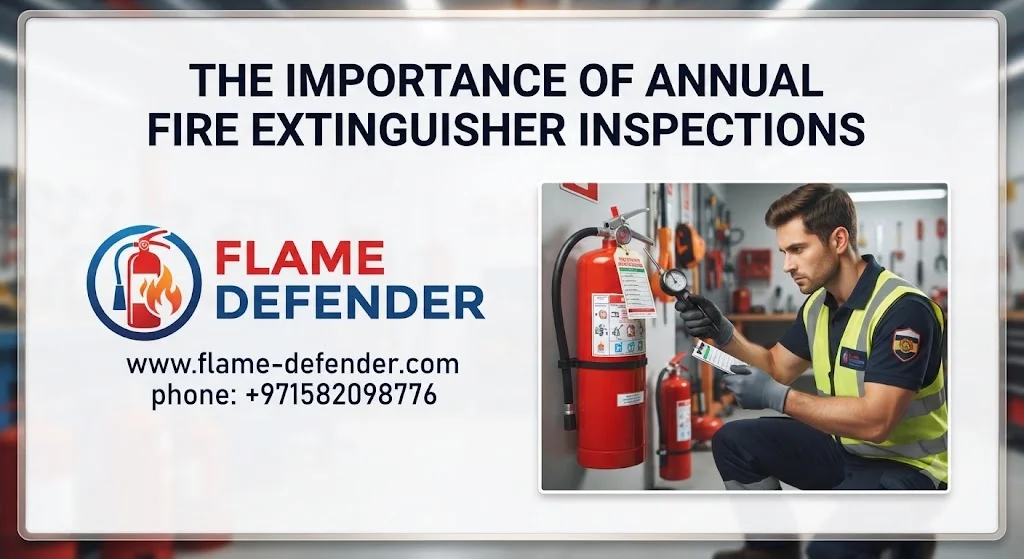
None of these problems are visible from a quick glance. Only a proper inspection checking the pressure gauge, weighing the cylinder, examining the hose and pin, and testing the mechanism can confirm whether an extinguisher will actually work.
What Happens During an Annual Inspection
A standard annual inspection typically includes:
- Visual check of the cylinder body for dents, rust, or corrosion.
- Pressure gauge reading to confirm the needle sits in the green zone.
- Weight check to confirm the cylinder holds the correct amount of agent.
- Pin and tamper seal verification to ensure the extinguisher hasn’t been used or tampered with.
- Hose, nozzle, and handle inspection for cracks or blockages.
- Expiry and hydrostatic test date review — cylinders generally need pressure testing every 5 years and replacement after about 10 years.
If any of these checks fail, the next step is servicing which usually means fire extinguisher refilling. Refilling replaces the old or degraded agent with a fresh charge and restores the extinguisher to full working pressure, giving it a new lease of life instead of requiring a full replacement.
Why This Matters Even More in Pakistan
Fire risk in Pakistan is rising. <cite index=”7-1″>Rescue 1122 data recorded more than 3,400 commercial and residential fire incidents in 2025, with a large share traced back to electrical faults such as overloaded wiring and failing appliances.</cite> Add to this the fact that <cite index=”2-1″>many fire extinguishers across the country stay installed for years without any inspection, servicing, or refilling</cite>, and the risk becomes clear: thousands of buildings may currently be protected by extinguishers that would fail on the day they’re needed most.
There’s also a quality concern specific to the local market. <cite index=”2-1″>Because Pakistan currently lacks unified national licensing standards for refilling service providers, the quality of refilling agents and workmanship can vary widely between vendors.</cite> This makes it even more important to choose a certified, experienced refilling service rather than the cheapest option on the street corner.
On the regulatory side, <cite index=”3-1″>while Pakistan does not yet have one single unified national fire code, provincial laws such as the Punjab Fire Prevention Act and municipal building bylaws require commercial and industrial buildings to maintain functional fire safety equipment.</cite> Annual inspection and refilling records are often what factory inspectors, insurance auditors, and building safety officers ask to see first.
The Real Cost of Skipping Inspections
Some business owners delay inspections to save money, but the math rarely works out in their favor. Refilling costs in Pakistan are modest — commonly falling somewhere between a few hundred and a few thousand rupees depending on extinguisher type and size, far cheaper than replacing a damaged unit or, worse, dealing with fire damage. Compare that small annual expense to:
- Property and stock destroyed in an uncontrolled fire
- Business downtime and lost income
- Injury or loss of life
- Failed insurance claims due to non-compliant fire safety equipment
- Fines or shutdown orders from safety inspectors
A functioning fire extinguisher, ready to act in the first 60 seconds of a fire, is often what decides whether an incident stays small or becomes a headline.
Signs Your Fire Extinguisher Needs Refilling Now
You shouldn’t always wait for the annual date. Watch for these warning signs between inspections:
- The pressure gauge needle is outside the green zone
- The extinguisher was used, even briefly
- Visible rust, dents, or a damaged hose
- The safety pin or tamper seal is missing or broken
- The powder feels hard or lumpy when the cylinder is shaken (a slight movement should be felt)
- The extinguisher is past its expiry or hydrostatic test date
If you notice any of these, arrange for professional fire extinguisher refilling immediately rather than waiting for the next scheduled check.
Choosing a Reliable Refilling Service
Because of the inconsistent standards mentioned earlier, it pays to be selective. Look for a provider that:
- Uses calibrated equipment and quality-tested extinguishing agents
- Issues a proper refilling and inspection certificate
- Offers annual maintenance contracts (AMCs) so you never miss a due date
- Has trained technicians familiar with DCP, CO2, foam, and water-type extinguishers
- Provides on-site service for bulk or urgent needs
For businesses, schools, hospitals, and homeowners across Pakistan looking for dependable, professional service, Flame Defender’s fire extinguisher refilling service offers certified refilling, inspection, and maintenance solutions designed to keep your fire safety equipment genuinely ready not just present.
Building a Simple Annual Habit
Protecting a property from fire doesn’t require complicated systems. It requires consistency. A simple approach that works well for homes and businesses alike:
- Mark one fixed date every year for a full inspection.
- Do a quick visual gauge check every month in between.
- Refill or service immediately after any use, no matter how minor.
- Keep a written or digital record of every inspection and refill.
- Replace cylinders once they reach the end of their safe service life.
This routine costs very little time and money, but it’s the difference between an extinguisher that’s just decoration and one that actually saves lives.
Final Thoughts
Fire doesn’t wait for convenient timing, and neither should fire safety maintenance. Annual fire extinguisher inspections — paired with timely refilling — are one of the most cost-effective safety investments any home or business in Pakistan can make. The next time you glance at that red cylinder on the wall, ask yourself: has it actually been checked this year? If you’re not sure, that’s your sign to book a professional inspection and refill today.
Frequently Asked Questions
1. How often should a fire extinguisher be inspected in Pakistan? Fire extinguishers should get a full professional inspection at least once a year, with quick visual gauge checks done monthly by the owner or staff.
2. How much does fire extinguisher refilling cost in Pakistan? Refilling costs vary by extinguisher type and size, generally ranging from a few hundred rupees for small DCP units to a few thousand rupees for larger CO2 or foam extinguishers. Getting a quote from a certified local provider is the most accurate way to know your exact cost.
3. How do I know if my fire extinguisher needs refilling? Check the pressure gauge — if the needle sits outside the green zone, or the unit has been used, damaged, or has passed its expiry date, it needs refilling.
4. Can I refill a fire extinguisher myself? No. Refilling requires specialized equipment, correctly measured extinguishing agents, and trained technicians. It should always be done by a certified professional service to ensure safety and reliability.
5. How long does a fire extinguisher last before it needs replacing? Most fire extinguisher cylinders can be refilled and reused for around 10 years, with hydrostatic pressure testing required roughly every 5 years to confirm the cylinder is still structurally safe.
6. Is fire extinguisher inspection legally required for businesses in Pakistan? Yes. Provincial regulations, such as the Punjab Fire Prevention Act and municipal building bylaws, require commercial and industrial buildings to maintain functional, properly serviced fire safety equipment.
7. What happens if a fire extinguisher is used even briefly? Even a short burst reduces internal pressure and disturbs the extinguishing agent, so the unit should be refilled right away rather than reused later.
8. Which type of fire extinguisher needs the most frequent maintenance? Dry chemical powder (DCP/ABC) extinguishers tend to need closer monitoring because the powder can clump in humid conditions, though all types benefit from annual professional checks.
9. Does fire extinguisher refilling come with a certificate? Reputable providers issue a refilling and inspection certificate, which is useful for compliance records, insurance claims, and safety audits.
10. Where can I get fire extinguisher refilling in Pakistan? Certified refilling services are available in most major cities, including Lahore, Karachi, Islamabad, and Rawalpindi. For reliable, professional refilling and maintenance, you can reach out through Flame Defender’s fire extinguisher refilling page.