
- Home
- Services
- About Company
- Fire Equipments
- Safety Equipments
- Safety Equipments
- Fire Safety Suits
- Breathing Apparatus
- Road Safety Equipment
- 3M Anti-Shatter Film
- Armorcoat Anti-Shatter Film
- Forest Fire Control System
- Emergency Window Escape Chute System
- Fire Blanket
- Security Equipment
- Blog
Room Integrity Testing
- Home
- Room Integrity Testing
Room Integrity Testing
Gaseous suppression systems can only extinguish fires if the room can contain the gas. Our expert diagnostics team utilizes specialized Door Fan Testing equipment to measure air leakage and calculate accurate gas retention times for critical server rooms, data centers, and switchgear rooms across Pakistan and the UAE.
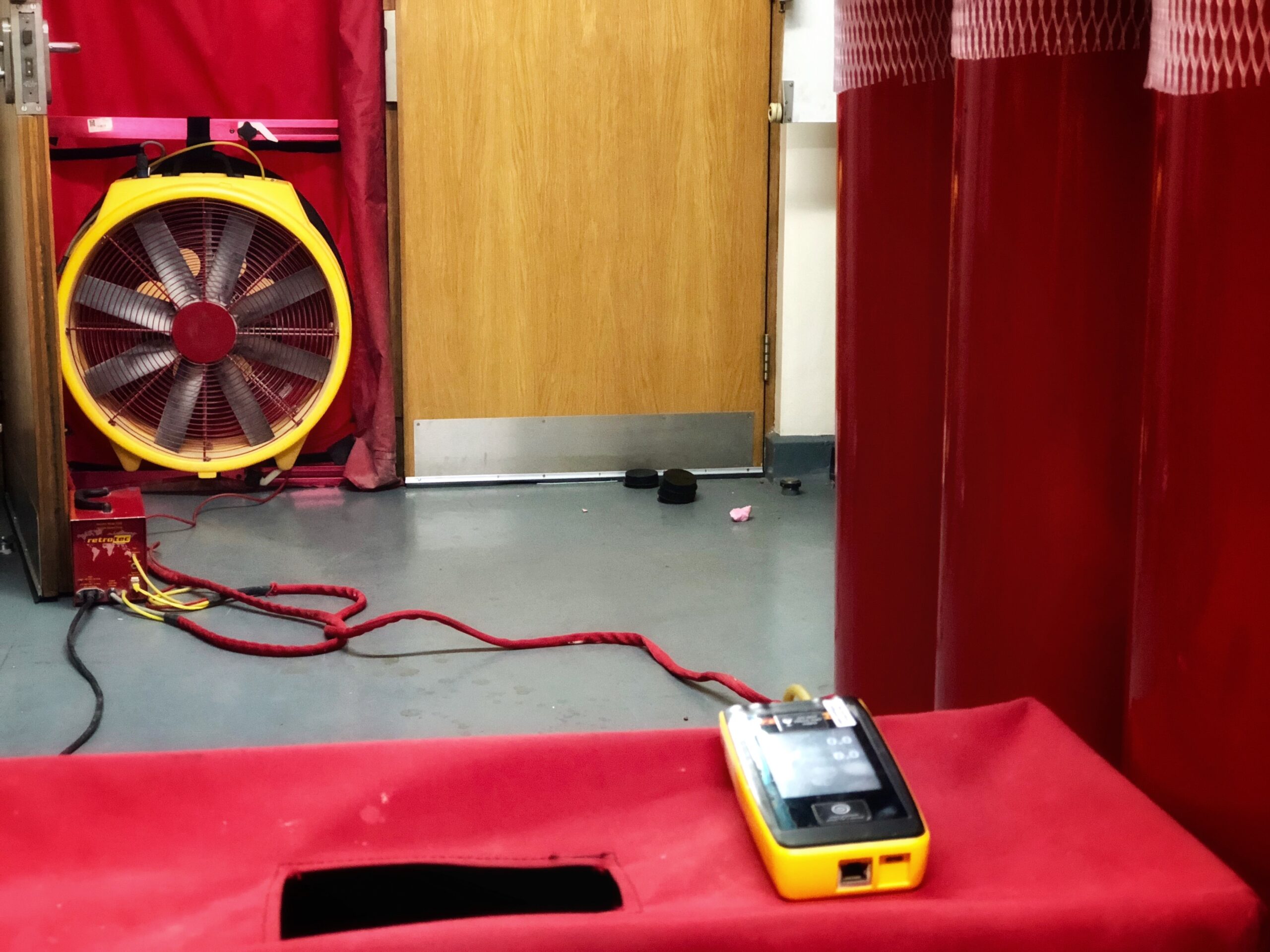
Room Integrity Testing Services by Flame Defender
A gaseous fire suppression system is only as effective as the room it protects. When a suppression system activates, it floods the protected space with a fire-suppressing gas — but if that room has unsealed gaps, cracks, or openings in its walls, floor, or ceiling, the gas escapes too quickly to reach and maintain the concentration needed to extinguish the fire. This is where room integrity testing becomes essential. A room integrity test verifies that your protected enclosure can retain the suppression agent at the required concentration for long enough to fully suppress a fire. At Flame Defender, we provide professional room integrity testing services for commercial properties, offices, data centers, server rooms, and industrial facilities across Pakistan, with our head office based in Dubai, UAE.
Why Room Integrity Testing is Essential
Installing a gaseous suppression system is a significant investment in the protection of your property, equipment, and people. But without a room integrity test, you have no way of knowing whether that investment will actually pay off when a fire occurs. A room that fails an integrity test will allow the suppression gas to leak out before the fire is fully extinguished, leaving your property and everything inside it at serious risk.
Room integrity testing is not a one-time requirement. Buildings change over time. Cable routes are modified, new penetrations are made through walls for pipework or wiring, doors are adjusted, and general wear and tear creates gaps that did not exist when the system was first installed. Each of these changes can compromise the integrity of the protected enclosure without anyone realising it. Regular testing ensures that any deterioration in room tightness is identified and corrected before it affects the performance of your suppression system.
For businesses, room integrity testing is also a regulatory and insurance requirement. International fire safety standards including NFPA 2001 and ISO 14520 require that protected enclosures be tested to confirm they meet minimum retention time requirements. Many insurance providers also require a valid room integrity test certificate as a condition of coverage for properties protected by gaseous suppression systems. Without a current certificate, you may find your insurance claim rejected following a fire incident.
Our Testing Process
At Flame Defender, we use the industry-standard door fan test method to carry out room integrity testing. This is a scientifically validated and internationally recognised method that provides accurate and reliable results without discharging any suppression agent.
We begin with a detailed pre-test inspection of the protected enclosure. Our technicians examine all walls, floors, ceilings, doors, windows, cable penetrations, pipework entries, ventilation openings, and any other potential leakage points. We document the current condition of the room and identify any obvious gaps or unsealed penetrations that are likely to cause a test failure. Where practical, we seal minor leakage points before the test begins so that the result reflects the actual condition of a properly maintained room rather than avoidable deficiencies.
We then install a calibrated fan unit in the main doorway of the protected enclosure and use it to pressurise and depressurise the room at measured levels. By monitoring the airflow required to maintain specific pressure differentials, our equipment calculates the total leakage area of the enclosure. This data is fed into specialist software that models how long the suppression gas would be retained in the room at the required extinguishing concentration, producing a predicted retention time that is compared against the minimum requirement for the specific suppression agent installed.
If the room passes the test, we issue a full test certificate documenting the results, the test conditions, and the calculated retention time. If the room fails, we provide a detailed leakage report identifying the locations and severity of leakage points so that remedial sealing work can be carried out efficiently. Once the necessary repairs are made, we retest the enclosure to confirm it now meets the required standard and issue the certification.
What We Test
Flame Defender carries out room integrity testing on all types of protected enclosures including server rooms and data centers, electrical switchrooms and control rooms, telecommunications rooms, archive and document storage rooms, clean rooms, and any other space protected by a gaseous suppression system. We work with all major suppression agents including FM-200, CO2, Novec 1230, inert gas blends, and other clean agent systems.
Who We Serve
Flame Defender provides room integrity testing services to a wide range of clients across Pakistan. Data centers and server rooms housing critical IT infrastructure depend on gaseous suppression systems and require regular integrity testing to ensure their protected rooms can retain suppression gas long enough to protect irreplaceable equipment and data. Financial institutions, telecommunications companies, and technology businesses trust us for precise and fully documented testing that meets both regulatory and insurance requirements.
Corporate offices with protected electrical rooms, hospitals with critical care equipment areas, broadcast facilities, and government buildings all rely on Flame Defender for professional integrity testing carried out to international standards. Industrial facilities with control rooms and high-value process equipment also depend on our services to confirm their suppression systems will perform as designed.
For clients with multiple protected enclosures across different sites or with international operations, our Dubai head office coordinates testing programs that deliver consistent results and documentation across all locations.
Compliance and Certification
Room integrity testing certificates are required by fire safety authorities, insurance providers, and international safety standards bodies. Flame Defender provides fully documented test reports and certificates that meet the requirements of all major standards including NFPA 2001, ISO 14520, and local Pakistani fire safety regulations. Our reports are detailed, accurate, and professionally formatted to satisfy the most demanding inspection or audit requirements.
We maintain records of all tests carried out for every client and provide advance notice when retesting is due, ensuring your protected enclosures are always covered by a current and valid certificate.
Contact Flame Defender Today
A gaseous suppression system that discharges into a leaking room is a system that may fail to save your property. Room integrity testing is the only way to confirm that your protected enclosure will retain suppression gas at the concentration and for the duration needed to extinguish a fire completely. Contact Flame Defender today to schedule your room integrity test and make certain that your suppression system investment is fully protected and ready to perform when it matters most.
Frequently Asked Questions (FAQs)
Find quick answers to common queries regarding our fire safety & security solutions.
Room Integrity Testing (RIT), also known as a Door Fan Test, is a procedure used to verify whether a protected room can retain a fire suppression agent for the required hold time. It is commonly performed in rooms protected by clean agent fire suppression systems such as FM-200 and Novec 1230.
Room Integrity Testing ensures that the fire suppression agent remains inside the protected area long enough to extinguish the fire and prevent re-ignition. A room with excessive leakage may reduce the effectiveness of the suppression system and fail compliance requirements.
Room Integrity Testing is commonly required for:
- Data Centers
- Server Rooms
- Control Rooms
- Electrical Switch Rooms
- Telecom Facilities
- UPS Rooms
- Archives and Record Rooms
- Clean Agent Protected Areas
- Mission-Critical Facilities
Room Integrity Testing is typically recommended during system commissioning, after significant building modifications, and periodically as required by fire safety standards, insurance providers, or facility maintenance programs.
Room Integrity Testing is commonly performed for:
- FM-200 Fire Suppression Systems
- Novec 1230 Systems
- Inergen Systems
- Argonite Systems
- CO₂ Suppression Systems
- Other Clean Agent Fire Suppression Systems
A calibrated fan is temporarily installed in a doorway to measure air leakage within the protected enclosure. Specialized software calculates the room’s retention time and determines whether the enclosure can maintain the required concentration of the suppression agent.
If the room fails the test, technicians identify leakage points such as gaps around doors, cable penetrations, ductwork, walls, ceilings, or floors. After sealing these leaks, the room can be retested to verify compliance.
No. Room Integrity Testing is a non-destructive procedure and does not discharge the fire suppression agent. The test evaluates enclosure leakage without activating the suppression system.
The cost depends on factors such as room size, facility type, number of protected areas, and testing requirements. Flame Defender offers customized quotations for commercial, industrial, and critical infrastructure facilities throughout Pakistan.
Yes. Flame Defender provides professional Room Integrity Testing services across Karachi, Lahore, Islamabad, Rawalpindi, Faisalabad, Multan, Peshawar, Quetta, Sialkot, Gujranwala, Hyderabad, and Sukkur. Our experienced technicians use advanced testing equipment to verify enclosure integrity and help ensure compliance with international fire safety standards and clean agent system requirements.
Do you need help?
If you have any question,
Feel free to call us
Call Us Today At +971 58 209 8776 We are available to help 9am to 7pm.
Secure Your Commercial & Industrial Projects with Certified Systems
From high-rise buildings in UAE to industrial plants across Pakistan, we engineer NFPA-compliant Fire Alarms, Hydrant Systems, and Walkthrough Security Gates. Get full compliance and smooth approval from Civil Defence authorities.
Request a Technical Proposal
Direct WhatsApp Query ✉️ Email RFP / DrawingsAverage response time for technical estimates: < 2 Hours
Flame Defender
Trusted name in fire safety equipment, installation, and maintenance. Certified solutions for homes, offices, factories and commercial buildings since 2010.
Our Locations
-
Head Office:
Dubai, UAE
Call: +971582098776 -
Branch:
Islamabad, Rawalpindi
Call: 923114233334
Our Services
Get In Touch
- Email:
sales@flame-defender.com
info@flame-defender.com
- Mon - Sat: 9:00 AM - 7:00 PM