
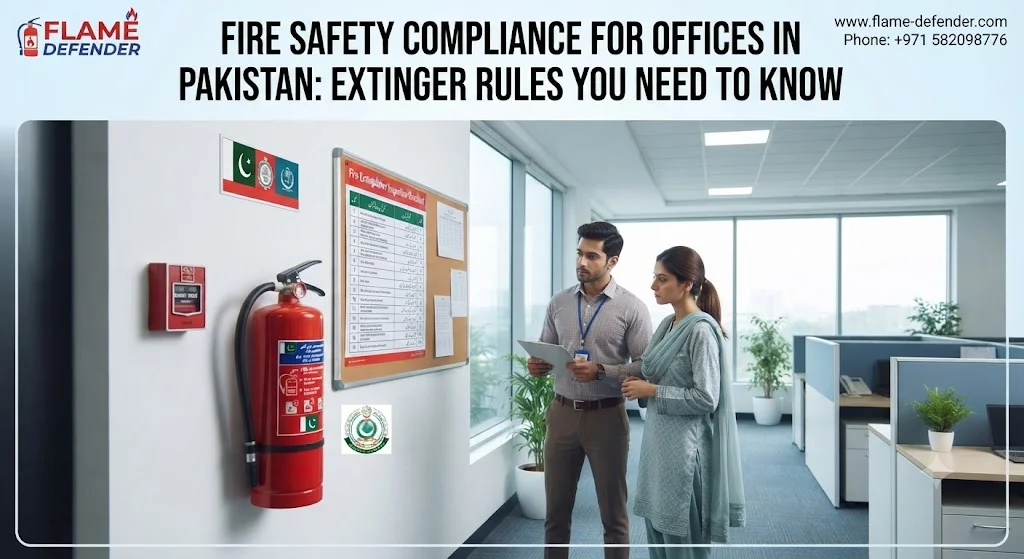
Every year, offices across Pakistan face fire-related losses that could have been prevented with proper safety measures. Whether you run a small startup in Lahore, a corporate office in Karachi, or a co-working space in Islamabad, fire safety compliance isn’t just a legal formality — it’s a responsibility to your employees, clients, and property.
This guide breaks down what office fire safety compliance actually means in Pakistan, what the law expects from you, and why regular fire extinguisher refilling in Pakistan should be part of every office’s routine maintenance plan.
Why Fire Safety Compliance Matters for Offices
Offices are full of fire hazards that people often overlook: overloaded electrical sockets, faulty wiring, paper-heavy storage rooms, kitchens with gas connections, and server rooms running hot equipment for hours. A small spark can turn into a major disaster within minutes if there’s no working fire safety equipment on hand.
Beyond the obvious safety risk, non-compliance can also lead to:
- Heavy fines from local civil defense or building authorities
- Insurance claim rejections in case of fire damage
- Legal liability if an employee is injured
- Business shutdown orders from regulatory bodies
Simply put, fire safety compliance protects lives first, and your business second.
What Pakistani Law Says About Fire Safety in Offices
Fire safety regulations in Pakistan are generally enforced through provincial building codes, labor laws, and civil defense guidelines. While enforcement varies by city, most commercial buildings and offices are expected to follow these baseline requirements:
- A minimum number of fire extinguishers based on floor area and occupancy
- Extinguishers placed at accessible points, clearly marked and unobstructed
- Fire exits that are clearly signed and never locked during working hours
- Smoke detectors and fire alarms in larger commercial buildings
- Periodic inspection and refilling of extinguishers to keep them functional
- Fire drills and staff training, especially in high-rise offices
Local authorities such as the Civil Defence Department and municipal corporations in cities like Karachi, Lahore, Islamabad, and Rawalpindi conduct inspections, particularly after major fire incidents. Offices found without valid, functional extinguishers often face on-the-spot fines or closure notices until compliance is restored.
Types of Fire Extinguishers Every Office Should Have
Not every fire is the same, and not every extinguisher works on every type of fire. Offices typically need a mix of the following:
1. Water-based (Class A) — Best for ordinary combustibles like paper, wood, and cardboard, which make up most office fire risks.
2. CO2 extinguishers (Class B & C) — Ideal for electrical fires and areas with computers, servers, or wiring, since they leave no residue.
3. Dry Chemical Powder (ABC type) — A versatile, all-purpose extinguisher suitable for most office environments, effective against multiple fire classes.
4. Foam extinguishers — Useful where flammable liquids might be present, such as printing or maintenance areas.
Most standard offices in Pakistan rely on ABC dry powder extinguishers and CO2 units placed near electrical panels and server rooms.
Why Extinguisher Refilling Is a Legal and Safety Requirement
One of the most overlooked parts of fire safety compliance is extinguisher maintenance. Having an extinguisher mounted on the wall means nothing if it’s expired, under-pressurized, or empty. Extinguishers lose pressure over time, and the chemical agent inside can degrade or clump, making it useless in an actual emergency.
This is where fire extinguisher refilling in Pakistan becomes essential. Most fire safety guidelines recommend refilling extinguishers:
- Once every 12 months for general inspection and top-up
- Immediately after any use, even partial
- When the pressure gauge shows low or empty
- Based on the manufacturer’s expiry recommendation, typically every 3-5 years for a full recharge
Skipping refilling doesn’t just risk a failed inspection — it risks lives during an actual fire emergency.
How Office Fire Extinguisher Refilling Works
Getting your office extinguishers refilled is a straightforward process when you work with a professional fire safety provider. Here’s what the process typically looks like:
- Inspection — A technician checks the pressure gauge, hose, nozzle, and physical condition of each extinguisher.
- Emptying and Cleaning — The old agent (powder, foam, or CO2) is removed and the cylinder is cleaned internally.
- Refilling — Fresh fire-suppressing agent is added according to the extinguisher’s rated capacity.
- Pressure Testing — The cylinder is pressurized to the correct level and tested for leaks.
- Sealing and Tagging — A service tag is added with the refill date, next due date, and technician details, which is often required during compliance inspections.
Businesses in Pakistan usually prefer getting this done through a certified provider who can service multiple extinguishers on-site, minimizing downtime.
Building a Simple Fire Safety Compliance Checklist for Your Office
If you’re setting up or reviewing your office’s fire safety plan, here’s a practical checklist to follow:
- Count extinguishers based on floor size (a general rule is one extinguisher per 200-300 square meters, though this can vary)
- Mount extinguishers at visible, easy-to-reach locations near exits and high-risk zones
- Schedule annual inspections and refilling with a licensed provider
- Keep fire exits unobstructed and clearly signed
- Install smoke detectors, especially in server rooms and kitchens
- Train at least a few staff members on how to use an extinguisher (the PASS method: Pull, Aim, Squeeze, Sweep)
- Conduct a fire drill at least once a year
- Maintain a maintenance log for all fire safety equipment
Choosing the Right Fire Extinguisher Refilling Service in Pakistan
Not all refilling providers offer the same quality of service. When choosing a company for fire extinguisher refilling in Pakistan, look for:
- Proper certification and trained technicians
- Use of genuine, quality-tested fire suppressing agents
- On-site service so your office doesn’t need to transport equipment
- Proper documentation and service tagging for compliance records
- Reasonable turnaround time so extinguishers aren’t out of service for long
If you’re looking for a reliable provider, Flame Defender’s fire extinguisher refilling service offers professional inspection, refilling, and maintenance for offices across Pakistan, helping businesses stay compliant without the hassle of managing it in-house.
Final Thoughts
Fire safety compliance for offices in Pakistan isn’t complicated, but it does require consistency. Having the right number and type of extinguishers is only half the job — keeping them properly maintained and refilled is what actually makes them effective when it matters most. A small annual investment in inspection and refilling can save lives, protect property, and keep your business on the right side of the law.
Frequently Asked Questions
1. Is fire extinguisher refilling mandatory for offices in Pakistan? Yes. Most provincial and municipal fire safety regulations require offices to keep extinguishers functional at all times, which includes regular refilling and inspection, usually on an annual basis.
2. How often should office fire extinguishers be refilled? Extinguishers should generally be inspected and refilled once a year, refilled immediately after any use, and given a full recharge every 3-5 years depending on the manufacturer’s guidelines.
3. What happens if my office doesn’t have working fire extinguishers during an inspection? Authorities can issue fines, warnings, or in serious cases, closure notices until the office meets fire safety compliance requirements.
4. How many fire extinguishers does an office need in Pakistan? A common guideline is one extinguisher per 200-300 square meters of floor space, though the exact number depends on the office layout, occupancy, and fire risk level.
5. What type of fire extinguisher is best for an office? ABC dry chemical powder extinguishers are the most versatile choice for general office use, while CO2 extinguishers are better suited for server rooms and areas with electrical equipment.
6. How do I know if my fire extinguisher needs refilling? Check the pressure gauge — if the needle is outside the green zone, it needs refilling. Also check for a valid service tag and expiry date on the cylinder.
7. Can I refill a fire extinguisher myself? No. Refilling requires proper equipment, trained technicians, and certified fire-suppressing agents. It should always be done by a licensed fire safety service provider.
8. How much does fire extinguisher refilling cost in Pakistan? Costs vary based on extinguisher size and type, ranging from a few hundred to a few thousand rupees per unit. It’s best to request a quote from a local provider for accurate pricing.
9. Does fire extinguisher refilling affect office insurance claims? Yes. Insurance providers often check whether fire safety equipment was properly maintained. Expired or unrefilled extinguishers can lead to claim rejections after a fire incident.
10. Where can I get professional fire extinguisher refilling services in Pakistan? Certified fire safety companies like Flame Defender offer on-site fire extinguisher refilling in Pakistan, along with inspection and compliance documentation for offices across major cities.