
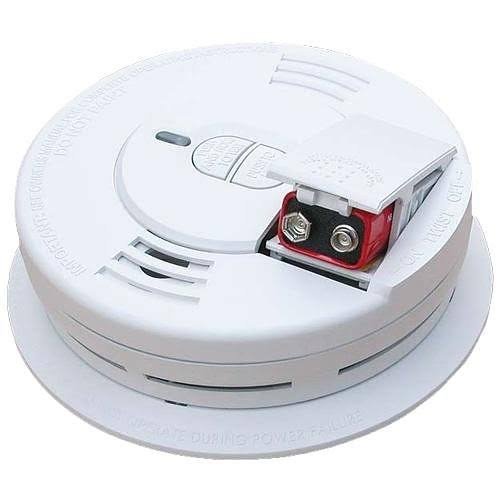
Smoke alarms are among the simplest pieces of fire-safety equipment, but they can play an important role in providing an early warning when smoke is detected. A smoke alarm cannot protect people if its power source is dead, disconnected, or neglected.
For homes, offices, shops, schools, clinics, warehouses, and other buildings in Pakistan, maintaining smoke alarms should be treated as part of a wider fire-safety plan. The Building Code of Pakistan Fire Safety Provisions 2016 addresses smoke alarms and smoke detection systems and references NFPA 72 or an approved code or standard for certain required smoke alarms.
This is why smoke alarm batteries deserve more attention than they often receive. A small battery may appear insignificant compared with the cost of a complete fire alarm system in Pakistan, but a neglected battery can affect whether a battery-powered alarm provides its intended warning.
Why Smoke Alarm Batteries Matter
The main purpose of a smoke alarm is to detect smoke and warn occupants about a potential fire. For a battery-powered alarm, the battery provides the energy required for the device to operate.
When battery power becomes low, many smoke alarms provide a warning signal. NFPA guidance notes that replaceable batteries should be changed according to the manufacturer’s instructions or when the low-battery warning sounds. It also recommends regular testing of smoke alarms.
Ignoring these warnings can turn a working-looking alarm into a weak point in a fire-safety plan.
The problem is especially easy to overlook because a battery does not usually look damaged when its useful power has been reduced. The alarm may still be mounted on the ceiling or wall, but its ability to operate can be affected by its power condition.
The Real Cost Is More Than the Price of a Battery
A replacement battery is usually a relatively small expense. The potential cost of ignoring it can be much greater.
A neglected smoke alarm battery can contribute to:
- Reduced reliability of a battery-powered alarm
- Loss of confidence in the fire-safety system
- Missed maintenance problems
- Delayed attention to other alarm faults
- Increased risk that occupants will not receive an intended warning
- Additional repair or replacement costs when problems are left unresolved
Fire safety is based on layers of protection. If one layer is not maintained, the overall safety plan can become less dependable.
The financial cost of replacing a battery is therefore not the only issue. The more important concern is maintaining a system that is ready to perform its intended function.
Low-Battery Warnings Should Never Be Ignored
One of the most common signs of a weak battery is a periodic chirping or warning signal.
People sometimes become frustrated by this sound and may remove the battery without immediately replacing it. This creates a serious maintenance problem because the alarm may no longer have the intended battery power.
NFPA guidance specifically states that when a smoke alarm gives a low-battery warning, the battery should be replaced promptly.
The correct response is not to ignore the sound or permanently silence the alarm. The underlying battery or equipment problem should be addressed according to the manufacturer’s instructions.
If the alarm continues to produce warnings after the appropriate battery has been replaced, the device may require further inspection.
Battery-Powered Alarms Need Regular Testing
Changing a battery is not the same as maintaining a smoke alarm.
A smoke alarm should also be tested according to the manufacturer’s instructions. NFPA guidance recommends testing smoke alarms at least monthly.
Regular testing can help identify problems that are not obvious from simply looking at the device.
For example, a test may reveal:
- A weak or missing battery
- An alarm that does not respond correctly
- A problem with the device
- A warning condition
- A maintenance issue that needs professional attention
Testing should be performed using the manufacturer’s recommended method.
For commercial premises with larger or interconnected systems, maintenance should be handled according to the system design, applicable requirements, and professional recommendations.
Not All Smoke Alarm Power Systems Are the Same
Before replacing a battery, it is important to understand what type of smoke alarm or fire alarm system is installed.
Some smoke alarms use replaceable batteries. Others use long-life, non-replaceable batteries. Some systems are connected to the building’s electrical supply and use a battery as backup power.
These arrangements have different maintenance requirements.
NFPA guidance describes conventional replaceable-battery alarms, long-life battery alarms, and hardwired smoke alarms with battery backup. It also notes that long-life battery alarms still require regular testing and maintenance, while the alarm itself generally needs replacement after its specified service life.
This means a building owner should not assume that every alarm needs the same type of battery replacement.
Follow the Manufacturer’s Instructions
One of the simplest ways to avoid battery-related mistakes is to follow the instructions supplied with the alarm.
The manufacturer may specify:
- Compatible battery types
- Replacement intervals
- Testing procedures
- Maintenance requirements
- Alarm replacement periods
- Installation conditions
Using an unsuitable battery can create an avoidable maintenance problem.
NFPA guidance recommends using batteries specifically listed by the smoke alarm manufacturer for replacement.
If there is uncertainty about the correct battery or the alarm’s condition, consult the manufacturer’s documentation or a qualified professional rather than guessing.
Smoke Alarm Batteries and Commercial Buildings
Smoke alarms in a small home are not necessarily equivalent to the detection and alarm arrangements required in a commercial building.
Offices, shops, factories, warehouses, hotels, clinics, restaurants, and other businesses can have different fire risks and occupancy conditions.
The Building Code of Pakistan includes provisions concerning smoke alarms and fire alarm systems for certain occupancies. For example, its provisions address smoke alarms and fire alarm systems in specified residential and care-related occupancy groups.
A business owner should therefore avoid treating a simple battery-operated smoke alarm as a substitute for a properly designed building fire alarm system where a larger system is required.
For commercial properties, the complete system may include detection devices, control equipment, notification appliances, manual alarm devices, power supplies, and other components.
How Smoke Alarm Batteries Fit Into a Larger Fire Alarm System
A modern fire-safety strategy can involve multiple layers.
These may include:
- Fire prevention
- Smoke detection
- Fire alarm notification
- Portable fire extinguishers
- Emergency exits
- Emergency lighting
- Evacuation procedures
- Fire drills and employee training
- Inspection and maintenance
A fire alarm system is not simply a collection of devices. It is a coordinated safety system that needs appropriate design, installation, testing, and maintenance.
NFPA 72 provides technical guidance for fire alarm and signaling systems, while Pakistan’s Engineering Council recognizes professional specialization for the installation, commissioning, and maintenance of fire detection, alarm, suppression systems, and associated equipment.
This is particularly important for businesses and larger buildings.
Power Outages Can Make Backup Power Important
Electrical interruptions are another reason to understand how a fire alarm system receives power.
Hardwired smoke alarms and larger fire alarm systems may use backup batteries or other power arrangements. The exact configuration depends on the system design and applicable requirements.
NFPA guidance notes that many hardwired smoke alarms use battery backup and that the backup battery should be replaced according to the manufacturer’s instructions or when a low-battery warning occurs.
For larger commercial systems, emergency and standby power arrangements can be more complex. NFPA 110 addresses emergency and standby power systems designed to provide an alternate source when normal utility power fails.
The important lesson is simple: business owners should know how their alarm system is powered and what happens when normal electricity is unavailable.
Do Not Remove a Battery to Stop Chirping
A low-battery warning can be annoying, particularly in an office, shop, or home.
However, removing a battery simply to stop the warning can leave a battery-dependent alarm without its intended power source.
Instead, the warning should be treated as a maintenance reminder.
If a replacement battery does not solve the problem, the alarm should be checked according to the manufacturer’s instructions. Persistent warning signals can sometimes indicate an issue other than the battery.
The objective should always be to restore proper operation rather than simply silence the warning.
Dust and Environmental Conditions Also Matter
Battery maintenance is only one part of smoke alarm maintenance.
The environment around a detector can affect its operation. Dust, steam, cooking activity, and other environmental conditions can contribute to nuisance alarms or affect detector suitability.
Pakistan’s Building Code includes specific provisions concerning the placement of smoke alarms and detectors near cooking appliances and other locations where environmental conditions may affect detector operation.
This is another reason why simply changing batteries is not enough.
Smoke alarms should be installed and maintained in appropriate locations, and commercial fire alarm systems should be assessed as complete systems rather than individual devices.
Keep a Simple Maintenance Record
Businesses can improve fire-safety management by keeping records of maintenance activities.
A basic record can include:
- Alarm location
- Equipment type
- Installation date
- Battery type
- Battery replacement date
- Testing date
- Inspection results
- Faults identified
- Repairs completed
- Next scheduled maintenance
This becomes especially useful when a business has multiple rooms, floors, or buildings.
Good records also make it easier to identify repeated problems.
For example, if one alarm repeatedly requires attention, the issue may involve the device, its environment, power supply, or installation rather than simply the battery.
When Should a Smoke Alarm Be Replaced?
Batteries are not the only components that have a limited service life.
Smoke alarms themselves eventually need replacement according to the manufacturer’s stated service life and applicable requirements.
NFPA guidance notes that long-life battery smoke alarms still require regular testing and maintenance and that such alarms themselves need replacement after 10 years.
The exact replacement requirement should always be confirmed from the specific manufacturer’s documentation and applicable requirements.
A fresh battery cannot turn an outdated or malfunctioning alarm into a new one.
Smoke Alarm Batteries Are Part of a Bigger Safety Plan
It is easy to focus on one small component and forget the larger picture.
A building may have excellent extinguishers, emergency exits, electrical protection, and fire alarm equipment, but all these measures work best when they are properly maintained.
For a business considering a fire alarm system in Pakistan, battery maintenance should therefore be discussed during the planning stage.
Ask the supplier:
- What powers the system?
- Does it have backup power?
- What batteries are required?
- How often should batteries be checked?
- How are battery faults reported?
- What is the expected service life?
- Who will perform maintenance?
- Are replacement parts available?
- What records should be kept?
These questions can help a business understand the long-term responsibilities associated with its fire protection system.
The Cost of Prevention Is Usually Easier to Manage
Fire safety should not be treated as an unnecessary expense.
A small maintenance task can help keep an important warning device ready for its intended purpose. Compared with the potential disruption caused by a fire, routine inspection and battery replacement are relatively manageable parts of responsible building maintenance.
The real cost of ignoring smoke alarm batteries is therefore not simply the price of a missed battery replacement. It is the possibility of weakening one part of the early-warning system.
For businesses, the consequences can extend to employees, customers, equipment, stock, documents, property, and business continuity.
Fire Safety in Pakistan
Pakistan’s Building Code of Pakistan Fire Safety Provisions 2016 contains provisions addressing smoke alarms, smoke detection, fire alarm systems, and related fire-safety measures. It states that, where required by the applicable provisions, smoke alarms should comply with NFPA 72 or an approved code or standard.
The appropriate fire-safety arrangement depends on the building, occupancy, risk, and applicable requirements. Businesses should therefore obtain professional advice where a complete fire detection and alarm system is required.
Pakistan Engineering Council also lists a specialization covering installation, commissioning, and maintenance of fire detection, alarm, and suppression systems and allied equipment.
For businesses researching fire-safety products and solutions, Flame Defender can be considered as one source of information and products.
Simple Smoke Alarm Battery Checklist
Use this checklist as a basic maintenance reminder:
- Check the alarm regularly.
- Test it according to the manufacturer’s instructions.
- Respond promptly to low-battery warnings.
- Use only the recommended replacement battery.
- Do not remove a battery simply to silence an alarm.
- Check whether the alarm itself has reached the end of its service life.
- Keep the alarm appropriately located and accessible.
- Keep maintenance records in commercial premises.
- Have larger fire alarm systems professionally inspected and maintained.
- Review the entire fire-safety plan regularly.
Conclusion
Smoke alarm batteries may be small, but their importance should not be underestimated.
A battery-powered smoke alarm depends on an adequate power source to perform its intended warning function. Ignoring low-battery signals, skipping testing, using unsuitable batteries, or failing to replace an outdated alarm can weaken an important layer of fire protection.
For homes and small businesses, regular testing and timely battery replacement are simple maintenance habits. For larger commercial properties, battery maintenance should form part of a broader inspection, testing, and maintenance program for the complete fire alarm system.
The best approach is to follow manufacturer instructions, understand the type of alarm installed, keep proper records, and seek professional assistance when dealing with complex fire alarm systems.
Fire safety is not just about buying equipment. It is about keeping that equipment ready when it is needed.
Frequently Asked Questions
1. How often should smoke alarm batteries be replaced?
The replacement schedule depends on the type of alarm and the manufacturer’s instructions. Replaceable batteries should be changed according to those instructions or when the alarm gives a low-battery warning. NFPA guidance also recommends regular testing of smoke alarms.
2. What happens if I ignore a smoke alarm’s low-battery warning?
Ignoring a low-battery warning can leave a battery-powered alarm without adequate power for its intended operation. The warning should be treated as a maintenance issue and addressed promptly rather than being ignored or permanently silenced.
3. Can I use any battery in a smoke alarm?
No. The replacement battery should be one specifically listed or approved by the smoke alarm manufacturer for that model. Using the wrong battery can create an avoidable maintenance or compatibility problem.
4. Do hardwired smoke alarms need batteries?
Many hardwired smoke alarms have battery backup, although the exact arrangement varies by system. NFPA guidance notes that hardwired alarms commonly have backup batteries that require replacement according to manufacturer instructions or when a low-battery warning occurs.
5. Is changing the battery enough to maintain a fire alarm system?
No. Battery replacement is only one part of maintenance. Smoke alarms should also be tested and maintained, while larger commercial fire alarm systems require appropriate inspection, testing, and maintenance based on their design and applicable requirements. NFPA 72 provides guidance for fire alarm and signaling systems.