
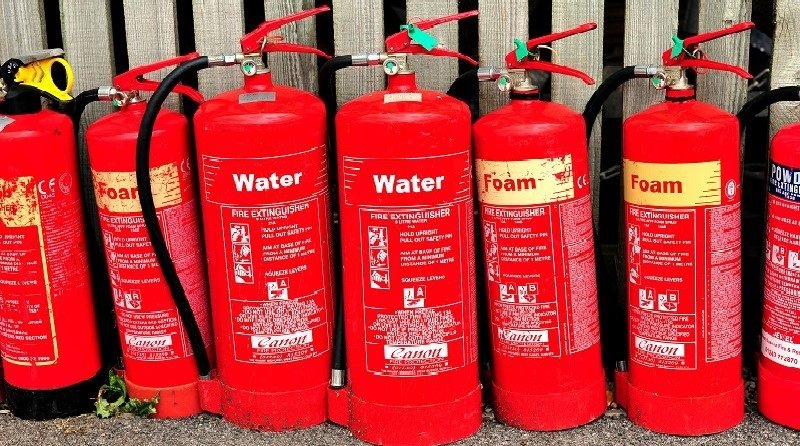
Teaching children about fire safety is an important part of helping them understand everyday risks and respond calmly during an emergency. Children are naturally curious, and they may notice fire extinguishers in schools, shopping centres, offices, apartment buildings, and homes. Explaining what these devices are for can help them recognise their importance without encouraging them to handle dangerous equipment.
Fire extinguishers are designed to control certain types of fires. However, not every extinguisher is suitable for every situation. Some contain water, while others use foam, dry chemical powder, carbon dioxide, or specialised agents. Each type has a specific purpose, and using the wrong one can make a fire more dangerous.
For children, the most important lesson is simple: a fire extinguisher is not a toy, and children should never try to fight a fire. If they see smoke, flames, or hear a fire alarm, they should alert an adult, follow their emergency plan, and get outside safely.
Understanding extinguisher types can also help children appreciate the wider fire protection measures found in modern buildings. For example, a properly installed fire alarm system in Pakistan can warn occupants when a fire is detected, giving them an opportunity to follow the building’s evacuation procedure.
This guide explains the main types of fire extinguishers, how parents and teachers can discuss them with children, and why fire alarms, escape plans, and adult supervision are essential.
Why Should Children Learn About Fire Extinguishers?
Children do not need to become firefighting experts to understand fire safety. They need age-appropriate information that helps them recognise hazards, avoid unsafe behaviour, and know when to seek help.
1. It Helps Children Recognise Fire Safety Equipment
Children may see red fire extinguishers mounted on walls in schools, hospitals, offices, and other public buildings. Explaining their purpose helps children understand that these devices are emergency equipment intended for trained adults.
Parents and teachers can point out extinguishers during ordinary building safety discussions without allowing children to touch or operate them.
2. It Builds Awareness of Different Fire Risks
A fire involving paper is different from a fire involving cooking oil or electrical equipment. Children can learn that different materials create different hazards and that one extinguisher may not be suitable for every fire.
This lesson encourages respect for safety procedures rather than experimentation.
3. It Reinforces the Importance of Fire Alarms
Fire extinguishers are only one part of a building’s fire protection arrangements. Smoke detectors, heat detectors, alarms, emergency lighting, exit signs, and evacuation plans can all play important roles.
Children should understand that when an alarm sounds, they must follow their teacher’s or responsible adult’s instructions and leave by the designated safe route.
4. It Encourages Responsible Behaviour
Fire safety education teaches children not to play with matches, lighters, candles, or electrical equipment. It also helps them understand why fire extinguishers, alarm call points, and other safety devices must not be treated as toys.
These lessons are useful at home, at school, and in public places.
Understanding the Main Types of Fire Extinguishers
The following explanations are intended to help parents and teachers introduce the different extinguisher types. Children should learn their purposes, not how to operate them during an emergency.
Extinguisher labels and fire classifications can vary by standard and jurisdiction. The equipment selected for a building should be suitable for its specific hazards and local requirements.
1. Water Fire Extinguishers
Water extinguishers are generally intended for fires involving ordinary combustible materials, such as paper, cardboard, wood, and certain fabrics.
Water helps cool burning material, reducing the heat that allows a fire to continue.
A simple way to explain it to children: Water extinguishers are designed for certain materials, such as paper and wood, but they are not suitable for every fire.
Water must not be used on a fire involving energised electrical equipment or flammable liquids where it could spread the danger. Children should never decide whether a particular fire is suitable for a water extinguisher.
2. Foam Fire Extinguishers
Foam extinguishers are commonly designed for certain fires involving ordinary combustible materials and flammable liquids. The foam helps cover the burning surface and can reduce the release of flammable vapours.
Their suitability depends on the extinguisher’s rating and the materials involved.
A simple way to explain it to children: Foam extinguishers are made for particular kinds of fires, and adults must check the label to know where they can be used.
Foam is not suitable for every hazard. Children should not approach a fire to identify its contents or choose firefighting equipment.
3. Dry Chemical Powder Extinguishers
Dry chemical powder extinguishers are widely used because some varieties are rated for several fire classes. An ABC-rated extinguisher, for example, is designed for certain fires involving ordinary combustible materials, flammable liquids, and energised electrical equipment.
Other powder extinguishers may be intended for specialised industrial hazards. The label is important because not all powder extinguishers have the same capabilities.
A simple way to explain it to children: Some powder extinguishers can control several kinds of fires, but the correct type must be selected by a responsible adult or qualified professional.
Children should never discharge a powder extinguisher for fun or attempt to use one during a fire.
4. Carbon Dioxide (CO₂) Fire Extinguishers
Carbon dioxide extinguishers release CO₂ gas and are commonly used for certain flammable-liquid fires and fires involving energised electrical equipment. They leave little residue compared with many powder extinguishers.
However, CO₂ can create additional risks in confined or poorly ventilated areas, and the discharge equipment can become extremely cold.
A simple way to explain it to children: This extinguisher contains a special gas that adults may use for certain types of fire. It is not safe for children to handle.
Children should never touch the discharge horn, pull the pin, or try to test the equipment.
5. Wet Chemical Fire Extinguishers
Wet chemical extinguishers are designed mainly for certain fires involving cooking oils and fats, particularly in commercial kitchens. Their extinguishing agent helps cool the burning material and form a layer that reduces the chance of the fire restarting.
These extinguishers are different from ordinary water extinguishers, even though their agents contain liquid.
A simple way to explain it to children: A special extinguisher is used for certain cooking-oil fires because ordinary water can make these fires much more dangerous.
If a pan catches fire, children should move away, alert an adult, and follow the household or school’s emergency procedure. They should never throw water onto burning cooking oil.
6. Class D Fire Extinguishers
Class D extinguishers are intended for certain fires involving combustible metals, such as magnesium or sodium. These hazards are more likely to be found in specialised industrial, laboratory, or manufacturing environments than in an ordinary home.
The extinguishing agent must be compatible with the specific metal involved.
A simple way to explain it to children: Some factories use special extinguishers for materials that most people do not encounter at home.
Children should not enter restricted industrial areas or handle specialised firefighting equipment.
How to Teach Extinguisher Types in an Age-Appropriate Way
Children learn best when information is simple, relevant, and repeated. Parents and teachers can explain fire extinguisher types without creating fear or encouraging unsafe experiments.
Use Simple Words
Avoid overwhelming young children with technical terms. Explain that an extinguisher is a safety device designed for certain fires and that adults must select the correct one.
Older children may be ready to learn the difference between water, foam, powder, CO₂, wet chemical, and specialised metal-fire extinguishers.
The goal is understanding, not memorising every technical specification.
Use Pictures and Classroom Materials
Pictures of different extinguisher types can help children recognise the equipment they may see in buildings.
Teachers can use labelled illustrations, age-appropriate worksheets, or supervised classroom discussions. Any learning materials should clearly state that real extinguishers are for emergency use and must not be handled by students.
Do not use live flames, pressurised equipment, or extinguisher discharge demonstrations as children’s activities.
Discuss Everyday Examples
Adults can explain that paper, electrical appliances, and cooking oil create different fire hazards. These examples help children understand why fire safety equipment is not interchangeable.
Children should also learn not to investigate smoke or flames to determine what is burning. Their role is to get away and tell a responsible adult.
Reinforce the Rules Regularly
Short, repeated discussions are often more useful than a single long lesson. Parents can revisit the household escape plan, while teachers can review evacuation instructions before a scheduled drill.
The key messages should remain consistent: do not play with fire, alert an adult, follow the alarm procedure, and never return to a burning building.
Fire Extinguishers and Fire Safety in Pakistani Schools
Schools in Pakistan should treat fire safety as part of their wider emergency preparedness arrangements. Students, teachers, support staff, and visitors need to understand how to respond when an alarm sounds.
A school safety programme may include the following measures.
1. Appropriate Fire Protection Equipment
School management should arrange a risk assessment to determine which extinguishers and other protection systems are required. The type and placement of equipment should reflect the building layout, electrical installations, kitchens, laboratories, and other relevant hazards.
Equipment should remain accessible to authorised adults while being protected from unnecessary tampering.
2. Working Fire Alarm Systems
A fire alarm system helps warn occupants when the system detects a fire-related condition or when a manual alarm is activated.
Schools should ensure that alarms, detectors, call points, and other relevant components are installed, tested, and maintained according to applicable requirements.
Staff should know what the alarm sounds like and how students are expected to evacuate.
A fire alarm system in Pakistan should be selected according to the school’s needs and applicable building safety provisions rather than simply purchasing the least expensive available product.
3. Clear Evacuation Routes
Corridors, staircases, and emergency exits must remain unobstructed. Exit signs should be visible, and staff should know the designated assembly area.
Children should practise leaving the building calmly with their class or assigned group. They should not stop to collect schoolbags, search for friends, or return to classrooms.
4. Teacher and Staff Training
Adults assigned emergency responsibilities should receive appropriate training. Depending on the school’s risk assessment, designated staff may require instruction in extinguisher use, alarm procedures, first aid, or other emergency duties.
Students should not be expected to fight fires or take on responsibilities that belong to trained adults.
5. Regular Drills and Reviews
Fire drills help schools identify problems with communication, evacuation routes, and assembly procedures.
After each drill, management should review any difficulties and make improvements. New students and staff should be introduced to the emergency arrangements, and the plan should be reviewed whenever the building or its use changes.
Teaching Children About Fire Alarms and Emergency Procedures
Fire extinguishers are only one part of fire safety. For children, knowing how to respond to a warning is generally more important than knowing how an extinguisher operates.
A fire alarm system in Pakistan may use sounders, visual indicators, detectors, and manual call points, depending on the design. Children should know that an alarm is a warning to follow the building’s emergency procedure.
Teach these basic rules:
- Recognise the warning: Know the alarm signal used at home or school.
- Tell an adult: If smoke or flames are noticed, warn a responsible adult immediately if it is safe to do so.
- Leave promptly: Follow the agreed escape route and adult instructions.
- Avoid lifts during a fire: Use the designated stairs or evacuation route unless a specifically designed and authorised evacuation arrangement says otherwise.
- Go to the assembly point: Stay with the responsible group and follow instructions.
- Stay outside: Never re-enter the building to retrieve toys, bags, or other belongings.
Families should practise their escape plan, including a safe meeting point outside. Schools should make sure drills are appropriate for students’ ages and individual needs.
If a fire occurs, adults should contact the appropriate emergency service. In Pakistan, Rescue 1122 operates in many areas, but availability and emergency arrangements vary by location.
Common Mistakes to Avoid When Teaching Kids About Fire Extinguishers
Fire safety lessons can become less effective if adults unintentionally send confusing messages.
Treating Extinguishers as Toys
Allowing children to play with extinguishers or press their controls can cause injury, damage the equipment, and leave it unavailable in an emergency. Keep extinguishers secure and explain that they are emergency devices.
Teaching Equipment Before Evacuation
Children do not need to learn how to fight fires before they understand how to escape. Start with recognising danger, alerting adults, following alarms, and staying outside.
Assuming Every Extinguisher Is the Same
Different extinguishers are designed for different hazards. Teaching children that any extinguisher can be used on any fire creates a dangerous misunderstanding.
Using Frightening Examples
Fire safety education should be truthful without unnecessarily frightening children. Focus on the actions that help keep them safe and give them opportunities to ask questions.
Forgetting to Practise
Children may not remember instructions during an emergency if they have never practised the evacuation plan. Regular, calm discussions and supervised drills help reinforce the correct response.
Conclusion
Teaching kids about types of fire extinguishers helps them understand why fire protection equipment is available in homes, schools, and public buildings. Water, foam, dry chemical powder, carbon dioxide, wet chemical, and Class D extinguishers have different purposes, and none should be treated as a universal solution.
For children, the most important lesson is not how to operate these devices. It is knowing that fire is dangerous, recognising alarms, alerting a responsible adult, following the escape plan, and staying outside once they have evacuated.
Schools and families should combine age-appropriate education with suitable equipment, working alarms, clear exits, and regular practice. A properly maintained fire alarm system in Pakistan can provide an important warning, but effective protection also depends on people understanding what to do next.
By teaching these simple principles consistently, adults can help children develop safer habits and become more prepared to respond appropriately in an emergency.
Frequently Asked Questions
1. What are the main types of fire extinguishers children should know about?
Children can learn to recognise water, foam, dry chemical powder, carbon dioxide, wet chemical, and Class D extinguishers. They should understand that each type has a specific purpose and that only trained adults should operate them.
2. Should children learn how to use a fire extinguisher?
Young children should not be taught to operate portable fire extinguishers. Their priority should be to alert an adult, follow the evacuation plan, and reach safety. Any practical extinguisher training for older participants should be age-appropriate, supervised by a competent instructor, and consistent with safety guidance.
3. Why is it important to teach children that different extinguishers handle different fires?
Different materials require different extinguishing agents. An unsuitable extinguisher can make some fires more dangerous. Teaching this distinction helps children understand why adults and qualified professionals must choose the appropriate equipment.
4. What should children do if they see a fire at school or at home?
They should move away from danger, alert a responsible adult, follow the fire alarm and evacuation instructions, and go to the designated safe meeting point. They must not stop to collect belongings or return to the building.
5. How does a fire alarm system help protect children?
A fire alarm system can warn occupants when a fire-related condition is detected or an alarm is manually activated. This warning can help children and adults begin evacuation sooner, provided the system is properly installed and maintained and occupants understand the emergency procedure.