
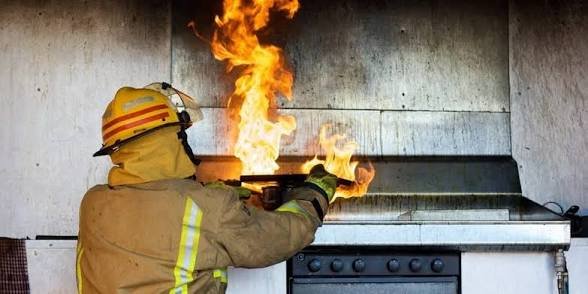
Restaurants combine cooking equipment, heat, electrical systems, gas supplies, combustible materials, staff, and customers in one busy environment. Because these hazards can exist at the same time, restaurant fire safety needs more than a few extinguishers placed around the building. It requires prevention, early detection, suitable fire-protection equipment, clear evacuation procedures, staff awareness, and regular inspection.
In Pakistan, the Pakistan Engineering Council lists the Building Code of Pakistan – Fire Safety Provisions 2016 as part of the country’s building-code framework. The provisions address areas such as fire alarms, emergency egress, evacuation drills, fire-safety equipment, and maintenance.
What Is Restaurant Fire Safety?
Restaurant fire safety is the collection of measures used to prevent fires, detect emergencies early, alert occupants, support evacuation, and limit fire-related damage.
A complete restaurant fire-safety approach can include:
- Fire detection and alarm systems
- Kitchen fire-suppression arrangements
- Suitable fire extinguishers
- Safe electrical installations
- Proper gas-supply management
- Clear emergency exits
- Emergency lighting and exit signs where required
- Staff training
- Evacuation procedures
- Regular inspection and maintenance
- Emergency communication
The exact requirements vary according to the restaurant’s size, layout, occupancy, equipment, building type, and applicable regulations.
Why Are Restaurants at Particular Fire Risk?
The kitchen is usually one of the most important areas to consider because cooking creates continuous heat and may involve cooking oils, gas appliances, electrical equipment, and ventilation systems.
Flame Defender describes commercial kitchens as high-risk environments because cooking oil, gas burners, electrical wiring, and heat can contribute to fire hazards.
However, the kitchen is not the only area that needs attention. Dining rooms, storage spaces, electrical rooms, offices, staff areas, and outdoor service areas may also have different hazards.
A restaurant’s fire-safety plan should therefore consider the entire property rather than focusing only on cooking appliances.
How Does a Restaurant Fire Alarm Work?
A fire alarm system is designed to provide early warning when smoke, heat, or another fire-related condition is detected.
Depending on the system design, detectors send signals to a fire alarm control panel. The panel processes the signal and activates notification devices such as sounders, bells, or visual indicators. This gives occupants an opportunity to respond according to the restaurant’s emergency plan.
A fire alarm system in Pakistan may use conventional, addressable, wireless, or intelligent technology. Flame Defender states that it installs several types of fire alarm systems and uses components such as smoke detectors, heat sensors, control panels, and notification devices.
The appropriate system depends on the building and its risk profile. A small restaurant and a large multi-floor restaurant complex may require very different designs.
Why Early Fire Detection Matters
A fire can grow while people are still trying to understand what is happening. Early detection is therefore an important part of protecting customers and employees.
For example, a fire beginning in a storage room may not immediately be visible to people in the dining area. Similarly, a problem in an unoccupied area could remain unnoticed without suitable detection.
A properly designed alarm system can provide an earlier warning throughout the building.
The Pakistan fire-safety provisions emphasize multiple safeguards rather than depending on a single protective measure. This principle is particularly relevant to commercial properties such as restaurants.
Kitchen Fire Safety
Kitchen safety deserves special attention because cooking equipment can create significant heat and fire hazards.
Restaurant management should establish procedures for:
- Keeping cooking areas properly maintained
- Keeping combustible materials away from heat sources
- Maintaining ventilation and extraction systems
- Monitoring cooking equipment
- Keeping emergency equipment accessible
- Ensuring staff understand the restaurant’s emergency procedures
- Arranging appropriate inspection and maintenance
Staff should never be expected to take unnecessary risks when dealing with a developing fire. The priority during a serious emergency should be following the evacuation plan and contacting appropriate emergency services.
Kitchen Fire Suppression Systems
Some commercial kitchens require dedicated suppression systems designed for their particular cooking hazards.
These systems can be designed to detect a fire condition and automatically activate an appropriate suppression agent. Flame Defender describes kitchen hood and other automatic suppression systems for commercial kitchens in Pakistan and explains that suppression systems can operate through automatic detection and control arrangements.
The system should be professionally designed for the equipment and cooking environment rather than selected solely on price.
Regular inspection and testing are also important because a suppression system that has not been maintained may not perform as expected during an emergency.
Fire Extinguishers in Restaurants
Fire extinguishers are another part of a restaurant’s overall protection strategy.
Different areas may have different fire hazards, so extinguisher selection should be based on the types of materials and equipment present. Kitchen areas, electrical rooms, storage spaces, and dining areas may not require identical equipment.
Extinguishers also need appropriate inspection and servicing. Flame Defender provides extinguisher inspection and refilling services for restaurants and hotels and notes that an extinguisher’s condition cannot always be determined simply by looking at its exterior.
Employees should receive appropriate safety training, while customers should not be expected to handle firefighting equipment.
Electrical Fire Prevention
Restaurants depend heavily on electrical equipment, including refrigerators, freezers, ovens, ventilation systems, lighting, computers, point-of-sale equipment, and other appliances.
Poorly maintained electrical systems can create additional hazards.
Good electrical fire prevention includes:
- Appropriate professional inspection
- Maintaining equipment according to manufacturer requirements
- Avoiding unsafe electrical modifications
- Keeping electrical areas accessible for inspection
- Addressing damaged cables or equipment promptly
- Avoiding unnecessary overloading of circuits
Electrical safety should form part of the restaurant’s regular maintenance program.
Gas Safety
Restaurants that use gas-powered cooking equipment need suitable gas-safety procedures.
Gas systems and appliances should be installed and maintained by appropriately qualified professionals. Staff should know the restaurant’s emergency procedures for suspected gas problems and should not attempt unsafe repairs themselves.
The objective is to reduce the possibility of leaks, equipment faults, and other conditions that could contribute to an emergency.
Emergency Exits and Escape Routes
A restaurant can have excellent detection equipment, but customers still need a safe way to leave the building.
Emergency exits and escape routes should be appropriately planned and kept clear. The Building Code of Pakistan addresses means of egress and emphasizes that routes should remain unobstructed and that exits should be appropriately identified.
Restaurant management should regularly check that:
- Corridors are not blocked by furniture or stored goods.
- Exit routes remain accessible.
- Exit signs are visible where required.
- Doors and escape routes are maintained.
- Staff know the designated evacuation routes.
- Customers can be directed toward safe exits.
During an emergency, people should follow the restaurant’s evacuation instructions and should not return to an affected building unless authorized emergency personnel determine that it is safe.
Restaurant Staff Have an Important Role
Restaurant employees are often the first people to notice unusual smoke, heat, alarms, or other warning signs.
Staff should therefore understand the restaurant’s emergency plan before an emergency occurs.
Training can cover:
- How to recognize the fire alarm signal
- How to report an emergency
- Where emergency exits are located
- Where customers should assemble
- Who has responsibility for specific emergency tasks
- How to communicate with management and emergency responders
- When evacuation should take priority
Training should be appropriate to each employee’s role. Staff should never be encouraged to take dangerous risks in an attempt to protect property.
Customer Evacuation
Unlike employees, customers may not know the building layout. A restaurant’s emergency plan should therefore make evacuation as straightforward as possible.
Clear signs, audible alarms, appropriate emergency communication, and trained staff can help direct customers toward exits.
Large restaurants may also benefit from emergency communication systems that can provide instructions across different areas of the building. Flame Defender notes that public-address systems can be integrated with fire alarm infrastructure as part of a broader life-safety strategy.
The Importance of Emergency Communication
An alarm tells people that something is wrong, but additional communication may sometimes be necessary.
A public-address system can allow authorized staff to provide clear information, such as directing customers toward particular exits or informing people that they should remain at a designated assembly point.
The communication system should complement the restaurant’s fire alarm and evacuation plan rather than replace them.
Fire Drills and Staff Training
Fire drills can help restaurant employees become familiar with emergency procedures.
A drill can reveal practical problems that may not be obvious when a plan exists only on paper. For example, management might discover that an exit is difficult to access, staff are unsure about responsibilities, or communication does not reach every part of the restaurant.
The Building Code of Pakistan includes provisions concerning emergency egress and relocation drills and the keeping of written drill records where applicable.
Drills should be planned responsibly and should not expose staff or customers to real fire or smoke.
Storage and Housekeeping
Poor housekeeping can increase fire risk by allowing combustible materials to accumulate near heat sources or electrical equipment.
Restaurants should establish routines for:
- Removing unnecessary combustible waste
- Keeping storage areas organized
- Maintaining clear access to emergency equipment
- Keeping combustible materials away from cooking equipment
- Managing packaging materials
- Maintaining clean and accessible service areas
Good housekeeping is a basic but important part of fire prevention.
Fire Alarm Maintenance
Installing a fire alarm system does not mean the system can simply be ignored afterward.
Dust, humidity, component wear, wiring problems, power issues, and other faults can affect system reliability. Flame Defender recommends regular maintenance, testing, cleaning, and checking of fire alarm components.
Restaurant management should keep appropriate records of inspections, testing, repairs, and maintenance.
If an alarm develops a fault, it should be addressed promptly rather than assuming the system will function correctly during an emergency.
Why Professional Fire Risk Assessment Matters
Every restaurant has a different layout and operating environment.
A small café with limited cooking equipment may have different requirements from a large restaurant containing several kitchens, storage rooms, multiple floors, and extensive customer seating.
A professional assessment can consider:
- Building layout
- Occupancy
- Cooking equipment
- Electrical systems
- Gas installations
- Storage
- Detection requirements
- Alarm coverage
- Evacuation routes
- Suppression requirements
- Applicable fire-safety standards
This can help determine which combination of safety measures is appropriate.
Fire Safety Should Cover the Whole Building
Restaurant fire safety should not stop at the kitchen.
Important areas can include:
Dining Areas
Customers may be unfamiliar with exits, so alarms, signs, and clear evacuation routes are important.
Storage Rooms
Paper products, packaging, furniture, and other materials can increase combustible loading.
Electrical Rooms
These areas may contain electrical equipment that requires suitable protection and maintenance.
Offices and Staff Rooms
These areas also need appropriate detection and access to evacuation routes.
Outdoor or Service Areas
Waste storage, generators, gas-related equipment, and other external facilities may require separate consideration.
Regular Testing and Documentation
Fire safety is an ongoing process. Restaurants should maintain records of relevant inspections, tests, maintenance activities, repairs, and training.
Documentation can help management understand whether equipment is being maintained and whether problems have been corrected.
The Building Code of Pakistan also emphasizes maintenance of required fire-safety devices, equipment, and systems.
Good records can therefore support both safety management and regulatory responsibilities.
How Fire Safety Systems Work Together
The most effective approach is not to depend on one piece of equipment.
A restaurant may combine:
- Fire prevention procedures
- Smoke and heat detection
- Fire alarm notification
- Kitchen suppression where appropriate
- Suitable extinguishers
- Emergency exits
- Emergency communication
- Staff training
- Evacuation drills
- Regular inspection and maintenance
Each component has a different role. Detection provides warning, alarms communicate the emergency, suppression may help control certain hazards, and evacuation procedures help people move away from danger.
The Role of Flame Defender
Flame Defender provides fire-protection services in Pakistan, including fire alarm installation, maintenance, testing, and upgrades. Its published services cover conventional and addressable systems as well as smoke and heat detection solutions.
The company also describes kitchen fire-suppression solutions and professional inspection and testing services for commercial environments.
For any restaurant, the correct system should be based on the actual building, cooking equipment, occupancy, hazards, and applicable requirements rather than using a one-size-fits-all approach.
Final Thoughts
Restaurant fire safety works through several connected layers. Prevention helps reduce the chance of a fire, detection provides early warning, alarms notify occupants, suppression systems can address specific high-risk areas, and evacuation procedures help people reach safety.
A reliable fire alarm system in Pakistan can be an important part of this strategy, but an alarm alone cannot provide complete protection. Regular maintenance, suitable equipment, clear exits, staff training, emergency communication, and professional assessment are equally important.
For restaurant owners and managers, the best approach is to treat fire safety as an ongoing responsibility. Reviewing risks regularly and maintaining the systems already installed can help create a safer environment for employees and customers.
FAQs
1. Why is fire safety especially important in restaurants?
Restaurants combine cooking heat, electrical equipment, gas systems, combustible materials, employees, and customers. A comprehensive fire-safety plan helps detect emergencies early and supports safe evacuation.
2. How does a restaurant fire alarm system work?
Fire detectors can identify smoke, heat, or other fire-related conditions and send signals to a control panel. The panel then activates notification devices to warn people inside the building.
3. Does a restaurant need a fire alarm system in Pakistan?
Fire-safety requirements depend on factors such as building type, occupancy, size, layout, and applicable regulations. Restaurants should have their specific requirements assessed by qualified fire-safety professionals and relevant authorities.
4. Are kitchen fire-suppression systems different from ordinary fire extinguishers?
Yes. A dedicated kitchen suppression system can be designed specifically for commercial cooking hazards and may operate automatically when its detection system identifies a fire condition. The appropriate system depends on the kitchen’s equipment and design.
5. How often should restaurant fire-safety equipment be maintained?
Fire alarms, suppression systems, extinguishers, and other equipment should be inspected, tested, and maintained according to applicable requirements, manufacturer instructions, and the system’s specific design. Regular maintenance helps identify faults before an emergency occurs.