
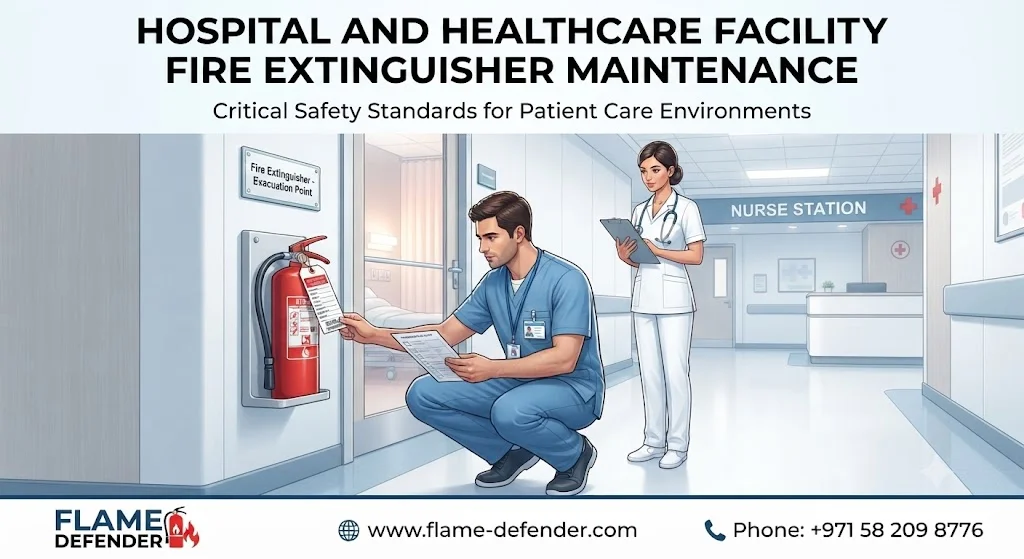
Hospitals and healthcare facilities carry a responsibility that goes far beyond patient care. They must also protect patients, staff, and visitors from fire hazards that can spread quickly through wards, operation theaters, pharmacies, and storage rooms filled with oxygen cylinders, chemicals, and electrical equipment. Because of this, fire extinguisher maintenance in hospitals is not just a legal formality, it is a life-saving necessity.
In this guide, we will explain why hospitals need regular fire extinguisher maintenance, what the process involves, how often it should be done, and why fire extinguisher refilling in Pakistan is such an important part of keeping healthcare facilities safe. We will also answer the most common questions people search for on Google, so you can get quick, clear answers in one place.
Why Fire Safety Matters So Much in Hospitals
Hospitals are unique environments. Unlike offices or warehouses, they combine several fire risk factors at once:
- Oxygen supply lines and cylinders, which can turn a small fire into a fast-spreading one
- Electrical and diagnostic equipment running 24/7 without breaks
- Flammable chemicals and sanitizers used in labs, operation theaters, and cleaning routines
- Patients who cannot evacuate quickly, including those in ICUs, on ventilators, or recovering from surgery
A single malfunctioning extinguisher during an emergency can mean the difference between a contained incident and a major disaster. This is why healthcare facilities across Pakistan are increasingly focused on proper fire extinguisher inspection, servicing, and refilling schedules.
What Does Fire Extinguisher Maintenance Actually Involve?
Many people assume that once a fire extinguisher is installed, it stays ready to use forever. In reality, extinguishers lose pressure, their chemical agents degrade, and their components wear out over time. Proper maintenance includes:
1. Monthly Visual Inspection
Staff or a designated fire safety officer checks that the extinguisher is in its correct place, the pressure gauge shows the right reading, the pin and tamper seal are intact, and there is no visible damage or corrosion.
2. Annual Professional Servicing
A certified fire safety company inspects the internal components, tests the pressure, cleans the nozzle and hose, and confirms the extinguisher meets safety standards.
3. Refilling
Depending on usage and the type of extinguisher (CO2, dry powder, foam, or water-based), refilling is required every 1 to 5 years, or immediately after use — even a partial discharge.
4. Hydrostatic Testing
Extinguisher cylinders are pressure-tested every few years to make sure the tank itself is still structurally safe, especially important for older units.
5. Replacement of Damaged Units
Any extinguisher with rust, dents, a cracked hose, or a broken gauge should be replaced rather than repaired.
How Often Should Hospitals Refill Fire Extinguishers?
This is one of the most common questions healthcare facility managers ask. As a general rule:
| Extinguisher Type | Recommended Refill Interval |
|---|---|
| CO2 Extinguishers | Every 5 years (or after use) |
| Dry Powder (ABC/DCP) | Every 1–2 years |
| Foam-Based | Every 1 year |
| Water-Based | Every 1 year |
However, hospitals should not rely on time intervals alone. Every extinguisher should be checked monthly, and any drop in pressure, visible damage, or partial use should trigger an immediate refill regardless of when the last one was done.
Why Choose a Professional Service for Fire Extinguisher Refilling in Pakistan
Refilling a fire extinguisher is not a task for untrained staff. It requires the right chemical agents, correct pressure calibration, and proper safety testing to ensure the extinguisher will actually work when needed. Using an uncertified or low-quality refilling service can leave a hospital with extinguishers that look fine on the outside but fail during an actual emergency.
This is where a trusted provider like Flame Defender plays an important role. Professional fire extinguisher refilling in Pakistan should include:
- Certified technicians trained in handling different extinguisher types
- Genuine, high-quality fire-fighting agents
- Proper pressure testing after refilling
- Documentation and service records for compliance and audits
- Timely response for hospitals that cannot afford safety downtime
Hospitals in cities across Pakistan — including Karachi, Lahore, Islamabad, and Rawalpindi are held to fire safety compliance standards by health authorities and insurance providers. Working with an experienced local fire safety company ensures your facility stays compliant and genuinely protected, not just on paper.
Fire Safety Compliance for Healthcare Facilities in Pakistan
Regulatory bodies and hospital accreditation programs in Pakistan increasingly require documented fire safety measures, including:
- A fire extinguisher placed within reach on every floor and department
- Clear signage showing extinguisher locations and usage instructions
- Regular maintenance logs available for inspection
- Staff training on how to use extinguishers correctly during an emergency
- A working fire alarm and evacuation plan integrated with extinguisher placement
Hospitals seeking accreditation, insurance renewal, or government approval often need to show maintenance certificates as proof that their fire safety equipment is inspected and refilled on schedule.
Common Mistakes Hospitals Make with Fire Extinguisher Maintenance
- Skipping monthly checks because staff assume annual servicing is enough
- Using the same extinguisher type everywhere, without matching the type to the specific fire risk in each department (electrical, chemical, or general)
- Delaying refills after partial use, thinking the extinguisher still has “enough” agent left
- Placing extinguishers in hard-to-reach locations, slowing down emergency response
- Not training new staff on how to read a pressure gauge or operate an extinguisher
Avoiding these mistakes starts with partnering with a reliable maintenance provider and building a simple internal checklist that staff follow every month.
Choosing the Right Fire Extinguisher Type for Different Hospital Areas
Not every extinguisher works for every type of fire. Hospitals should match extinguisher types to the risks present in each area:
- Operation theaters and labs: CO2 extinguishers, which leave no residue and are safe near sensitive equipment
- Wards and general areas: Water or foam-based extinguishers for ordinary combustibles
- Electrical and server rooms: CO2 or dry chemical extinguishers, never water-based
- Kitchens and cafeterias: Wet chemical extinguishers designed for cooking oil fires
- Storage and pharmacy areas: Dry powder extinguishers for chemical and flammable liquid risks
Getting this mix right, and keeping every unit properly refilled and tested, is central to a hospital’s overall fire safety plan.
10 Frequently Asked Questions
1. How often should fire extinguishers be refilled in a hospital? Most hospital fire extinguishers should be refilled every 1 to 5 years depending on the type, and immediately after any use, even partial. Monthly visual checks help catch problems before the scheduled refill date.
2. What is the cost of fire extinguisher refilling in Pakistan? Costs vary based on extinguisher type, size, and location, generally ranging from a few hundred to a few thousand rupees per unit. Hospitals with many extinguishers often get better rates through annual maintenance contracts with a fire safety provider.
3. Can a fire extinguisher be refilled at any local shop? No. Refilling should only be done by certified technicians using approved fire-fighting agents and proper pressure-testing equipment. Untrained refilling can result in extinguishers that fail during real emergencies.
4. How do I know if a hospital fire extinguisher needs refilling? Check the pressure gauge — if the needle is outside the green zone, it needs attention. Other signs include a broken tamper seal, visible damage, corrosion, or a due date on the service tag that has passed.
5. What type of fire extinguisher is best for hospitals? Most hospitals use a combination: CO2 extinguishers for electrical and sensitive medical equipment areas, and dry powder or foam extinguishers for general wards, storage, and administrative areas.
6. Is fire extinguisher maintenance mandatory for hospitals in Pakistan? Yes, healthcare facilities are generally required to maintain functional fire safety equipment as part of building safety codes, health department regulations, and accreditation requirements. Documentation of regular servicing is often needed for compliance checks.
7. How long does a fire extinguisher refill take? A standard refill typically takes a few hours per unit, including pressure testing, once picked up by a certified service provider. Larger hospitals with many units usually schedule bulk servicing to minimize downtime.
8. What happens if an expired fire extinguisher is used during a fire? An expired or poorly maintained extinguisher may have insufficient pressure or a degraded agent, meaning it could fail to put out the fire or not discharge at all, putting lives and property at serious risk.
9. How many fire extinguishers does a hospital need? This depends on the facility’s size and layout, but general safety guidelines recommend at least one extinguisher within a short walking distance on every floor and in every high-risk department, such as labs, kitchens, and electrical rooms.
10. Who provides reliable fire extinguisher refilling services in Pakistan? Established fire safety companies with certified technicians and proper testing equipment, such as Flame Defender, offer professional fire extinguisher refilling in Pakistan with documented service records for compliance and peace of mind.
Final Thoughts
Fire extinguisher maintenance is one of those responsibilities that can easily be overlooked until it is too late. For hospitals and healthcare facilities, where lives are already at their most vulnerable, keeping fire safety equipment fully functional is not optional, it is essential.
Regular inspections, timely refilling, and working with a trusted local provider for fire extinguisher refilling in Pakistan can make sure that when an emergency happens, every extinguisher in the building is ready to do its job. Investing in proper maintenance today is a small step that protects patients, staff, and the entire facility tomorrow.