
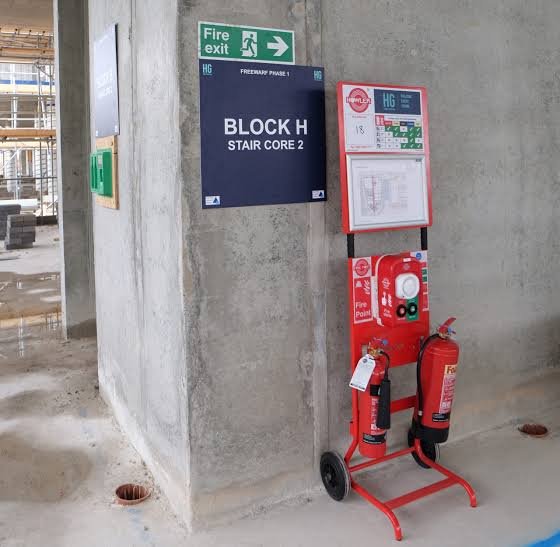
Construction sites are busy environments where workers use electrical equipment, operate machinery, store building materials, and perform activities that can create heat or sparks. Although these activities are essential for completing a project, they can also introduce significant fire hazards if suitable precautions are not followed.
A fire on a construction site can threaten workers, damage expensive equipment, destroy materials, delay project completion, and spread to nearby buildings. The risks may be higher when temporary electrical connections, combustible waste, flammable products, and incomplete escape routes are present at the same time.
In Pakistan, construction companies, contractors, engineers, property developers, and site supervisors should treat fire safety as an essential part of project planning. Preventive measures need to be considered from the earliest stages of construction and adjusted as the building develops.
A suitable Fire alarm system in Pakistan can form part of a building’s fire protection arrangements, but fire safety on a construction site involves much more than installing an alarm. It also requires appropriate firefighting equipment, safe storage, housekeeping, worker training, emergency access, and clear evacuation procedures.
This guide explains the main construction-site fire hazards and how to use fire safety equipment and procedures responsibly. It also discusses the importance of planning, maintenance, and compliance with applicable fire safety requirements in Pakistan.
1. Why Fire Safety Is Essential on Construction Sites
Unlike a completed building, a construction site changes continuously. Temporary walls may be installed, permanent electrical systems may remain incomplete, and escape routes can change as new floors and sections are added.
These changing conditions make regular fire risk assessments important.
Common construction-site fire hazards include:
- Faulty temporary electrical connections and damaged cables.
- Welding, cutting, and other hot-work activities.
- Improper storage of flammable liquids and gases.
- Accumulation of cardboard, timber, packaging, and construction waste.
- Unsafe use of heaters and other heat-producing equipment.
- Smoking in prohibited areas.
- Inadequate fire detection and emergency communication.
- Blocked access routes and poorly marked exits.
A small incident can become more serious when combustible materials are stored near an ignition source or workers do not know how to raise the alarm.
Fire safety measures help reduce these risks while supporting worker protection, business continuity, and responsible project management. They should be included in daily site operations rather than treated as a final inspection requirement.
2. Identify Fire Hazards Before Work Begins
The first step in construction-site fire safety is to identify potential hazards and decide how they will be controlled.
A risk assessment should consider the type of work being performed, materials being used, equipment installed, number of workers present, and condition of the building.
For example, a site carrying out welding may have different hazards from one focused on painting, electrical installation, or interior finishing. The assessment should reflect these differences.
Site managers should consider where combustible materials will be stored, how workers will leave the building, and whether emergency responders can reach the affected area.
The assessment should also be reviewed when work activities change. A new storage area, temporary electrical installation, or change to an escape route may introduce risks that were not present during an earlier phase.
Responsibilities should be clearly assigned. Supervisors, contractors, safety officers, and workers need to understand how to report hazards and who is responsible for correcting them.
Documenting inspections and corrective actions helps management identify recurring problems and confirm that important safety measures remain in place.
3. Use Fire Extinguishers Correctly
Fire extinguishers are important pieces of firefighting equipment, but the wrong type may be ineffective or make a situation more dangerous.
Different extinguishers are designed for different fire risks. Before selecting equipment, site managers should consider the materials present, electrical hazards, flammable liquids, and other conditions identified in the risk assessment.
Select the appropriate equipment
Multipurpose dry chemical extinguishers may be suitable for several common fire classes, depending on the product’s rating. Carbon dioxide extinguishers may be appropriate for certain electrical equipment and other specified hazards.
Other risks may require specialised equipment. For example, some combustible metals require extinguishing agents designed specifically for those materials.
Water extinguishers should not be used on energised electrical equipment or flammable-liquid fires unless the equipment is specifically rated and approved for that application.
A qualified fire safety professional can help determine the correct types, quantities, and locations of extinguishers for the site.
Keep extinguishers accessible
Extinguishers should be clearly identified, appropriately mounted, and accessible without requiring workers to move towards a fire.
They should not be hidden behind stored materials or placed where machinery and vehicles can damage them. Their locations should be included in site safety information.
Understand the limits of an extinguisher
Portable extinguishers are generally intended for small, manageable fires. Workers should only consider using one if they have received suitable training, the equipment is appropriate, the fire is still limited, and a safe exit remains available behind them.
If the fire spreads, smoke becomes heavy, or the situation is uncertain, workers should leave the area and raise the alarm.
The priority is always to protect people, not equipment or building materials.
4. Manage Hot Work Safely
Hot work includes activities such as welding, cutting, grinding, and other operations that can produce sparks or heat capable of igniting combustible materials.
These activities require careful planning because sparks may travel beyond the immediate work area and ignite materials that are not directly visible to the worker.
Before hot work begins, the responsible supervisor should assess the area, confirm that appropriate precautions are in place, and follow any required authorisation or permit procedure.
Combustible waste should be removed from the work area where practical, and suitable protection should be provided for materials that cannot be moved. Nearby openings and spaces should also be considered because sparks or heat may affect adjoining areas.
Suitable firefighting equipment should be available, and workers should understand the emergency arrangements before work starts.
Where required by the site procedure, a designated fire watch should monitor the work area during the activity and for the prescribed period afterwards. The duration and arrangements should be determined by the risk assessment and applicable requirements.
Hot work should stop if conditions become unsafe or required safeguards are no longer available.
These precautions help reduce the chance that routine construction activities will start a fire.
5. Store Flammable Materials Properly
Construction sites may contain paints, solvents, adhesives, fuels, gas cylinders, cleaning products, and other materials that can contribute to a fire.
Incorrect storage can increase the likelihood of ignition and make an incident more difficult to control.
Flammable materials should be stored in designated areas appropriate to their properties and the manufacturer’s instructions. Storage arrangements should account for ventilation, ignition sources, access restrictions, and separation from incompatible materials.
Containers should remain properly labelled and closed when not in use. Damaged containers and leaks should be reported immediately, and spills should be managed according to the product’s safety information and the site’s emergency procedures.
Smoking and open flames should be prohibited in designated storage areas, with clear signs displayed where necessary.
Gas cylinders should be handled and stored according to applicable requirements, with suitable protection from damage and heat. Only trained and authorised personnel should manage equipment requiring specialised handling.
Site managers should keep storage areas organised and avoid allowing combustible materials to accumulate near temporary buildings, electrical equipment, or escape routes.
6. Maintain Electrical Safety
Temporary electrical installations are common during construction. Poor connections, overloaded circuits, damaged insulation, and unsuitable equipment can create overheating and fire hazards.
Electrical installations should be designed, installed, and inspected by competent personnel. Workers should not improvise electrical connections or attempt repairs beyond their training and authorisation.
Regular checks should identify damaged cables, loose connections, exposed conductors, and equipment showing signs of overheating. Faulty equipment should be taken out of service until it has been assessed and made safe.
Power distribution equipment should be protected from conditions for which it is not designed, including water exposure and physical damage.
Cables should be routed so they do not create unnecessary trip hazards or become crushed by vehicles and machinery.
Site managers should also ensure that electrical equipment is used according to its intended purpose and manufacturer guidance.
Good electrical housekeeping reduces preventable hazards and helps keep work areas organised.
7. Install and Maintain Fire Alarm Systems During Construction
Fire detection and alarm arrangements should be considered throughout the construction process. A permanent system may not be fully operational during the early stages, but this does not remove the need for a suitable method of warning workers about a fire.
A Fire alarm system in Pakistan may include automatic detectors, manual alarm points, control equipment, audible alarms, and visual warning devices, depending on the building’s design and applicable requirements.
Plan for changing site conditions
As construction progresses, the number of enclosed spaces, floors, workers, and potential fire hazards can change. Fire safety arrangements should be reviewed to ensure that warnings can reach everyone who needs them.
Temporary warning arrangements may be necessary until permanent systems are installed and commissioned. These should be selected according to the risk assessment and relevant requirements.
Install permanent systems progressively where appropriate
The Pakistan Engineering Council’s Building Code of Pakistan — Fire Safety Provisions 2016 addresses fire protection during construction and demolition, including the installation of new fire protection systems as construction progresses.
Project teams should consult the applicable provisions and relevant authorities to determine what is required at each stage of a particular project.
Test and maintain equipment
Fire alarm equipment should be installed, tested, and maintained by competent personnel. Any temporary or permanent system should be checked according to its design, manufacturer’s instructions, and applicable requirements.
Workers should know how an alarm is raised, what the warning sounds or looks like, and where to find evacuation instructions.
An alarm is only useful when people recognise it and know what to do next. It should therefore be supported by communication, training, and clear emergency procedures.
8. Keep Escape Routes and Emergency Access Clear
An effective evacuation plan depends on routes that workers can use safely.
Construction materials, tools, waste, temporary barriers, and parked vehicles should not obstruct designated escape routes or emergency access points. As the project develops, routes should be reviewed and updated to reflect changing site conditions.
Where applicable, exits should be clearly identified and provided with suitable lighting. Temporary stairs, walkways, and access routes should be maintained in a condition that supports safe movement.
Workers should know where to assemble after leaving the building and how supervisors will account for people who were present.
Emergency vehicle access also requires attention. Site layouts should allow responders to reach the relevant areas as far as reasonably practicable, subject to the project design and local requirements.
If an escape route becomes unavailable, the issue should be reported immediately and an alternative arrangement communicated before work continues in the affected area.
Never assume that workers will be able to find an unfamiliar exit during a fire without prior information.
9. Maintain Good Housekeeping
Construction waste can become fuel for a fire. Timber offcuts, cardboard packaging, plastic wrapping, discarded materials, and oily waste should not be allowed to accumulate unnecessarily.
A housekeeping programme should specify who removes waste, how frequently work areas are inspected, and where different materials are stored.
Waste should be placed in suitable designated containers and removed according to site procedures. Materials that may ignite under particular conditions should be managed in line with their specific safety requirements.
Walkways, stairways, exits, fire equipment, and electrical panels should remain unobstructed.
Good housekeeping also helps workers identify leaks, damaged equipment, and other hazards before they contribute to an emergency.
Supervisors should include housekeeping in routine inspections rather than waiting until the end of a work shift or project stage.
10. Train Workers and Practise Emergency Procedures
Equipment alone cannot provide effective protection if workers do not understand how to respond.
Every worker should receive appropriate site induction and understand the fire risks associated with their duties. Training should cover how to report a fire, activate the alarm, follow evacuation instructions, and identify the assembly point.
Workers should also know which activities require additional authorisation and how to report damaged equipment, unsafe storage, or blocked exits.
Emergency drills should be organised as appropriate to the project, the risk assessment, and applicable requirements. Drills can help identify communication problems, confusing routes, or difficulties accounting for workers.
Training should be provided in languages and formats workers can understand. New workers and contractors should receive relevant information before beginning activities that introduce additional hazards.
Supervisors should review lessons from drills and actual incidents and update the emergency plan where necessary.
The objective is to ensure that people respond calmly and promptly, without attempting unsafe firefighting or returning to a dangerous area.
11. Prepare an Emergency Response Plan
A construction-site fire emergency plan should explain how workers will be warned, evacuated, accounted for, and directed towards emergency assistance.
The plan should identify responsibilities for raising the alarm, contacting emergency services, guiding evacuation where appropriate, and providing responders with relevant information.
It should also identify the site’s address or access point, assembly arrangements, and any special hazards that emergency personnel should know about.
Workers should be instructed to leave promptly when an evacuation is ordered. They should not stop to collect tools, personal belongings, or construction materials.
No one should re-enter the affected area until the responsible emergency authorities confirm it is safe.
The plan should be reviewed whenever site layout, access, occupancy, or work activities change significantly.
A documented plan provides a consistent framework for responding to an emergency and helps reduce confusion during a stressful situation.
12. Fire Safety Requirements for Construction Sites in Pakistan
Construction companies should identify the fire safety requirements applicable to their project, including the building’s design, location, occupancy, stage of construction, and relevant authority.
The Building Code of Pakistan — Fire Safety Provisions 2016, published by the Pakistan Engineering Council, is an important national reference for fire prevention, life safety, and building fire protection. Its construction and demolition provisions address matters such as housekeeping, site security, fire protection systems, worker training, emergency communication, and pre-fire planning.
The Pakistan Engineering Council also lists the Occupational Safety and Health Code of Practice for Construction Sector of Pakistan among its policy and standards resources. Project managers should consult the current official documents and determine which provisions and other requirements apply to their work.
Depending on the project and location, additional rules, approvals, or inspections may apply through relevant building control bodies, local authorities, and fire safety agencies.
Contractors should not assume that every project has identical requirements. They should obtain advice from competent professionals and confirm compliance with the appropriate authority.
Keeping inspection records, maintenance documentation, training records, and emergency plans can help demonstrate that fire safety is being managed systematically.
13. Make Fire Safety Part of Everyday Site Management
The strongest fire safety programmes are integrated into routine project management.
Before each work period, supervisors can review planned activities and identify tasks that may introduce additional hazards. Regular inspections can check storage arrangements, electrical equipment, alarms, escape routes, and firefighting equipment.
When unsafe conditions are identified, they should be corrected promptly and the responsible person informed.
Contractors and subcontractors should understand the same essential site rules, even when they perform different types of work. Clear communication helps prevent one team’s activity from creating a hazard for another.
Management should also ensure that fire safety responsibilities are supported with suitable resources, training, and supervision.
Fire safety is not solely the responsibility of a safety officer. Engineers, site managers, contractors, and workers all contribute by following procedures and reporting problems.
Conclusion
Fire safety for construction sites requires continuous attention because hazards change as a project develops. Hot work, temporary electrical installations, flammable materials, combustible waste, and incomplete escape routes can all increase the risk of a fire.
Using suitable firefighting equipment, maintaining alarm systems, storing hazardous materials responsibly, keeping access routes clear, and training workers are essential elements of a comprehensive safety programme.
In Pakistan, project teams should consult the applicable building and occupational safety requirements and work with qualified professionals to establish appropriate controls.
A reliable fire alarm system can help warn people, but it must be supported by evacuation arrangements, equipment maintenance, and clear communication. The purpose of these measures is not simply to protect buildings and materials; it is to help every worker return home safely.
By making fire prevention part of everyday construction management, organisations can reduce avoidable risks, improve preparedness, and support safer project delivery.
Frequently Asked Questions (FAQs)
1. Why is fire safety important on construction sites?
Construction sites often contain temporary electrical systems, combustible materials, flammable products, and activities that generate heat or sparks. Fire safety measures help protect workers, nearby communities, equipment, and property while reducing the risk of costly project delays.
2. What fire safety equipment should a construction site have?
Equipment depends on the site’s hazards, size, activities, and applicable requirements. It may include suitable fire extinguishers, fire detection and warning equipment, emergency lighting, signs, and other required fire protection systems. A competent professional should assess the site to determine the appropriate arrangement.
3. How should workers use fire extinguishers safely?
Workers should use only equipment suitable for the fire type and only when trained, the fire is small and manageable, and a safe exit remains available. If the fire spreads, smoke increases, or conditions are unsafe, they should evacuate and raise the alarm.
4. Why is a fire alarm system important during construction?
A fire alarm system or suitable temporary warning arrangement can alert workers to a possible fire so they can follow the emergency plan. Arrangements should reflect the changing layout and risks of the construction site and comply with applicable requirements.
5. What are the main fire safety responsibilities of construction managers?
Construction managers should assess fire risks, establish site procedures, maintain suitable equipment, keep escape routes clear, arrange worker training, monitor hazardous activities, and prepare emergency plans. They should also verify which fire safety requirements apply to the project and address identified hazards promptly.