
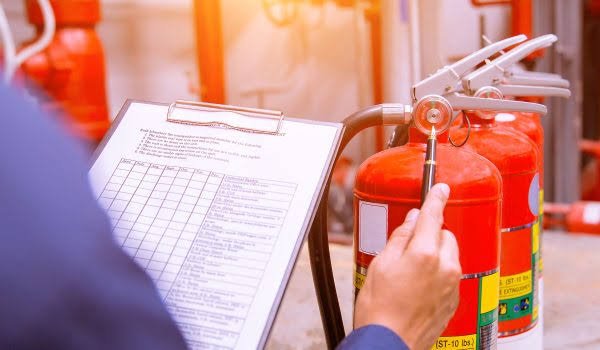
Fire safety is an important part of protecting a home and the people who live in it. Many families think about fire safety only after an accident occurs, but identifying hazards before an emergency can help reduce risk and improve preparedness. A fire safety audit provides a structured way to examine a property, identify possible hazards, review existing safety measures, and determine where improvements may be needed.
Although professional fire safety audits are commonly associated with offices, factories, schools, shopping centers, hospitals, and other commercial buildings, the same basic principles can be useful for residential properties. Families can review electrical equipment, cooking areas, escape routes, smoke alarms, fire extinguishers, and emergency procedures as part of a household fire-safety check.
The Building Code of Pakistan – Fire Safety Provisions 2016 covers fire prevention, life safety, and fire protection for buildings and building-like structures. Its scope includes inspection of buildings, equipment and fire-safety systems, assessment of existing occupancies, maintenance and testing of fire protection systems, access for fire department operations, and means of egress.
What Is a Fire Safety Audit?
A fire safety audit is a systematic review of a building’s fire hazards and protective measures.
The purpose is to identify conditions that could contribute to a fire or make it difficult for occupants to respond safely. Depending on the type of property, an audit can examine both physical equipment and safety procedures.
A review may cover:
- Electrical installations
- Cooking and heating equipment
- Smoke detection
- Fire alarm systems
- Fire extinguishers
- Emergency exits
- Escape routes
- Emergency lighting
- Fire doors
- Storage practices
- Combustible materials
- Emergency contact procedures
- Evacuation arrangements
- Inspection and maintenance records
The Building Code of Pakistan specifically includes inspection, assessment, maintenance, repair, servicing, and testing of fire protection systems and equipment within its broader fire-safety scope.
Why Should Families Care About Fire Safety Audits?
A home can contain many ordinary items that become hazardous during a fire. Electrical appliances, cooking equipment, furniture, curtains, paper, clothing, plastics, and other household materials can contribute to fire growth.
Families may also unintentionally create hazards by:
- Overloading electrical outlets
- Blocking exits with furniture
- Storing combustible items near heat sources
- Leaving cooking equipment unattended
- Ignoring damaged electrical wires
- Keeping fire extinguishers inaccessible
- Failing to test smoke alarms
- Not having an emergency evacuation plan
A household fire-safety review can help identify these conditions before they become part of an emergency.
Understanding the Main Goals of an Audit
A fire safety audit generally has several objectives.
Identifying Fire Hazards
The first objective is to identify potential sources of ignition and materials that could contribute to fire.
Common sources include electrical equipment, cooking appliances, heaters, and other heat-producing devices.
Checking Detection and Warning
A building should have an appropriate method of detecting and communicating a fire where required.
The Building Code of Pakistan states that buildings of a size, arrangement, or occupancy where a fire would not provide adequate warning to occupants should have fire alarm systems where necessary.
Reviewing Escape Routes
People need a practical way to leave a building during an emergency.
An audit can examine whether doors, corridors, stairs, and other means of egress are accessible and appropriately arranged.
Reviewing Fire Protection Equipment
Fire extinguishers, alarms, detectors, emergency lighting, and other systems should be checked for suitability, accessibility, condition, and maintenance.
Checking Emergency Procedures
A household or organization should know what to do if an alarm sounds or a fire is discovered.
What Does a Home Fire Safety Audit Check?
A residential audit does not necessarily require complicated equipment. Many important observations can be made by systematically reviewing the home.
Electrical Safety
Electrical systems are an important part of household fire prevention.
Families can look for:
- Damaged wires
- Loose plugs
- Overloaded outlets
- Improper extension-cord use
- Appliances showing signs of damage
- Electrical equipment placed near water
- Unusual heat from sockets or appliances
Electrical problems should be inspected and repaired by an appropriately qualified professional rather than handled through unsafe temporary repairs.
Kitchen Fire Safety
The kitchen can contain several heat sources and combustible materials.
A home fire-safety review should consider:
- Cooking appliances
- Gas connections
- Electrical cooking equipment
- Flammable materials near cooking areas
- Ventilation
- Accessibility of appropriate fire protection equipment
Keeping unnecessary combustible materials away from cooking appliances can help reduce fire risk.
Families should also ensure that everyone understands the household’s emergency procedure if a cooking fire occurs.
Heating Equipment
Heating equipment can become hazardous when it is damaged, improperly installed, or placed too close to combustible materials.
During an audit, check the location and condition of heaters and other heat-producing appliances.
Follow the manufacturer’s safety instructions and keep combustible materials at appropriate distances.
Smoke Alarms and Fire Detection
Early warning can be an important part of household fire safety.
Smoke alarms can detect smoke and provide an audible warning. Larger or more complex buildings may use a complete fire alarm system containing interconnected detectors, manual call points, control equipment, notification appliances, and other components.
The Building Code of Pakistan includes provisions addressing smoke alarms and fire alarm systems, including requirements for certain residential and other occupancies.
When reviewing a home, families should check whether smoke alarms are present where appropriate, whether they are functional, and whether their batteries or power supplies require attention.
Fire Alarm System in Pakistani Buildings
The need for a fire alarm system in Pakistani buildings depends on factors such as occupancy, building size, use, design, and applicable requirements.
The Building Code of Pakistan Fire Safety Provisions 2016 states that where building fire alarm systems or automatic fire detectors are required, they should be installed in accordance with applicable standards and the relevant provisions.
The code also identifies several possible functions of a building fire alarm system, including manual alarm initiation, automatic detection, monitoring of fire suppression systems, activation of emergency functions, and fire alarm notification.
For a family living in a standard home, this does not necessarily mean that a complex commercial alarm installation is required. The appropriate arrangement depends on the property and applicable requirements.
Fire Extinguishers
Fire extinguishers can be an important component of fire preparedness.
However, the correct extinguisher depends on the type of fire hazard. Different extinguishing agents are designed for different classes of fire.
During a fire-safety audit, check:
- Whether suitable extinguishers are available where appropriate
- Whether they are accessible
- Whether they are visibly identified
- Whether they appear damaged
- Whether required inspection or servicing is current
An extinguisher should not be treated as a substitute for evacuation. If a fire is growing or conditions are unsafe, people should leave the area and seek emergency assistance.
Emergency Exits and Escape Routes
A safe escape route is one of the most important parts of fire preparedness.
During a household review, examine:
- Main exits
- Alternative exits
- Stairways
- Hallways
- Doors
- Windows that may form part of an emergency plan
- Outdoor assembly areas
Furniture, boxes, bicycles, storage containers, or other objects should not unnecessarily obstruct escape routes.
The Building Code of Pakistan requires means of egress to be arranged or marked so that the route to a place of safety can be clearly identified, with illumination provided for means of egress.
Emergency Lighting
If a building requires emergency lighting, the system should be checked as part of a fire-safety inspection.
Emergency lighting can help occupants identify escape routes when normal lighting is unavailable.
This can be particularly important in larger residential buildings, apartment complexes, commercial properties, and other structures where evacuation routes may be difficult to navigate in darkness.
Fire Doors and Compartmentation
Some buildings use fire-rated doors and other construction features to limit the spread of fire and smoke.
A fire-safety review can examine whether such doors are maintained properly and whether they are being used correctly.
Doors designed to provide fire protection should not be unnecessarily propped open or modified in a way that compromises their intended function.
The Building Code of Pakistan addresses protection of vertical openings and other construction features intended to limit the movement of fire, smoke, or fumes through a building.
Storage Practices
Storage can have a significant effect on fire safety.
Families should avoid accumulating unnecessary combustible materials in areas close to heat-producing appliances or electrical equipment.
Examples include:
- Cardboard boxes
- Paper
- Clothing
- Curtains
- Cleaning products
- Packaging materials
- Plastics
Storage should not obstruct electrical panels, exits, stairways, corridors, or fire protection equipment.
Checking the Fire Safety Plan
A fire safety audit should also consider what people will do during an emergency.
A basic household plan can identify:
- Primary escape route
- Alternative escape route
- Outdoor meeting point
- Emergency contact information
- Responsibilities of family members
- Assistance for children, older family members, or anyone requiring additional support
Everyone in the household should understand the plan.
Fire Drills at Home
Fire drills are often associated with schools and workplaces, but families can also discuss and practice their emergency plan.
A simple household exercise can help family members become familiar with:
- Alarm sounds
- Exit routes
- Meeting locations
- Emergency communication
- Staying away from unsafe areas
The Building Code of Pakistan includes provisions concerning fire drills and evacuation planning for applicable buildings.
The objective is preparedness rather than creating unnecessary fear.
What Happens During a Professional Fire Safety Audit?
For a commercial or larger residential property, a professional audit may involve several stages.
1. Initial Review
The auditor gathers information about the building, occupancy, construction, fire protection systems, and previous inspections.
2. Physical Inspection
The premises are examined to identify hazards and evaluate existing protective measures.
3. Documentation Review
Relevant documents may include:
- Fire protection system records
- Inspection reports
- Maintenance records
- Equipment certificates
- Fire evacuation plans
- Previous audit reports
- System drawings
4. Risk Identification
Observed issues are documented and assessed according to their significance and the applicable requirements.
5. Recommendations
The final report can identify corrective measures, maintenance needs, system improvements, or areas requiring professional attention.
Why Maintenance Records Matter
Fire safety is not a one-time activity.
A system may work correctly when installed but become unreliable if it is not inspected and maintained.
The Building Code of Pakistan requires relevant fire protection systems and components to be inspected, tested, and maintained according to applicable requirements and manufacturer instructions.
Families should therefore keep records of important maintenance and testing, particularly where a property has installed fire protection systems.
For larger buildings and businesses, maintaining organized documentation is even more important.
When Should a Fire Safety Audit Be Conducted?
The appropriate frequency depends on the property, its use, applicable regulations, and changes to the building.
An additional review may be appropriate after:
- Major renovations
- Changes in occupancy
- Installation of new electrical systems
- Changes to cooking facilities
- Addition of new fire protection equipment
- Changes to escape routes
- A fire or other significant incident
The Building Code of Pakistan also addresses changes of occupancy and requires applicable fire protection and safety provisions to be considered when the use of a building changes.
Common Problems Found During Fire Safety Reviews
Several problems can occur repeatedly in buildings.
These may include:
- Blocked escape routes
- Expired or poorly maintained equipment
- Damaged electrical wiring
- Missing or poorly positioned signage
- Inaccessible fire extinguishers
- Non-functional smoke alarms
- Poor storage practices
- Lack of an evacuation plan
- Inadequate maintenance records
Identifying these issues is one of the practical benefits of conducting a structured review.
Fire Safety Audits for Apartments and Residential Buildings
Apartment buildings can require additional consideration because many people may share the same structure.
A review may consider:
- Common corridors
- Staircases
- Emergency exits
- Fire doors
- Alarm systems
- Smoke detection
- Electrical rooms
- Generator areas
- Parking areas
- Firefighting equipment
- Emergency lighting
Residents and building management should understand their respective responsibilities and follow applicable requirements.
Choosing Professional Fire Safety Services
For larger properties, a professional assessment can provide a more detailed review than a simple household checklist.
When selecting a fire-safety service provider, property owners can consider:
- Relevant technical qualifications
- Experience with similar buildings
- Knowledge of applicable codes
- Inspection methodology
- Documentation provided
- Maintenance and testing capabilities
For information about fire protection equipment and services available in Pakistan, Flame Defender is one source that families and property owners can review when researching fire-safety solutions.
Building a Fire-Safe Home
A fire safety audit is most useful when its findings are followed by practical improvements.
Families can build stronger fire-safety habits by:
- Keeping electrical equipment in good condition
- Maintaining clear exits
- Storing combustible materials safely
- Checking smoke alarms
- Keeping appropriate fire protection equipment accessible
- Developing an evacuation plan
- Reviewing emergency contacts
- Arranging professional inspections when appropriate
Fire safety should be treated as an ongoing responsibility rather than a one-time task.
Conclusion
Fire safety audits provide a structured way to identify hazards, examine protective equipment, review escape routes, and improve emergency preparedness. While professional audits are particularly important for larger and more complex buildings, families can also apply many of the same principles to their homes.
Electrical safety, cooking practices, smoke detection, fire alarms, extinguishers, emergency exits, storage, and evacuation planning all contribute to a safer living environment.
In Pakistan, the Building Code of Pakistan – Fire Safety Provisions 2016 provides a framework covering fire prevention, life safety, fire protection, inspection, maintenance, and testing. The exact requirements applicable to a property depend on its type, occupancy, size, and other characteristics.
The main purpose of a fire safety audit is not simply to identify problems. It is to help property owners and occupants understand those problems and take appropriate corrective action before an emergency occurs.
Frequently Asked Questions
1. What is a fire safety audit?
A fire safety audit is a systematic examination of a building’s fire hazards, protective equipment, escape routes, detection systems, emergency procedures, and maintenance arrangements.
2. Do homes need fire safety audits?
A professional audit may not be necessary for every small home, but families can conduct regular household fire-safety checks. Larger homes, apartment buildings, and properties with complex systems may benefit from professional assessment.
3. What does a fire safety audit check?
It can examine electrical hazards, cooking equipment, smoke detection, fire alarms, extinguishers, emergency exits, lighting, fire doors, storage, evacuation plans, and maintenance records.
4. Is a fire alarm system required in every Pakistani home?
Requirements vary according to the building’s characteristics and applicable regulations. The Building Code of Pakistan contains specific provisions for fire alarms and smoke detection in different occupancies, so the appropriate arrangement should be determined according to the property and applicable authority requirements.
5. How often should a fire safety audit be conducted?
There is no single interval suitable for every property. The appropriate frequency depends on the building, occupancy, installed systems, applicable regulations, and changes to the property. Additional reviews may be appropriate after renovations, occupancy changes, or significant fire-safety incidents.