
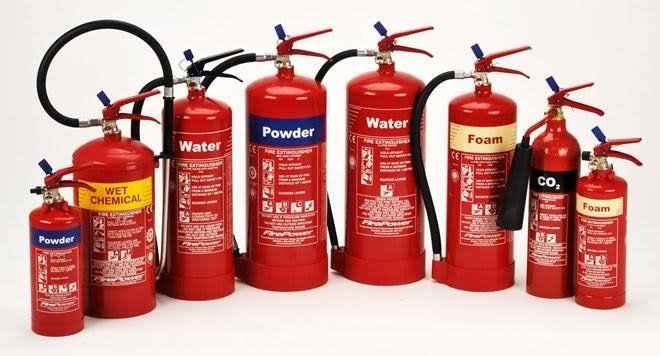
Fire extinguishers are one of the most recognizable pieces of fire protection equipment. They are designed to provide a first line of defense against fires that are still small enough to be safely addressed with portable equipment. However, choosing an extinguisher is not simply a matter of selecting the largest or least expensive cylinder available.
Different fires require different extinguishing agents. A product suitable for paper and wood may not be appropriate for cooking oil, flammable liquids, or energized electrical equipment. The correct selection depends on the hazards present, the size of the potential fire, the location, and applicable safety requirements.
The Building Code of Pakistan – Fire Safety Provisions 2016 states that extinguisher selection should consider the type and size of the likely fire, hazards in the area, nearby energized electrical equipment, ambient temperature, and other relevant factors.
This guide explains the major factors to consider when selecting fire extinguishers for homes, offices, shops, commercial properties, and other buildings in Pakistan.
Why Fire Extinguishers Are Important
A fire can grow rapidly. A portable extinguisher may help control a limited fire during its early stage when used appropriately and when conditions allow people to remain safe.
The purpose of an extinguisher is not to replace an evacuation plan, fire alarm system, sprinkler system, or emergency response. Instead, it is one component of a broader fire protection strategy.
The Building Code of Pakistan describes portable extinguishers as a first line of defense for fires of limited size.
For this reason, an extinguisher should be:
- Appropriate for the expected fire hazard
- Easy to access
- Clearly identified
- Properly maintained
- Suitable for the environment
- Installed according to applicable requirements
Understand the Different Classes of Fire
Before buying an extinguisher, it is important to understand fire classifications. The classification tells you what type of fire the extinguisher is designed to address.
Class A Fires
Class A fires involve ordinary combustible materials such as:
- Wood
- Paper
- Cloth
- Rubber
- Many types of plastics
Offices, homes, schools, shops, and warehouses can contain significant quantities of these materials.
Extinguishers approved for Class A fires are commonly selected where ordinary combustible materials are present. NFPA guidance identifies wood, cloth, paper, rubber, and many plastics as examples of Class A materials.
Class B Fires
Class B fires involve flammable or combustible liquids. Examples can include certain oils, paints, solvents, and fuels.
Properties that store or use flammable liquids require careful assessment because the appropriate extinguisher must be matched to the specific hazard.
NFPA identifies gasoline, oil, some paints, and solvents among examples of Class B fire hazards.
Class C Fires
Class C relates to fires involving energized electrical equipment.
Offices, workshops, commercial buildings, server rooms, electrical rooms, and homes can contain electrical equipment that requires consideration when selecting fire protection equipment.
A Class C rating is associated with extinguishers that have been evaluated as suitable for use around energized electrical equipment.
Class D Fires
Class D fires involve combustible metals. These hazards are generally associated with specialized industrial or laboratory environments rather than ordinary homes.
Examples can include certain forms of magnesium and sodium.
Because these fires require specialized extinguishing agents, the equipment should be selected through a proper hazard assessment.
Class K Fires
Class K fires involve cooking oils and animal fats, particularly in commercial cooking environments.
Restaurants, hotel kitchens, catering operations, and other commercial kitchens may require equipment specifically designed for this type of hazard.
NFPA identifies Class K extinguishers as equipment used for cooking-oil and animal-fat fires in commercial cooking operations.
Common Types of Fire Extinguishers
Fire extinguishers use different agents to control fires. Common types include water, foam, dry chemical powder, carbon dioxide, and wet chemical extinguishers.
The appropriate type depends on the hazard.
Water Extinguishers
Water extinguishers are generally associated with Class A combustible materials.
They can be useful for fires involving materials such as paper, wood, and cloth.
However, water is not suitable for every type of fire. It should not automatically be used on electrical equipment or fires involving flammable liquids.
Foam Extinguishers
Foam extinguishers can be suitable for certain Class A and Class B hazards, depending on their specific rating and approval.
They may be considered in environments where both ordinary combustible materials and certain flammable-liquid risks exist.
Always check the extinguisher’s label before selecting or using it.
Dry Chemical Powder Extinguishers
Dry chemical powder extinguishers are widely used for various fire hazards. Some models are designed for multiple fire classes.
The exact rating printed on the extinguisher is important because not every powder extinguisher is suitable for every fire.
For commercial or industrial applications, selection should be based on the actual hazard assessment rather than assuming that one general-purpose model is suitable everywhere.
Carbon Dioxide Extinguishers
Carbon dioxide extinguishers are commonly associated with electrical equipment and certain Class B hazards.
They do not leave the same type of powder residue associated with dry chemical extinguishers, which can be useful around some sensitive equipment.
However, the suitability of the extinguisher must still be confirmed from its label and rating.
Wet Chemical Extinguishers
Wet chemical extinguishers are designed particularly for certain cooking-oil and fat hazards.
They are commonly associated with commercial kitchens where deep-fat cooking equipment creates a specialized fire risk.
Choosing the Right Size
Size is another important factor when buying an extinguisher.
A larger extinguisher may contain more extinguishing agent and potentially provide greater capacity, but it can also be heavier and more difficult for some people to handle.
The correct size depends on:
- Fire hazard
- Area being protected
- Fire rating
- Building occupancy
- Expected fire size
- Location
- User capability
- Applicable regulations
The Building Code of Pakistan states that extinguisher selection should consider both the type and size of the fire most likely to occur.
Therefore, choosing an extinguisher based solely on cylinder size is not an appropriate selection method.
Check the Fire Rating
Fire extinguishers are labeled according to the hazards they are designed to address. Class A and Class B extinguishers may also have numerical ratings indicating relative extinguishing effectiveness.
For example, an extinguisher might carry a classification combining several fire classes.
The rating information is more useful than simply looking at the physical size of the cylinder.
Before purchasing, check:
- Fire-class letters
- Numerical ratings where applicable
- Manufacturer information
- Approval or certification information
- Operating instructions
- Maintenance information
NFPA explains that portable extinguishers are labeled according to the fire classes for which they are suitable.
Consider the Location
The location of an extinguisher matters almost as much as the extinguisher itself.
Equipment should be positioned where it can be accessed without unnecessary delay while avoiding locations that could become inaccessible during a fire.
Potential locations may include:
- Near exits
- Along suitable escape routes
- Near identified fire hazards
- In kitchens
- Near workshops
- In office areas
- In storage areas
The exact placement and number should follow the applicable code and a suitable fire risk assessment.
NFPA requirements use factors such as hazard classification, extinguisher rating, coverage area, and travel distance when determining placement.
Fire Extinguishers and Fire Alarm Systems
An extinguisher and a fire alarm system perform different functions.
A fire alarm system is designed to detect and communicate a warning about a fire. An extinguisher is intended to provide a means of controlling a limited fire.
For this reason, installing extinguishers does not eliminate the need for suitable detection and alarm arrangements.
When considering a fire alarm system in Pakistani buildings, owners should look at the building’s occupancy, size, use, and applicable fire-safety requirements. The Building Code of Pakistan includes provisions addressing fire detection and alarm systems as well as portable extinguishers.
A complete fire protection strategy may therefore combine detection, notification, portable extinguishers, emergency exits, evacuation procedures, and other systems where required.
What to Check Before Buying
Before purchasing an extinguisher, review several important details.
1. Identify the Hazard
Start by identifying what could potentially burn.
Is the main risk paper and furniture? Cooking oil? Flammable liquids? Electrical equipment? Combustible metals?
The answer helps determine the appropriate extinguisher classification.
2. Check the Label
Never buy an extinguisher without checking its label.
The label should clearly indicate the fire classes for which the product is approved or rated.
3. Consider the Environment
Temperature, humidity, dust, chemicals, and outdoor exposure can affect equipment selection and maintenance.
Certain environments may require specialized equipment.
4. Check Quality and Certification
Choose equipment from a reputable manufacturer or supplier and verify the applicable approval or certification information.
Low price alone should not be the primary purchasing criterion for life-safety equipment.
5. Consider Maintenance
Ask how the extinguisher will be inspected, serviced, refilled, and maintained.
An extinguisher that cannot be properly maintained should not be treated as a dependable long-term safety solution.
Pakistan’s Building Code states that an extinguisher that can no longer be serviced according to the manufacturer’s maintenance manual is considered obsolete and should be removed from service.
Maintenance Is Part of the Purchase
Buying a fire extinguisher is only the beginning.
Extinguishers should be periodically inspected and maintained according to manufacturer instructions, applicable standards, and local requirements.
Checks may include:
- Physical condition
- Pressure condition where applicable
- Safety pin and seal
- Hose or nozzle
- Accessibility
- Label condition
- Corrosion
- Leakage
- Service information
If an extinguisher appears damaged, discharged, heavily corroded, or otherwise defective, it should be evaluated by an appropriately qualified service provider.
Avoid Common Buying Mistakes
Several mistakes can reduce the effectiveness of fire protection equipment.
Buying Only Based on Price
The cheapest extinguisher is not automatically the most appropriate option. Fire classification, quality, rating, maintenance, and suitability should be considered together.
Choosing One Type for Every Area
Different areas may have different hazards. A kitchen, electrical room, warehouse, and office may not require identical equipment.
Ignoring the Rating
A cylinder’s size does not tell the entire story. The fire rating and classification are essential.
Poor Placement
An extinguisher hidden behind furniture or stored in an inaccessible location may be difficult to reach during an emergency.
Forgetting Maintenance
A neglected extinguisher may not be dependable when needed.
Fire Extinguishers for Homes
Homes can contain several potential fire hazards, including cooking equipment, electrical appliances, chargers, heating equipment, paper, furniture, and textiles.
A household fire safety plan can include appropriately selected portable extinguishers along with smoke alarms, clear exits, and basic fire prevention practices.
The exact equipment required depends on the home and its hazards.
Residents should also understand that an extinguisher should only be used when the fire is small, there is a clear escape route, and using the equipment does not put anyone at unnecessary risk. If a fire is growing or conditions are unsafe, evacuation and contacting emergency services should take priority.
Fire Extinguishers for Businesses
Businesses may require a broader fire protection strategy because they can have more people, larger floor areas, specialized equipment, storage areas, kitchens, workshops, or other hazards.
A business fire safety assessment can help determine:
- Number of extinguishers
- Types of extinguishers
- Fire ratings
- Locations
- Inspection requirements
- Additional fire protection systems
- Emergency procedures
The Building Code of Pakistan provides requirements for different building occupancies and includes provisions for portable fire extinguishers.
Professional Guidance Matters
Fire protection is a safety-critical subject. When the hazards are complex or the building is large, professional advice can help ensure that the selected equipment and placement are appropriate.
For information about fire protection equipment and related solutions in Pakistan, Flame Defender provides fire safety products and information for the Pakistani market.
Professional assessment can be especially useful for:
- Commercial buildings
- Restaurants
- Warehouses
- Factories
- Workshops
- Offices
- Schools
- High-rise buildings
- Facilities storing flammable materials
Final Thoughts
Choosing a fire extinguisher should begin with the hazard rather than the product price or appearance. Understanding fire classes, checking ratings, considering the environment, selecting suitable equipment, and planning proper placement are all important parts of responsible fire protection.
The Building Code of Pakistan emphasizes selecting extinguishers according to the likely fire type, fire size, hazards, electrical equipment, environmental conditions, and other relevant factors.
A fire extinguisher is also only one part of a complete safety plan. Appropriate detection, alarms, emergency exits, evacuation procedures, maintenance, and fire prevention practices can work together to improve overall preparedness.
For homeowners and businesses in Pakistan, taking time to assess fire hazards before buying equipment can help ensure that the chosen extinguisher is suitable for the environment in which it will be installed.
Frequently Asked Questions
1. How do I choose the right fire extinguisher?
Start by identifying the types of fire hazards present. Then select an extinguisher specifically rated for those hazards. Consider the fire size, building environment, location, and applicable safety requirements.
2. Can one fire extinguisher be used for every type of fire?
No. Different fire classes require different extinguishing agents. An extinguisher should only be used on the fire classes shown on its label.
3. How often should fire extinguishers be inspected?
Inspection and maintenance should follow the manufacturer’s instructions, applicable standards, and local requirements. Businesses should maintain a regular inspection program and arrange professional servicing when required.
4. Do homes need fire extinguishers?
A suitable portable extinguisher can be an important part of residential fire preparedness, depending on the home’s risks and applicable requirements. Homes should also have appropriate smoke detection, clear escape routes, and an emergency plan.
5. Is a fire extinguisher enough for complete fire protection?
No. An extinguisher is only one part of fire protection. Depending on the building, a complete strategy may also include smoke detection, a fire alarm system, emergency lighting, evacuation planning, fire doors, sprinklers, and other protective measures.