
Fire safety is an essential responsibility for every building owner, business operator, facility manager, and property developer. A fire can start unexpectedly because of electrical faults, cooking activities, overheating equipment, flammable materials, or other hazards. When a fire occurs, having suitable firefighting equipment available can help reduce damage and protect people—provided the equipment is appropriate for the fire and used safely.
Fire hose reels are an important part of fire protection in many commercial, industrial, and public buildings. They provide a connected supply of water through a hose, allowing trained and authorised users to respond to certain small fires during their earliest stages. Unlike portable fire extinguishers, which contain a limited quantity of extinguishing agent, a properly designed hose reel system can deliver water continuously while the water supply remains available.
However, fire hose reels are not suitable for every type of fire, and their presence does not guarantee safety. They must be selected according to the building’s risks, installed correctly, inspected regularly, and supported by alarms, evacuation procedures, and staff training.
In Pakistan, where commercial properties, offices, factories, shopping centres, warehouses, and multi-storey buildings have different fire protection needs, understanding this equipment is particularly valuable. A reliable fire alarm system in Pakistan, combined with suitable firefighting equipment and an effective emergency plan, can contribute to a more comprehensive approach to fire safety.
What Is a Fire Hose Reel?
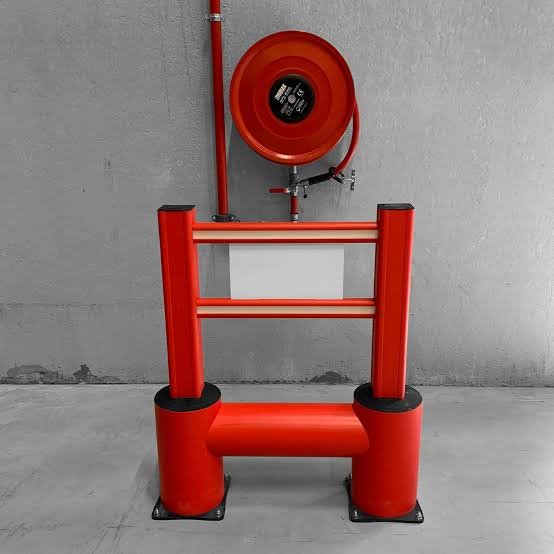
A fire hose reel is a permanently installed firefighting device designed to provide a readily accessible hose connected to a water supply. It commonly consists of a circular reel or drum, a flexible hose, a control valve, a nozzle, and the necessary mounting or cabinet arrangement.
When the system is activated according to its design, water travels through the hose and exits through the nozzle. The user directs the water towards an appropriate fire while maintaining a safe escape route.
Fire hose reels are generally intended for certain fires involving ordinary combustible materials, such as paper, cardboard, wood, and some textiles. Their suitability depends on the circumstances, the installation, and the equipment’s approved use.
They must not be treated as universal firefighting devices. Water can create a serious electrical hazard when used on energised electrical equipment, and it can spread burning flammable liquids. Staff should follow the building’s emergency procedures and use only equipment appropriate for the identified fire risk.
Why Are Fire Hose Reels an Essential Safety Investment?
1. They provide readily accessible firefighting equipment
During an emergency, every second matters. If suitable firefighting equipment is located far from the affected area or hidden behind stored materials, it may be difficult to access when needed.
A properly positioned fire hose reel gives trained personnel access to a connected water supply without having to locate multiple portable units. Its location should be identified through appropriate signage and reflected in the building’s fire safety plan.
The reel must remain unobstructed at all times. Furniture, boxes, stock, machinery, and temporary partitions should never prevent people from reaching it.
2. They can support an early response to certain fires
Some fires begin on a relatively small scale before spreading to nearby materials. Where the fire is suitable for water-based firefighting, a correctly installed hose reel may help trained personnel respond during the early stages.
Nevertheless, attempting to extinguish a fire is never more important than protecting human life. If the fire is growing, smoke is spreading, the heat is intense, or the escape route is becoming unsafe, people should evacuate immediately and contact the emergency services.
A hose reel is an additional safety measure, not a reason to delay evacuation.
3. They can provide a continuous supply of water
A portable extinguisher has a limited operating duration. A hose reel connected to a suitable, reliable water supply can provide water for longer, subject to the system’s capacity and operating conditions.
This can be useful in appropriate situations involving ordinary combustible materials. However, continuous water delivery depends on adequate pressure, sufficient water storage, functioning pumps where required, and properly maintained pipework.
Building managers should therefore consider the complete water supply arrangement rather than purchasing a reel alone.
4. They complement other fire protection systems
Effective fire protection relies on several measures working together. Fire hose reels may form one part of a building’s firefighting arrangements, alongside portable extinguishers, hydrants, sprinklers where required, emergency exits, and fire detection and alarm equipment.
A fire alarm system in Pakistan can help alert occupants when a fire is detected or a manual alarm is activated. A hose reel serves a different purpose: it provides a means of delivering water for certain firefighting situations.
Neither system replaces the other. Early warning helps people respond and evacuate, while appropriate firefighting equipment may support a safe initial response when conditions permit.
5. They can support business continuity
Fire incidents can interrupt operations, damage equipment, destroy stock, and affect employees, customers, and neighbouring properties.
Suitable firefighting equipment may help reduce losses when an incident can be addressed safely at an early stage. Regular maintenance also helps businesses identify problems before an emergency occurs.
The financial value of fire hose reels should therefore be considered alongside the broader benefits of fire prevention, emergency preparedness, reliable equipment, and protection of people.
Where Are Fire Hose Reels Commonly Used?
The need for a hose reel depends on a building’s design, occupancy, fire hazards, applicable codes, and the requirements of the relevant authority. They are commonly considered for the following types of premises.
Commercial buildings and offices
Offices can contain paper products, furniture, electrical equipment, storage areas, and meeting rooms. In larger commercial premises, an appropriate fixed firefighting system may form part of the building’s overall fire protection design.
Office managers should ensure that firefighting equipment remains accessible and that employees understand evacuation procedures.
Factories and industrial facilities
Industrial environments may contain packaging materials, raw materials, production equipment, and combustible waste. The fire risks can vary significantly from one facility to another.
A fire protection assessment should identify whether hose reels are appropriate and whether additional equipment, such as specialist extinguishers, hydrants, or automatic suppression systems, is needed.
Warehouses and storage facilities
Warehouses can contain large quantities of combustible goods arranged in racks or stacked in storage areas. Fire can spread rapidly when materials are closely packed or escape routes are obstructed.
The layout, height of stored goods, fire load, water supply, and accessibility of firefighting equipment must all be considered during system planning.
Shopping centres and public buildings
Shopping centres, educational institutions, healthcare facilities, and other public buildings may have many occupants who are unfamiliar with the premises.
Fire safety arrangements must prioritise early warning, clear evacuation routes, accessible exits, and coordination with emergency services. Hose reels, where required, should be positioned and managed as part of a comprehensive safety plan.
Multi-storey buildings
In multi-storey premises, firefighting equipment must be suitable for the building’s height, layout, water supply, and applicable regulations.
A building may require several types of fixed firefighting equipment rather than hose reels alone. Property owners should obtain a professional assessment before deciding which systems are necessary.
Important Components of a Fire Hose Reel System
Understanding the main components helps building managers recognise why proper installation and maintenance matter.
1. Reel or drum: Holds the hose and allows it to be deployed and stored in an orderly manner.
2. Hose: Carries water from the supply connection to the nozzle. It must be suitable for the system’s intended operating conditions and free from damage.
3. Nozzle: Controls the discharge of water. Depending on the design, it may allow the operator to regulate the flow or select an approved spray pattern.
4. Control valve: Controls the water supply to the hose reel. It must remain accessible and operate as intended.
5. Water supply and associated pipework: Deliver water at the required flow and pressure. Pumps, tanks, valves, and other components may be necessary depending on the system design.
6. Cabinet, mounting, and signage: Protect or support the equipment and help occupants identify its location. The arrangement should allow prompt access without obstruction.
Every component must be compatible with the overall system. Selecting equipment based only on appearance or price can result in an installation that does not meet the building’s requirements.
What Should Be Considered Before Installation?
Installing fire hose reels requires more than choosing a convenient wall location. The design should reflect the property’s specific fire risks and applicable requirements.
Conduct a fire risk assessment
Begin by identifying likely ignition sources, combustible materials, occupancy levels, building layout, and potential fire spread. The assessment should also consider whether water is an appropriate extinguishing agent for the hazards present.
Select suitable locations
Hose reels should be accessible and positioned to serve the intended areas in accordance with the approved design. The route to the equipment should remain clear, and deploying the hose should not create an unacceptable obstruction to escape routes or fire doors.
Confirm the water supply
A hose reel cannot perform as intended if its water supply is inadequate. Qualified professionals should assess the required flow, pressure, storage, pumping arrangements, and reliability of the supply.
Use suitable equipment
Equipment should meet the applicable specifications and be appropriate for its intended environment. Industrial premises, for example, may have different requirements from small offices or retail units.
Use qualified installers
Installation should be completed and tested by competent professionals. Incorrect pipework, unsuitable connections, poor mounting, or inadequate water pressure can undermine system performance.
Check local regulatory requirements
Pakistan’s Building Code of Pakistan (Fire Safety Provisions 2016) provides a framework for building fire prevention and life safety. Specific requirements depend on factors such as occupancy, building design, applicable provisions, and decisions of the relevant authority. The Punjab Civil Defence Department also identifies firefighting arrangements and fire detection and alarm systems among the measures considered during inspections. See the official Building Code of Pakistan Fire Safety Provisions 2016 and Punjab Civil Defence inspection guidance.
Owners should confirm requirements with the authority responsible for their particular building instead of assuming that every property has identical obligations.
Fire Hose Reels and Fire Alarm Systems: Why Both Matter
Fire detection and firefighting equipment perform different but complementary roles.
A fire alarm system is designed to warn occupants of a fire or a suspected fire. Depending on its configuration, it may use smoke detectors, heat detectors, manual call points, sounders, visual warning devices, and a control panel.
A hose reel is a firefighting device intended to deliver water to certain fires when it is safe and appropriate to use it.
In a properly planned building, alarm activation should prompt occupants to follow established emergency procedures. These may include raising the alarm, contacting emergency services, assisting others according to the evacuation plan, and moving to a designated assembly point.
People should never assume that the presence of a hose reel means they must fight a fire. Most occupants should prioritise evacuation unless they have an assigned role, appropriate training, and safe conditions for the task.
Businesses looking for a fire alarm system in Pakistan should evaluate the alarm’s suitability, installation quality, audibility and visibility, backup arrangements, testing, and maintenance. Fire alarms and hose reels should be coordinated with the building’s wider fire safety strategy.
Maintenance Tips for Fire Hose Reels
A hose reel that is damaged, obstructed, or unable to receive sufficient water may not work when required. Regular inspection and servicing are therefore essential.
Perform routine visual checks
Designated personnel should check that the reel is accessible, signage is visible, and the hose, nozzle, cabinet, and visible connections show no obvious damage. Any leakage, corrosion, missing components, or signs of tampering should be reported promptly.
Check the hose and reel condition
The hose should be stored correctly and should not have visible cracks, cuts, kinks, or deterioration. The reel should rotate and unwind as intended, without obvious obstruction.
Arrange professional testing
Visual inspections cannot confirm every aspect of system performance. Competent technicians should carry out the required testing and servicing in accordance with the equipment manufacturer’s instructions, applicable standards, and local requirements.
Verify the water supply
Where included in the system design, pumps, tanks, valves, and associated pipework should be checked under the prescribed maintenance programme. Any faults affecting the availability or pressure of water must be addressed.
Keep records
Maintain written records of inspections, tests, servicing, defects, repairs, and corrective actions. These records help building managers monitor equipment condition and demonstrate that maintenance responsibilities are being addressed.
The inspection schedule should be determined by the applicable standards, the manufacturer’s guidance, the system design, and the relevant authority—not by guesswork.
Common Mistakes to Avoid
Several preventable mistakes can reduce the effectiveness of a fire hose reel system.
- Blocking access: Storing boxes, furniture, or equipment in front of a reel delays access during an emergency.
- Ignoring small leaks: Minor leaks or visible damage can indicate a problem that requires investigation.
- Assuming water works on every fire: Water is not suitable for all fires, especially certain electrical and flammable-liquid incidents.
- Neglecting employee training: People may not know when equipment is appropriate or when evacuation must take priority.
- Relying on the hose reel alone: A hose reel cannot replace alarms, escape routes, extinguishers, or other protection required by the building’s risk assessment.
- Skipping professional servicing: A visual check alone may not identify defects in valves, pipework, water pressure, or other system components.
- Failing to plan for emergencies: Equipment is only one part of a wider response involving warning, evacuation, communication, and coordination with emergency services.
Avoiding these mistakes requires clear responsibilities, regular checks, proper documentation, and management support.
Safe Response During a Fire Emergency
If a fire occurs, raise the alarm and follow the building’s emergency procedures. Contact the appropriate emergency services and evacuate using the designated escape routes. Do not use lifts unless they are specifically designed and authorised for emergency evacuation.
Only trained, authorised personnel should consider using a hose reel, and only if the fire is suitable for water, the fire is small and manageable, and there is a clear escape route behind them. Never approach a fire that is spreading rapidly, producing heavy smoke, or threatening to cut off the exit.
Do not use water on energised electrical equipment or burning liquids. If there is any uncertainty about the fire type or the safety of the situation, leave the area and allow trained emergency responders to manage the incident.
After evacuation, move to the designated assembly point and do not re-enter the building until the responsible emergency personnel declare it safe.
Conclusion
Fire hose reels can be a valuable part of a building’s fire protection arrangements when they are correctly selected, installed, maintained, and used within their intended limits. They provide accessible water for certain firefighting situations and can complement other measures designed to reduce fire risks.
For businesses and property owners in Pakistan, the priority should be a complete and properly assessed fire safety strategy. This includes appropriate firefighting equipment, clear evacuation routes, staff awareness, routine maintenance, and a reliable fire detection and alarm system.
Investing in suitable equipment is important, but maintaining it and preparing people to respond safely are equally essential. A well-managed fire safety programme helps protect occupants, reduce avoidable property damage, and improve emergency preparedness.
Frequently Asked Questions (FAQs)
1. What is the main purpose of a fire hose reel?
A fire hose reel provides a connected water supply through a hose for use on certain suitable fires. It is generally intended for trained users responding to a small fire when conditions are safe. It does not replace evacuation or emergency services.
2. Where should fire hose reels be installed?
Their locations depend on the building’s layout, occupancy, fire risk assessment, system design, and applicable regulations. They should be readily accessible, clearly identified, and installed by competent professionals.
3. Can a fire hose reel be used on an electrical fire?
Water should not be applied to energised electrical equipment because it can create a risk of electric shock. The appropriate response depends on the equipment, whether it is safely isolated, and the fire circumstances. Occupants should raise the alarm and evacuate if there is any danger.
4. How often should fire hose reels be inspected?
The inspection and servicing schedule should follow the applicable standards, manufacturer’s instructions, system design, and local requirements. Regular visual checks should identify visible damage, leakage, or obstruction, while competent technicians should perform prescribed functional testing and servicing.
5. Are fire hose reels enough to protect a commercial building in Pakistan?
No. A hose reel is only one possible element of a fire protection system. Depending on the building and its risks, other measures may include fire detection and alarm systems, extinguishers, hydrants, sprinklers, emergency lighting, exit signage, evacuation plans, and staff training. The relevant authority and qualified fire safety professionals should determine the applicable requirements.