
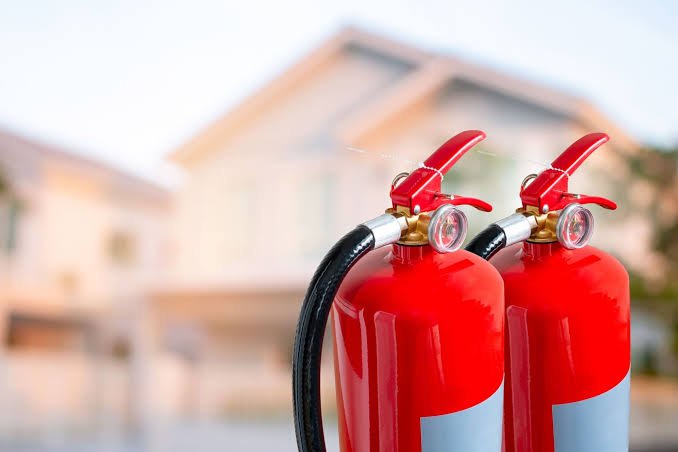
Fire safety often begins with prevention, but prevention alone is not enough. Even a careful household can experience an electrical fault, cooking accident, gas leak, or other unexpected ignition source. When that happens, properly maintained fire-safety equipment can provide the warning and protection needed to respond quickly.
For homeowners in Pakistan, this means fire extinguishers, smoke detectors, alarms, emergency lighting where applicable, and other protective equipment should not simply be purchased and forgotten. Regular inspection and maintenance are essential parts of fire safety.
Pakistan’s Building Code of Pakistan – Fire Safety Provisions 2016 covers the design, installation, maintenance, repair, servicing, and testing of fire-protection systems and equipment. Pakistan Engineering Council lists these provisions among its national building codes and standards.
The National Disaster Management Authority (NDMA) also provides fire-safety guidance for Pakistan and emphasizes preparedness and maintaining firefighting equipment in good working condition.
This article explains why fire-equipment maintenance matters, what homeowners should check, and how regular attention can make a home safer.
Why Fire Equipment Maintenance Matters
Buying fire-safety equipment is an important first step, but equipment only provides protection when it is functional and accessible.
Consider a fire extinguisher that has been sitting in a corner for several years. It may look perfectly normal from the outside, but it could have:
- Lost pressure
- Developed corrosion
- Been damaged
- Become blocked or inaccessible
- Passed its service interval
- Been discharged partially
- Been affected by unsuitable storage conditions
The same principle applies to smoke alarms.
A smoke alarm with a depleted battery, damaged sensor, or fault indicator may not provide the warning you expect during a fire.
Maintenance turns fire-safety equipment from something that is simply present into something that is ready to work.
Fire Safety Starts With Prevention
Before discussing equipment, it is important to understand that maintenance is only one part of home fire safety.
A safer home also requires attention to everyday hazards.
Common household fire risks include:
- Overloaded electrical outlets
- Damaged electrical cables
- Cooking equipment
- Gas appliances
- Candles and open flames
- Portable heaters
- Poorly stored combustible materials
- Smoking materials
- Generators
- Improper fuel storage
NDMA’s current guidance resources include dedicated urban fire-safety material, reflecting the importance of fire prevention and preparedness at household and community levels.
The best strategy is therefore:
Prevent fires where possible → detect them early → respond appropriately → evacuate when necessary.
1. Maintain Smoke Alarms Regularly
Smoke alarms are among the simplest fire-safety devices available for a home.
Their primary purpose is to provide an early warning when smoke is detected.
That warning can be particularly valuable at night, when occupants may not immediately notice a developing fire.
Homeowners should regularly check:
- Whether the alarm is powered
- Whether the test function works
- Whether the device shows a fault
- Whether the alarm is physically damaged
- Whether dust or dirt has accumulated
- Whether batteries need replacement
- Whether the unit has reached the end of its service life
Follow the manufacturer’s instructions for testing, cleaning, battery replacement, and replacement of the complete unit.
2. Don’t Ignore a Low-Battery Warning
A low-battery alarm can be annoying, particularly at night.
Some people remove the battery simply to stop the sound.
That creates a serious safety problem.
Instead, replace the battery promptly with the correct type specified by the manufacturer.
If a smoke alarm repeatedly gives fault or low-battery warnings despite a new battery, the device may require further inspection or replacement.
Never leave a smoke alarm without a functioning power source simply because the warning is inconvenient.
3. Keep Smoke Alarms Free From Obstruction
A smoke alarm needs to detect smoke effectively.
Do not cover it with:
- Plastic
- Cloth
- Tape
- Decorations
- Paint
- Other materials
Dust and insects can also affect some alarm devices.
Follow the manufacturer’s cleaning instructions rather than using excessive water or unsuitable cleaning products.
If the alarm is positioned incorrectly or frequently produces nuisance alarms, don’t simply disable it. The location or detector type may need professional assessment.
4. Fire Extinguishers Need Attention Too
A fire extinguisher can be useful for controlling a small fire when a person is trained and conditions are safe.
But having an extinguisher in the house does not guarantee that it will work.
Homeowners should periodically check whether:
- The extinguisher is in its designated location
- Access is clear
- The cylinder appears undamaged
- The safety pin and seal are intact where applicable
- The pressure indicator is in the appropriate range where provided
- There is no obvious corrosion or leakage
- The servicing information is current
Any extinguisher showing signs of damage or a maintenance problem should be assessed by a qualified service provider.
Pakistan’s fire-safety code specifically includes maintenance, repairs, servicing, and testing of fire-protection systems and equipment within its scope.
5. Put Extinguishers Where They Can Actually Be Reached
A fire extinguisher hidden behind furniture is not useful during an emergency.
Keep extinguishers:
- Visible
- Accessible
- Properly mounted where appropriate
- Away from unnecessary obstructions
- Near areas where they may be needed, based on a risk assessment
However, placement should not force someone to move toward a fire to retrieve the extinguisher.
The priority during a fire should always be personal safety.
If the fire is growing quickly, producing heavy smoke, or blocking the escape route, leave the area and contact emergency services rather than attempting to fight it.
6. Use the Correct Extinguisher
Not every extinguisher is suitable for every fire.
Different extinguishing agents are designed for different hazards.
A home may contain potential fires involving:
- Ordinary combustible materials
- Cooking oils
- Flammable liquids
- Electrical equipment
The appropriate extinguisher should therefore be selected based on the hazards present and the manufacturer’s classification.
Never assume that any extinguisher can safely be used on every type of fire.
When in doubt, evacuate and seek professional assistance.
7. Inspect Kitchen Fire-Safety Equipment
The kitchen is one of the most important areas to consider because cooking involves heat, oil, gas, and electrical appliances.
Regularly inspect:
- Cooking appliances
- Gas connections
- Electrical cables
- Sockets
- Exhaust systems
- Fire extinguishers
- Other appropriate fire-protection equipment
Keep combustible materials such as paper towels, curtains, packaging, and cloth away from cooking surfaces.
Grease and cooking-oil fires require particular care.
Never throw water onto a hot cooking-oil fire.
If a small cooking fire can be safely covered using the appropriate method and equipment, follow established safety guidance. Otherwise, evacuate and call emergency services.
8. Check Electrical Equipment
Electrical faults are a common concern in residential fire prevention.
Maintenance should include looking for:
- Damaged cables
- Loose plugs
- Broken sockets
- Burn marks
- Sparks
- Overheated outlets
- Extension cords in poor condition
- Unusual smells
- Repeated circuit-breaker trips
A circuit breaker or fuse is an important protective device, but it does not mean the electrical system can be ignored.
Repeated trips should be investigated by a qualified electrician rather than repeatedly resetting the breaker without identifying the cause.
9. Be Careful With Extension Cords
Extension cords are convenient, but they should not become a permanent substitute for appropriate electrical installation.
Avoid:
- Overloading extension cords
- Connecting multiple extension boards together
- Using damaged cords
- Running cables under rugs where they can be damaged
- Using inappropriate cords for high-power appliances
High-power equipment such as heaters, air conditioners, cooking appliances, and other demanding devices may require dedicated electrical circuits.
10. Maintain Emergency Lighting Where Needed
Some homes and residential buildings may have emergency lighting, particularly larger properties, apartment buildings, or buildings with shared areas.
Emergency lighting can help occupants find escape routes when normal electricity fails.
Where such systems are installed, maintenance should include checking:
- Light operation
- Batteries
- Charging systems
- Test functions
- Physical condition
- Visibility
The exact requirements depend on the building type and applicable regulations.
11. Don’t Forget the Generator
Many homes and businesses in Pakistan use generators or other backup-power equipment.
Generator safety should form part of overall fire-equipment maintenance.
Regularly inspect:
- Fuel lines
- Fuel tanks
- Electrical connections
- Exhaust systems
- Cooling systems
- Batteries
- Cables
- Ventilation
Never operate a fuel-burning generator in an enclosed or poorly ventilated space.
Keep combustible materials away from the generator and address fuel leaks immediately.
A generator can provide useful backup power, but poor maintenance can introduce additional fire and exhaust hazards.
12. Inspect Gas Appliances and Connections
Gas-related equipment deserves regular attention.
Check for:
- Damaged hoses
- Loose connections
- Faulty regulators
- Corrosion
- Unusual smells
- Improperly installed appliances
If you suspect a gas leak, do not create an ignition source by switching electrical equipment on or off. Leave the area if necessary and contact the appropriate emergency or gas-service provider.
Gas appliances should be installed and serviced by qualified personnel.
13. Keep Fire Equipment Away From Children
Children should be taught basic fire safety, but potentially dangerous equipment should still be secured appropriately.
Children should understand:
- Fire is dangerous
- Matches and lighters are not toys
- They should never hide during a fire
- They should tell an adult immediately if they see smoke or flames
- They should follow evacuation instructions
At the same time, adults should ensure that fire extinguishers and other equipment remain accessible to responsible occupants.
14. Create a Home Fire-Escape Plan
Equipment maintenance is only one part of protection.
Every household should know how to escape.
A simple plan should identify:
- Primary exits
- Alternative exits
- Meeting point outside
- How to call emergency services
- How children will be assisted
- How elderly or mobility-limited occupants will be helped
Practice the plan so that family members know what to do without waiting for instructions during a real emergency.
If smoke is present, occupants should avoid exposing themselves unnecessarily and follow established fire-safety procedures.
15. Keep Escape Routes Clear
A maintained fire extinguisher cannot help if residents cannot reach an exit.
Keep:
- Hallways clear
- Stairways unobstructed
- Doors operational
- Exit routes free of storage
- Keys accessible where needed
- Emergency routes clearly understood
Do not use stairways, corridors, or exits as permanent storage areas.
This is particularly important in apartment buildings and larger homes where multiple occupants may need to escape simultaneously.
Pakistan’s Fire Safety Provisions include requirements relating to means of egress as part of the broader objective of protecting life from fire.
16. Maintenance Records Are Useful
For a simple home, you may not need complicated documentation.
However, keeping basic records can help you remember when equipment was checked.
You could record:
- Smoke-alarm tests
- Battery replacements
- Extinguisher servicing
- Electrical inspections
- Generator servicing
- Gas-appliance maintenance
- Emergency-drill dates
For larger residential buildings, building managers should maintain more formal inspection and maintenance records.
Records can also help identify recurring problems.
17. Professional Inspection Has Its Place
Homeowners can perform simple visual checks and routine tests, but some equipment requires qualified professionals.
Professional assistance may be appropriate for:
- Fire-alarm system installation
- Complex alarm faults
- Electrical inspections
- Gas-appliance servicing
- Fire-extinguisher servicing
- Generator electrical installation
- Larger residential fire-protection systems
Do not attempt to repair specialized fire-protection equipment without the appropriate knowledge and authorization.
The Building Code of Pakistan recognizes inspection, maintenance, repair, servicing, and testing as important elements of fire-protection-system management.
18. Why a Fire Alarm System Deserves Regular Attention
A fire alarm system in Pakistan can provide an important early-warning layer in residential and other buildings where such systems are installed.
But the system needs to be maintained.
A maintenance program can involve:
- Testing alarm devices
- Checking control panels
- Inspecting power supplies
- Testing notification devices
- Checking detectors
- Reviewing fault indicators
- Confirming that backup power functions where applicable
- Keeping records of testing and servicing
A system that constantly displays faults should not be ignored.
Likewise, repeated false alarms should be investigated rather than solved by disabling detectors.
The objective is to maintain a system that occupants can trust when a genuine emergency occurs.
19. Don’t Disable Equipment Because of False Alarms
Nuisance alarms can be frustrating.
But removing batteries, disconnecting detectors, or disabling alarm zones can leave a property without adequate warning.
If false alarms occur repeatedly, investigate the cause.
Possible causes can include:
- Detector location
- Cooking smoke
- Dust
- Steam
- Environmental conditions
- Equipment faults
- Incorrect detector selection
A qualified professional can determine whether the detector should be relocated, cleaned, replaced, or changed to a more appropriate type.
20. A Simple Monthly Home Fire-Safety Checklist
Homeowners can use a basic checklist:
Smoke and alarm equipment
- Test smoke alarms.
- Check batteries or power indicators.
- Look for fault warnings.
- Keep detectors clean.
- Replace damaged or outdated units according to manufacturer guidance.
Fire extinguishers
- Check location.
- Keep access clear.
- Look for visible damage or corrosion.
- Check service information.
- Arrange professional servicing when required.
Electrical safety
- Inspect visible cables.
- Look for burn marks.
- Avoid overloaded outlets.
- Investigate repeated circuit trips.
Kitchen
- Keep combustible materials away from cooking equipment.
- Inspect gas connections.
- Keep appropriate fire equipment accessible.
Generator
- Check for fuel leaks.
- Keep ventilation clear.
- Inspect cables and connections.
- Keep combustible storage away.
Escape
- Keep exits clear.
- Confirm that family members know the meeting point.
- Review the emergency plan.
Fire Equipment Maintenance Is an Ongoing Process
One of the biggest mistakes homeowners make is treating fire safety as a one-time purchase.
Buying a smoke alarm is not the end of fire safety.
Buying an extinguisher is not the end.
Installing an alarm system is not the end.
Safety equipment must remain:
Installed → Accessible → Functional → Tested → Maintained → Ready
That cycle is what turns equipment into meaningful protection.
Pakistan’s Building Code of Pakistan – Fire Safety Provisions 2016 takes a similar systems-based approach, covering inspection, design, installation, maintenance, repair, servicing, and testing of fire-protection systems and equipment.
The First Step to a Safer Home
Fire equipment maintenance may not feel as urgent as buying new equipment.
There is no dramatic moment when you replace a battery or inspect an extinguisher.
But these small actions are exactly what help ensure that equipment works when it matters.
A safer home combines:
- Fire prevention
- Early detection
- Maintained equipment
- Safe electrical systems
- Kitchen precautions
- Appropriate extinguishers
- Clear escape routes
- Family education
- Emergency planning
The National Disaster Management Authority’s fire-safety resources also emphasize household preparedness, including keeping fire extinguishers around the home, particularly near heat or fire sources.
For additional information about fire protection and safety solutions, visit Flame Defender.
Final Thoughts
Fire equipment maintenance is one of the simplest ways to strengthen household fire safety.
A smoke alarm with a working power supply can provide early warning. A properly maintained extinguisher can offer a response option for a small fire when conditions are safe. Maintained electrical and gas equipment can reduce preventable hazards. Clear exits can give occupants a better chance of reaching safety.
The important point is that fire-safety equipment should never be treated as decoration or a one-time purchase.
Regular inspection, testing, cleaning, servicing, and replacement when necessary are what keep these protective measures dependable.
Whether you live in a house, apartment, or another residential building in Pakistan, making fire-equipment maintenance part of your normal household routine is a practical step toward a safer home.
Frequently Asked Questions
1. How often should I test a smoke alarm?
Follow the manufacturer’s instructions for your specific alarm. Regular testing is important, and batteries or complete units should be replaced according to the manufacturer’s recommendations. A smoke alarm that shows a fault or does not respond to testing should be addressed promptly.
2. How often should a home fire extinguisher be serviced?
The required service schedule depends on the extinguisher type, manufacturer instructions, applicable requirements, and local servicing practices. Homeowners should perform appropriate visual checks and have extinguishers professionally serviced when required.
3. Can I maintain a fire alarm system myself?
Basic user checks such as testing an alarm may be appropriate, but installation, repairs, system faults, and specialized servicing should generally be handled by qualified personnel. Complex fire-alarm systems require appropriate testing and maintenance procedures.
4. Where should a fire extinguisher be kept at home?
It should be readily accessible and positioned according to the hazards and layout of the home. It should not be hidden behind furniture or stored where reaching it would require moving toward a dangerous fire. A professional can recommend suitable placement for a particular property.
5. What is the most important part of home fire safety?
There is no single measure that provides complete protection. The strongest approach combines prevention, working smoke alarms, appropriately maintained firefighting equipment, safe electrical and gas systems, clear escape routes, and a practiced family emergency plan.