
A fire emergency can be confusing, especially when people have never practiced what to do. At home, family members may know where the doors are, but knowing an exit exists is different from having a clear plan for using it during an emergency.
A home fire drill gives family members an opportunity to practice leaving safely, recognizing an alarm, and meeting at a predetermined location. The goal is not to create fear or simulate a real fire. It is to make the household more familiar with safe evacuation procedures.
The Building Code of Pakistan Fire Safety Provisions 2016 includes requirements for emergency egress and fire drills in applicable occupancies. It states that drills should be conducted at the frequency specified for different occupancies and that drill participants should relocate to a predetermined location.
Why Fire Drills Matter at Home
During an emergency, people may react differently from how they expect. They may become confused, forget an exit, or waste time looking for family members.
A simple practice drill can help everyone understand the household’s emergency plan.
A home drill can teach family members:
- What the fire alarm sounds like
- Which exits are available
- Where to go after leaving
- Where family members should meet
- Why they should not return inside
- How to respond when an adult gives evacuation instructions
The purpose is preparation, not creating a realistic or frightening emergency.
Start With a Simple Home Fire-Safety Plan
Before conducting a drill, the household should have a basic evacuation plan.
Identify the safest practical ways to leave the home and select an outdoor meeting location away from the building. Everyone should know the meeting point.
The plan should also consider children, older family members, visitors, and anyone who may need additional assistance.
Keep the plan simple enough that everyone in the household can understand it.
Make Sure Everyone Recognizes the Alarm
A reliable fire alarm system in Pakistan can provide an early warning when smoke or heat is detected. Flame Defender provides fire alarm solutions for residential, commercial, and industrial properties in Pakistan, including smoke detectors, heat sensors, control panels, and notification equipment.
Family members should know what the alarm sounds like and understand that an activated alarm should be treated seriously.
If an alarm sounds unexpectedly, household members should follow their emergency plan rather than assuming that it is a false alarm.
Choose Safe Escape Routes
Every household should know the normal exit routes from bedrooms and other occupied areas.
A good plan should consider more than the main entrance. If one route is unavailable because of smoke or another hazard, people should know the alternative safe route identified in the household plan.
Escape routes should remain free of unnecessary obstacles. Furniture, boxes, storage items, and other objects should not make it difficult to reach an exit.
Keep Bedrooms in the Plan
Night-time fires can be particularly challenging because people may be asleep when an alarm activates.
Bedrooms should therefore be included when planning evacuation.
Family members should know how to respond immediately when an alarm is heard at night. Parents or responsible adults should make sure younger children understand that they should follow the household’s emergency instructions.
The aim is to make the response familiar without frightening children.
Choose a Family Meeting Point
A meeting point should be located a safe distance from the home and away from areas where emergency responders may need access.
For example, the family might choose a suitable point across the street or another agreed location that does not interfere with emergency operations.
The important thing is that everyone knows the same meeting point.
Once outside, family members should remain there and wait for instructions from responsible adults or emergency personnel.
Never Return Inside During an Emergency
One of the most important rules of a home fire plan is that people should not return to a burning or potentially unsafe building to retrieve belongings or search for someone.
Once outside, stay outside and tell responsible adults or emergency responders if someone may still be inside.
People should not put themselves in danger attempting to investigate or control a fire.
Keep the Drill Safe
A fire drill at home should never involve real flames, smoke, burning materials, or dangerous simulations.
The drill should simply involve practicing the household’s evacuation procedure.
For example, an adult can announce that the drill is beginning, activate the household’s planned notification method without creating a hazardous situation, and ask everyone to follow the established evacuation route.
The exercise should remain calm and controlled.
Teach Children Without Creating Fear
Children can learn important fire-safety habits, but the information should be presented in a calm and age-appropriate way.
Explain that alarms are designed to warn people about possible danger and that the correct response is to follow the household’s safety plan.
Avoid frightening children with graphic descriptions of fires or injuries.
Instead, focus on simple actions:
- Listen for the alarm.
- Follow the adult’s instructions.
- Leave using the planned safe route.
- Go to the family meeting point.
- Stay outside.
These basic principles are easier for younger family members to remember.
Consider Visitors
A household fire plan should also work when guests are present.
Visitors may not know where the exits are or where the family meeting point is located. During a drill, adults can explain the basic plan to visitors without making the exercise complicated.
This is particularly useful for homes that regularly have relatives, friends, domestic helpers, or other visitors.
Practice at Different Times
A household does not need to make every drill identical.
Different times can help family members become familiar with the plan under different circumstances. However, drills should always remain safe and should never involve intentionally creating smoke, heat, flames, blocked exits, or other dangerous conditions.
The Building Code of Pakistan Fire Safety Provisions 2016 states that required drills may be conducted at expected and unexpected times and under varying conditions to represent unusual circumstances.
For a home, the focus should remain on safe evacuation practice rather than attempting to reproduce dangerous conditions.
Check Whether the Alarm Can Be Heard
A drill can reveal practical problems with alarm awareness.
For example, family members may discover that an alarm is difficult to hear from a particular room. Instead of ignoring this problem, the household can have the alarm system professionally assessed.
Flame Defender notes that fire alarm systems require regular inspection, testing, and maintenance to keep detectors, control panels, batteries, sounders, and other components functioning correctly.
If a household has concerns about alarm coverage or reliability, a qualified fire-safety professional can evaluate the system.
Test and Maintain Fire Detection Equipment
A drill should not replace proper equipment maintenance.
Smoke detectors and other alarm components can be affected by dust, humidity, ageing, electrical problems, or other conditions. Regular testing and maintenance help identify problems.
A fire alarm system in Pakistan should be maintained according to the manufacturer’s instructions and applicable fire-safety requirements.
Flame Defender provides maintenance and testing services alongside installation and system upgrades.
Consider Different Areas of the Home
Different parts of a home can present different fire risks.
Kitchen
Cooking areas may contain appliances and materials that require particular attention to fire prevention.
Bedrooms
Bedrooms should be included in the evacuation plan because people may be asleep when an alarm activates.
Garage
Garages can contain vehicles, tools, equipment, and other materials. Keeping the area organized can support general fire prevention.
Storage Areas
Accumulated storage can increase combustible material inside a building. Keeping unnecessary items under control can reduce avoidable hazards.
The objective is not to make a home completely risk-free, but to identify reasonable precautions.
Keep Exits Clear Every Day
An evacuation route should not only be clear during a drill.
Doors, stairways, corridors, and other exits should remain accessible during normal household activities.
Boxes, furniture, bicycles, bags, or other belongings should not be placed where they could interfere with emergency movement.
Regular household organization can therefore become part of fire safety.
Make a Plan for People Who Need Assistance
Some household members may need additional help during evacuation.
This can include young children, older adults, or people with mobility or communication difficulties.
The family should decide in advance who will provide assistance and how the person will reach the safe meeting point.
The plan should be practical and reviewed when household circumstances change.
What About Pets?
Pets can also be included in general emergency planning.
Adults should decide in advance how pets will be handled without putting anyone at risk. People should never delay their own evacuation or re-enter an unsafe building because they are trying to retrieve a pet.
The safest approach is to include pets in household preparedness before an emergency happens.
Fire Drills Can Reveal Problems
One of the biggest benefits of a drill is that it can identify weaknesses in the plan.
A household may discover that:
- Someone does not know the meeting point.
- An exit is difficult to access.
- A family member cannot hear the alarm.
- Children are unsure what to do.
- A planned route is not practical.
- Family members wait for instructions instead of leaving.
- Emergency contact information is outdated.
These observations can be used to improve the plan.
Do Not Turn a Drill Into a Firefighting Exercise
Home fire drills should focus on evacuation.
A household drill should not involve practicing with real flames, creating smoke, or intentionally handling dangerous fire situations.
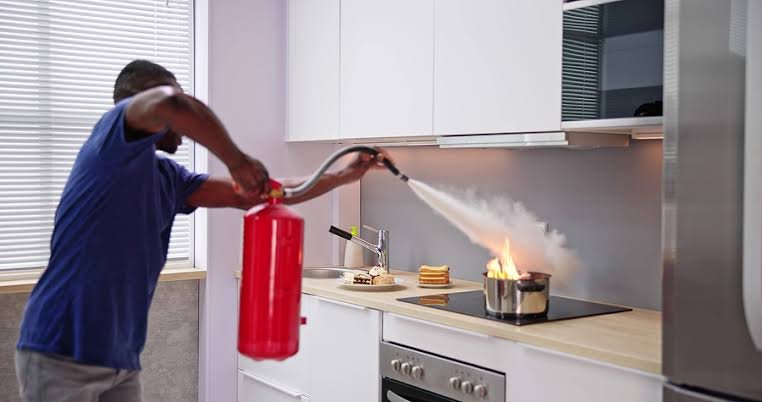
Firefighting equipment may be appropriate for a property, but using such equipment during an actual emergency should depend on the situation, training, and safety. For most occupants, especially children, the priority should be getting out safely and contacting emergency services.
Fire Extinguishers Are a Separate Safety Measure
Some homes may have suitable fire extinguishers as part of their fire-protection arrangements.
However, having an extinguisher does not mean that occupants should stay inside a developing fire.
Flame Defender provides fire extinguisher installation, inspection, refilling, testing, and maintenance services in Pakistan.
The decision to use firefighting equipment during an emergency should be based on appropriate training and safe circumstances. Evacuation should take priority when a fire is growing, smoke is spreading, or there is any doubt about safety.
Practice Communication
Family members should know how to communicate during an emergency.
Adults can teach children basic information such as their full name, home address, and how to seek help from a responsible adult when appropriate.
Older children can also learn the household’s emergency plan and understand that they should follow instructions from responsible adults and emergency responders.
Communication planning becomes especially important when family members are in different parts of the home.
Keep Emergency Information Updated
A household can keep important emergency information easily accessible.
This may include:
- Emergency contact numbers
- Home address
- Family contact details
- Important medical information
- Information about household members who may need assistance
During an emergency, having accurate information available can make communication easier.
Review the Plan After Changes
A fire drill plan should change when the household changes.
For example, the plan may need to be reviewed after:
- Moving furniture
- Renovating rooms
- Adding a new floor
- Changing bedrooms
- Adding new family members
- Changes in mobility needs
- Installing or upgrading an alarm system
The plan should always reflect the current layout and household situation.
Keep a Record of Drills
Formal buildings may have specific requirements for documenting drills. The Building Code of Pakistan Fire Safety Provisions 2016 states that written records of required drills should be completed and maintained.
For a private home, a formal record may not be necessary in the same way, but families can still make a simple note of when they practiced and what they learned.
A short record can help households remember to review their plan periodically.
Fire Drills and Fire Alarm Systems Work Together
A drill is most useful when it reflects the home’s actual fire-safety arrangements.
The alarm provides the warning, while the drill helps family members understand how to respond to that warning.
This is why a reliable fire alarm system in Pakistan should be combined with an understandable evacuation plan.
A household should know:
- How the alarm sounds
- What the alarm means
- Which exits are available
- Where to meet
- Who will assist children or others who need help
- What to do after leaving
Together, these measures can make the household better prepared.
Professional Fire-Safety Assessment
Some homes may have more complicated layouts or additional risks. Large houses, multi-storey residences, apartment buildings, and properties with specialized equipment may benefit from professional fire-safety advice.
A professional assessment can consider alarm coverage, detection technology, evacuation arrangements, extinguishers, and other relevant protection.
Flame Defender states that it provides fire alarm solutions for homes and residential properties across Pakistan, including installation, testing, maintenance, and upgrades.
For more information about fire protection solutions, visit Flame Defender.
A Simple Home Fire Drill Checklist
Before a household drill, make sure the plan includes:
- A clear evacuation route
- An alternative safe route where appropriate
- A family meeting point
- A working and properly maintained alarm
- A plan for young children
- A plan for anyone requiring additional assistance
- A way to communicate during an emergency
- Clear instructions not to return inside
- Emergency contact information
During the drill, keep the exercise calm and safe.
Afterward, discuss what worked and what should be improved.
Common Mistakes to Avoid
Waiting Until an Emergency
A family should not try to create an evacuation plan for the first time during an actual fire.
Blocking Escape Routes
A route that is blocked during everyday life may also be blocked during an emergency.
Ignoring Alarm Problems
If people cannot hear or recognize an alarm, the issue should be investigated.
Returning for Belongings
Personal possessions should never take priority over safety.
Practicing With Real Fire
A home drill should never involve flames or other dangerous simulations.
Forgetting to Update the Plan
Households change, and fire-safety plans should change with them.
Making Fire Drills a Normal Safety Habit
A home fire drill does not need to be complicated. The most important part is consistency.
Families can periodically review their escape routes, check that everyone knows the meeting point, and make sure the alarm system is appropriately maintained.
The Building Code of Pakistan’s fire-safety framework recognizes drills as an important part of emergency preparedness in applicable occupancies.
For homes, regular practice can provide a simple way to turn an emergency plan from an idea into something the family understands.
Final Thoughts
Fire safety at home is about preparation, early warning, and safe evacuation. A fire drill gives family members an opportunity to practice these principles before an emergency occurs.
A properly installed and maintained fire alarm system in Pakistan can provide an important warning, but the alarm is only the beginning. Everyone in the household should know what the warning means, how to leave safely, and where to meet outside.
Fire drills should always remain simple, calm, and safe. They should never involve real flames or dangerous simulations. The goal is to help family members respond confidently and leave the building safely if a genuine emergency occurs.
For information about residential fire alarm installation, maintenance, and other fire-protection solutions in Pakistan, visit Flame Defender.
FAQs
1. Why should families conduct fire drills at home?
Fire drills help family members become familiar with their evacuation plan, exits, alarm signals, and meeting point. Practicing beforehand can reduce confusion during a real emergency.
2. How often should a family conduct a fire drill?
There is no single schedule suitable for every home. Families should practice periodically and whenever there is a significant change in the home’s layout or household members.
3. What should children learn during a home fire drill?
Children should learn to recognize the alarm, follow responsible adults, use the planned safe exit, go to the family meeting point, and stay outside. The lesson should be calm and age-appropriate.
4. Is a fire alarm system enough without a fire drill?
No. An alarm provides an important warning, but household members also need to understand how to respond to that warning. An evacuation plan and regular practice complement the detection system.
5. Can a fire drill include real smoke or fire?
No. Home fire drills should not use real flames, smoke, burning materials, or other dangerous simulations. The drill should focus on safely practicing evacuation procedures.