
What Is a Fire Hose Reel?
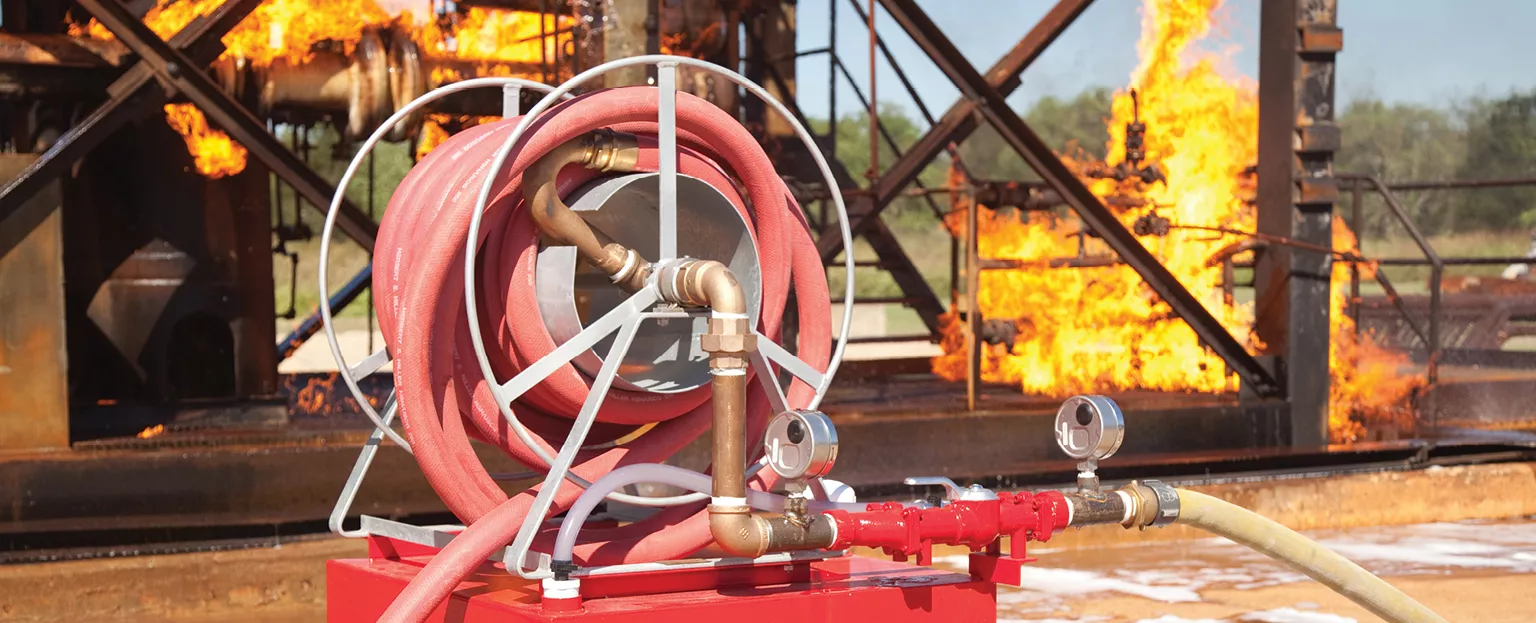
A fire hose reel is a fixed firefighting device designed to provide a readily available water supply during a fire emergency. It normally consists of a hose wound around a reel, a water connection, a control valve, and a nozzle. The arrangement allows water to be directed toward a fire when the system is designed for that purpose.
Hose reels are commonly included as part of broader fire protection arrangements in buildings. They are different from portable extinguishers because they are connected to a building’s water supply rather than relying on a small stored quantity of extinguishing agent.
Flame Defender describes hose reels as part of water-based fire protection systems used across different types of properties, including residential, commercial, industrial, and other buildings.
Why Fire Hose Reels Matter
A fire can grow rapidly, so having appropriate firefighting equipment available can be an important part of a building’s safety strategy.
A hose reel can provide a continuous water supply while the building’s emergency response is underway, provided that the system has been properly designed, supplied with adequate water, and maintained.
However, a hose reel is only one layer of protection. It should work alongside other measures such as detection and alarm systems, emergency lighting, escape routes, fire doors, extinguishers, sprinklers, and appropriate emergency procedures.
The Building Code of Pakistan Fire Safety Provisions 2016 includes requirements for standpipe and hose systems in specified buildings and states that such systems must be properly maintained and inspected, tested, and maintained according to applicable standards.
The Connection Between Hose Reels and Fire Alarms
A hose reel and a fire alarm serve different purposes.
The alarm system is primarily concerned with detection and notification, while a hose reel is part of the firefighting response. An alarm can alert occupants that a potential fire condition exists, while water-based equipment can form part of the building’s response and suppression strategy.
This is why it is useful to consider a fire alarm system in Pakistan as one component of an integrated fire protection plan rather than as a replacement for firefighting equipment.
Flame Defender provides fire alarm solutions for residential, commercial, and industrial properties and describes services including system design, installation, testing, maintenance, and upgrades.
Main Components of a Hose Reel System
Although designs vary according to building requirements, a hose reel arrangement can include several important components.
Hose
The hose carries water from the supply connection to the nozzle. It must remain in suitable condition and should be checked for visible deterioration, damage, or other problems.
Reel
The reel stores the hose and allows it to be deployed when necessary. It should operate smoothly and remain accessible.
Valve
The valve controls the water supply. A valve that cannot operate properly can prevent the equipment from performing its intended function.
Nozzle
The nozzle controls and directs the water coming from the hose. Its condition and operation are therefore important parts of the system.
Water Supply
A hose reel is dependent on an appropriate water supply. Problems with pressure, flow, valves, or connected pipework can affect the system’s performance.
Because these components work together, inspecting only the visible hose is not enough to establish that the complete installation is ready for use.
Where Are Hose Reels Used?
Hose reel systems may be found in various buildings where water-based fire protection is appropriate.
Examples can include:
- Commercial buildings
- Offices
- Industrial facilities
- Warehouses
- Shopping centres
- Hospitals
- Hotels
- Educational buildings
- Residential developments
- Other properties requiring fixed fire protection
The actual requirements depend on the building’s design, occupancy, fire risks, height, applicable regulations, and engineered fire protection strategy.
Flame Defender lists hose reels among water-based protection systems used in offices, residential buildings, factories, warehouses, hospitals, hotels, shopping malls, schools, parking facilities, and other properties.
Hose Reels as Part of a Layered Safety Strategy
Modern fire protection generally works best when multiple safety measures support each other.
For example:
Detection → Alarm → Evacuation → Firefighting response → Emergency services
A detection system may identify a developing fire. The alarm can notify occupants. Emergency procedures can guide people toward safety. Fixed firefighting equipment may provide an additional layer of protection where appropriate.
The Building Code of Pakistan includes separate provisions covering fire alarm systems, standpipes, sprinklers, and other fire protection measures, reflecting the importance of multiple layers rather than relying on one device.
The Importance of Correct Installation
A hose reel should be installed according to the design requirements of the building and applicable standards.
Important considerations can include its location, accessibility, water supply, pipework, pressure, flow, and relationship with other fire protection systems.
Poorly positioned equipment may be difficult to reach during an emergency. Similarly, inadequate water supply or unsuitable components can affect the system’s ability to provide the intended protection.
Professional design and installation help ensure that the system is appropriate for the property rather than simply adding equipment without considering the complete fire protection arrangement.
Accessibility Is Important
Fire safety equipment needs to be accessible when it is required.
A hose reel should not be hidden behind stored materials, blocked by furniture, or placed where occupants cannot reach it easily.
Building managers should also make sure that cabinets and surrounding areas remain free from unnecessary obstruction.
Accessibility should be considered during routine building inspections, especially in busy commercial or industrial environments where storage arrangements frequently change.
Why Regular Testing Matters
A hose reel can look perfectly normal while having an underlying problem.
For example, deterioration can affect the hose, valves can become difficult to operate, and problems in the water supply can reduce system performance.
Flame Defender’s hose reel testing service describes inspections of hose condition, reel operation, valves, nozzles, water flow, and pressure. It also highlights the importance of maintaining records of testing and identified faults.
Regular professional testing therefore provides more assurance than simply looking at the equipment from the outside.
Inspection, Testing, and Maintenance
These three activities are related but serve different purposes.
Inspection
Inspection involves checking the system and its components for visible or obvious problems.
Testing
Testing checks whether components and the overall system perform as intended under appropriate conditions.
Maintenance
Maintenance involves addressing identified problems and keeping the equipment in suitable working condition.
The Pakistan fire safety provisions state that standpipe systems should be inspected, tested, and maintained according to NFPA 25 or another approved code or standard. They also place responsibility for maintaining the system in good working condition on the owner.
Common Problems That Can Affect Hose Reels
Several issues may reduce the reliability of a hose reel system.
Damaged Hoses
A hose that has deteriorated or been physically damaged may not perform as intended.
Blocked Nozzles
Dirt, corrosion, or other contamination can affect the nozzle.
Faulty Valves
A valve that is difficult to operate may delay the availability of water.
Poor Water Flow
Insufficient flow can indicate a problem with the water supply, valves, pipework, or other parts of the system.
Obstructed Equipment
Even a correctly functioning hose reel becomes less useful if occupants cannot access it quickly.
These issues demonstrate why routine inspection and professional testing are important.
The Role of Building Management
Building owners and managers have an important role in ensuring that fixed fire protection systems remain operational.
Their responsibilities can include arranging appropriate inspections, testing, maintenance, repairs, and documentation.
The Building Code of Pakistan specifically states that the owner is responsible for maintaining a standpipe system and keeping it in good working condition.
Building management should also make sure that modifications or renovations do not accidentally interfere with fire protection equipment.
Training and Awareness
Fire protection equipment is more useful when people understand the building’s emergency procedures.
Employees, residents, and other occupants should know what the fire alarm means, where evacuation routes are located, and what to do during an emergency.
Training should emphasize that personal safety comes first. Occupants should not be encouraged to approach a dangerous or rapidly spreading fire.
In many situations, the correct response is to raise the alarm, evacuate, and contact emergency services.
Hose Reels and High-Rise Buildings
High-rise buildings require carefully designed fire protection because occupants may be far from ground level and evacuation can be more complex.
Pakistan’s Building Code contains provisions for standpipe systems in high-rise buildings and specifies Class I standpipe protection for high-rise buildings throughout where the relevant provisions apply.
The exact system requirements depend on the building and applicable regulations, so high-rise fire protection should be designed and maintained by appropriate professionals.
Hose Reels and Commercial Buildings
Commercial properties can contain many occupants and different types of fire hazards.
Offices, shopping centres, warehouses, hotels, and industrial buildings may therefore require coordinated fire protection systems.
A hose reel may form one part of this arrangement, while alarms, sprinklers, hydrants, emergency lighting, signage, and evacuation procedures provide additional layers.
The aim is to create a coordinated system rather than relying on individual pieces of equipment.
Relationship With Fire Sprinklers
Hose reels and sprinklers are not the same thing.
A sprinkler system is generally designed to respond automatically to heat and control or suppress a fire. A hose reel is a manually operated water-based firefighting device.
Both can have a place within a broader fire protection strategy, depending on the building and applicable requirements.
Pakistan’s Building Code contains separate provisions addressing automatic sprinkler systems and standpipe systems.
Relationship With Fire Hydrant Systems
Fire hydrants and hose reels can also be components of a wider water-based fire protection network.
A hydrant system can provide water through hydrant outlets and associated equipment for firefighting operations, while hose reels are designed as fixed hose stations.
Flame Defender describes fire hydrant systems as networks that can include water storage, fire pumps, valves, landing valves, hose reels, hoses, branch pipes, and nozzles.
The specific combination depends on the property’s fire protection design.
Documentation and Maintenance Records
Keeping proper records is an important part of managing fire protection equipment.
Records can help building managers understand:
- When equipment was inspected
- When testing was completed
- Which problems were identified
- What repairs were performed
- When the next inspection is due
The Building Code requires maintenance and testing arrangements for applicable standpipe systems, while professional testing services can provide reports documenting equipment condition and test results.
Good documentation also helps identify repeated problems over time.
Why Professional Testing Is Valuable
Fire hose reels are safety equipment, so their reliability should not be assumed simply because they appear clean and undamaged.
Professional testing can assess the system more thoroughly, including water flow, valves, hose condition, nozzle operation, and other relevant components.
Flame Defender states that it provides fire hose reel testing for commercial, residential, and industrial properties across Pakistan and checks the system from its water supply connection through to the nozzle.
For complex buildings, professional inspection and maintenance can be especially important.
Integrating Hose Reels With Modern Fire Protection
Fire protection is increasingly viewed as an integrated system rather than a collection of unrelated products.
A modern building may combine:
- Fire alarm systems
- Smoke and heat detection
- Manual call points
- Fire hose reels
- Fire hydrants
- Automatic sprinklers
- Fire pumps
- Water storage
- Emergency lighting
- Exit signage
- Emergency communication
Flame Defender’s Pakistan-focused fire safety information similarly describes integrated protection involving detection, alarms, suppression, emergency equipment, and evacuation measures.
Each component has a different purpose, but together they can create multiple layers of protection.
Safety Should Always Come First
A hose reel is firefighting equipment, not a reason for untrained people to take unnecessary risks.
If a fire is spreading quickly, producing significant smoke, or creating unsafe conditions, occupants should prioritize evacuation and seek professional emergency assistance.
Fire protection systems are intended to support life safety. They should never encourage someone to remain in a dangerous environment simply to protect property.
Conclusion
Fire hose reels can play an important role in a building’s water-based fire protection strategy. When properly designed, installed, accessible, inspected, tested, and maintained, they can provide a readily available water supply as part of the building’s emergency response.
However, a hose reel should never be considered a standalone solution. Effective fire safety combines early detection, reliable alarms, safe evacuation routes, appropriate suppression systems, emergency procedures, professional maintenance, and occupant awareness.
For properties in Pakistan, a properly planned fire alarm system in Pakistan can provide the early warning needed to complement fixed firefighting equipment. Flame Defender offers fire alarm, hose reel, hydrant, and other fire protection services for properties across Pakistan.
Frequently Asked Questions
1. What is the main purpose of a fire hose reel?
A fire hose reel provides a fixed water supply through a hose and nozzle as part of a building’s firefighting arrangements. Its suitability depends on the building’s design and applicable fire safety requirements.
2. Are hose reels the same as fire extinguishers?
No. A hose reel is connected to a water supply and can provide a continuous supply while operating, whereas a portable extinguisher contains a limited quantity of extinguishing agent. Both can serve different purposes within a fire protection strategy.
3. How often should fire hose reels be tested?
Testing requirements depend on the system, building, applicable standards, and local requirements. The Building Code of Pakistan requires applicable standpipe systems to be inspected, tested, and maintained according to NFPA 25 or another approved code or standard.
4. Can a hose reel replace a fire alarm system?
No. They perform different functions. A fire alarm system provides detection and notification, while a hose reel is part of a firefighting system. Effective fire protection normally uses multiple layers of safety.
5. Who should maintain a building’s hose reel system?
Responsibility depends on the property and applicable requirements. For systems covered by the Building Code’s standpipe provisions, the owner is responsible for maintaining the system in good working condition. Professional fire safety specialists can perform appropriate inspection, testing, and maintenance.