
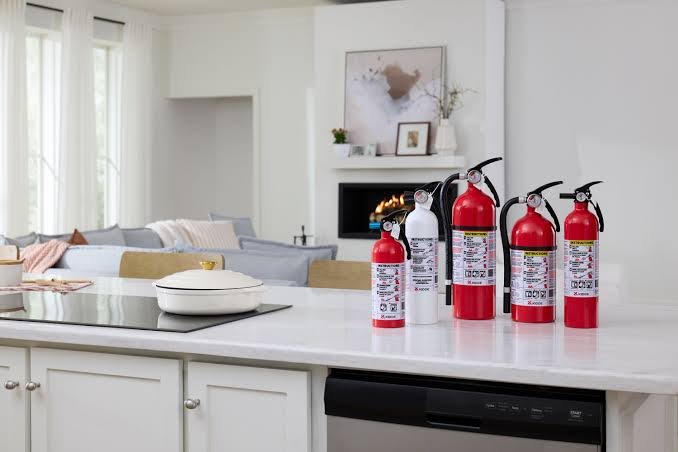
Home should be a place where families feel safe and comfortable. However, everyday activities such as cooking, charging electronic devices, using electrical appliances, and operating heating equipment can create fire risks. Although many people install strong locks and security systems, they may overlook an important part of household safety: having appropriate fire protection equipment.
A fire extinguisher can help control a small, early-stage fire when the correct type is available and someone can use it safely. It cannot guarantee that a fire will be controlled, and it should never replace smoke alarms, an evacuation plan, or professional emergency assistance.
In Pakistan, homes vary from apartments and rented properties to large houses and multi-storey buildings. Each home has different risks depending on its electrical installations, cooking arrangements, fuel sources, and layout. Understanding these risks can help families make informed decisions about fire safety.
This guide explains the importance of household fire extinguishers, the main types available, where to keep them, how to maintain them, and how they work alongside a fire alarm system in Pakistan.
1. Why Does Every Home Need to Consider Fire Extinguishers?
A fire can begin with a seemingly ordinary activity. Cooking oil may overheat, an electrical connection may fail, or a candle may ignite nearby materials. If a fire is detected early, the correct extinguisher may help control it before it spreads.
However, not every fire should be tackled with an extinguisher. A fire involving a room, producing heavy smoke, or spreading rapidly requires immediate evacuation and emergency assistance.
The benefits of appropriate household fire protection include:
- Early response: A suitable extinguisher may help control a small fire before it grows.
- Protection of property: Early intervention can sometimes limit damage to household belongings.
- Improved preparedness: Families can learn what to do when a fire starts.
- Support for other safety measures: Extinguishers complement smoke alarms, safe electrical installations, and evacuation planning.
- Greater awareness: Choosing and maintaining safety equipment encourages families to identify fire hazards around the home.
The most important principle is that people should never put themselves at risk to protect property. Life safety must always come first.
2. What Are the Common Causes of Home Fires in Pakistan?
Understanding common household hazards helps families decide what precautions are appropriate.
Cooking accidents
Cooking is a major activity in most homes, but unattended pans, overheated oil, and combustible materials near stoves can create fire hazards. Gas stoves also require safe installation, suitable ventilation, and regular attention to leaks or faulty connections.
Stay in the kitchen while cooking, keep towels and packaging away from burners, and turn off appliances when they are not in use.
If cooking oil catches fire, do not pour water onto it. Water can cause burning oil to spread. If it is safe, turn off the heat without reaching across the flames, cover the pan with a suitable lid, and leave it covered while it cools. If the fire is not immediately controlled or you are unsure what to do, evacuate and call emergency services.
Electrical problems
Damaged wires, overloaded sockets, poor-quality electrical accessories, and faulty appliances can create ignition risks.
Avoid connecting too many high-power appliances to one outlet. Stop using equipment with damaged cables, unusual heat, burning smells, or repeated electrical faults. Have problems inspected by a qualified electrician.
Gas and fuel hazards
Some households use LPG cylinders or other fuel sources for cooking and heating. Incorrect storage, damaged equipment, and leaking connections can create serious hazards.
Use approved equipment, follow the supplier’s safety instructions, and arrange professional inspection when needed. If you suspect a gas leak, avoid flames and electrical switches, move people away from the danger, and contact the appropriate emergency service or qualified gas professional from a safe location.
Candles, heaters, and smoking materials
Candles, portable heaters, and cigarettes can ignite curtains, bedding, furniture, or other combustible materials. Keep these ignition sources away from flammable items, and never leave an open flame unattended.
Charging devices and batteries
Damaged chargers, incompatible accessories, and defective batteries may overheat. Use suitable charging equipment, stop using damaged devices, and follow the manufacturer’s instructions for charging and storage.
3. Understanding the Main Types of Fire Extinguishers
Not every extinguisher is suitable for every fire. The correct choice depends on the burning material, the equipment involved, and the product’s approved fire classifications.
ABC dry chemical powder extinguishers
ABC dry chemical powder extinguishers are designed for a range of common fire hazards, including many fires involving ordinary combustible materials, flammable liquids, and certain electrical equipment.
Their versatility can make them a practical option for some homes. However, powder can leave residue that damages sensitive electronics and requires cleaning. The label should clearly identify the fires for which the extinguisher is suitable.
Carbon dioxide (CO₂) extinguishers
CO₂ extinguishers are commonly used for certain flammable-liquid and electrical-equipment fires. They generally leave little residue, but their effectiveness depends on the circumstances, and they may be less suitable for some ordinary combustible materials.
CO₂ can also create an asphyxiation hazard in confined spaces. Product instructions and professional advice should guide its use.
Foam extinguishers
Foam extinguishers may be suitable for certain ordinary combustible-material and flammable-liquid fires. They are not automatically appropriate for every electrical hazard, so the label must be checked before selection.
Water-based extinguishers
Water extinguishers are generally intended for suitable fires involving ordinary combustible materials, such as paper and wood. They must not be used on live electrical equipment or burning cooking oil.
Wet chemical extinguishers
Wet chemical extinguishers are designed for particular cooking-oil and fat fires, especially those associated with commercial cooking equipment. A product specifically approved for the relevant hazard may be appropriate for a home with particular cooking risks.
Important: Check the extinguisher’s label and follow professional guidance. Do not choose equipment based on colour alone, and never assume one extinguisher is suitable for every possible fire.
4. How Do You Choose the Right Extinguisher for Your Home?
Before buying an extinguisher, consider the hazards in your home rather than selecting the cheapest or largest option.
Ask the following questions:
- What hazards are present? Consider cooking equipment, electrical appliances, heating devices, and any fuels stored on the property.
- What fire classifications does the product cover? The label should identify the approved uses.
- Is it suitable for a residential setting? Consider where it will be stored and who may need to access it.
- Can household members reach it safely? It should be accessible without entering a hazardous area.
- Is the product genuine and properly labelled? Look for clear manufacturer information, operating instructions, and applicable certification or approval details.
- Can it be serviced locally? Confirm that inspection, maintenance, and recharging support is available when required.
The required number, size, and placement of extinguishers depend on the property’s layout, risks, and applicable requirements. A qualified fire safety professional can assess larger homes, multi-storey properties, or buildings with unusual hazards.
For apartments, also check the building’s shared fire safety arrangements. A household extinguisher does not replace equipment or measures required in common areas.
5. Where Should You Keep Fire Extinguishers at Home?
An extinguisher is useful only when it is accessible and suitable for the hazard.
Depending on the home layout and professional recommendations, possible locations may include:
- Near a kitchen exit, away from the immediate cooking hazard.
- In an accessible area close to a utility or workshop space, if relevant.
- Near an exit on a floor where additional protection is appropriate.
- In another clearly identified location that household members can reach without crossing a likely fire area.
Avoid placing extinguishers directly beside a stove, where a fire could prevent access. Do not hide them behind furniture, stack boxes in front of them, or store them where children may play with them.
Follow the manufacturer’s instructions for mounting and environmental conditions. Make sure the operating label remains visible and that everyone in the household knows where the equipment is located.
In rented homes, discuss permanent mounting or other changes with the landlord when necessary. Residents should also learn the building’s evacuation procedures and identify shared exits.
6. How Do You Use a Fire Extinguisher Safely?
A portable extinguisher should only be used on a small, early-stage fire when the person has been trained or understands the product’s instructions, the correct extinguisher is available, and there is a clear escape route behind them.
Remember these safety principles:
- Raise the alarm and alert other people first.
- Call the local emergency service when a fire presents a danger or may spread.
- Keep an exit behind you and stay away from smoke.
- Use only an extinguisher labelled for the type of fire.
- Stop immediately if the fire grows, smoke increases, or the extinguisher does not work as expected.
- Never re-enter a burning building to retrieve possessions.
Many extinguishers use the PASS method: Pull the pin, Aim at the base of the fire, Squeeze the handle, and Sweep from side to side. However, operating methods can differ by model, so follow the instructions printed on the specific unit and obtain practical training where possible.
Do not attempt to fight a fire if you are uncertain, the exit is threatened, or you would need to approach dangerous heat or smoke. Evacuate instead.
7. Why Smoke Alarms and Fire Alarm Systems Matter
Fire extinguishers are only one part of a complete home fire safety plan. People may be asleep or in another room when a fire begins, making early warning essential.
Smoke alarms can alert occupants to a developing fire, giving them an opportunity to leave before smoke and heat make escape difficult. Install suitable alarms according to manufacturer instructions and applicable local requirements, and test them regularly.
Larger homes, apartment buildings, and shared residential properties may need more comprehensive detection and alarm arrangements. A professionally designed fire alarm system in Pakistan should account for the building’s design, occupancy, relevant standards, and local requirements.
Depending on the property, appropriate arrangements may include interconnected smoke alarms, audible warning devices, manual alarm points, or a central fire alarm system. The correct solution should be assessed by a competent professional.
Remember that an alarm warns people of danger; it does not extinguish the fire. Likewise, an extinguisher cannot provide the early warning that a working alarm offers. Both should form part of a wider safety plan.
8. How Should You Maintain a Home Fire Extinguisher?
An extinguisher that is damaged, discharged, or difficult to operate may fail when needed. Regular checks help identify problems before an emergency.
Follow the manufacturer’s maintenance instructions and any applicable inspection requirements.
Check the condition
Look for visible damage, corrosion, leakage, a blocked nozzle, or a missing operating label. If the extinguisher has a pressure gauge, check that its indicator is within the manufacturer’s specified operating range.
Check access and placement
Make sure the extinguisher remains in its designated location and can be reached quickly. Keep the label visible and the path to it clear.
Review service information
Check the inspection tag, service records, and any stated maintenance or testing dates. Requirements vary by extinguisher type and applicable standards, so do not rely on one universal service interval.
Arrange professional servicing
If an extinguisher has been used, damaged, discharged, or identified as defective, arrange appropriate servicing or replacement. Recharging and internal maintenance should be performed by a qualified service provider.
Do not dismantle, modify, or attempt to recharge the unit yourself.
9. Common Mistakes Families Should Avoid
Even when a household owns a fire extinguisher, certain mistakes can reduce its effectiveness.
Buying the wrong type: A product may not be suitable for cooking oil, electrical equipment, or another hazard in the home.
Ignoring the instructions: Family members may not know how to operate the unit or when to stop using it.
Storing it out of reach: Equipment hidden behind furniture or kept in a locked storage area may not be accessible during an emergency.
Forgetting maintenance: Corrosion, damage, or a loss of pressure can affect readiness.
Depending on an extinguisher alone: Smoke alarms, safe exits, hazard prevention, and evacuation plans remain essential.
Attempting to fight a large fire: Smoke and heat can make a situation dangerous very quickly. Protecting people is more important than saving belongings.
Blocking escape routes: Furniture, stored items, and household clutter should never prevent occupants from reaching an exit.
Avoiding these mistakes helps turn fire equipment into a useful part of a wider safety plan.
10. Create a Simple Home Fire Safety Plan
Every household should know what to do if a fire occurs. The plan does not need to be complicated, but everyone should understand it.
Start by identifying at least two possible ways out of each occupied room where feasible. Check that doors and windows can be opened safely, and make sure escape routes remain clear.
Choose a meeting point outside the home, away from traffic and the building. Make sure children understand where to go and who to follow. Plan how to assist older adults or anyone who may need help evacuating.
Practise the plan periodically and review it after changes to the home. If you live in an apartment, learn the building’s emergency procedures and follow instructions from building management and emergency responders.
If a fire starts:
- Warn everyone and activate the alarm if available.
- Leave using a safe exit, avoiding smoke.
- Close doors behind you if this can be done safely.
- Call the appropriate emergency service from a safe location.
- Stay outside and do not re-enter until authorities say it is safe.
Do not delay evacuation to collect valuables or attempt to retrieve an extinguisher from a dangerous location.
11. Fire Safety Considerations for Pakistani Homes
Homes in Pakistan have varied layouts, electrical systems, cooking arrangements, and fuel sources. Fire safety measures should reflect these differences.
In houses using LPG cylinders, proper equipment, safe storage, and attention to leaks are important. In properties with frequent power interruptions, residents should follow manufacturer instructions when using backup power equipment and avoid unsafe electrical connections.
Families living in apartment buildings should understand shared evacuation routes, building alarms, and the location of communal firefighting equipment. Residents should not block corridors or stairways with personal belongings.
The Building Code of Pakistan—Fire Safety Provisions 2016 provides a national reference for fire prevention, life safety, and fire protection in buildings. The exact requirements applicable to a residence can depend on its building type, location, relevant local regulations, and the authority responsible for enforcement.
For guidance on a particular property, consult the relevant building management, local authority, or qualified fire safety professional rather than assuming every home has identical requirements.
Conclusion
Having an appropriate fire extinguisher at home can improve preparedness, but owning one is not enough. Families need to select equipment that matches their household hazards, keep it accessible, maintain it properly, and understand its limitations.
Smoke alarms, safe cooking practices, sound electrical installations, clear escape routes, and a rehearsed evacuation plan are equally important. If a fire becomes dangerous or cannot be controlled immediately, leave the building and call emergency services.
For households in Pakistan, a practical approach is to assess the risks in each living area, obtain suitable equipment from a reliable supplier, and seek professional advice where necessary. A few sensible precautions can help families respond more confidently and make their homes safer.
Frequently Asked Questions (FAQs)
1. Should every home have a fire extinguisher?
A suitable fire extinguisher can be a valuable part of household fire protection. The appropriate type and number depend on the home’s layout and hazards. Extinguishers should complement smoke alarms and a clear evacuation plan, not replace them.
2. Which fire extinguisher is best for home use?
There is no single best option for every home. ABC dry chemical powder extinguishers cover several common fire classifications, while other types are designed for particular hazards. Check the product label and seek professional advice to select equipment suitable for your household.
3. Can I use a fire extinguisher on an electrical fire?
Only use an extinguisher specifically labelled as suitable for the electrical hazard involved, and follow its instructions. Never use water on live electrical equipment. If the fire is spreading or the situation is unsafe, evacuate and call emergency services.
4. How often should a home fire extinguisher be checked?
Follow the manufacturer’s instructions and applicable maintenance requirements. Regular visual checks can identify damage, access problems, or visible pressure issues, while servicing and recharging should be completed by a qualified provider when required.
5. Is a fire extinguisher enough to protect a home from fire?
No. Extinguishers cannot guarantee that a fire will be controlled. Smoke alarms, safe electrical and cooking practices, clear escape routes, household training, and an emergency plan are all important parts of home fire safety.