
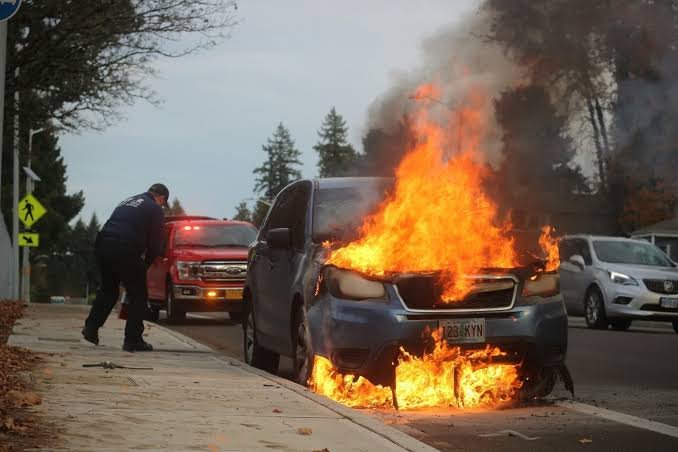
Car fire safety is an important part of household and road safety. Many families focus on protecting their homes from fire but may overlook the vehicle parked in the driveway, garage, or near the house. Cars contain fuel, electrical wiring, lubricants, plastics, upholstery, and other materials that can contribute to a fire when a serious mechanical or electrical problem occurs.
Vehicle fires can happen for different reasons. Mechanical failures, electrical problems, damaged wiring, leaking fluids, collisions, and overheating components are among the situations that can increase fire risk. The National Fire Protection Association (NFPA) notes that mechanical and electrical problems are common causes of vehicle fires and recommends paying attention to warning signs such as fluid leaks, damaged wiring, and unusual changes in engine temperature.
For families in Pakistan, understanding basic vehicle fire prevention can help reduce avoidable risks. Proper vehicle maintenance, safe parking, awareness of warning signs, and a clear emergency plan can all contribute to better preparedness.
Why Car Fire Safety Matters
A vehicle is essentially a mobile collection of mechanical, electrical, and fuel systems. Under normal conditions, these systems operate safely. However, damaged components, poor maintenance, accidents, or extreme heat can create conditions that may lead to a fire.
A vehicle fire can also become a concern for nearby buildings. A car parked close to a house, shop, garage, or another vehicle can potentially expose surrounding property to heat and flames.
This is particularly important in crowded residential areas where vehicles may be parked close together.
Pakistan’s Rescue 1122 Emergency Services Department identifies fires and road traffic crashes among the emergencies it responds to and promotes community preparedness and fire prevention as part of its safety work.
Common Causes of Vehicle Fires
Understanding the common causes of vehicle fires is an important first step toward prevention.
Electrical Problems
Modern cars contain extensive electrical systems. Wiring, batteries, alternators, fuses, lighting systems, sensors, infotainment equipment, and other electrical components all require proper installation and maintenance.
Damaged or loose wiring can create electrical problems. Repeatedly blown fuses can also indicate an underlying fault that should be inspected rather than repeatedly ignored.
NFPA lists electrical problems and damaged wiring among warning signs that vehicle owners should take seriously.
Fuel and Fluid Leaks
Many vehicle fluids can burn under suitable conditions. Fuel, engine oil, transmission fluid, brake fluid, and other automotive fluids should therefore be contained within their appropriate systems.
A visible leak should not simply be ignored. A qualified mechanic should investigate the source and repair the problem.
Engine Overheating
An overheating engine can indicate a mechanical or cooling-system problem.
Drivers should pay attention to unusual temperature readings, warning lights, steam, unusual smells, or other signs that the vehicle is not operating normally.
Continuing to drive a vehicle with a serious overheating problem can increase the risk of damage and potentially create additional hazards.
Accidents and Collisions
A crash can damage fuel systems, electrical components, wiring, batteries, and other parts of a vehicle.
Not every crash results in a fire, but damaged vehicles should be assessed appropriately after an accident.
NFPA notes that most crashes do not result in fire, but recommends contacting emergency services after a crash and avoiding unnecessary exposure to a damaged vehicle.
Warning Signs of a Possible Car Fire
Recognizing warning signs early can help a driver take appropriate action.
Potential warning signs include:
- Burning smells
- Smoke
- Damaged or loose wiring
- Repeatedly blown fuses
- Fuel or fluid leaks
- Unusual engine temperature
- Sudden electrical problems
- Unusual noises
- Warning lights
- Visible damage after an accident
A burning smell should not automatically be dismissed as normal.
If a vehicle behaves unusually, it is safer to move to an appropriate safe location and arrange professional inspection rather than continuing to drive without understanding the problem.
Regular Vehicle Maintenance
Regular maintenance is one of the most practical ways to reduce vehicle-related fire risks.
A professional mechanic can inspect systems that may not be obvious to an ordinary driver.
Maintenance can include checking:
- Electrical wiring
- Battery connections
- Fuel systems
- Engine components
- Cooling systems
- Belts and hoses
- Fluid levels
- Leaks
- Exhaust components
NFPA recommends regular servicing by a professionally trained mechanic and advises owners to have leaks or vehicle problems checked.
Maintenance requirements vary between vehicles, so owners should also follow the manufacturer’s recommended service schedule.
Safe Parking at Home
Where a vehicle is parked can affect household fire safety.
Whenever possible, vehicles should be parked in appropriate designated areas rather than directly against a house or near easily ignitable materials.
Avoid parking close to:
- Dry vegetation
- Waste materials
- Fuel storage
- Chemical storage
- Combustible rubbish
- Other unnecessary sources of ignition
The vehicle should also have enough surrounding space to allow people to move away safely if smoke or fire develops.
Garage Fire Safety
A garage can contain additional hazards because it may hold tools, cleaning products, paints, cardboard, electrical equipment, and other materials.
If a vehicle is kept inside a garage, the garage should be kept organized and free of unnecessary combustible materials.
Important considerations include:
- Keeping exits accessible
- Maintaining electrical equipment
- Avoiding unsafe storage
- Keeping combustible materials away from heat sources
- Maintaining suitable ventilation
- Following local building and fire-safety requirements
For larger shared or enclosed parking facilities, additional fire protection measures may be required. Pakistan’s Punjab Community Safety Buildings Regulations, for example, include specific fire protection provisions for certain buildings and enclosed car parks.
Electric and Hybrid Vehicles
Electric and hybrid vehicles have different powertrain technologies from conventional petrol or diesel vehicles.
Their high-voltage battery systems require appropriate handling, particularly after severe damage or a fire.
Vehicle owners should follow the manufacturer’s emergency instructions and inform emergency responders if a damaged vehicle is an electric or hybrid vehicle.
Specialized emergency-response guidance for electric vehicles notes that damaged high-voltage batteries can present electrical hazards and, in some circumstances, the possibility of delayed fire.
This is another reason why people should not approach or attempt to dismantle a severely damaged vehicle after a serious incident.
What to Do if Smoke or Fire Appears
If smoke or flames are coming from a vehicle while driving, safety should be the priority.
NFPA recommends pulling over as quickly as safely possible, turning off the engine, getting everyone out of the vehicle, moving away from the vehicle and traffic, and contacting emergency services.
The important steps are:
- Move the vehicle to a safe location if it can be done without creating additional danger.
- Stop the engine.
- Get everyone out of the vehicle.
- Move a safe distance away.
- Do not return to the vehicle for belongings.
- Contact the appropriate emergency service.
- Keep other people away from the vehicle.
In Punjab, Rescue 1122 lists 1122 as its emergency number.
Emergency numbers can differ by jurisdiction, so residents should know the appropriate emergency service for their area.
Why People Should Not Re-enter a Burning Car
A burning vehicle can become dangerous very quickly.
Smoke can reduce visibility and may contain harmful substances. Heat can also make approaching the vehicle unsafe.
Even if the flames appear limited, conditions can change rapidly.
For this reason, once everyone has evacuated, people should stay away and allow trained emergency responders to manage the incident.
NFPA specifically advises people never to return to a burning vehicle for belongings.
Fire Extinguishers and Vehicles
Some people consider keeping a portable fire extinguisher in a vehicle. Whether this is appropriate depends on the vehicle, extinguisher, local requirements, storage conditions, and the manufacturer’s instructions.
A fire extinguisher should never create a false sense of security.
If a fire is already developing rapidly, the priority should be evacuation and contacting emergency services rather than attempting to fight the fire.
For any extinguisher, users should understand its rating and limitations and follow the manufacturer’s instructions.
Special circumstances can apply to electric vehicles and high-voltage batteries, so vehicle-specific emergency guidance should be followed.
Car Fire Safety Around the Home
Vehicle safety and home fire safety are connected when a car is parked near a residence.
A vehicle fire close to a building can expose the structure to heat and flames. This is one reason families should consider where they park vehicles and what materials are stored around parking areas.
A household fire-safety review can include:
- Vehicle parking location
- Garage condition
- Electrical charging equipment
- Fuel storage
- Nearby combustible materials
- Access for emergency vehicles
- Home smoke alarms
- Fire extinguishers where appropriate
- Emergency exits
A broader fire protection plan may also include a suitable fire alarm system in Pakistani homes and buildings where applicable.
The exact system depends on the building type, size, occupancy, and relevant requirements.
Fire Alarm Systems and Vehicle Safety
A fire alarm system does not normally detect every vehicle problem before a fire begins. However, suitable fire detection and alarm arrangements can provide an important warning when fire or smoke occurs within a building.
For homes, smoke alarms can provide early warning to occupants.
For larger buildings and parking structures, fire detection and alarm systems may form part of a broader fire protection strategy.
Pakistan’s building-safety regulations include automatic fire alarm and detection requirements for certain buildings, along with other fire protection measures.
Therefore, vehicle fire safety should not be considered separately from the overall fire safety of a property.
Safe Fuel Handling
Fuel is highly flammable, so it should be handled carefully.
Vehicle owners should avoid unsafe fuel storage or transportation practices and should follow applicable laws and manufacturer guidance.
Fuel leaks should be addressed promptly by a qualified professional.
NFPA advises that when gasoline must be transported, it should be carried only in an appropriate certified container and kept appropriately ventilated; gasoline containers should not be transported in the passenger compartment.
Avoid Unauthorized Electrical Modifications
Modern vehicles often contain sophisticated electrical systems.
Unapproved modifications can introduce additional wiring, connections, or electrical loads that were not part of the original vehicle design.
Examples can include poorly installed lighting, audio equipment, accessories, charging equipment, or other electrical modifications.
Vehicle electrical work should be carried out by appropriately qualified professionals using components suitable for the vehicle.
Parking and Charging Electric Vehicles
Electric vehicles require additional consideration because charging involves electrical equipment and, in some cases, high-voltage battery systems.
Charging equipment should be installed and used according to the vehicle and charger manufacturer’s instructions and applicable electrical requirements.
Damaged charging cables, connectors, outlets, or other components should not be used until they have been inspected and, where necessary, repaired or replaced.
For shared or enclosed parking areas, building owners should consider the applicable fire and electrical safety requirements.
Fire Safety in Parking Buildings
Multi-story and enclosed parking facilities can present different challenges from an individual residential driveway.
A vehicle fire in a confined parking structure can expose nearby vehicles and building components to heat and smoke.
Research into vehicle fires in parking structures has identified fire spread as an important consideration, particularly in some open parking structures, and discusses the role of sprinkler protection in enclosed garages.
Building owners should therefore follow applicable fire-safety codes and obtain professional advice when designing or modifying parking facilities.
The Role of Fire Prevention
The best vehicle fire strategy begins with prevention.
Simple preventive habits include:
- Maintaining the vehicle regularly
- Repairing leaks promptly
- Checking unusual electrical problems
- Monitoring engine temperature
- Keeping the vehicle in good mechanical condition
- Following manufacturer maintenance recommendations
- Using suitable charging equipment
- Avoiding unsafe fuel storage
- Parking responsibly
- Keeping combustible materials away from vehicles
These steps cannot eliminate every possible cause of fire, but they can help reduce avoidable risks.
Preparing the Whole Family
Everyone who regularly travels in a family vehicle should know basic emergency procedures.
Children should understand that if a vehicle must be evacuated, they should follow the responsible adult’s instructions and move away from the vehicle.
Families can discuss:
- Where to move after leaving the vehicle
- Why nobody should return for belongings
- How to contact emergency services
- What warning signs to report
- Why damaged vehicles should not be approached unnecessarily
Rescue 1122’s community safety program emphasizes public preparedness, fire prevention, safety education, and emergency management skills.
Professional Inspection and Fire Safety
If a vehicle develops repeated electrical problems, fluid leaks, overheating, unusual smells, or other warning signs, it should be inspected by a qualified automotive professional.
Similarly, homeowners and property managers should seek professional fire-safety advice for complex building systems, garages, charging facilities, or commercial parking areas.
For information about fire protection equipment and safety solutions in Pakistan, Flame Defender provides fire-safety information and products that property owners can explore.
Conclusion
Car fire safety is an important part of protecting families, vehicles, homes, and surrounding property. Mechanical problems, electrical faults, fluid leaks, overheating, and collision damage can all create potential hazards.
Regular vehicle maintenance, attention to warning signs, safe parking, responsible fuel handling, and appropriate charging practices can help reduce avoidable risks.
If smoke or flames appear, evacuation should take priority. Everyone should leave the vehicle, move to a safe location, and contact the appropriate emergency service. In Punjab, Rescue 1122 provides emergency services including fire response and lists 1122 as its emergency number.
A home’s overall fire protection should also consider smoke detection, alarms, escape routes, and other appropriate safety measures. A properly planned fire alarm system in Pakistani homes and buildings can form part of a wider fire-safety strategy where required.
The key principle is simple: maintain vehicles properly, recognize warning signs early, avoid unnecessary risks, and prioritize people’s safety whenever a vehicle fire occurs.
Frequently Asked Questions
1. What are the common causes of car fires?
Common causes include mechanical problems, electrical faults, damaged wiring, fluid leaks, overheating, and vehicle collisions. Regular professional maintenance can help identify some problems before they become serious.
2. What should I do if my car catches fire?
Stop in a safe location if possible, turn off the engine, get everyone out, move away from the vehicle, and contact the appropriate emergency service. Do not return to the vehicle for personal belongings.
3. Can a car fire spread to a house?
Yes. A vehicle parked close to a building can expose nearby structures to heat, flames, and smoke. Keeping vehicles and combustible materials appropriately separated from buildings can help reduce this risk.
4. Are electric vehicles different when it comes to fire safety?
Electric and hybrid vehicles contain high-voltage battery systems that require specific emergency considerations. A severely damaged battery can present electrical hazards and may have the potential for delayed fire, so manufacturer guidance and emergency responders’ instructions should be followed.
5. Does a fire alarm system help with car fire safety?
A fire alarm system can provide early warning when fire or smoke is detected in a protected building, but it does not replace vehicle maintenance or safe driving practices. For larger buildings and parking facilities, detection and alarm systems may be part of the overall fire protection design, depending on applicable requirements.