
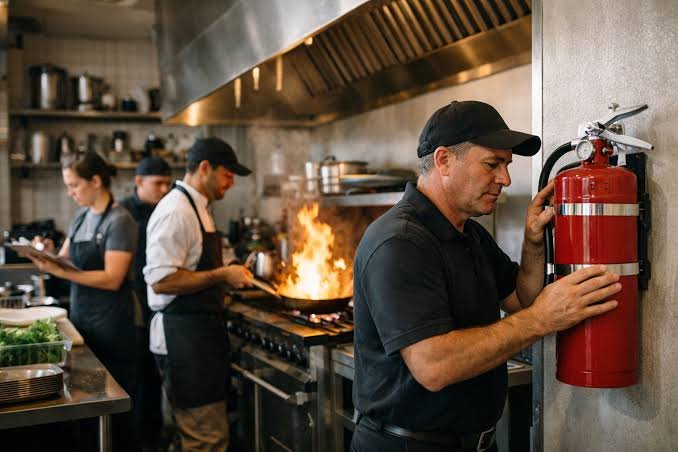
Restaurants are busy environments where heat, electricity, cooking oils, gas, and large numbers of people come together every day. These conditions make fire safety an essential part of restaurant planning—not simply an additional expense.
A well-designed fire protection strategy can help restaurant owners detect a fire early, control an incident before it spreads, protect employees and customers, and reduce property damage. It can also support compliance with applicable building and fire-safety requirements in Pakistan.
The Building Code of Pakistan – Fire Safety Provisions 2016 establishes requirements intended to provide reasonable levels of fire and life safety and property protection. The provisions apply to both new and existing buildings.
For restaurant owners, however, choosing fire-safety equipment can be confusing. There are extinguishers, alarms, detectors, kitchen suppression systems, emergency lighting, sprinklers, fire doors, evacuation plans, and other measures to consider.
This guide explains what to look for when buying restaurant fire-safety equipment in Pakistan and how to build a practical safety system.
Why Restaurant Fire Safety Requires Special Attention
A restaurant has several different types of fire hazards in one location.
The kitchen may contain cooking oil, gas cylinders or gas lines, electrical appliances, ovens, fryers, grills, exhaust systems, and combustible packaging. Dining areas may contain furniture, curtains, decorations, electrical equipment, and other materials that can contribute to fire growth.
Electrical rooms, storage areas, generators, and waste-collection areas create additional risks.
Another important consideration is occupancy. A restaurant fire does not only threaten the building—it can place customers and staff at risk, particularly if smoke spreads quickly or exits are blocked.
For this reason, fire protection should not be based on a single piece of equipment. It should be approached as a complete system involving prevention, detection, suppression, evacuation, and staff preparedness.
1. Start With a Restaurant Fire-Risk Assessment
Before purchasing equipment, identify the hazards throughout the premises.
Walk through the restaurant and examine:
- Cooking equipment
- Deep fryers
- Gas appliances and connections
- Electrical distribution boards
- Refrigerators and freezers
- Ovens and grills
- Exhaust hoods and ducts
- Gas-cylinder storage areas
- Generator rooms
- Electrical rooms
- Food and packaging storage
- Waste-storage areas
- Dining areas
- Staircases and corridors
- Emergency exits
The goal is to understand where a fire could start, how quickly it could spread, and how people would escape.
The Building Code of Pakistan uses occupancy classifications and establishes different requirements according to building use and characteristics.
A professional assessment is particularly valuable for large restaurants, high-rise locations, food courts, hotels, shopping centres, and restaurants operating in multi-purpose buildings.
2. Choose the Right Fire Detection System
Early detection is one of the most important components of restaurant fire safety.
A suitable detection and alarm system can alert occupants when smoke, heat, or another fire indicator is detected. This gives employees more time to begin evacuation and contact emergency services.
When evaluating a Fire alarm system in Pakistan, restaurant owners should consider more than the price of the control panel.
Look at:
- Type of detectors
- Number and placement of detectors
- Manual call points
- Audible alarms
- Visual alarm indicators where appropriate
- Alarm control panel
- Backup power
- Monitoring capabilities
- System expandability
- Installation quality
- Testing and maintenance arrangements
Kitchen areas require careful detector selection. Normal cooking activity can produce heat, steam, and smoke, which may cause inappropriate detectors to generate unwanted alarms.
The system should therefore be designed according to the characteristics of each area rather than simply installing identical detectors throughout the building.
Pakistan’s fire-safety provisions include requirements for fire-warning and detection systems in applicable occupancies, while local authorities may also impose additional requirements.
3. Don’t Ignore Kitchen Fire Suppression
Fire extinguishers are important, but they should not be considered the only protection for a commercial kitchen.
Cooking appliances can create fires involving cooking oils and fats. A fire beneath a commercial cooking hood can also spread into the exhaust system if it is not controlled properly.
Depending on the restaurant’s design and applicable requirements, a kitchen may need a dedicated automatic suppression system designed for cooking hazards.
When evaluating a kitchen suppression system, ask:
- What type of cooking equipment does it protect?
- Does it cover fryers, grills, ranges, and other appliances?
- How does activation work?
- Does activation shut down gas or electrical cooking equipment where required?
- Is the exhaust system properly considered?
- How often does the system require inspection and servicing?
- Is the equipment installed by qualified personnel?
The Building Code of Pakistan contains specific fire-protection provisions for different building uses and areas, including requirements involving suppression and fire separation.
4. Buy Fire Extinguishers Based on the Hazard
One of the most common mistakes restaurant owners make is purchasing extinguishers based only on availability or price.
Different fires require different extinguishing agents.
For example, restaurants may encounter:
- Ordinary combustible-material fires
- Flammable-liquid fires
- Electrical equipment fires
- Cooking-oil and fat fires
A restaurant may therefore require more than one extinguisher type.
Extinguishers should be:
- Appropriate for the hazard
- Correctly sized
- Easily accessible
- Clearly identified
- Properly mounted
- Regularly inspected
- Maintained by qualified personnel
Employees should also know where extinguishers are located and understand when it is safe to attempt first-response firefighting.
An extinguisher should never be treated as a substitute for evacuation. If a fire is growing rapidly, producing heavy smoke, or blocking an escape route, employees should prioritize getting people to safety.
5. Pay Attention to Gas and Fuel Safety
Many restaurants use natural gas, LPG, or other fuel sources for cooking.
Fuel-related hazards deserve special attention because leaks can potentially create both fire and explosion risks.
Restaurant operators should regularly inspect:
- Gas connections
- Flexible hoses
- Regulators
- Valves
- Cylinders
- Gas piping
- Ventilation
- Storage arrangements
Gas cylinders should be stored and handled according to applicable local requirements and manufacturer instructions.
Staff should also know how to respond if they smell gas. The response should follow an established emergency procedure rather than relying on improvisation.
Where appropriate, gas detection and automatic shut-off arrangements can provide an additional layer of protection.
6. Inspect Electrical Installations
Electrical faults are another important source of fire risk in commercial kitchens.
Restaurants can have significant electrical loads because they may operate refrigerators, freezers, ovens, exhaust fans, air-conditioning equipment, lighting, coffee machines, POS systems, water heaters, and other appliances simultaneously.
A safety review should examine:
- Distribution boards
- Circuit breakers
- Wiring
- Extension cords
- Plug connections
- Overloaded outlets
- Damaged cables
- Electrical appliances
- Generator connections
Avoid using temporary wiring as a permanent solution.
Electrical panels should remain accessible and should never be surrounded by combustible materials or used as storage space.
Routine electrical inspections can identify problems before overheating or electrical faults become serious.
7. Protect Exhaust Hoods and Ducts
Restaurant exhaust systems can accumulate grease over time.
Grease deposits can become a significant fire hazard, particularly when exposed to high temperatures or flames.
A proper maintenance programme should include inspection and cleaning of:
- Filters
- Hood surfaces
- Exhaust fans
- Ductwork
- Grease collection areas
Cleaning frequency should reflect the type and volume of cooking. A restaurant that performs heavy frying may require more frequent cleaning than a facility with relatively low-grease cooking.
A clean exhaust system also supports better ventilation and kitchen hygiene.
8. Keep Emergency Exits Clear
A sophisticated alarm system cannot protect occupants effectively if people cannot escape.
Emergency exits should be:
- Clearly identified
- Unobstructed
- Accessible
- Properly illuminated
- Appropriate for the building’s occupancy and layout
Do not use emergency exit routes for storing boxes, chairs, cleaning supplies, equipment, or deliveries.
Restaurant furniture should also be arranged so that customers and employees can move toward exits without unnecessary obstacles.
Pakistan’s fire-safety framework places significant importance on means of egress and emergency evacuation.
9. Consider Emergency Lighting and Signage
A fire may interrupt normal electrical power. Smoke can also make it difficult for people unfamiliar with the building to identify escape routes.
Emergency lighting and illuminated exit signage can help occupants navigate toward safe exits.
When buying emergency lighting, consider:
- Battery backup
- Expected operating duration
- Installation location
- Visibility
- Routine testing
- Maintenance requirements
Exit signs should be easy to see and should not be hidden by decorations, advertising displays, furniture, or equipment.
10. Fire Doors and Compartmentation Matter
Fire can spread rapidly from one part of a building to another.
Fire-rated walls, doors, and other forms of compartmentation can help slow the spread of fire and smoke, giving occupants additional time to evacuate and allowing emergency responders more time to control the incident.
Doors that are part of a fire-protection arrangement should not be propped open unless the system is specifically designed to permit it.
The Building Code of Pakistan includes provisions concerning fire separation and fire-resistant construction for various rooms and occupancies.
Restaurant owners renting space inside a shopping centre, hotel, or commercial building should determine which fire-protection features are their responsibility and which are managed by the building owner.
11. Don’t Overlook Sprinkler Systems
Automatic sprinklers can provide an important layer of protection by responding to developing fires.
Whether sprinklers are required depends on factors such as the building’s occupancy, size, height, construction, layout, and applicable regulations.
A sprinkler system should be professionally designed rather than installed simply by placing sprinkler heads wherever convenient.
Restaurant owners should ask suppliers about:
- System design
- Water supply
- Pump arrangements
- Valves
- Coverage
- Inspection
- Testing
- Maintenance
- Compatibility with the building’s existing fire-protection infrastructure
The Building Code of Pakistan includes requirements related to automatic sprinkler systems in applicable circumstances.
12. Create a Written Emergency Action Plan
Equipment alone does not create a complete fire-safety programme.
Employees need clear instructions about what to do during an emergency.
An emergency plan can include:
- How to report a fire
- How to activate the alarm
- How to contact emergency services
- Which exits should be used
- Where employees and customers should assemble
- Who is responsible for specific emergency duties
- How evacuation will be managed
- How fire drills will be conducted
- When firefighting equipment may be used
- How the building will be accounted for after evacuation
The Building Code of Pakistan specifically identifies emergency action plans, emergency reporting, evacuation procedures, fire drills, and emergency response responsibilities among relevant requirements.
13. Train Restaurant Employees
Even the best fire-protection equipment is less effective if employees do not know how to use it.
Training should cover:
- Recognising common fire hazards
- Raising the alarm
- Calling emergency services
- Using appropriate extinguishers when safe
- Evacuation procedures
- Emergency exits
- Gas emergency procedures
- Kitchen shutdown procedures
- Assembly points
- Assisting customers without creating additional risk
New employees should receive basic fire-safety information as part of their induction.
Refresher training should also be provided periodically.
Fire drills can help identify practical problems that may not be obvious during normal operations.
14. Compare Suppliers Before Buying
When purchasing restaurant fire-safety equipment in Pakistan, do not compare suppliers based only on the initial quotation.
Ask suppliers for information about:
- Product specifications
- Relevant certifications
- Installation experience
- Warranty
- Maintenance support
- Replacement parts
- Testing procedures
- Response times
- Documentation
- Previous commercial projects
A low-cost system can become expensive if it requires frequent repairs or fails to perform when needed.
The best purchasing decision considers quality, suitability, installation, maintenance, and long-term reliability.
15. Think About Maintenance From Day One
Fire equipment is not a one-time purchase.
Alarms, detectors, extinguishers, emergency lighting, pumps, sprinklers, kitchen suppression systems, and other equipment require appropriate inspection, testing, servicing, or replacement.
Create a maintenance record containing:
- Equipment type
- Installation date
- Location
- Inspection dates
- Test results
- Defects identified
- Repairs completed
- Replacement dates
- Responsible service provider
Punjab Civil Defence, for example, identifies fire detection and alarm systems, firefighting arrangements, fire-safety plans, emergency exits, evacuation plans, and other measures among fire-safety considerations for commercial premises.
Requirements can vary according to the location, building type, occupancy, and authority having jurisdiction, so restaurant owners should verify applicable requirements with the relevant local authority.
Restaurant Fire Safety Buying Checklist
Before purchasing equipment, restaurant owners can use the following checklist:
Detection
- Fire alarm control system
- Suitable smoke or heat detection
- Manual call points
- Audible/visual notification where required
- Backup power
Suppression
- Correct fire extinguishers
- Kitchen suppression where required
- Sprinkler protection where applicable
- Fire hydrant or other building systems where applicable
Kitchen Safety
- Hood and duct cleaning
- Gas inspection
- Cooking-equipment maintenance
- Proper fuel storage
- Suitable ventilation
Evacuation
- Emergency exits
- Exit signs
- Emergency lighting
- Clear escape routes
- Evacuation plan
Management
- Staff training
- Fire drills
- Maintenance records
- Emergency contacts
- Regular professional inspections
Final Thoughts
Restaurant fire safety should be viewed as an investment in people, property, business continuity, and responsible management.
The right solution is not necessarily the system with the largest number of devices or the lowest price. It is the system designed around the restaurant’s actual hazards, building configuration, occupancy, and applicable Pakistani requirements.
If you are evaluating a Fire alarm system in Pakistan, start with a professional risk assessment and determine what the premises actually needs. Then compare equipment based on suitability, quality, installation, certification, maintenance, and after-sales support rather than price alone.
For restaurant owners, prevention is equally important. Proper kitchen maintenance, safe electrical installations, controlled fuel use, clean exhaust systems, unobstructed exits, employee training, and regular inspections all work together to reduce the likelihood and consequences of a fire.
The Building Code of Pakistan – Fire Safety Provisions 2016 remains an important reference for fire and life-safety requirements, while local authorities may establish additional requirements that businesses must follow.
For information about fire-protection solutions and equipment, restaurant operators can also explore .
FAQs
1. What fire safety equipment does a restaurant need?
The exact requirements depend on the restaurant’s size, layout, occupancy, cooking equipment, building type, and local regulations. Common measures include fire detection and alarm systems, appropriate extinguishers, kitchen suppression systems, emergency lighting, exit signage, and, where applicable, sprinklers or hydrants.
2. Is a fire alarm system necessary for restaurants in Pakistan?
Fire alarm and detection requirements depend on the building’s occupancy and applicable regulations. The Building Code of Pakistan contains requirements for fire-warning and detection systems in specified circumstances. Restaurant owners should have their premises assessed against the requirements applicable to their particular building and location.
3. Which extinguisher should be used in a restaurant kitchen?
There is no single extinguisher suitable for every restaurant hazard. Cooking oils, ordinary combustibles, flammable liquids, and electrical equipment can require different approaches. The extinguisher should be selected according to the specific hazard and applicable standards.
4. How often should restaurant fire-safety equipment be inspected?
Inspection and maintenance intervals depend on the type of equipment, manufacturer requirements, applicable standards, and local regulations. Restaurants should maintain documented inspection and servicing schedules and arrange professional servicing where required.
5. What is the most important restaurant fire-safety measure?
There is no single measure that provides complete protection. A strong programme combines fire prevention, early detection, appropriate suppression, clear evacuation routes, emergency planning, staff training, and regular maintenance. A restaurant should be assessed as a complete fire-safety environment rather than relying on one product.