
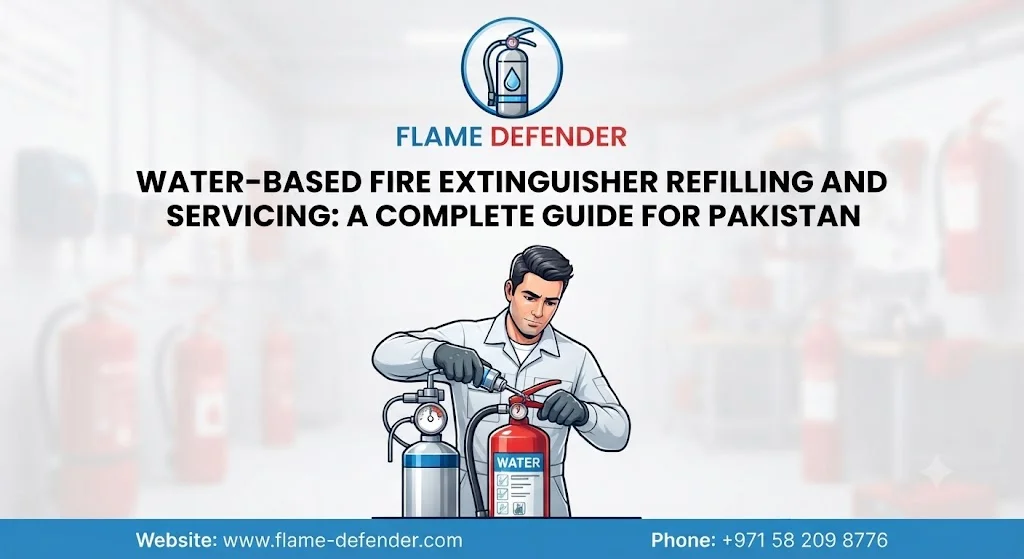
Fire safety is not something you can afford to ignore, whether you run a small shop, manage a factory, or simply want to protect your home. Among the many types of fire extinguishers available, water-based fire extinguishers are one of the most common and widely trusted options across homes, offices, and commercial buildings in Pakistan. But owning one is only half the job. If it isn’t refilled and serviced properly, it can fail you exactly when you need it most.
In this guide, we’ll walk through everything you need to know about water-based fire extinguisher refilling and servicing, why it matters, how often it should be done, and how to find reliable fire extinguisher refilling in Pakistan.
What Is a Water-Based Fire Extinguisher?
A water-based fire extinguisher uses plain water, or water mixed with additives, to cool down and put out fires. It works by absorbing heat quickly, which lowers the temperature of the burning material below its ignition point. This makes it highly effective for Class A fires — those involving ordinary combustible materials like wood, paper, cloth, and cardboard.
You’ll typically find these extinguishers in offices, schools, warehouses, retail stores, and residential buildings, since Class A fire risks are common in almost every setting. They’re simple to use, affordable, and considered one of the safest extinguisher types for general environments where there’s no risk of electrical or flammable liquid fires.
Why Refilling and Servicing Matters
A fire extinguisher isn’t a “buy it once and forget it” device. Over time, the pressure inside the cylinder can drop, the water can settle or degrade, and internal components like hoses, valves, and seals can wear out. If any of this happens without your knowledge, your extinguisher may look fine on the outside but fail to work when a fire actually breaks out.
Here’s why regular refilling and servicing is essential:
- Ensures the extinguisher actually works during an emergency. A fire doesn’t wait for you to check your equipment first.
- Maintains proper pressure levels. Low pressure means weak or no discharge, which can be dangerous in a real fire situation.
- Prevents corrosion and internal damage. Water-based extinguishers, if not checked periodically, can develop rust inside the cylinder, weakening its structure.
- Keeps you compliant with safety regulations. Many commercial buildings, factories, and offices in Pakistan are required to maintain valid, serviced fire safety equipment for insurance and legal compliance.
- Extends the lifespan of your equipment. Regular servicing means you don’t need to replace extinguishers as frequently, saving money in the long run.
How Often Should You Refill and Service a Water-Based Fire Extinguisher?
As a general rule, fire extinguishers should be inspected at least once a year, even if they haven’t been used. However, the refilling schedule can depend on a few factors:
- After every use — even a partial discharge — the extinguisher must be refilled immediately.
- Annual inspection — a certified technician checks pressure, hose condition, and the cylinder body.
- Every 5 years — a more thorough hydrostatic test is usually recommended to check the cylinder’s structural integrity.
- Environmental exposure — extinguishers kept in humid, dusty, or high-temperature areas (common in many parts of Pakistan) may need more frequent checks.
If you’re unsure when your extinguisher was last serviced, it’s best to get it checked sooner rather than later.
Signs Your Water-Based Fire Extinguisher Needs Servicing
Don’t wait for the annual reminder alone. Watch out for these warning signs:
- The pressure gauge needle is outside the green zone
- Visible rust, dents, or corrosion on the cylinder
- The pin or tamper seal is broken or missing
- The hose is cracked, blocked, or damaged
- It’s been more than a year since the last inspection
- There’s visible leakage around the valve
If you notice any of these, it’s time to contact a professional servicing team rather than risk using a faulty extinguisher.
The Refilling and Servicing Process
Here’s a general idea of what happens during a professional water-based fire extinguisher service:
- Inspection — The technician checks the exterior for damage, corrosion, and the condition of the pressure gauge.
- Discharge testing (if needed) — If the extinguisher hasn’t been used recently but is due for periodic testing, it may be discharged and tested.
- Cleaning the cylinder — The internal cylinder is cleaned to remove any rust or debris.
- Refilling — Fresh water (with appropriate additives, if applicable) is refilled into the cylinder.
- Pressurizing — The extinguisher is repressurized to the correct level using compressed air or nitrogen.
- Sealing and tagging — A new tamper seal is applied, and a service tag is attached showing the date of service and next due date.
- Final check — The extinguisher is tested for leaks and proper function before being handed back.
This entire process should always be done by trained professionals, since incorrect pressurizing or sealing can create safety hazards.
Why Choose Professional Fire Extinguisher Refilling in Pakistan
Fire safety equipment is a serious matter, and DIY refilling is not something to attempt without proper training and tools. Working with an experienced provider ensures your extinguishers meet safety standards and are genuinely reliable when needed.
If you’re looking for trusted fire extinguisher refilling in Pakistan, Flame Defender offers professional refilling and servicing solutions for water-based and other extinguisher types. Their team handles inspection, refilling, pressure testing, and certification, helping homes and businesses across Pakistan stay fire-ready all year round.
Tips to Maintain Your Fire Extinguisher Between Services
- Keep it in an easily accessible, visible location
- Avoid placing it near direct heat sources or in extreme humidity
- Check the pressure gauge every few months
- Make sure the safety pin and tamper seal are intact
- Never use it for practice or testing purposes casually
- Keep a record of service dates for each extinguisher
Small habits like these can go a long way in ensuring your extinguisher is ready when you need it.
Conclusion
A water-based fire extinguisher can be a lifesaver, but only if it’s properly maintained. Regular refilling and servicing isn’t just a formality — it’s what ensures the equipment actually performs when a fire breaks out. Whether it’s for your home, office, or commercial space, staying on top of your fire safety equipment is a responsibility that shouldn’t be delayed.
If your extinguisher is due for a check, don’t wait until it’s too late. Reach out to a trusted provider of fire extinguisher refilling in Pakistan and make sure your safety equipment is always ready to protect what matters most.
Frequently Asked Questions (FAQs)
1. How often should a water-based fire extinguisher be refilled? It should be refilled immediately after any use, and inspected annually. A more detailed hydrostatic test is generally recommended every 5 years, depending on the manufacturer’s guidelines.
2. Can I refill a fire extinguisher myself at home? No, refilling should always be done by a trained professional. Improper refilling or pressurizing can make the extinguisher unsafe or ineffective during an actual fire.
3. What types of fires can a water-based fire extinguisher put out? Water-based extinguishers are best suited for Class A fires, which involve materials like wood, paper, textiles, and other ordinary combustibles.
4. Is it safe to use a water-based extinguisher on electrical fires? No, water conducts electricity, so using a water-based extinguisher on live electrical fires can be dangerous. A CO2 or dry powder extinguisher is more appropriate for such fires.
5. How do I know if my fire extinguisher needs servicing? Check the pressure gauge regularly. If the needle is outside the green zone, or if you notice rust, damage, or an expired service tag, it’s time for servicing.
6. What is the average lifespan of a water-based fire extinguisher? With proper maintenance, a water-based fire extinguisher can typically last around 10 to 15 years before it needs replacement, though this can vary by manufacturer.
7. How much does fire extinguisher refilling cost in Pakistan? Costs vary depending on the extinguisher size, condition, and service provider. It’s best to request a quote directly from a professional servicing company for accurate pricing.
8. Why does the pressure in my fire extinguisher drop over time? Pressure can drop due to minor leaks, temperature fluctuations, or general wear on seals and valves over time, which is why annual checks are important.
9. Do commercial buildings in Pakistan need certified fire extinguisher servicing? Yes, most commercial and industrial buildings are required to maintain regularly serviced and certified fire safety equipment to meet safety regulations and insurance requirements.
10. Where can I get reliable fire extinguisher refilling services in Pakistan? You can get professional fire extinguisher refilling and servicing from Flame Defender, which provides reliable fire safety solutions for homes and businesses across Pakistan.