
Fire extinguishers are one of the most important safety tools in any home, office, factory, or vehicle. But many people don’t realize that an extinguisher isn’t a “buy it once and forget it” item. Over time, the pressure drops, the extinguishing agent loses effectiveness, and the unit becomes unreliable exactly when you need it most. That’s why fire extinguisher refilling in Pakistan has become such an important service for businesses and homeowners who take safety seriously.
In this guide, we’ll walk you through the complete step-by-step process that professional technicians follow when refilling a fire extinguisher, why each step matters, and how to choose a reliable refilling service near you.
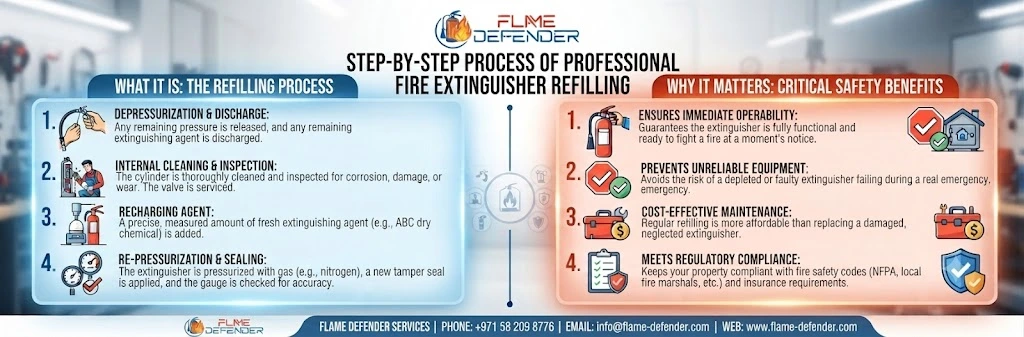
Why Fire Extinguisher Refilling Matters
A fire extinguisher that looks fine on the outside can be completely useless on the inside. Pressure gauges can fail, seals can weaken, and the powder or gas inside can settle or lose its chemical punch. Refilling isn’t just about topping up the agent — it’s a full inspection and recharge process that restores the extinguisher to working condition.
Skipping regular refilling puts lives and property at risk. It can also cause businesses to fail fire safety audits, insurance inspections, or building code compliance checks, which are becoming stricter across Pakistan’s commercial sector.
Step-by-Step Process of Professional Fire Extinguisher Refilling
Step 1: Initial Inspection and Assessment
The process always starts with a visual and physical inspection of the extinguisher. A trained technician checks:
- The body of the cylinder is prone to rust, dents, or corrosion
- The pressure gauge reading
- The hose, nozzle, and trigger mechanism
- The expiry date and last service tag
If the cylinder shows structural damage, it may be flagged for replacement instead of refilling, since safety always comes before cost savings.
Step 2: Depressurizing the Cylinder
Before opening the extinguisher, the remaining pressure must be safely released. This is a critical safety step, as opening a pressurized cylinder without releasing the internal pressure first can be dangerous for the technician.
Step 3: Removing the Old Extinguishing Agent
Once depressurized, the cylinder is opened, and the old agent — whether it’s dry chemical powder, CO2, foam, or water-based — is completely emptied. Any leftover residue is cleaned from the inside of the cylinder to prevent clogging or contamination in the next fill.
Step 4: Internal and External Cleaning
The empty cylinder is thoroughly cleaned, both inside and out. This step ensures no moisture, dust, or old powder residue remains, which could otherwise affect the extinguisher’s performance or cause internal corrosion over time.
Step 5: Component Inspection
The valve, hose, nozzle, safety pin, and pressure gauge are individually checked. Worn-out O-rings, cracked hoses, or faulty valves are replaced with genuine parts. This step is what separates a professional refilling service from a shortcut job — reused faulty parts are one of the leading causes of extinguisher failure during emergencies.
Step 6: Hydrostatic Testing (When Required)
Depending on the age and type of the cylinder, a hydrostatic pressure test may be carried out to confirm that the cylinder can safely hold pressure without leaking or bursting. This is typically required every few years and is a legal safety requirement for commercial fire safety equipment in many industries.
Step 7: Refilling with the Correct Extinguishing Agent
This is the core step. The technician refills the cylinder with the correct type and quantity of extinguishing agent based on the extinguisher’s classification (ABC powder, CO2, foam, or water mist). Using the wrong agent or an incorrect fill weight can make the extinguisher ineffective or even unsafe.
Step 8: Pressurizing the Cylinder
Once refilled, the cylinder is pressurized to the manufacturer’s specified level using nitrogen or the appropriate gas, depending on the extinguisher type. The pressure gauge is checked to confirm it sits within the correct operating range.
Step 9: Leak Testing
Before the extinguisher is approved for use, it undergoes a leak test to confirm that the valve and seals are holding pressure correctly. Any sign of leakage sends the unit back for further repair before it can be certified.
Step 10: Labeling, Tagging, and Certification
Finally, the extinguisher is fitted with a new service tag showing the refill date, technician details, and the next due date for servicing. A certification label is added, which is often required for fire safety compliance and insurance documentation.
How Often Should You Refill a Fire Extinguisher?
As a general guideline in Pakistan:
- CO2 extinguishers: Refill every 5 years, or immediately after any use
- Dry chemical powder extinguishers: Refill every 1–2 years, or after use
- Foam and water-based extinguishers: Refill annually
- Any extinguisher with a low or fluctuating pressure gauge reading should be checked immediately, regardless of the schedule
Why Choose a Professional Refilling Service in Pakistan
With fire safety regulations tightening across factories, offices, malls, and residential buildings in cities like Lahore, Karachi, and Islamabad, choosing a certified refilling provider matters. A professional service ensures:
- Genuine extinguishing agents that meet safety standards
- Proper pressure testing and certification
- Compliance with local fire safety codes
- Extended lifespan of your existing equipment instead of unnecessary replacement
If you’re looking for a trusted provider for fire extinguisher refilling in Pakistan, Flame Defender offers professional inspection, refilling, and certification services designed to keep your property and people protected.
Frequently Asked Questions (FAQs)
1. How often should a fire extinguisher be refilled in Pakistan? Most extinguishers need refilling every 1 to 5 years, depending on the type, or immediately after any use, even partial use.
2. How do I know if my fire extinguisher needs refilling? Check the pressure gauge — if the needle isn’t in the green zone, or if the extinguisher hasn’t been serviced in over a year, it likely needs refilling.
3. Is it cheaper to refill or replace a fire extinguisher? In most cases, refilling is more cost-effective than buying a new unit, as long as the cylinder itself is structurally sound.
4. Can a fire extinguisher be refilled after use? Yes, once used (even partially), an extinguisher should be refilled as soon as possible so it’s ready for the next emergency.
5. What types of fire extinguishers can be refilled? ABC dry powder, CO2, foam, and water-based extinguishers can all be professionally refilled.
6. How long does the refilling process take? A standard refill typically takes a few hours per unit, though larger commercial batches may take longer depending on quantity.
7. Do I need to replace the extinguisher cylinder every time it’s refilled? No, cylinders can usually be reused multiple times as long as they pass inspection and hydrostatic testing when required.
8. Is fire extinguisher refilling mandatory for businesses in Pakistan? Yes, most commercial buildings, factories, and offices are required to maintain functional, regularly serviced fire extinguishers to meet fire safety compliance standards.
9. Can I refill a fire extinguisher myself? No, refilling requires specialized equipment, correct extinguishing agents, and pressure testing tools that only trained technicians and certified facilities have access to.
10. Where can I get professional fire extinguisher refilling services in Pakistan? Certified providers like Flame Defender offer complete refilling, inspection, and certification services across major cities in Pakistan.
Final Thoughts
A fire extinguisher is only as reliable as its last service. Regular, professional refilling ensures your equipment is ready to perform when it matters most — protecting your home, employees, and property from potential fire hazards. Don’t wait for a failed inspection or, worse, a real emergency to find out your extinguisher wasn’t ready. Schedule a professional refill today and stay compliant, protected, and prepared.