
Every home, office, factory, and shop in Pakistan needs at least one fire extinguisher. But owning a fire extinguisher is not enough — you also need to know if it is actually working. The easiest way to check this is by reading the pressure gauge on top of the cylinder. Sadly, most people never look at this small dial until it is too late, during an actual fire emergency.
In this guide, we will explain how a fire extinguisher pressure gauge works, what the different colour zones mean, and how to know when it’s time for fire extinguisher refilling in Pakistan. Whether you own a small CO2 unit for your kitchen or a large ABC powder cylinder for your warehouse, this article will help you keep it fire-ready all year round.
What Is a Fire Extinguisher Pressure Gauge?
A pressure gauge is the small, round dial found on most fire extinguishers, usually near the handle. It shows how much pressure is inside the cylinder. This pressure is what pushes the extinguishing agent (powder, foam, or gas) out with enough force to fight a fire.
Not every extinguisher has a gauge. CO2 extinguishers, for example, don’t usually have one because they work differently — they need to be weighed instead. But most dry powder, water, and foam extinguishers have a gauge, and it is your quickest visual check to know if the unit is ready to use.
Understanding the Colour Zones
Most gauges are divided into three colour sections:
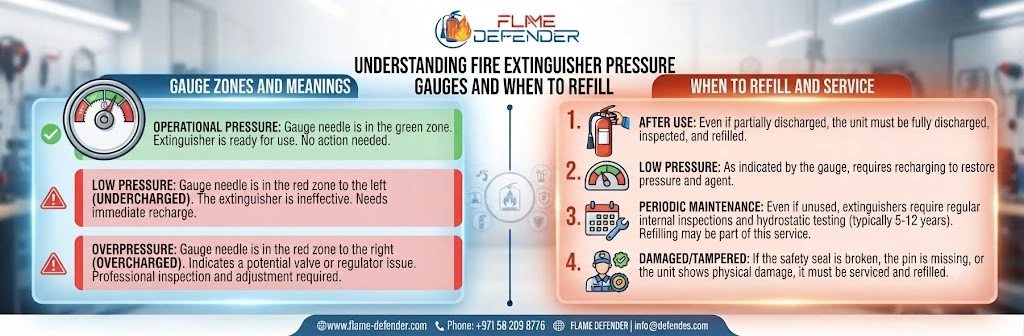
- Green Zone – This means the extinguisher is fully charged and ready to use. If the needle sits here, you’re good to go.
- Red Zone (Left Side) – This shows the extinguisher is under-pressurized or empty. It will not work properly, or at all, in an emergency.
- Red Zone (Right Side) – This means the extinguisher is over-pressurized, which can also be dangerous and needs professional attention.
If you ever notice the needle outside the green zone, don’t wait. Get it checked by a professional service before it becomes a bigger problem.
Why Pressure Drops Over Time
Even a fire extinguisher that has never been used can lose pressure. Some common reasons include:
- Natural leakage – Seals and valves wear out over years of use, letting tiny amounts of gas escape slowly.
- Temperature changes – Pakistan’s hot summers and cold winters cause the internal pressure to expand and contract, which can weaken seals faster.
- Physical damage – A dropped or knocked extinguisher can develop small leaks that are not visible from outside.
- Old age – Extinguishers have a limited lifespan. Even with proper care, most models need replacement or a full overhaul after 5 to 15 years, depending on the type.
- Improper storage – Extinguishers stored in humid or very hot places (common in local warehouses and factories) tend to lose pressure faster.
Signs Your Fire Extinguisher Needs a Refill
You don’t always need to wait for the gauge needle to move into the red zone. Watch out for these signs too:
- The gauge needle is not in the green zone
- Visible corrosion or rust on the cylinder body
- Dents or damage to the extinguisher body
- The pin or tamper seal is broken or missing
- The hose is cracked, blocked, or brittle
- It has already been used, even partially
- It has crossed its official inspection or refill due date
If you notice any of these signs, it’s time to arrange a professional refill and inspection rather than assuming the extinguisher is still safe to rely on.
How Often Should You Refill a Fire Extinguisher in Pakistan?
This depends on the type of extinguisher and how it’s used:
- Water and foam extinguishers: Refill or service every 12 months
- Dry powder (ABC) extinguishers: Inspect yearly; refill every 5 years or after use
- CO2 extinguishers: Weigh yearly; refill if weight drops below the marked level
- Wet chemical extinguishers: Service annually, refill after use or every 5 years
Businesses in Pakistan — especially factories, offices, malls, restaurants, and petrol pumps are usually required to keep fire safety equipment properly maintained under local safety regulations and insurance requirements. Regular servicing isn’t just good practice, it can also affect your fire safety compliance and insurance validity.
Why Refilling Matters More in Pakistan’s Climate
Pakistan experiences extreme heat in summer, especially in cities like Karachi, Lahore, and Multan, along with humid coastal weather and cold winters up north. These temperature swings put extra stress on extinguisher seals and valves. A cylinder that might last longer in a mild climate could lose pressure faster here. That’s why local businesses and homeowners should check their gauges more frequently ideally every month instead of only once a year.
DIY Check vs. Professional Refill
Checking the gauge yourself takes only a few seconds and is something everyone should do monthly. Simply glance at the needle position — no tools needed.
However, refilling should always be done by trained professionals. This is because:
- The correct type and quantity of extinguishing agent must be used
- The cylinder needs to be pressure-tested for safety
- Valves and hoses need inspection for damage
- Incorrect refilling can make the extinguisher unsafe or ineffective
For fire extinguisher refilling in Pakistan, it’s best to work with a certified fire safety company that follows proper testing and refilling standards, rather than an unauthorized local vendor.
Choosing a Reliable Refilling Service
When picking a service provider, consider the following:
- Do they provide trained technicians and proper testing equipment?
- Do they offer pickup and delivery service for bulk refilling (useful for offices and factories)?
- Do they provide a service report or refill certificate?
- Do they offer AMC (Annual Maintenance Contracts) for regular servicing?
- Are they experienced with different extinguisher types (CO2, ABC powder, foam, water)?
A trustworthy provider like Flame Defender can help ensure your extinguishers are refilled correctly, tested for safety, and ready whenever you need them whether it’s for a single home unit or a full commercial building.
Final Thoughts
Your fire extinguisher’s pressure gauge is a small but powerful safety tool. A quick monthly glance can tell you whether your extinguisher will actually work when you need it most. Don’t wait for an emergency to find out it’s empty or damaged. Make gauge checks a habit, and schedule professional refilling as soon as you notice any warning signs.
If you’re looking for dependable fire extinguisher refilling in Pakistan, make sure to choose a service that values safety, proper testing, and quick turnaround — because when it comes to fire safety, there’s no room for shortcuts.
Frequently Asked Questions (FAQs)
1. What does the green zone on a fire extinguisher gauge mean? The green zone means the extinguisher is properly pressurized and ready to use in case of a fire.
2. How often should I check my fire extinguisher’s pressure gauge? It’s best to check it once a month. A quick glance takes only a few seconds and can catch problems early.
3. What should I do if the needle is in the red zone? Stop relying on that extinguisher and contact a professional refilling service right away to have it inspected and refilled.
4. Do CO2 fire extinguishers have a pressure gauge? No, most CO2 extinguishers don’t have a gauge. They need to be weighed periodically to check if they still have enough gas inside.
5. How long does a fire extinguisher refill take? A standard refill usually takes a few hours to a day, depending on the extinguisher type and whether pressure testing is also required.
6. Can I refill a fire extinguisher myself? No, refilling should always be done by trained professionals using proper equipment, since incorrect refilling can make the extinguisher unsafe.
7. How much does fire extinguisher refilling cost in Pakistan? Costs vary depending on the extinguisher size and type (CO2, ABC powder, foam, or water). It’s best to request a quote from a certified local provider for accurate pricing.
8. When does a fire extinguisher need to be replaced instead of refilled? If the cylinder shows heavy rust, dents, damage, or has failed a pressure test, it’s usually safer to replace it rather than refill it.
9. Is it mandatory for businesses in Pakistan to service fire extinguishers regularly? Yes, most commercial buildings, factories, and offices are expected to maintain functional fire safety equipment as part of local safety compliance and insurance requirements.
10. What happens if I use an expired or empty fire extinguisher during a fire? It may fail to discharge properly or run out too quickly, leaving you without protection exactly when you need it most — which is why regular checks and timely refills are essential.