
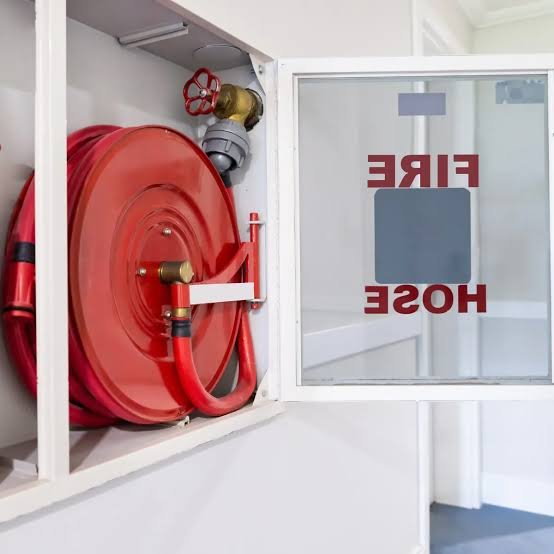
Fire safety is essential for protecting homes, offices, factories, warehouses, schools, hospitals, shopping centres, and other buildings. While many people focus on fire extinguishers and smoke alarms, fire hose reels are also an important part of a building’s fire protection arrangements.
A fire hose reel is a fixed firefighting device designed to provide a continuous supply of water through a hose and nozzle. When correctly installed, maintained, and used by trained individuals, it may help control certain small fires during their early stages. However, it is not suitable for every type of fire, and using it incorrectly can put people at serious risk.
This article explains seven common mistakes people make with fire hose reels, why these mistakes matter, and how building owners, facility managers, and occupants can reduce the risks.
What Is a Fire Hose Reel?
A fire hose reel is generally mounted on a wall or placed inside a designated cabinet. It usually consists of a reel drum, hose, nozzle, water supply connection, and associated valves or controls.
The hose is stored on the reel so that it can be deployed when needed. Depending on the model, the reel may rotate manually or operate with a swinging mechanism. The nozzle controls the water discharge.
Fire hose reels are intended for initial firefighting in appropriate circumstances. They are not a replacement for fire alarms, evacuation procedures, automatic suppression systems, or the fire service.
The following mistakes can reduce their usefulness and create additional hazards.
1. Blocking Access to the Fire Hose Reel
One of the most common mistakes is placing furniture, cartons, equipment, or other objects in front of a fire hose reel.
In busy buildings, space is often limited. Employees may temporarily store materials in corridors, shopkeepers may place goods near walls, and residents may leave household items in shared areas. Over time, these objects can obstruct access to firefighting equipment.
Why this is a problem
During a fire, smoke, confusion, and urgency can make it difficult to locate and reach equipment. If a hose reel is blocked, people may lose valuable time trying to move objects or find another source of firefighting equipment.
Obstructions may also interfere with opening a cabinet, rotating a reel, or pulling out the hose.
How to avoid this mistake
- Keep the area immediately around the hose reel clear.
- Do not use fire equipment cabinets for storage.
- Ensure that signs identifying the hose reel are visible.
- Include hose reel access in routine building inspections.
- Inform employees and occupants that firefighting equipment must remain accessible.
In offices, factories, apartment buildings, and commercial premises, keeping escape routes and firefighting equipment unobstructed should be part of everyday housekeeping.
2. Failing to Inspect and Maintain the Hose Reel
Another serious mistake is assuming that a hose reel will work simply because it is installed.
Fire equipment can deteriorate over time. Hoses may develop cracks, seals may wear out, valves may become stiff, and metal components may corrode. Dust, moisture, and physical damage can also affect the equipment.
A hose reel that has not been inspected for a long period may not perform as expected when required.
Why maintenance matters
Maintenance helps identify defects before an emergency occurs. Regular checks can help detect visible damage, leaks, and problems with the reel mechanism. Formal maintenance should be performed by a competent person according to applicable requirements and the manufacturer’s instructions.
How to avoid this mistake
Create a documented inspection and maintenance programme that includes:
- Regular visual checks for visible damage and leakage.
- Checking that the reel and hose are correctly stored.
- Ensuring that the nozzle and controls are present.
- Arranging periodic operational tests by a competent technician.
- Recording inspection dates, defects, repairs, and follow-up actions.
The exact inspection frequency should follow local requirements, the system design, and the manufacturer’s guidance. A visual check is not a substitute for professional servicing.
3. Using the Wrong Type of Fire Hose Reel
Not every hose reel or water-based firefighting system is suitable for every environment.
Different buildings have different fire hazards. A residential building, textile mill, commercial kitchen, warehouse, and electrical equipment room may require different fire protection arrangements.
A common mistake is assuming that a water hose reel can safely be used on any fire.
Why this is dangerous
Water can be unsuitable for fires involving energised electrical equipment and certain flammable liquids. Applying water to such fires may increase the danger, spread burning material, or expose the user to electrical shock.
Hose reels are generally designed for particular applications, and their suitability depends on the type of fire, the equipment, and the surrounding conditions.
How to avoid this mistake
- Identify the main fire hazards in each area.
- Confirm that installed firefighting equipment is appropriate for those hazards.
- Clearly label equipment and provide understandable operating instructions.
- Train staff to recognise situations where a hose reel must not be used.
- Ensure that suitable alternative equipment is available where required.
For example, a facility containing electrical machinery needs a fire safety plan that addresses electrical fire risks rather than relying on a water hose reel alone.
4. Not Training People to Use the Equipment
Installing a fire hose reel does not automatically mean that everyone in a building knows how to operate it.
Some people may never have used one before. Others may understand the basic idea but be unfamiliar with the particular reel, its controls, or the building’s emergency procedures.
A lack of training can lead to confusion and unsafe decisions.
Why training is important
A person facing a fire must make quick decisions. They need to recognise the alarm, understand the evacuation route, know how to raise the alarm, and determine whether attempting to use firefighting equipment is appropriate.
Training should emphasise that people must not remain to fight a fire when evacuation is the safer option.
How to avoid this mistake
Provide training that covers:
- How to recognise a fire emergency and raise the alarm.
- How to locate the nearest safe exit.
- The purpose and basic operation of the building’s hose reels.
- The types of fire for which the equipment is suitable.
- The importance of maintaining a safe escape route.
- When to stop attempting firefighting and evacuate.
Training should be suitable for the building’s occupants and their responsibilities. Only trained individuals should consider using a hose reel, and only when it is safe to do so.
5. Installing the Hose Reel in an Unsuitable Location
The location of a fire hose reel affects how easily it can be reached and used.
Poor placement can make equipment difficult to access, reduce the hose’s effective reach, or place users in an area where smoke and fire could cut off their escape.
In some buildings, equipment may be installed without adequately considering walls, partitions, doors, machinery, storage areas, and the likely movement of occupants during an emergency.
Why location matters
A hose reel must be accessible and suitable for the area it is intended to protect. If it is too far from the relevant hazard, obstructed by building features, or positioned where a person could become trapped, it may not provide practical protection.
How to avoid this mistake
Before installation:
- Have the building’s fire risks assessed by a qualified professional.
- Consider the layout and use of each floor.
- Review access routes and possible obstructions.
- Confirm that the selected equipment is appropriate for the building.
- Ensure that its position does not interfere with evacuation routes.
Installation should comply with applicable local requirements, the approved fire safety design, and the manufacturer’s instructions. Building owners should not choose locations based only on convenience or appearance.
6. Rewinding or Storing the Hose Incorrectly
After a hose reel has been inspected or used, it must be returned to a condition in which it can be accessed and deployed correctly.
Incorrect rewinding can leave the hose twisted, tangled, or unevenly positioned. A damaged nozzle, poorly stored hose, or incorrectly reset valve may also affect readiness.
Sometimes, people put equipment away quickly without checking whether all components have been restored properly.
Why this is a problem
A poorly stored hose may not unwind smoothly. It can become caught or kinked, slowing deployment and potentially restricting water flow.
Incorrectly reset controls can also result in leakage or prevent the reel from operating as intended.
How to avoid this mistake
- Follow the manufacturer’s instructions for rewinding and resetting the reel.
- Check that the hose is correctly positioned on the drum.
- Inspect the hose for visible damage or twisting.
- Confirm that the nozzle and controls operate as intended.
- Have the system checked after use or maintenance.
- Record any defects and ensure they are corrected before the equipment is returned to service.
Operational testing and reinstatement should be carried out by trained personnel or a competent service provider. Do not improvise repairs or force stiff components.
7. Assuming a Fire Hose Reel Replaces a Complete Fire Safety System
A fire hose reel is only one component of a wider fire safety plan.
Some building owners believe that installing a hose reel is enough to protect occupants. This overlooks the need for early warning, evacuation planning, suitable firefighting equipment, staff training, and ongoing maintenance.
Why this mistake matters
A hose reel does not automatically detect a fire or alert everyone in a building. It also cannot guarantee that a fire can be controlled safely.
Smoke can spread rapidly, exits can become inaccessible, and a fire may grow beyond the capability of first-response equipment. Attempting to fight such a fire can expose occupants to severe danger.
How to avoid this mistake
A complete fire safety plan should consider:
- Suitable fire detection and alarm systems.
- Clear and accessible escape routes.
- Emergency lighting and appropriate safety signs.
- Suitable extinguishers and other required fire protection equipment.
- Fire drills and staff training.
- Inspection and maintenance of installed systems.
- A clear process for contacting emergency services.
A properly designed fire alarm system in Pakistan can help provide early warning, while hose reels and other firefighting equipment serve different roles within the overall fire protection strategy.
For information about fire safety systems and related services, visit Flame Defender.
Fire Hose Reel Safety: Practical Tips for Buildings in Pakistan
Buildings in Pakistan vary widely in design and use. A small office, multi-storey residential building, textile factory, hospital, and warehouse will not necessarily have the same fire protection needs.
A practical safety programme should reflect the building’s activities, occupancy, fire hazards, and applicable local requirements.
For building owners and facility managers
- Arrange a professional review of the building’s fire risks.
- Ensure hose reels are installed in suitable locations.
- Keep access to all firefighting equipment clear.
- Establish an inspection and maintenance schedule.
- Keep records of servicing and corrective work.
- Provide appropriate training for designated personnel.
- Review evacuation procedures regularly.
For employees and occupants
- Learn the locations of alarms and emergency exits.
- Never block fire equipment with personal belongings or stock.
- Report visible damage, leakage, or missing components.
- Participate in fire drills and safety training.
- Follow the building’s emergency instructions.
- Evacuate promptly when conditions are unsafe.
For industrial facilities
Factories and warehouses may contain combustible stock, machinery, electrical systems, and processes that create additional fire risks. Their fire safety arrangements should be based on a competent risk assessment.
Special attention should be given to access routes, equipment suitability, employee training, and the coordination of fire alarms with emergency procedures.
What Should Be Checked During a Hose Reel Inspection?
Routine visual checks can help identify obvious issues, but more formal inspection and testing should be carried out by a competent person according to applicable requirements.
The following checklist provides a general overview. It does not replace the manufacturer’s instructions or a formal servicing standard.
| Inspection item | What to look for |
|---|---|
| Accessibility | No stored items or obstructions blocking the reel |
| Hose condition | No obvious cuts, cracks, kinks, or deterioration |
| Reel mechanism | No visible damage; movement appears unobstructed |
| Nozzle | Present, intact, and correctly fitted |
| Valves and connections | No obvious leakage or damage |
| Signage | Clear and visible identification |
| Storage | Hose properly arranged and nozzle secured |
| Maintenance records | Inspection dates, defects, and repairs documented |
Building owners should confirm inspection requirements applicable to their own premises and ensure that maintenance is performed by competent personnel.
When Should You Avoid Using a Fire Hose Reel?
Fire hose reels are not intended to be used in every emergency.
Do not attempt to fight a fire if:
- The fire is spreading rapidly.
- Smoke is making the area difficult to breathe in or see through.
- Your escape route may become blocked.
- The fire involves energised electrical equipment.
- The fire involves a substance for which water is unsuitable.
- You have not been trained to use the equipment.
- You feel unsafe or are unsure what to do.
Your priority should be raising the alarm, warning others, and evacuating safely. Contact the relevant emergency services and follow the building’s emergency plan.
Never put yourself or others at risk to protect property.
Conclusion
Fire hose reels can play an important role in a building’s fire protection arrangements, but their presence alone does not guarantee safety. Blocked access, neglected maintenance, unsuitable applications, inadequate training, poor installation, incorrect storage, and overreliance on hose reels can all reduce their usefulness.
Building owners and facility managers in Pakistan should treat fire hose reels as part of a complete fire safety programme. This includes suitable installation, regular inspections, professional maintenance, clear emergency procedures, and training for people with designated responsibilities.
Most importantly, firefighting equipment should never be used as a reason to delay evacuation. Protecting human life must always come first.
A well-maintained hose reel, combined with an appropriate alarm system, effective evacuation planning, and trained personnel, helps create a more prepared and safety-conscious environment.
Frequently Asked Questions (FAQs)
1. What is the main purpose of a fire hose reel?
A fire hose reel provides a fixed supply of water through a hose and nozzle for initial firefighting in suitable circumstances. It is intended for appropriate fires and should only be used when it is safe to do so.
2. How often should fire hose reels be inspected?
They should receive regular visual checks and formal inspection and maintenance according to applicable local requirements, the manufacturer’s instructions, and the system’s maintenance schedule. A competent person should carry out formal servicing.
3. Can a fire hose reel be used on an electrical fire?
A water hose reel should not be used on energised electrical equipment because of the risk of electric shock. Follow the emergency plan, raise the alarm, and evacuate if necessary.
4. Why is fire hose reel training important?
Training helps people understand the equipment’s purpose, recognise its limitations, and make safer decisions during an emergency. It should also emphasise raising the alarm and evacuating when conditions are unsafe.
5. Is a fire hose reel enough to protect a building from fire?
No. A hose reel is only one part of fire protection. Buildings also need suitable detection and alarm arrangements, evacuation procedures, appropriate firefighting equipment, and regular inspection and maintenance based on their risks.