
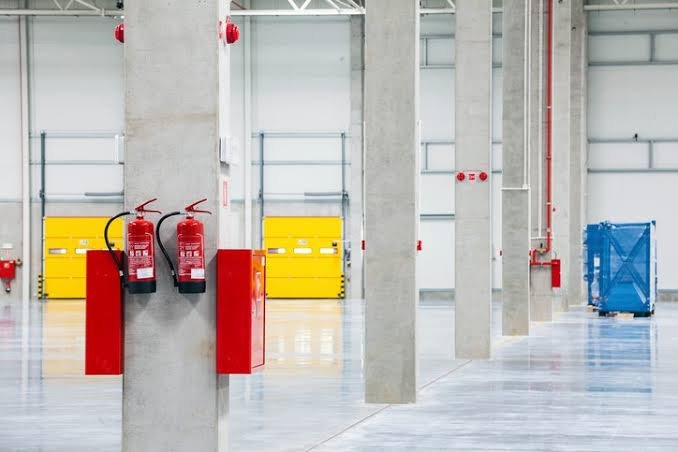
Warehouses play an important role in Pakistan’s supply chain. They store raw materials, finished products, food items, textiles, electronics, packaging materials, machinery, and many other goods. Businesses depend on these facilities to protect inventory and keep daily operations running smoothly. However, warehouses can also face significant fire risks if safety measures are ignored.
A fire in a warehouse can affect much more than the products stored inside. It can put workers and visitors at risk, damage buildings, interrupt deliveries, create financial losses, and affect customers and nearby businesses. In facilities containing large quantities of combustible materials, a fire can become a serious emergency if it is not detected and managed promptly.
Warehouse fire safety is therefore not simply a matter of installing equipment. It involves identifying hazards, maintaining electrical systems, organising storage areas, providing suitable detection and warning arrangements, and preparing people to respond safely.
For businesses operating in Pakistan, understanding warehouse fire safety is particularly important. The Building Code of Pakistan Fire Safety Provisions 2016 provides an important national reference, while relevant local authorities may have additional requirements.
Here are five important reasons warehouse fire safety matters more than many people realise.
1. It Protects Employees, Visitors, and Other People
The most important reason to prioritise warehouse fire safety is the protection of human life.
Warehouses can be busy environments. Employees may be receiving deliveries, moving products, operating machinery, checking inventory, packing orders, or managing dispatch activities. Drivers, contractors, maintenance workers, and visitors may also enter the premises.
If a fire begins during working hours, people may be spread across different sections of the building. Some may be working in storage aisles, offices, loading areas, or separate rooms. Without suitable warning arrangements and a clear evacuation plan, they may not recognise the emergency quickly enough.
Early Warning Gives People Time to Respond
A suitable fire detection and alarm arrangement helps alert occupants when a fire is detected. Depending on the building’s design and risk assessment, detection may involve smoke detectors, heat detectors, manual call points, audible alarms, and visual warning devices.
A properly designed fire alarm system in Pakistan can support early notification in warehouses and other commercial buildings. However, its performance depends on suitable equipment selection, professional installation, regular testing, and maintenance.
The warning must be noticeable throughout the areas where people work. A sound that can be heard in the main office may not be sufficiently clear in a large storage area with machinery or other background noise.
Clear Evacuation Routes Are Essential
Workers should know how to leave the building safely. Emergency exits, corridors, stairways, and access routes should remain clear and appropriately marked.
Storage materials should never block emergency doors or narrow important walking routes. Exit signs should be visible, and emergency lighting should be considered where required.
Warehouse managers should make sure that:
- Employees know the designated emergency exits.
- Evacuation routes are kept clear.
- Exit signs remain visible.
- Workers understand the alarm signals.
- Visitors receive suitable safety information.
- People who may need assistance have an evacuation arrangement.
- Everyone knows the designated outdoor assembly area.
Children should never be expected to investigate a warehouse fire or operate firefighting equipment. Their role is to alert a responsible adult and follow the evacuation instructions.
Protecting people must always come before protecting stock or equipment.
2. It Reduces the Risk of Serious Property and Inventory Loss
A warehouse may contain a large amount of valuable inventory. Even a relatively small fire can cause extensive damage if combustible goods are stored in one area or if the building lacks appropriate protection.
Common warehouse contents include cardboard packaging, paper, wooden pallets, fabrics, plastics, furniture, and other materials that may contribute to fire growth.
Some warehouses also store products that require special precautions because of their chemical properties, flammability, or storage conditions.
Different Materials Create Different Risks
Not all stored products present the same level of fire risk. A warehouse containing textiles may require a different risk assessment from one storing electronics, food products, furniture, or industrial chemicals.
Packaging also matters. Cardboard cartons, plastic wrapping, wooden pallets, and other materials can add combustible contents to storage areas.
Managers should maintain an accurate inventory and identify products that require special storage arrangements. Relevant safety information should be available to responsible personnel.
Organised Storage Supports Safer Operations
Poor storage practices can make a warehouse more difficult to manage during an emergency. Overfilled aisles, unstable stacks, and goods placed too close to electrical equipment can create additional concerns.
A well-organised facility should have:
- Clearly identified storage zones.
- Appropriate separation for incompatible materials.
- Safe access to electrical panels and safety equipment.
- Clearly marked walkways.
- Suitable arrangements for waste and packaging.
- Storage practices that follow product and building requirements.
Storage arrangements should also be reviewed whenever the type or quantity of goods changes.
Fire Protection Should Match the Building
The appropriate protection measures depend on factors such as building size, height, occupancy, stored products, storage configuration, and applicable regulations.
Depending on the risk assessment, a warehouse may require automatic detection, alarm systems, sprinklers, hydrants, extinguishers, or other approved protection arrangements.
These systems should be designed by qualified professionals rather than selected simply because another warehouse uses similar equipment.
Preventing major property damage begins with understanding what is stored and how the building is used.
3. It Helps Prevent Business Interruptions and Financial Losses
A warehouse fire can affect a business long after the immediate emergency has ended.
When inventory, equipment, or the building itself is damaged, normal operations may stop. Businesses may be unable to fulfil customer orders, receive new deliveries, or maintain production schedules.
The financial impact can extend beyond the value of damaged products.
Direct Financial Costs
Direct losses may include:
- Damage to stored goods.
- Repair or reconstruction expenses.
- Replacement of damaged machinery.
- Costs associated with cleaning and recovery.
- Loss of important documents or records.
- Temporary storage and relocation expenses.
The final cost depends on the scale of the incident and the type of business.
Indirect Business Consequences
Indirect losses can sometimes be just as difficult to manage.
A warehouse that cannot operate may delay deliveries to retailers, manufacturers, distributors, and customers. Businesses may face contractual problems, missed deadlines, and reduced customer confidence.
For companies that depend on continuous stock availability, an interruption at one storage facility can affect several other parts of the supply chain.
Prevention Supports Business Continuity
A warehouse fire-safety programme should be connected to the organisation’s wider business-continuity plan.
Managers should identify which products, records, systems, and operations are essential to business activity. They should also understand how the company would respond if a warehouse became temporarily unavailable.
Useful measures include:
- Maintaining accurate inventory records.
- Keeping important business information backed up.
- Reviewing insurance coverage with a qualified adviser.
- Identifying alternative storage or distribution arrangements.
- Maintaining inspection and maintenance records.
- Reviewing fire risks whenever warehouse operations change.
Fire prevention cannot guarantee that a fire will never occur. However, a well-planned safety programme can reduce avoidable risks and improve preparedness.
4. It Improves Workplace Organisation and Regulatory Readiness
Fire safety is not an isolated activity. It is connected to housekeeping, equipment maintenance, staff awareness, building management, and workplace responsibilities.
A warehouse that follows consistent safety practices is generally easier to inspect, maintain, and manage.
Electrical Safety Matters
Electrical faults are an important source of concern in warehouses. Facilities may contain lighting systems, distribution boards, motors, charging equipment, computers, conveyors, refrigeration systems, and other electrical installations.
Overloaded circuits, damaged cables, poor maintenance, and unsuitable equipment can increase risk.
Warehouse managers should arrange appropriate inspections by qualified electricians. Electrical panels and equipment should be maintained according to relevant technical requirements.
Employees should report damaged electrical equipment rather than attempting repairs without proper training and authorisation.
Good Housekeeping Reduces Hazards
Waste packaging, paper, plastic wrapping, and other unwanted materials should not accumulate unnecessarily.
Regular housekeeping can help prevent combustible waste from building up around work areas. It can also improve access to emergency exits and make it easier to identify damaged equipment or unsafe storage practices.
A practical housekeeping programme should cover:
- Regular removal of unnecessary waste.
- Clear access to emergency exits.
- Safe storage of packaging materials.
- Proper organisation of loading and unloading areas.
- Suitable storage of maintenance supplies.
- Routine inspection of workspaces.
Understand the Applicable Pakistani Requirements
The Building Code of Pakistan Fire Safety Provisions 2016 is an important national reference for building fire safety. It addresses areas such as fire prevention, detection, protection, and means of escape. Its application and enforcement should be considered alongside the requirements of the relevant Authority Having Jurisdiction.
Punjab Civil Defence identifies fire detection and alarm systems, firefighting arrangements, fire-safety plans, emergency control rooms, emergency exits, evacuation plans, and ventilation arrangements among the measures considered during fire-safety inspections.
These provincial inspection details should not be treated as automatically identical across every province. Warehouse owners should confirm the requirements that apply to their location, building type, and operations.
Regulatory readiness is not just about preparing documents before an inspection. It means maintaining safety arrangements as part of everyday business operations.
5. It Builds a Culture of Awareness and Emergency Preparedness
Even a well-equipped warehouse depends on people understanding their responsibilities.
Employees should know how to recognise warning signals, report hazards, and follow the organisation’s emergency plan. Without awareness, important safety equipment may be overlooked, exits may become obstructed, and warning signals may not receive an appropriate response.
Training Helps Employees Recognise Hazards
Warehouse workers should receive safety information relevant to their duties and the risks present at their workplace.
Training may cover:
- Recognising common fire hazards.
- Understanding alarm signals.
- Reporting unsafe conditions.
- Keeping emergency routes clear.
- Following evacuation instructions.
- Understanding the location of emergency exits.
- Knowing the workplace assembly point.
- Following instructions from designated safety personnel.
Training should be suitable for the workers’ responsibilities. Employees should not be expected to perform tasks beyond their training or qualifications.
Fire Drills Help Test the Emergency Plan
A written emergency plan is useful, but it should also be reviewed and practised.
Fire drills help employees become familiar with warning signals, evacuation routes, assembly areas, and communication arrangements.
A drill can also help management identify practical problems, such as unclear exit signs, obstructed corridors, or difficulties accounting for visitors and contractors.
After each exercise, responsible personnel should review what worked and what needs improvement.
Management Must Support Safety
Warehouse safety should not depend on one employee. Senior management, supervisors, maintenance teams, and workers all have responsibilities.
Management should provide suitable resources, arrange inspections, address reported hazards, and make sure safety procedures are understood.
A workplace where employees feel comfortable reporting hazards is better positioned to identify problems before they become emergencies.
Common Fire Hazards Warehouse Managers Should Recognise
Although the five reasons above explain why warehouse fire safety matters, managers should also understand the hazards that may exist in their facilities.
Electrical Equipment
Damaged cables, overloaded electrical circuits, faulty machinery, and poorly maintained installations can increase fire risk. Regular professional inspections are important.
Heating and Hot Work Activities
Maintenance and repair work may introduce temporary ignition risks. Activities such as welding or cutting require an approved workplace safety process, suitable supervision, and compliance with applicable precautions.
Combustible Packaging
Cardboard, paper, plastic wrapping, and wooden pallets can contribute to fire growth. Storage and waste-management arrangements should account for these materials.
Poor Storage Practices
Overcrowded storage areas can obstruct access, make inspections difficult, and interfere with emergency arrangements.
Unsafe Charging Areas
Warehouses using battery-powered equipment should follow the equipment manufacturer’s charging and maintenance instructions. Charging areas should be appropriately designed and managed.
Special or Hazardous Materials
Certain chemicals, gases, and flammable products require specific storage and handling arrangements. Their safety data and applicable regulations should guide the warehouse’s procedures.
Identifying hazards is the first step towards managing them responsibly.
The Role of Fire Detection and Alarm Systems in Warehouses
A warehouse may have a large floor area, multiple storage sections, and different working environments. This can make early warning especially important.
A suitable detection and alarm system should be designed around the building’s layout, occupancy, storage conditions, and risk assessment.
Depending on the facility, the design may include:
- Smoke or heat detection where appropriate.
- Manual alarm activation points.
- Audible warning devices.
- Visual warning devices where needed.
- A suitable control and monitoring arrangement.
- Reliable power supplies and backup arrangements.
- Inspection, testing, and maintenance procedures.
The choice of detection technology is important. For example, dusty or humid environments may affect the suitability of certain detector types. High ceilings and particular storage configurations may also require specialist design considerations.
A qualified fire-safety professional should assess these conditions before equipment is selected.
An alarm system is only one part of the overall strategy. It should work alongside suitable building protection, clear escape routes, staff awareness, and a documented emergency plan.
A Practical Warehouse Fire-Safety Checklist
Warehouse managers can use this checklist as a starting point for reviewing their facilities. It does not replace a professional fire-risk assessment or local compliance inspection.
| Area | What to Review |
|---|---|
| Fire detection | Confirm that suitable detection arrangements are installed |
| Alarm system | Check testing and maintenance records |
| Emergency exits | Keep exits accessible and clearly identified |
| Storage | Review the arrangement of combustible and special materials |
| Electrical systems | Arrange qualified inspections and repairs |
| Housekeeping | Remove unnecessary waste and packaging |
| Fire protection | Confirm that required equipment is suitable and maintained |
| Staff awareness | Provide appropriate safety training |
| Evacuation plan | Review routes, assembly points, and communication |
| Fire drills | Conduct and review exercises as required |
| Documentation | Maintain inspection, training, and maintenance records |
The checklist should be reviewed regularly and updated when the warehouse layout, products, or operations change.
Conclusion
Warehouse fire safety matters more than many businesses realise because its impact extends beyond damaged inventory. It protects employees and visitors, helps reduce property losses, supports business continuity, improves workplace organisation, and strengthens emergency preparedness.
For warehouses in Pakistan, safety planning should consider the Building Code of Pakistan Fire Safety Provisions 2016 and the requirements of the relevant local authority. A professional assessment can help determine which detection, alarm, protection, and evacuation arrangements are appropriate for a particular facility.
A reliable fire alarm system in Pakistan can contribute to early warning, but equipment alone cannot create a safe warehouse. Regular maintenance, responsible storage, electrical inspections, clear exits, staff awareness, and emergency planning are equally important.
Businesses that make fire safety part of everyday operations are better prepared to protect people, property, and the continuity of their work.
Frequently Asked Questions (FAQs)
1. Why is warehouse fire safety important?
Warehouse fire safety protects employees, visitors, stored goods, buildings, and business operations. It also helps reduce avoidable hazards and supports a safer response if an emergency occurs.
2. What are common causes of warehouse fires?
Potential causes include electrical faults, damaged equipment, unsafe maintenance activities, heating equipment, unsuitable storage practices, and incidents involving combustible or hazardous materials. The actual risks vary according to the warehouse’s activities and stored products.
3. Does a warehouse need a fire alarm system?
The required fire detection and alarm arrangements depend on the building’s size, occupancy, design, stored materials, and applicable regulations. Warehouse owners should consult the relevant authority and a qualified fire-safety professional to determine the appropriate system.
4. How can warehouse managers improve fire safety?
Managers can arrange professional risk assessments, maintain electrical installations, organise storage areas, keep emergency exits clear, inspect safety equipment, provide employee training, and review evacuation plans regularly.
5. Which fire-safety rules apply to warehouses in Pakistan?
The Building Code of Pakistan Fire Safety Provisions 2016 is an important national reference. Additional requirements may apply depending on the province, local authority, building classification, and warehouse operations. Owners should confirm the rules applicable to their particular premises.