
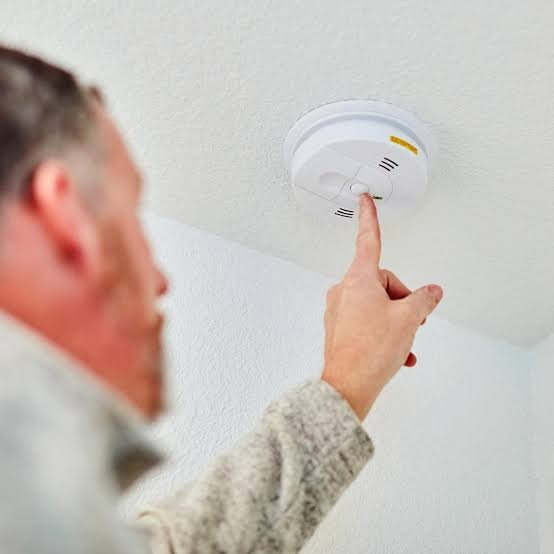
A fire can start unexpectedly, and the first few moments can make a major difference. Smoke may spread through a building before people notice visible flames, especially when everyone is asleep or working in another room. This is why smoke detectors are an important part of a complete fire-safety plan.
Many people think fire safety begins with a fire extinguisher. While extinguishers can be useful for appropriate small fires, they are only one part of a wider safety strategy. Smoke detection, fire alarms, clear escape routes, emergency planning, electrical safety, and regular equipment maintenance all work together to protect people and property.
In Pakistan, the Building Code of Pakistan Fire Safety Provisions 2016 contains specific provisions for smoke alarms and smoke detection. It states that, where required, single- and multiple-station smoke alarms should comply with applicable fire-alarm standards or approved codes. It also addresses the placement and interconnection of smoke alarms in certain buildings.
A properly designed fire alarm system in Pakistan can provide an important layer of early warning. Smoke detectors can form part of such systems or operate as individual alarms, depending on the building and its fire-protection design.
What Is a Smoke Detector?
A smoke detector is a device designed to sense smoke and provide a warning when smoke reaches the detection chamber.
Smoke detectors are not designed to replace every other fire-safety measure. Instead, they provide an early warning that can help occupants recognize a developing fire and begin their emergency response.
Depending on the system, a smoke detector may:
- Produce a local audible alarm.
- Send a signal to a fire alarm control panel.
- Activate other notification devices.
- Communicate with interconnected smoke alarms.
- Form part of a larger building fire-detection system.
The exact arrangement depends on the building, occupancy, system design, and applicable requirements.
Why Smoke Detection Matters
One of the biggest advantages of smoke detection is early warning.
A person may not immediately notice a fire in another room. Smoke can travel through a building while people are sleeping, studying, working, or watching television.
A smoke alarm can alert occupants before they personally see the fire.
This can be particularly important at night. People who are asleep may not notice a developing fire until conditions have already become dangerous.
NFPA’s fire-safety educational material emphasizes that people should understand the sounds made by smoke and carbon-monoxide alarms and know that alarm signals require action.
The goal of an alarm is therefore not simply to make noise. It is to provide a warning that prompts people to follow their emergency plan.
Smoke Detectors and Fire Alarm Systems Are Not Always the Same
The terms “smoke detector” and “fire alarm” are sometimes used interchangeably, but they can describe different parts of a fire-protection arrangement.
A standalone smoke alarm can detect smoke and produce an alarm from the device itself.
A larger fire alarm system may include:
- Smoke detectors
- Heat detectors
- Manual fire alarm points
- Fire alarm control panels
- Audible notification devices
- Visual notification devices
- Monitoring or communication equipment
- Other fire-protection interfaces
The Building Code of Pakistan Fire Safety Provisions addresses both smoke alarms and automatic smoke detection as part of fire-protection arrangements.
For larger buildings, a professionally designed system may be necessary.
Smoke Detectors Are Important in Homes
Homes can contain many potential fire hazards, including cooking equipment, electrical appliances, heating equipment, candles, and other ignition sources.
A smoke alarm can provide an early warning when occupants may not otherwise notice smoke.
For residential buildings, the appropriate number, type, location, and interconnection of smoke alarms can depend on the building design and applicable requirements.
Pakistan’s Building Code provisions specifically address smoke alarms in residential and other occupancy groups and provide requirements for their use in certain situations.
Homeowners should therefore consider smoke detection as an important part of their overall household safety plan.
Smoke Detectors Are Also Important for Businesses
Smoke detection is not limited to residential properties.
Offices, schools, hotels, shops, hospitals, warehouses, factories, restaurants, and other buildings may require different types of fire detection depending on their occupancy and hazards.
A commercial building can have more people, larger areas, multiple floors, electrical equipment, machinery, stored materials, or other conditions that make early detection particularly important.
The appropriate system should be based on a professional assessment of the building and applicable fire-safety requirements.
Pakistan Engineering Council identifies installation, commissioning, and maintenance of fire detection, alarm, and suppression systems as a specialized engineering field.
Correct Placement Matters
Installing a smoke detector is not simply a matter of putting one anywhere on a wall or ceiling.
The location can affect how effectively smoke reaches the detector.
Pakistan’s Building Code Fire Safety Provisions includes specific requirements concerning smoke-alarm placement around cooking appliances and bathrooms. For example, it establishes exclusion areas near fixed cooking appliances unless a detector is specifically approved for close-proximity installation.
This is important because cooking activities and steam can create conditions that may result in unwanted alarms.
The correct location depends on the building, room use, detector type, and applicable requirements.
For larger or specialized installations, professional design is recommended.
Avoid Unnecessary Alarm Problems
An alarm that sounds frequently because of unsuitable placement can become a problem.
Repeated unwanted alarms may cause occupants to stop taking alarm signals seriously.
This is sometimes called alarm fatigue: when people experience frequent non-emergency alarms, they may become less responsive to them.
Proper detector selection and placement can help reduce unnecessary alarms while maintaining appropriate detection.
Smoke alarms should not simply be moved, covered, disabled, or disconnected because they sometimes activate unexpectedly. Instead, the underlying cause should be investigated and the system assessed appropriately.
Kitchen Areas Need Special Consideration
Cooking is a common source of unwanted smoke alarms.
Steam, cooking smoke, and particles produced during normal cooking can affect some types of detectors.
This does not mean kitchens should be left without fire protection. Instead, detection arrangements should be designed appropriately for the environment.
Pakistan’s fire-safety provisions specifically address distances and detector arrangements around cooking appliances.
Where specialized detection is needed, the appropriate equipment should be selected according to the conditions.
Do Not Disable a Smoke Alarm
A smoke alarm that repeatedly activates can be frustrating, but removing its battery or disconnecting it creates another problem: the device may no longer provide the intended warning.
If an alarm repeatedly activates without an obvious emergency, the correct response is to identify the reason and determine whether the detector’s location, type, condition, or surrounding environment needs attention.
For interconnected systems, disabling one device can also affect the overall protection arrangement.
Fire safety should never depend on ignoring inconvenient warnings.
Testing Is Part of Smoke Detector Maintenance
A smoke detector should not simply be installed and forgotten.
Regular testing and maintenance help confirm that the system remains operational.
For larger fire alarm systems, inspection, testing, and maintenance should follow the system design, manufacturer’s requirements, applicable standards, and building requirements.
NFPA 72 is the National Fire Alarm and Signaling Code and provides criteria relating to installation, inspection, testing, and maintenance of fire alarm systems.
Pakistan Engineering Council also recognizes maintenance of fire detection and alarm systems as specialized engineering work.
The exact testing schedule can vary according to the equipment and installation.
Batteries Should Not Be Ignored
Battery-powered smoke alarms depend on their batteries to provide power.
A weak or depleted battery can prevent an alarm from performing as intended.
If a smoke alarm produces a low-battery warning, it should not simply be ignored.
For systems with backup batteries, maintenance should also consider the condition and suitability of the backup power supply.
The type of power arrangement depends on the alarm design. Some systems use replaceable batteries, while others use permanent electrical power with backup batteries.
Following the manufacturer’s instructions and applicable requirements is important.
Interconnected Smoke Alarms Can Improve Warning
In some buildings, multiple smoke alarms can be interconnected so that activation of one alarm causes other alarms in the same protected area to sound.
This can be especially useful when a building has multiple rooms.
Pakistan’s Building Code provisions include requirements concerning interconnection of multiple smoke alarms in certain new residential construction.
An interconnected arrangement can help occupants hear an alarm even when they are farther away from the detector that first senses smoke.
The exact design should follow applicable requirements.
Smoke Detection Is Especially Important at Night
A fire that begins during sleeping hours can be particularly dangerous because people may not immediately notice smoke or unusual conditions.
A functioning smoke alarm can provide an audible warning that wakes occupants and gives them an opportunity to follow their escape plan.
This is one reason smoke detection should be considered an essential part of residential fire safety.
Families should also discuss what everyone should do if an alarm sounds during the night.
Create a Fire Escape Plan
A smoke detector can warn people about a fire, but occupants still need to know what to do next.
Every household should have a simple emergency plan.
It should identify:
- Primary escape routes
- Alternative escape routes
- A safe outdoor meeting location
- How family members will contact emergency services
- How children will receive assistance
- How people with mobility or other needs will be supported
Everyone should understand that an alarm means they need to take action.
The Building Code of Pakistan Fire Safety Provisions addresses means of egress and emergency evacuation arrangements as part of building fire safety.
Teach Children About Smoke Alarms
Children should understand that a smoke alarm is a safety device.
Parents and teachers can explain what an alarm sounds like and what children should do when they hear it.
Children should not be encouraged to investigate smoke or fire themselves.
Instead, they should know to alert a responsible adult and follow the family’s or school’s emergency evacuation plan.
Regular age-appropriate fire drills can help make emergency procedures more familiar.
Smoke Detectors Do Not Replace Fire Prevention
Installing smoke alarms is important, but prevention remains essential.
Households and businesses should also reduce common fire risks by:
- Keeping electrical equipment in good condition.
- Avoiding overloaded electrical outlets.
- Keeping combustible materials away from heat sources.
- Practicing safe cooking habits.
- Maintaining gas equipment appropriately.
- Keeping emergency exits clear.
- Storing combustible materials responsibly.
- Maintaining firefighting equipment.
- Reviewing fire hazards regularly.
Smoke detectors provide warning. They do not prevent every fire from starting.
A strong fire-safety strategy combines prevention, detection, notification, evacuation, and appropriate firefighting measures.
The Role of a Fire Alarm System in Pakistan
A properly designed fire alarm system in Pakistan can bring different fire-detection and notification components together.
Depending on the building and its requirements, a system may include smoke detectors, heat detectors, manual alarm points, control panels, sounders, visual indicators, and other components.
Pakistan’s Building Code Fire Safety Provisions states that where required, automatic smoke detection should be provided in occupiable areas suitable for smoke-detector operation.
However, the correct system should always be based on the specific building and its hazards.
A small residence may have a different arrangement from a multi-story commercial property, hospital, factory, or warehouse.
Professional Installation Makes a Difference
Fire detection equipment needs to be correctly selected, located, installed, tested, and maintained.
Incorrect installation can reduce the effectiveness of a system.
For larger or more complex properties, building owners should work with appropriately qualified professionals who understand fire detection and alarm systems.
PEC’s engineering portal lists ME02 for installation, commissioning, and maintenance of fire detection, alarm, and suppression systems and associated equipment.
This highlights that complex fire-protection systems require appropriate technical expertise.
For information about fire-safety equipment and solutions, property owners and businesses can explore Flame Defender.
A Simple Smoke Detector Safety Checklist
Use the following checklist as a starting point for reviewing your smoke-detection arrangements:
- Are smoke alarms installed where required?
- Are the devices appropriate for their environment?
- Are alarms accessible for testing and maintenance?
- Are battery or power arrangements maintained?
- Are unwanted alarms investigated?
- Have alarms been tested according to their requirements?
- Are detectors free from obvious obstruction or damage?
- Are escape routes clear?
- Does everyone know what the alarm sounds like?
- Does the household or workplace have an evacuation plan?
- Are children familiar with the emergency procedure?
- Are larger fire alarm systems professionally inspected and maintained?
This checklist does not replace applicable codes, standards, manufacturer instructions, or professional fire-safety assessments.
Smoke Detectors and Other Fire Equipment Work Together
A complete safety plan should not depend on one device.
Smoke detectors can provide early warning.
Fire alarm systems can notify occupants throughout larger buildings.
Fire extinguishers can provide an appropriate first response to limited fires when occupants can safely use them.
Emergency lighting can support evacuation when normal lighting is unavailable.
Clear exits allow occupants to leave.
Fire drills help people understand what to do.
Regular maintenance keeps safety equipment ready.
Each layer has a different purpose.
When these layers work together, a building is better prepared to respond to a fire emergency.
Why Smoke Detectors Are a Small Investment With a Big Safety Role
A smoke detector is a relatively simple device, but its purpose is significant.
It can provide an early warning when occupants may not yet realize that a fire is developing.
That warning can be especially valuable at night or in large buildings where a fire may begin far from occupied areas.
However, the device must be correctly selected, installed, powered, tested, and maintained.
A smoke detector that is disconnected, damaged, poorly positioned, or ignored cannot provide the intended level of protection.
Conclusion
Your safety plan is not complete without thinking about smoke detection.
Smoke detectors provide an important early-warning layer for homes, offices, schools, businesses, and other buildings. When combined with a properly designed fire alarm system in Pakistan, clear evacuation routes, fire-prevention practices, appropriate firefighting equipment, and regular maintenance, they become part of a broader fire-safety strategy.
Pakistan’s Building Code of Pakistan Fire Safety Provisions includes specific provisions for smoke alarms and automatic smoke detection, while professional fire-protection systems require appropriate design, installation, inspection, and maintenance.
The most important point is simple: never treat a smoke detector as just another device on the wall. It is a warning system designed to help people recognize danger early.
A small investment in proper detection and maintenance can contribute significantly to a building’s overall preparedness.
FAQs
1. What is the main purpose of a smoke detector?
The main purpose of a smoke detector is to detect smoke and provide an early warning of a potential fire. This warning can help occupants recognize danger and begin their emergency response.
2. Is a smoke detector the same as a fire alarm system?
Not always. A standalone smoke alarm can provide an alarm from the individual device, while a larger fire alarm system can connect smoke detectors, manual alarm points, notification devices, and other components through a central system.
3. Where should smoke detectors be installed?
The appropriate locations depend on the building, room use, detector type, applicable requirements, and manufacturer’s instructions. Pakistan’s Building Code includes specific provisions addressing detector placement around cooking appliances and bathrooms.
4. Should I disable a smoke alarm if it frequently produces unwanted alarms?
No. Repeated unwanted alarms should be investigated rather than simply disabling the device. The detector’s location, type, condition, or surrounding environment may need to be assessed.
5. Does a fire alarm system require professional maintenance?
Larger and more complex systems should be inspected, tested, and maintained by appropriately qualified professionals according to the system design, manufacturer’s requirements, and applicable standards. PEC specifically recognizes installation, commissioning, and maintenance of fire detection, alarm, and suppression systems as specialized engineering work.