
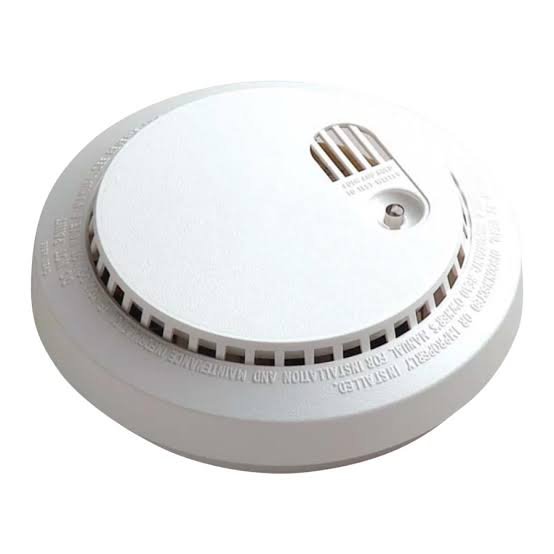
Smoke detectors are among the simplest and most important devices used for early fire warning. A small fire can produce smoke before flames become obvious, and a working smoke detector can alert people to a potential emergency while there is still time to respond and evacuate safely.
For homeowners, offices, schools, hotels, shops, warehouses, and other buildings in Pakistan, choosing the right smoke detector involves more than simply purchasing the cheapest available device. The detector should be suitable for the environment, installed correctly, tested regularly, and maintained according to the manufacturer’s instructions and applicable fire-safety requirements.
Pakistan’s Building Code framework includes provisions concerning smoke alarms and smoke detection systems in applicable occupancies. The Pakistan Engineering Council lists the Building Code of Pakistan – Fire Safety Provisions 2016 among its established building codes and standards.
This guide explains where smoke detectors can be purchased in Pakistan, what to consider before buying one, how smoke detectors relate to larger fire alarm systems, and why proper installation and maintenance matter.
What Is a Smoke Detector?
A smoke detector is a device designed to sense smoke particles and provide an alarm when smoke reaches a specified level.
The basic purpose is early warning. When a detector senses smoke, it may produce a local audible alarm or, as part of a larger fire alarm system, send a signal to a control panel. The exact operation depends on the type of detector and system.
A standalone smoke alarm is different from a complete building fire alarm system.
A standalone device may protect a particular room or residential area, while a larger system can connect multiple detectors, manual call points, sounders, visual indicators, and a central control panel.
This distinction is important when deciding what type of protection a building requires.
Why Smoke Detectors Matter
Fire can spread quickly, particularly when combustible materials are present. Smoke can also travel through corridors, rooms, stairways, and other parts of a building.
People may not immediately notice a fire, particularly when they are sleeping or located far away from the source.
A smoke detector provides an additional layer of protection by detecting smoke and producing an early warning.
The Building Code of Pakistan includes provisions for smoke alarms and smoke detection in particular occupancies. For example, its fire-safety provisions specify approved smoke alarms in certain residential board-and-care occupancies and describe smoke detection systems connected to fire alarm arrangements.
The exact requirements depend on the type, size, use, and design of the building.
Where Can You Buy Smoke Detectors in Pakistan?
People looking for smoke detectors generally have several purchasing options.
Specialized Fire-Safety Companies
Specialized fire-safety suppliers are useful when the property needs more than a single standalone detector.
A professional supplier may be able to help with:
- Smoke detectors
- Heat detectors
- Fire alarm control panels
- Manual call points
- Sounders
- Strobe lights
- Addressable systems
- Conventional systems
- Wireless fire alarm systems
- Installation
- Testing
- Maintenance
This can be particularly useful for offices, factories, warehouses, schools, hotels, apartment buildings, and commercial properties.
For larger installations, buying equipment and obtaining professional design or installation advice at the same time can help ensure that the components work together correctly.
Online Fire-Safety Stores
Online suppliers can provide convenient access to fire-safety equipment. Buyers can review product specifications and determine whether a detector is designed as a standalone alarm or as a component of a larger fire alarm system.
Before purchasing online, check:
- Product specifications
- Manufacturer information
- Intended application
- Power requirements
- Compatibility
- Installation requirements
- Warranty information
- Availability of replacement parts
- Seller support
A product photograph alone is not enough to determine whether a detector is appropriate for a particular building.
Local Fire Equipment Suppliers
Local fire-equipment suppliers may stock smoke detectors alongside extinguishers, fire hoses, emergency signs, and other equipment.
For smaller requirements, local availability can be convenient. However, buyers should still verify the detector’s specifications and suitability rather than selecting equipment based only on price.
Professional Fire Alarm Installers
For commercial and industrial properties, a fire alarm installer may supply and install the complete system.
This approach can be useful because the installer can consider the building layout, detector locations, control panel requirements, notification devices, wiring, testing, and maintenance.
Flame Defender states that it provides fire alarm installation services in Pakistan, including smoke detectors, heat sensors, conventional and addressable systems, and related installation and maintenance services.
Choosing Between a Standalone Smoke Alarm and a Fire Alarm System
One of the most important decisions is determining whether the property needs an individual smoke alarm or a complete fire alarm system.
Standalone Smoke Alarm
A standalone smoke alarm is generally designed to provide an alarm from the individual device.
This type of product may be appropriate for certain residential applications, subject to the building’s requirements.
Conventional Fire Alarm System
A conventional system connects multiple detection and alarm devices to a central control panel. The panel identifies the relevant circuit or zone when an alarm occurs.
These systems can be useful for buildings where zone-level identification is sufficient.
Addressable Fire Alarm System
An addressable system can identify individual devices or specific locations on the system, depending on its configuration.
This can be particularly useful in larger buildings where knowing the location of a triggered detector can help occupants and emergency personnel respond more efficiently.
Flame Defender describes conventional, addressable, wireless, intelligent, smoke-detection, and heat-detection systems among its fire alarm services.
What Type of Smoke Detector Should You Buy?
Not every smoke detector is suitable for every environment.
Two common detection technologies include ionization and photoelectric detection, although modern fire-safety systems may use additional technologies or combinations.
Photoelectric Smoke Detectors
Photoelectric detectors use light-based sensing technology to detect smoke particles.
They are widely used in many building applications, but their suitability depends on the specific environment and system design.
Ionization Smoke Detectors
Ionization detectors use a different sensing principle and have historically been used for detecting certain types of fires.
The choice between technologies should not be based only on a general internet recommendation. Building conditions, applicable standards, manufacturer’s instructions, and professional fire-safety requirements should be considered.
Multi-Sensor Detectors
Some modern systems combine different sensing technologies, such as smoke and heat detection, to improve detection performance in appropriate environments.
These devices can be useful where the building design requires more sophisticated detection.
Smoke Detectors vs Heat Detectors
Smoke detectors and heat detectors are not interchangeable.
A smoke detector responds to smoke particles, while a heat detector responds to temperature or a rapid increase in temperature, depending on its design.
Heat detectors may be appropriate in environments where smoke detectors could experience unwanted alarms because of normal environmental conditions.
For example, certain kitchens, workshops, industrial areas, or dusty environments may require a different detection strategy.
The correct choice should be determined according to the environment and applicable fire-safety design requirements.
Where Should Smoke Detectors Be Installed?
Detector placement is an important part of fire safety.
Installing a high-quality detector in the wrong location may reduce its effectiveness.
The exact placement depends on building design, detector type, ceiling configuration, environmental conditions, and applicable standards.
Smoke detection may be required in particular areas depending on the building’s occupancy.
For example, the Building Code of Pakistan’s fire-safety provisions include requirements for approved smoke alarms in certain sleeping areas and smoke detection systems in certain corridors and living areas.
This does not mean every building has exactly the same detector-placement requirements.
For larger or commercial properties, professional fire alarm design is recommended.
What Should You Check Before Buying?
Before purchasing a smoke detector, consider the following factors.
1. Intended Use
Determine whether the detector is intended for a home, office, warehouse, hotel, school, industrial facility, or another environment.
2. Compatibility
If you already have a fire alarm system, make sure the detector is compatible with the existing control panel and system architecture.
3. Power Supply
Check whether the detector is battery-powered, electrically powered, or designed for connection to a fire alarm control panel.
4. Alarm Output
Determine how the device provides warning and whether it needs to communicate with other system components.
5. Environmental Conditions
Dust, steam, heat, humidity, and other environmental factors can affect detector suitability.
6. Maintenance Requirements
Find out how the detector should be tested, cleaned, inspected, and maintained.
7. Manufacturer Information
A reputable product should have clear documentation describing its operation, limitations, installation requirements, and maintenance.
8. Applicable Standards
For commercial and larger buildings, equipment should be selected as part of a system designed according to applicable fire-safety requirements.
Why Cheap Smoke Detectors May Not Always Be the Right Choice
Price is naturally an important consideration, but fire-safety equipment should not be selected solely because it is inexpensive.
A very low-cost product may not provide the documentation, compatibility, support, or reliability needed for a particular application.
For a simple residential requirement, a suitable standalone detector may be sufficient where permitted.
For a commercial property, however, the question is usually much larger than the cost of one detector. The building may need a coordinated detection and alarm system with multiple components.
The right approach is to consider the complete safety requirement rather than the price of one device.
Smoke Detectors and Fire Alarm Systems
Smoke detectors are often one component of a larger fire alarm system.
A complete system may include:
- Smoke detectors
- Heat detectors
- Manual call points
- Fire alarm control panels
- Sounders
- Strobe indicators
- Input/output modules
- Backup power
- Monitoring equipment
- Emergency notification devices
When smoke is detected, the detector can communicate with the control panel. The system can then activate the appropriate notification devices according to its design.
This is why searching for a Fire alarm system in Pakistan should involve more than looking for individual detectors. The building’s overall fire-protection strategy should be considered.
Maintenance Is Essential
Buying and installing a smoke detector is not the end of the process.
A detector needs to remain operational throughout its service life.
Regular maintenance can help identify:
- Low battery conditions
- Faults
- Contamination
- Damaged components
- Wiring problems
- Communication failures
- Alarm problems
The Pakistan Engineering Council’s fire-safety provisions cover design, installation, maintenance, repair, servicing, and testing of fire-protection systems and equipment.
Flame Defender also emphasizes inspection, testing, and preventive maintenance as part of its fire alarm services.
Maintenance requirements vary according to equipment type and building use, so manufacturer’s instructions and applicable requirements should be followed.
Testing Smoke Detectors
A smoke detector should not simply be installed and forgotten.
Where a device has a test function, it should be tested according to the manufacturer’s instructions.
For larger systems, professional testing should verify that:
- Detectors communicate with the control panel.
- Alarm signals operate correctly.
- Sounders and visual indicators function.
- Backup power is available where required.
- Fault conditions are reported.
- The system responds appropriately.
Testing should be documented where required.
Smoke Detectors in Homes
Residential fire safety deserves particular attention because people may be asleep when a fire starts.
A working smoke alarm can provide an important warning during the night.
Homes should also have a basic emergency plan. Family members should know how to leave the building safely and where to meet outside.
Smoke alarms should not be blocked, disabled, or ignored because of occasional nuisance alarms. Instead, the cause should be investigated and, where necessary, the detector type or location should be professionally reviewed.
Smoke Detectors in Commercial Buildings
Commercial buildings usually have more complicated fire-safety requirements than individual homes.
Offices, hotels, schools, hospitals, warehouses, shopping centers, factories, and other facilities may require integrated fire detection and alarm systems.
The Building Code of Pakistan 2021 states that high-rise buildings must provide smoke detection and fire alarm arrangements in accordance with the applicable fire-safety provisions.
The precise system depends on the building’s design, occupancy, height, hazards, and applicable requirements.
Avoid Installing Detectors Without Considering the Environment
A detector that works well in one location may be unsuitable in another.
Steam from bathrooms, cooking fumes, dust, high temperatures, and other environmental conditions can contribute to unwanted alarms or affect detection performance.
Professional fire alarm designers consider these conditions when determining detector types and locations.
For large buildings, a site survey can help identify areas requiring smoke detection, heat detection, specialized detection, or other fire-safety measures.
Where to Find Fire-Safety Support in Pakistan
For a small residential requirement, consumers may purchase suitable smoke alarms through reputable fire-safety suppliers or other established retail channels.
For commercial and industrial requirements, it is generally more appropriate to work with a professional fire-safety company that can assess the property and provide compatible equipment, installation, testing, and maintenance.
Flame Defender lists smoke detectors and fire alarm systems among its fire-safety services and states that it provides installation and maintenance support for residential, commercial, and industrial properties in Pakistan.
The choice of supplier should ultimately be based on the building’s needs, equipment suitability, documentation, installation capability, and after-sales support.
A Simple Buying Checklist
Before buying a smoke detector, ask:
- Is this a standalone smoke alarm or part of a larger system?
- Is it suitable for the intended location?
- What detection technology does it use?
- What power source does it require?
- Is it compatible with my existing fire alarm system?
- Does the manufacturer provide installation and maintenance instructions?
- Can the device be tested?
- Is replacement or technical support available?
- Does the building require a complete fire alarm system instead?
- Does the proposed system meet applicable fire-safety requirements?
Answering these questions can help avoid purchasing equipment that is unsuitable for the property.
Final Thoughts
Knowing where to buy smoke detectors in Pakistan is only the first step toward better fire protection. The more important question is whether the selected detector is appropriate for the building, correctly installed, properly maintained, and integrated with the wider fire-safety strategy when required.
A standalone smoke alarm may provide valuable protection in an appropriate residential setting, while larger buildings may need a professionally designed fire alarm system containing multiple detectors, alarms, control equipment, and other components.
Pakistan’s Building Code includes specific smoke-detection and fire-alarm provisions for applicable occupancies, while the Pakistan Engineering Council maintains the Building Code of Pakistan – Fire Safety Provisions 2016 as part of its published building-code framework.
Whether you are protecting a home, office, school, hotel, warehouse, restaurant, or industrial facility, smoke detection should be considered as part of a complete fire-safety plan.
A properly selected and maintained Fire alarm system in Pakistan can provide early warning, but it works best alongside safe building practices, clear evacuation procedures, appropriate fire-protection equipment, regular inspection, and staff or occupant awareness.
FAQs
1. Where can I buy smoke detectors in Pakistan?
Smoke detectors can be purchased through specialized fire-safety companies, online fire-equipment suppliers, local safety-equipment dealers, and professional fire alarm installers. For larger properties, professional assessment is recommended before purchasing equipment.
2. How much does a smoke detector cost in Pakistan?
The price varies according to the detector type, manufacturer, technology, power arrangement, and whether it is a standalone device or part of a larger fire alarm system. Commercial systems also involve installation, wiring, control panels, testing, and maintenance costs.
3. Is a smoke detector the same as a fire alarm system?
No. A standalone smoke detector or smoke alarm is an individual detection device. A fire alarm system can connect multiple detectors and other devices to a central control panel and notification system.
4. How often should smoke detectors be tested?
Smoke detectors should be tested and maintained according to the manufacturer’s instructions and the requirements applicable to the building. Larger fire alarm systems should receive appropriate professional inspection, testing, and maintenance.
5. Can I install a smoke detector myself?
Some standalone residential smoke alarms are designed for straightforward installation, but commercial or integrated fire alarm systems should be designed, installed, tested, and maintained by suitably qualified professionals. The correct approach depends on the type and complexity of the property.