
A warehouse plays an important role in the supply chain. It stores products, raw materials, packaging, machinery, and other valuable goods before they are transported to businesses or customers. However, warehouses can also face significant fire risks because they often contain large quantities of combustible materials, electrical equipment, vehicles, and storage systems.
A small fire can quickly become a major emergency if it is not detected and managed appropriately. Beyond damaging stock and buildings, a warehouse fire can threaten employees, disrupt business operations, affect nearby properties, and create financial losses.
Warehouse fire safety is therefore not simply an expense. It is an investment in protecting people, property, inventory, and business continuity.
In Pakistan, warehouses support industries such as textiles, manufacturing, food distribution, pharmaceuticals, retail, and logistics. Their fire protection needs vary according to building design, stored materials, operational activities, and location.
This guide explains common warehouse fire hazards, practical prevention measures, detection and protection systems, emergency planning, and the importance of maintaining fire safety arrangements.
1. Why Warehouse Fire Safety Matters
Warehouses often contain high quantities of goods in one location. Products may be stacked on shelves, stored in cartons, placed on pallets, or kept in designated storage areas. If a fire starts, the amount and type of stored material can influence how quickly it spreads and how difficult it is to control.
The National Fire Protection Association identifies warehouse fires as a particular challenge because storage layouts, building dimensions, and the nature of stored commodities can complicate fire protection. Its research also highlights electrical and operating equipment among important ignition-related factors. NFPA
Good fire safety helps businesses:
- Protect employees, visitors, and contractors.
- Reduce the possibility of major property damage.
- Protect inventory and essential equipment.
- Limit interruptions to supply chains.
- Support compliance with applicable safety requirements.
- Improve confidence among customers, suppliers, and business partners.
The most important benefit, however, is protecting human life.
2. Common Causes of Warehouse Fires
Identifying possible ignition sources is the first step towards creating a safer storage environment.
Electrical Faults
Warehouses use electrical systems for lighting, machinery, ventilation, refrigeration, computers, and material-handling equipment.
Damaged cables, faulty connections, unsuitable electrical installations, and poorly maintained equipment can create fire hazards. Electrical distribution and lighting equipment are also identified in NFPA warehouse fire research as significant factors in some incidents. NFPA
Regular inspections by qualified electrical professionals can help identify developing problems.
Heating and Operating Equipment
Forklifts, industrial machinery, heating equipment, and other operating systems may generate heat during normal use.
Equipment should be maintained according to manufacturer instructions, and any signs of malfunction should be reported promptly.
Combustible Storage Materials
Many warehouses store cardboard, paper, textiles, wooden pallets, plastics, packaging, and other combustible products.
If these materials are stored carelessly or placed too close to potential ignition sources, fire risks can increase.
Storage arrangements should reflect the characteristics of the goods and the building’s approved fire protection design.
Flammable Liquids and Chemicals
Some facilities store paints, solvents, fuels, cleaning products, or other substances that require special handling.
These materials should be identified, stored, and managed according to their safety information and applicable regulations. Facilities handling hazardous commodities may need additional specialist protection measures.
Smoking and Hot Work
Smoking in unsuitable areas and maintenance activities involving heat or sparks can introduce ignition sources.
Warehouses should have clear policies for smoking and ensure that maintenance work is managed through appropriate workplace safety procedures.
3. How to Identify Fire Hazards in a Warehouse
A warehouse fire risk assessment helps management understand what could cause a fire, who might be affected, and what safety arrangements are necessary.
The assessment should consider the building, its operations, stored products, and the number of people working inside.
Important areas to review include:
- Electrical installations and equipment.
- Storage of combustible and hazardous materials.
- Heating and machinery areas.
- Charging and maintenance areas for powered equipment.
- Waste storage and disposal arrangements.
- Emergency exits and access routes.
- Fire detection and suppression equipment.
- Staff working patterns, including overnight operations.
The assessment should be reviewed whenever there are significant changes, such as new machinery, different stored materials, building extensions, or changes in warehouse layout.
A qualified fire safety professional can help determine which hazards require additional controls.
4. The Role of Fire Alarm Systems in Warehouses
Early warning is an essential part of warehouse fire protection. A suitable fire alarm system can alert employees and other occupants when smoke, heat, or another monitored fire condition is detected.
A warehouse may have high ceilings, extensive storage racks, separate work areas, and sections that are not continuously occupied. These characteristics make professional system design especially important.
Smoke and Heat Detection
Smoke detectors identify smoke particles in the monitored area. Heat detectors respond to temperature conditions.
The appropriate detection technology depends on the warehouse environment. Dust, airflow, ceiling height, temperature variation, and the nature of stored goods can affect detector selection and placement.
Manual Call Points
Manual call points allow a person who discovers a fire to activate the alarm.
They should be clearly identified, accessible, and installed according to the approved system design.
Alarm Control Panels
The control panel receives information from connected detection devices and manual call points.
Depending on the system, it can help identify the location of an alarm or indicate a fault that requires attention.
Audible and Visual Warnings
Sounders, bells, and visual alarm devices help notify people throughout the premises.
Visual warnings can be particularly useful in noisy working environments or areas where employees use hearing protection.
System Monitoring and Maintenance
A fire alarm system must remain in working condition. Routine inspection, testing, and maintenance should follow the manufacturer’s guidance and applicable standards.
For businesses researching a Fire alarm system in Pakistan, the most important consideration is selecting a professionally designed system suitable for the building’s occupancy, storage conditions, and local requirements.
An alarm system supports early warning, but it does not replace safe storage, evacuation planning, or other fire protection measures.
5. Fire Extinguishers and Fixed Fire Protection Systems
Fire protection equipment should be selected according to the hazards present in the warehouse. Different materials can require different forms of protection, so a single type of extinguisher or system may not be suitable for every area.
Portable Fire Extinguishers
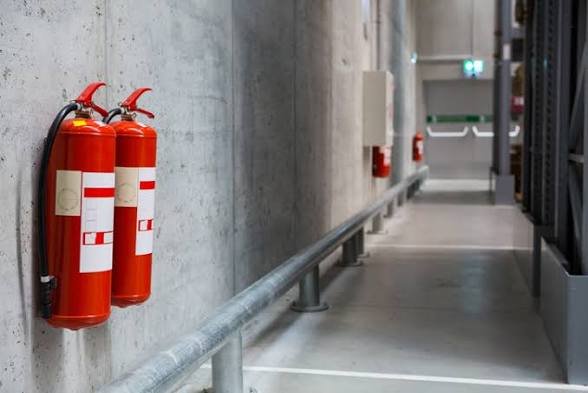
Portable extinguishers are commonly included in workplace fire safety arrangements. Their type, capacity, and location should be determined through a suitable assessment.
For example, electrical equipment, ordinary combustible materials, and flammable liquids can present different fire classifications. Extinguishers must be appropriate for the hazards they are intended to address.
They should be clearly marked, accessible, inspected, and maintained by competent personnel.
Employees should know where the equipment is located and understand the site’s emergency policy. They should not attempt to tackle a fire if doing so would put them in danger or delay evacuation.
Automatic Sprinkler Systems
Some warehouses require automatic sprinkler protection because of their size, occupancy, storage height, or the materials they contain.
A sprinkler system is designed to respond to heat and release water in the affected area according to its design. Its performance depends on correct engineering, suitable water supplies, appropriate installation, and regular maintenance.
Warehouse storage arrangements can affect sprinkler performance. Changes to rack layouts, ceiling arrangements, or stored commodities should therefore be reviewed by qualified fire protection professionals.
Fire Hydrants and Hose Systems
Depending on the facility’s design and applicable requirements, a warehouse may also need internal or external hydrants, hose systems, fire pumps, and dedicated water supplies.
These systems support firefighting operations and must be kept accessible and maintained.
6. Safe Storage Practices to Reduce Fire Risk
Storage arrangements are a major part of warehouse fire prevention. Even a well-designed building can become less safe if goods are stored in ways that interfere with its protection systems or escape routes.
Maintain Clear Aisles
Aisles should remain clear enough for normal operations and emergency movement.
Goods, pallets, packaging, and equipment should not be left in designated escape routes or in front of fire protection equipment.
Follow Approved Storage Layouts
Products should be stored according to the warehouse’s approved layout and fire protection design.
Managers should avoid making unreviewed changes to storage height, rack configuration, or commodity placement.
Separate Special-Hazard Materials
Materials that require special storage conditions should be identified and kept in designated areas according to their safety requirements.
Flammable liquids, chemicals, and other hazardous commodities may require specific separation, ventilation, containment, and fire protection arrangements.
Manage Waste and Packaging
Cardboard, plastic wrapping, paper, and other packaging materials can accumulate during warehouse operations.
Waste should be removed regularly and placed in appropriate designated areas. Keeping workspaces tidy reduces unnecessary combustible material and supports safer movement.
Protect Fire Safety Equipment
Sprinkler heads, detectors, alarm devices, extinguishers, and hydrants should not be blocked or damaged by storage activities.
Employees should report any equipment that appears inaccessible or defective.
7. Electrical Safety and Equipment Maintenance
Electrical safety should be part of every warehouse’s regular maintenance programme.
Lighting, machinery, conveyor systems, refrigeration units, charging equipment, and office installations should be maintained according to their technical requirements.
Warehouse management should arrange professional inspections and ensure that employees report visible damage or unusual equipment behaviour.
Important management practices include:
- Keeping electrical panels accessible to authorized personnel.
- Arranging repairs through qualified technicians.
- Replacing damaged equipment rather than continuing to use it.
- Maintaining records of inspections and repairs.
- Reviewing electrical requirements when new machinery is introduced.
- Ensuring temporary electrical arrangements are professionally managed.
These measures help reduce electrical hazards and improve the reliability of warehouse operations.
8. Emergency Exits and Evacuation Planning
A warehouse emergency plan should explain how employees, visitors, and contractors can leave the premises safely.
Warehouses may have long aisles, high storage racks, loading areas, mezzanine floors, and separate work zones. These features should be considered when planning evacuation routes.
Keep Exit Routes Clear
Emergency exits and escape routes must remain unobstructed.
Stored goods, vehicles, equipment, and packaging should not block doors or corridors.
Install Clear Exit Signs
Exit signs should be visible and understandable. Emergency lighting should support safe movement if normal lighting is unavailable.
Establish Assembly Areas
A suitable outdoor assembly area helps management account for employees and visitors after evacuation.
It should be positioned away from the building and emergency vehicle access routes.
Account for All Occupants
The emergency plan should explain how supervisors or designated staff account for employees, contractors, and visitors.
Special arrangements may be needed for people who require assistance during evacuation.
Display Emergency Information
Evacuation maps and emergency contact information should be displayed in appropriate locations.
Employees should understand the procedures before an emergency occurs.
9. Fire Safety Training for Warehouse Employees
Fire safety equipment is useful only when people understand the workplace’s emergency arrangements.
Employees should receive suitable training when they join the organization and whenever significant changes affect the workplace.
Training topics can include:
- Recognizing common fire hazards.
- Understanding alarm signals.
- Reporting smoke or suspected fire.
- Identifying emergency exits.
- Following evacuation instructions.
- Knowing the assembly area.
- Understanding who is responsible for contacting emergency services.
Fire drills can help employees become familiar with evacuation procedures. They should be planned, supervised, and reviewed by responsible personnel.
Training should emphasize that employees must not put themselves at risk to protect goods or machinery.
10. Warehouse Fire Safety in Pakistan
Warehouse owners and operators in Pakistan should identify the fire safety provisions that apply to their premises.
The Building Code of Pakistan – Fire Safety Provisions 2016 is an important national reference for building fire prevention, life safety, and fire protection. It covers matters such as occupancy classification, detection and alarm systems, fire protection equipment, emergency planning, and means of escape. The Pakistan Engineering Council lists the provisions among its official building code instruments. PEC +2
The requirements for a particular warehouse depend on factors such as its location, building classification, size, stored materials, and the authority responsible for enforcement.
In Punjab, the Punjab Community Safety Buildings Regulations are also relevant to covered buildings, including warehouses. Amendments reported in September 2026 describe updated safety provisions for commercial, industrial, healthcare, residential multistorey buildings, and warehouses. Warehouse operators should consult the current official regulations and the responsible authority for requirements applicable to their premises. Dawn
Businesses should consider the following steps:
- Identify the relevant local building control and safety authorities.
- Review the building’s approved plans and occupancy classification.
- Arrange a professional fire risk assessment.
- Confirm the required detection, alarm, and suppression arrangements.
- Maintain inspection and servicing records.
- Keep emergency plans and staff training up to date.
A qualified professional can help interpret the requirements for a particular facility. General online guidance should not be treated as a substitute for approval from the relevant authority.
11. The Importance of Regular Fire Safety Inspections
Fire safety is an ongoing responsibility. Equipment can deteriorate, storage layouts can change, and new operational activities can introduce hazards.
Regular inspections help management identify problems before they become emergencies.
A warehouse inspection programme should consider:
- Fire alarm condition and testing records.
- Extinguishers and other firefighting equipment.
- Sprinkler and water supply arrangements.
- Emergency lighting and exit signage.
- Clear access to exits and fire equipment.
- Electrical installations and machinery.
- Storage of combustible and hazardous materials.
- Waste management arrangements.
- Staff awareness and emergency procedures.
Inspection frequency should follow applicable requirements, manufacturer recommendations, and the advice of competent professionals.
Any identified defect should be recorded and addressed within an appropriate timeframe.
12. Fire Safety and Business Continuity
A warehouse fire can affect more than the building where it starts. It may interrupt deliveries, damage inventory, delay customer orders, and affect suppliers and business partners.
Business continuity planning helps an organization prepare for disruptions.
Warehouse managers should understand which goods, systems, and operations are essential to the business. They should also consider how operations could continue if a particular storage area became unavailable.
Fire prevention and protection contribute to business continuity by reducing the likelihood and potential impact of a serious incident.
Investing in suitable alarms, maintenance, staff awareness, and safe storage can help avoid much larger costs associated with a major emergency.
13. A Practical Warehouse Fire Safety Checklist
A checklist can help warehouse managers review essential arrangements. It should be adapted to the facility and supported by a suitable risk assessment.
- Review the warehouse fire risk assessment.
- Keep aisles and emergency exits clear.
- Check that exit signs and emergency lighting are serviceable.
- Arrange required fire alarm inspections and maintenance.
- Keep extinguishers accessible and properly maintained.
- Arrange professional checks of sprinkler and hydrant systems where installed.
- Review electrical installations and operating equipment.
- Store hazardous materials according to their requirements.
- Remove unnecessary combustible waste.
- Review changes to storage height and rack layouts.
- Provide staff with suitable fire safety training.
- Conduct and review evacuation drills.
- Maintain records of inspections, repairs, and training.
- Confirm that emergency services can access the premises.
A completed checklist does not automatically demonstrate legal compliance. The facility should still be assessed against the applicable building code and local authority requirements.
Conclusion
Warehouse fire safety is an essential investment in people, property, inventory, and business continuity. Electrical faults, operating equipment, combustible packaging, hazardous materials, and poor storage arrangements can all contribute to fire risks.
A safer warehouse combines prevention, early detection, suitable fire protection systems, clear evacuation routes, regular maintenance, and trained employees.
In Pakistan, warehouse operators should review the Building Code of Pakistan – Fire Safety Provisions 2016 and any applicable provincial or local regulations. Professional assessment is important because protection requirements vary according to the building and the materials stored.
The best time to improve warehouse fire safety is before an emergency occurs. A relatively small investment in inspections, training, maintenance, and appropriate protection can make a significant difference when it matters most.
Frequently Asked Questions (FAQs)
1. Why is warehouse fire safety important?
Warehouse fire safety helps protect employees, visitors, buildings, stored goods, and business operations. It also reduces the risk of serious disruption caused by fire-related damage.
2. What are the common causes of warehouse fires?
Common causes include electrical faults, operating equipment, heating systems, combustible packaging, flammable materials, and poorly managed maintenance activities.
3. What fire protection systems does a warehouse need?
Depending on its size, occupancy, building design, and stored materials, a warehouse may need fire detection and alarms, extinguishers, sprinklers, hydrants, emergency lighting, and suitable escape routes. A qualified professional should assess the facility.
4. Is a fire alarm system important for warehouses in Pakistan?
Yes. An appropriate fire alarm system can provide early warning and support evacuation. The required design and coverage depend on the warehouse’s classification, layout, hazards, and applicable local requirements.
5. How often should warehouse fire safety equipment be inspected?
Inspection and maintenance schedules depend on the type of equipment, manufacturer instructions, applicable standards, and local requirements. Warehouses should maintain documented checks and arrange servicing by competent professionals.
References
- Pakistan Engineering Council – Building Code of Pakistan: Fire Safety Provisions 2016. PEC
- National Fire Protection Association – Warehouse Structure Fires. NFPA
- OSHA – Warehousing Hazards and Solutions. Occupational Safety and Health Administration
- Smart PEC – Official Codes and Standards Register. Smart PEC
- Dawn – Amended Punjab Building Safety Regulations, September 2026. Dawn