
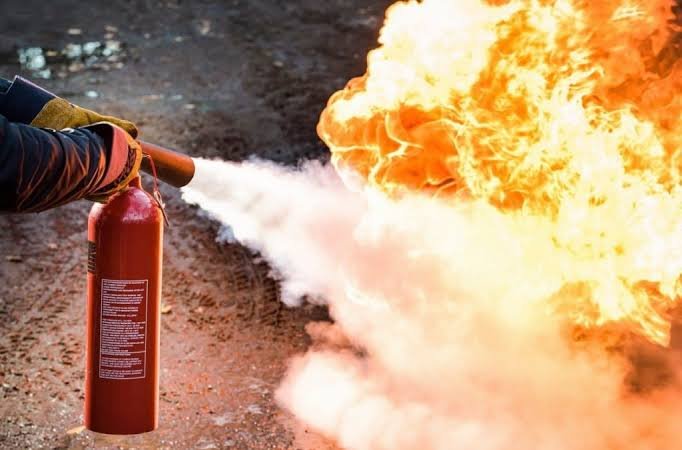
Fire can spread quickly, turning a small incident into a serious emergency within minutes. Whether it occurs in a home, office, restaurant, factory, warehouse, or commercial building, having suitable fire safety equipment can help reduce damage and protect lives.
One of the most familiar pieces of firefighting equipment is the fire extinguisher. However, not every extinguisher is designed for every fire. Using the wrong type can make a fire worse, damage equipment, or put the person attempting to extinguish it at risk.
Understanding the different types of fire extinguishers is an important part of fire prevention and emergency preparedness. It helps property owners, employees, and safety managers identify the equipment appropriate for the hazards in their buildings.
In Pakistan, fire protection planning should consider the building’s use, the materials present, electrical equipment, cooking operations, and applicable fire safety requirements. Extinguishers should also work as part of a broader safety system that includes alarms, evacuation routes, staff training, and other suitable firefighting arrangements.
This guide explains the main types of fire extinguishers, their uses, limitations, selection considerations, and maintenance practices.
What Is a Fire Extinguisher?
A fire extinguisher is a portable device that releases an extinguishing agent to control or put out a small fire. Depending on its design, it may contain water, foam, dry chemical powder, carbon dioxide, wet chemical, or a specialised agent.
Fire extinguishers work by interrupting one or more elements needed for combustion:
- Heat: Cooling the burning material.
- Fuel: Separating the fuel from the fire or covering its surface.
- Oxygen: Limiting the fire’s access to oxygen.
- Chemical reaction: Interrupting the combustion process.
Different extinguishing agents work in different ways. That is why selecting an extinguisher based on the expected fire hazard is essential. The Pakistan Building Code’s fire safety provisions identify factors such as the likely fire type and size, nearby hazards, electrical equipment, and environmental conditions when selecting portable extinguishers.
Understanding Fire Classes
Fire classes help identify the materials involved in a fire and the extinguishing agents suitable for dealing with them.
Classifications can differ between countries and standards. Always follow the classifications and instructions printed on the extinguisher and confirm that they match applicable local requirements.
Class A: Ordinary Combustible Materials
Class A fires involve common solid materials such as:
- Wood
- Paper and cardboard
- Cloth and textiles
- Some plastics
- Furniture and similar materials
These materials often leave glowing embers, so cooling is an important part of extinguishing the fire.
Class B: Flammable Liquids
Class B fires involve flammable liquids such as petrol, solvents, paints, and certain oils.
Water can spread burning liquid and should not be used on these fires. Use only an extinguisher specifically rated for the hazard.
Class C: Electrical Equipment
In the commonly used North American classification system, Class C refers to fires involving energised electrical equipment.
Electrical fires may involve wiring, appliances, control panels, computers, and machinery. The extinguisher must be specifically approved for use around energised electrical equipment.
Important: Fire class terminology is not identical everywhere. Check the extinguisher label and local code rather than relying on the letter alone.
Class D: Combustible Metals
Class D fires involve combustible metals, which may include magnesium, sodium, potassium, titanium, or certain metal powders and shavings.
These fires require agents designed for the specific metal involved. Ordinary water or a general-purpose extinguisher may be unsuitable and could increase the danger.
Class K: Commercial Cooking Oils and Fats
Class K is used in the United States for fires involving cooking oils and fats in commercial cooking appliances, such as deep-fat fryers.
Other standards may use different labels for cooking-oil hazards. Select an extinguisher specifically approved for the cooking equipment and fuel involved.
Main Types of Fire Extinguishers
1. Water Fire Extinguishers
Suitable for: Generally Class A fires, when the extinguisher is labelled for that use.
Water extinguishers cool burning materials, lowering their temperature below the level needed to sustain combustion.
Common applications
- Offices containing paper and furniture
- Schools and educational buildings
- Warehouses storing ordinary combustible goods
- Certain residential and commercial areas
Advantages
Water extinguishers are relatively straightforward in design and can be effective on suitable fires involving ordinary solid materials.
Limitations
Water extinguishers should not be used on burning flammable liquids or energised electrical equipment. Water may spread burning liquid, and its electrical conductivity can create a shock hazard.
They are also not a universal solution for every material that appears to be burning.
2. Foam Fire Extinguishers
Suitable for: Certain Class A and Class B hazards, depending on the product label.
Foam extinguishers release a foam-based agent that can cool combustible materials and form a covering over some flammable liquid surfaces. This covering helps reduce the release of flammable vapours.
Common applications
- Workshops
- Garages and vehicle-related facilities
- Certain storage areas containing flammable liquids
- Commercial premises with suitable Class A and B risks
Advantages
Foam can be useful where both ordinary combustible materials and certain flammable liquids are present.
Limitations
Foam is not automatically suitable for every liquid or electrical hazard. Its use must match the extinguisher’s approval and the specific fire risk. Do not assume that any foam extinguisher can safely handle an electrical fire.
3. Dry Chemical Fire Extinguishers
Dry chemical extinguishers release a fine powder that interrupts the combustion process. Some products are designed for multiple fire classes, while others are intended for more limited hazards.
ABC dry chemical extinguishers
ABC extinguishers are commonly used for a range of ordinary combustible, flammable-liquid, and approved electrical-equipment hazards.
They may be suitable for locations such as:
- Offices
- Shops
- Homes
- Workshops
- Certain industrial and commercial spaces
The exact suitability depends on the product’s rating and label. A multipurpose extinguisher should not be treated as suitable for every possible fire, particularly specialised metal fires or commercial cooking-oil fires.
BC dry chemical extinguishers
BC-labelled extinguishers are designed for the classes indicated on their labels, commonly including flammable-liquid and approved electrical hazards in the relevant classification system.
They are not necessarily suitable for ordinary solid combustibles that require a Class A rating.
Advantages
- Available in portable formats
- Some models cover multiple fire classes
- Useful in a variety of commercial and industrial settings when correctly selected
Limitations
Dry chemical powder can reduce visibility during discharge and leave residue. The residue may require cleaning and can affect sensitive equipment.
4. Carbon Dioxide (CO₂) Fire Extinguishers
Suitable for: Certain flammable-liquid and electrical-equipment fires, according to the extinguisher’s label and design.
Carbon dioxide extinguishers discharge CO₂, which helps suppress combustion by reducing the availability of oxygen around the fire. The discharge also produces a cooling effect.
Common applications
- Electrical rooms
- Offices with electronic equipment
- Certain laboratories
- Areas where powder residue would be undesirable
Advantages
CO₂ does not leave the same powder residue associated with dry chemical extinguishers. This can be useful around some sensitive equipment.
Limitations and safety concerns
CO₂ is not suitable for every fire, and it may be less effective on materials that can continue smouldering or reignite.
It can also create an asphyxiation hazard in confined or poorly ventilated spaces. The discharge horn can become extremely cold, so users must follow the manufacturer’s handling instructions.
Pakistan’s OGRA regulations specifically caution that CO₂ extinguishers equipped with metal horns are not considered safe for fires involving energised electrical equipment and are not classified for that use. Always verify the exact equipment approval and label.
5. Wet Chemical Fire Extinguishers
Suitable for: Certain cooking-oil and fat fires, when specifically labelled for the hazard.
Wet chemical extinguishers are designed for cooking-related fire risks, particularly those associated with commercial kitchens. The agent helps cool the burning oil and form a layer that reduces the chance of reignition.
Common applications
- Restaurants
- Hotel kitchens
- Catering facilities
- Commercial food preparation areas
Advantages
A correctly selected wet chemical extinguisher is designed for the special hazards posed by hot cooking oils and fats.
Limitations
A wet chemical extinguisher should not be assumed suitable for every fire in a kitchen. For example, a kitchen may also contain electrical equipment, packaging, gas appliances, and other materials requiring different protection.
Never throw water onto burning cooking oil. Water can cause the burning oil to splatter and spread the fire.
6. Class D Dry Powder Fire Extinguishers
Suitable for: Specific combustible-metal fires.
Class D extinguishers use specialised dry powders designed for particular metal hazards. Different combustible metals may require different agents, so the correct selection depends on the material being handled or stored.
Common applications
- Metal-processing facilities
- Certain manufacturing plants
- Laboratories working with combustible metals
- Industrial operations involving metal powders or shavings
Advantages
These extinguishers are designed for hazards that ordinary water, foam, or multipurpose extinguishers may not safely control.
Limitations
They are specialised equipment. A Class D extinguisher should be selected only after identifying the metal involved and consulting qualified fire safety personnel.
7. Clean Agent Fire Extinguishers
Clean agent extinguishers use specialised extinguishing agents intended to control certain fires while leaving little or no residue.
Common applications
- Data and communication rooms
- Certain control rooms
- Laboratories
- Areas containing sensitive electronic equipment
Advantages
They may help reduce residue-related damage compared with powder-based agents.
Limitations
Not every clean agent is suitable for every fire class or space. Consider the agent’s approval, room size, ventilation, occupancy, and manufacturer’s safety instructions before installation.
Fire Extinguisher Types at a Glance
| Extinguisher type | Typical use | Important limitation |
|---|---|---|
| Water | Ordinary solid combustibles | Not for flammable liquids or energised electrical fires |
| Foam | Certain solid combustibles and flammable liquids | Must match the liquid and electrical hazard |
| ABC dry chemical | Multiple labelled fire classes | Not universal; powder residue can affect equipment |
| BC dry chemical | Labelled liquid and electrical hazards | May not cover ordinary Class A materials |
| CO₂ | Certain liquid and electrical fires | Confined-space asphyxiation risk; verify electrical rating |
| Wet chemical | Approved cooking-oil and fat hazards | Not a universal kitchen extinguisher |
| Class D powder | Specific combustible metals | Agent must match the metal |
| Clean agent | Certain sensitive-equipment environments | Suitability depends on agent and conditions |
The table is a general guide, not a substitute for the extinguisher’s label, risk assessment, or applicable fire safety code.
How to Choose the Right Fire Extinguisher
Choosing an extinguisher begins with understanding what could burn and where the fire might occur.
1. Identify the likely fire hazards
Consider the materials, equipment, and activities in the area. A restaurant kitchen has different risks from a paper-storage room or an electrical control room.
2. Check the extinguisher’s label
Confirm the approved fire classes, rating, operating instructions, and any warnings. Do not rely only on the cylinder’s colour or appearance.
3. Consider who will use it
The extinguisher must be accessible and manageable for the people expected to use it. A heavy unit may not be practical for every employee or resident.
4. Consider the surrounding environment
Temperature, ventilation, sensitive equipment, and the presence of people can affect which extinguishing agent is appropriate.
5. Seek a competent assessment
For commercial, industrial, high-rise, or specialised premises, have a qualified fire safety professional assess extinguisher type, number, location, and maintenance requirements.
The Pakistan Building Code states that extinguishers are intended as a first line of defence against fires of limited size and that their selection should be based on the hazards to be protected.
How to Use a Fire Extinguisher Safely
A fire extinguisher is not a substitute for evacuation. Use one only if the fire is small and contained, you have been trained or understand the equipment, the alarm has been raised, and you have a clear escape route.
If the fire is spreading, smoke is building up, or you are uncertain, leave immediately and contact emergency services.
For a suitable small fire, the commonly taught PASS method is:
- Pull the safety pin.
- Aim the nozzle at the base of the fire.
- Squeeze the operating handle.
- Sweep the discharge from side to side across the base.
Keep your exit behind you and stop if the fire does not respond promptly. Follow the extinguisher’s instructions and any training provided for your workplace.
Fire Extinguisher Placement and Accessibility
Correct placement makes equipment easier to locate during an emergency.
Consider the following practices:
- Install extinguishers where they are visible and accessible.
- Keep routes to extinguishers free from obstructions.
- Use clear signs where equipment may not be immediately obvious.
- Select locations based on the fire risks and applicable requirements.
- Avoid placing extinguishers where heat, moisture, corrosion, or impact may damage them.
- Make sure employees know where the equipment is located.
The appropriate number and placement depend on the building, occupancy, hazard level, and relevant code requirements. A generic placement plan should not replace a site-specific assessment.
Inspection and Maintenance
An extinguisher may be ineffective if it has lost pressure, been damaged, or has an obstructed nozzle. Routine checks and professional servicing help keep equipment ready for use.
Regular visual checks
Check that:
- The extinguisher is in its designated place.
- Access is not blocked.
- The body has no obvious damage, rust, or leakage.
- The hose and nozzle appear intact.
- The safety pin and seal are present.
- The pressure indicator, if fitted, is within its marked operating range.
- The instructions and hazard labels are readable.
- Inspection and service records are current.
Professional servicing
Maintenance, internal examination, testing, and recharging should follow the manufacturer’s instructions and applicable standards. The Pakistan Building Code includes requirements for inspection and maintenance, and states that equipment that can no longer be serviced in accordance with its manufacturer’s maintenance manual is considered obsolete and should be removed from service.
Do not attempt to dismantle or recharge a pressurised extinguisher yourself. Use competent service personnel and ensure that any unit removed for servicing is replaced with suitable protection where required.
Why Fire Extinguishers Need Fire Alarm Systems
Fire extinguishers and fire alarm systems perform different but complementary roles.
An extinguisher is used to control a limited fire when it is safe to do so. A fire alarm system detects or signals a fire emergency and alerts occupants so they can respond and evacuate.
A properly planned fire safety arrangement may include:
- Smoke or heat detection where appropriate
- Audible and visible alarms
- Clearly marked evacuation routes
- Suitable portable extinguishers
- Emergency lighting and exit signage
- Staff training and evacuation procedures
- Other fire suppression systems required by the building’s risk assessment
For businesses looking for a fire alarm system in Pakistan, the appropriate system depends on the building’s size, occupancy, layout, and applicable requirements. Detection and alarm arrangements should be planned alongside firefighting equipment rather than treated as a replacement for it.
Punjab Civil Defence lists fire detection and alarm systems, firefighting arrangements, fire safety plans, and emergency exit and evacuation plans among the safety measures inspected in relevant premises.
Fire Extinguisher Safety in Pakistan
Buildings in Pakistan vary widely, from residential properties and small shops to factories, hospitals, offices, and high-rise developments. Their fire risks and protection requirements can therefore differ substantially.
Property owners and managers should consider:
- The building’s occupancy and activities
- Electrical installations and backup power equipment
- Cooking facilities and fuel storage
- Combustible materials and storage practices
- Access for occupants and emergency responders
- The condition and servicing history of firefighting equipment
- Applicable building and fire safety requirements
The Building Code of Pakistan (Fire Safety Provisions) 2016 addresses portable fire extinguishers, including selection, installation, inspection, maintenance, recharging, and testing. Applicable requirements should be confirmed with the relevant authority and qualified professionals for the specific premises.
Common Fire Extinguisher Mistakes to Avoid
Using one extinguisher for every fire
Different fires require different extinguishing agents. A multipurpose extinguisher is not suitable for every specialised hazard.
Ignoring the label
The label provides essential information about approved uses and limitations. Read it before an emergency occurs.
Attempting to fight a growing fire
Portable extinguishers are intended for limited fires. Evacuation and emergency assistance take priority when conditions are unsafe.
Blocking access to equipment
An extinguisher hidden behind boxes or locked away may not be available when needed.
Neglecting maintenance
A damaged, discharged, or poorly maintained extinguisher may fail during an emergency.
Forgetting training
Knowing where equipment is located is not the same as knowing how to use it. Staff should receive suitable instruction and understand when not to attempt firefighting.
Conclusion
Fire extinguishers are an important part of a complete fire safety plan, but choosing the correct type is essential. Water, foam, dry chemical, carbon dioxide, wet chemical, Class D powder, and clean agent extinguishers all have different applications and limitations.
The safest approach is to identify likely fire hazards, choose equipment with the correct approval and label, keep it accessible, and arrange regular inspection and professional servicing. People should also know how to raise the alarm, evacuate, and avoid taking unnecessary risks.
For homes and workplaces across Pakistan, fire extinguishers should be considered alongside detection, alarms, evacuation planning, training, and other measures required for the premises. A coordinated approach helps people respond more safely when a fire occurs.
Frequently Asked Questions (FAQs)
1. What are the main types of fire extinguishers?
Common types include water, foam, dry chemical, carbon dioxide, wet chemical, Class D dry powder, and clean agent extinguishers. Each is designed for particular fire hazards, so the label should always be checked.
2. Which fire extinguisher is suitable for electrical fires?
Use only an extinguisher specifically rated for the electrical hazard and approved for the equipment involved. Never use an ordinary water extinguisher on energised electrical equipment. Follow the label and local safety guidance.
3. Can a water extinguisher be used on a cooking-oil fire?
No. Water can cause burning oil to splatter and spread the fire. Commercial cooking-oil hazards require an extinguisher specifically approved for that type of fire.
4. How often should fire extinguishers be inspected?
They should receive regular visual checks and professional maintenance at intervals required by the manufacturer and applicable standards. The correct schedule depends on the extinguisher type and local requirements.
5. Are fire extinguishers enough to protect a building?
No. Extinguishers are only one part of fire protection. Buildings may also require detection and alarm systems, safe exits, evacuation plans, training, and other protection measures based on their risks and applicable codes.