Fire safety is often misunderstood. People may believe that a small fire is always easy to control, that smoke alarms are only needed in large buildings, or that any type of fire can be extinguished with water. Unfortunately, these misconceptions can lead to unsafe decisions during an emergency.
Understanding the facts helps families, employees, school staff, and building managers prepare more effectively. In Pakistan, fire risks can arise in homes, shops, offices, restaurants, factories, and apartment buildings. Electrical faults, cooking accidents, gas-related hazards, and the improper storage of combustible materials are among the issues that deserve attention.
A good fire safety plan combines prevention, early warning, appropriate equipment, clear escape routes, and regular training. A properly selected and maintained fire alarm system in Pakistan can help occupants receive an early warning, but no single device can prevent every fire or guarantee everyone’s safety.
This beginner’s checklist explains common fire safety myths, the facts behind them, and practical ways to make homes and workplaces safer.
Why Is It Important to Understand Fire Safety Myths?
Fire safety myths often develop because people rely on assumptions, outdated information, or advice that only applies to certain situations. A method that works for one type of fire may make another fire more dangerous.
For example, water can help extinguish some fires involving ordinary combustible materials, but it can be dangerous when used on burning cooking oil or energised electrical equipment. Similarly, a fire extinguisher may be suitable for one hazard but inappropriate for another.
Knowing the difference between a myth and a reliable safety practice helps people make better decisions before an emergency occurs.
Use the following checklist to review your understanding of fire safety.
Myth 1: Small Fires Are Always Easy to Control
The myth: If a fire looks small, there is plenty of time to handle it without calling for help.
The fact: A small fire can grow quickly, produce dangerous smoke, and spread to nearby materials. Its appearance alone does not show how quickly conditions may become unsafe.
Smoke can affect breathing and visibility, while heat can make escape routes difficult to use. A fire that begins in a wastebasket or cooking area may also spread to surrounding furniture, cabinets, or other combustible materials.
What you should do:
- Treat every fire alarm and visible fire seriously.
- Alert others and follow the building’s emergency procedure.
- Leave promptly if the fire is spreading, smoke is building up, or your escape route may be threatened.
- Contact the relevant emergency service.
- Never delay evacuation to protect belongings.
Only trained adults should consider using an appropriate extinguisher on a small, contained fire when it is safe to do so and a clear escape route remains available. If there is any doubt, leave the area.
Myth 2: Fire Alarms Are Only Necessary in Large Buildings
The myth: Small homes, shops, and offices do not need fire detection because people will notice a fire themselves.
The fact: Fires can start in buildings of any size, including when occupants are asleep, away from the affected room, or unable to see the source. Suitable smoke or heat detection and warning arrangements can help people recognise danger earlier.
The appropriate equipment depends on the building’s layout, occupancy, hazards, and applicable requirements. A large commercial property may need a more extensive fire alarm system than a small residence, but smaller premises should not ignore fire detection.
What you should do:
- Find out which detection and warning devices are appropriate for your premises.
- Install equipment according to the manufacturer’s instructions and applicable requirements.
- Arrange regular testing and maintenance.
- Do not ignore fault indicators or damaged devices.
- Make sure occupants know what the warning means and how to respond.
A suitable fire alarm system in Pakistan should be selected for the building’s needs rather than chosen solely by price. Professional advice may be necessary for commercial, industrial, and multi-storey premises.
Myth 3: Water Can Put Out Every Type of Fire
The myth: Water is a universal solution for extinguishing flames.
The fact: Water is suitable for certain fires, but it can make other situations more dangerous. Pouring water onto burning cooking oil can cause the burning material to spread. Water can also create an electrical hazard around energised equipment.
Different fires require different extinguishing methods. The correct equipment depends on the material burning and the surrounding conditions.
What you should do:
- Never pour water onto a cooking-oil or grease fire.
- Do not use water on energised electrical equipment.
- Make sure firefighting equipment is appropriate for the identified hazard.
- Follow the instructions on the extinguisher and the building’s emergency plan.
- Evacuate if the fire is not safely manageable.
Commercial kitchens may require specialised protection designed for cooking appliances and oils. Electrical rooms, workshops, and industrial facilities may also have specific extinguishing requirements.
When selecting equipment, seek advice from a qualified fire safety professional rather than assuming one extinguisher is suitable for every fire.
Myth 4: Fire Extinguishers Last Forever
The myth: Once an extinguisher has been purchased, it will remain ready for use without further attention.
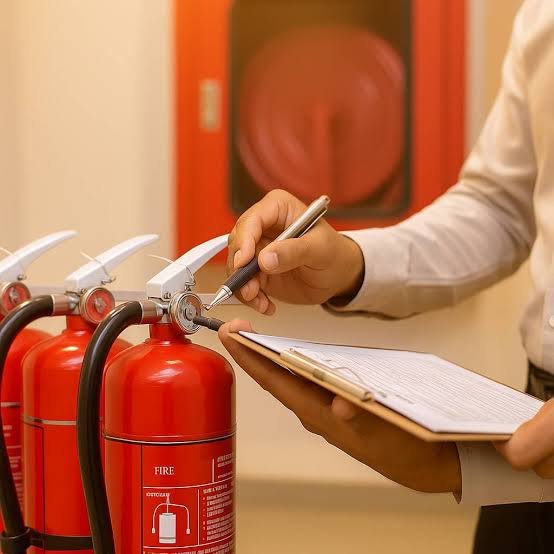
The fact: Fire extinguishers can become damaged, lose pressure, develop faults, or become unsuitable for the hazards in their location. An extinguisher that has been used may also require servicing or replacement before it can be relied upon again.
A unit that looks fine from a distance may still need professional inspection.
What you should do:
- Keep extinguishers in their designated, accessible locations.
- Check for visible damage and other issues during routine inspections.
- Follow the manufacturer’s instructions and applicable servicing requirements.
- Arrange professional maintenance at the required intervals.
- Replace or service defective equipment promptly.
The appropriate type and number of extinguishers depend on the building’s risks and applicable requirements. Employees should also receive suitable training so they understand when using an extinguisher is appropriate and when evacuation is the safer choice.
Myth 5: Smoke Is Less Dangerous Than Flames
The myth: If flames are not visible, staying inside a building is probably safe.
The fact: Smoke can contain harmful gases and particles, reduce visibility, and make breathing difficult. It may spread into corridors and other spaces before occupants can see the fire itself.
A smoky environment can make it difficult to identify exits or remain oriented. Waiting to confirm the exact source of smoke may expose people to unnecessary danger.
What you should do:
- Treat unexplained smoke as a serious warning.
- Follow the alarm and evacuation procedure.
- Use the designated escape route if it is safe to do so.
- Avoid entering smoke-filled areas to investigate.
- Do not re-enter a building until authorised by the responsible emergency personnel.
Do not assume that a fire is minor because the flames are hidden or the smoke appears limited. The safest response is to follow the emergency plan and seek help.
Myth 6: A Fire Blanket Can Handle Any Fire
The myth: A fire blanket is suitable for every fire and can replace other firefighting equipment.
The fact: Fire blankets are intended for specific applications, such as certain small cooking fires. They are not a universal solution for spreading fires, large fuel fires, or every electrical or industrial hazard.
Using a blanket in an unsuitable situation can expose a person to heat and smoke or delay evacuation.
What you should do:
- Read the product instructions before an emergency occurs.
- Store the blanket where it can be accessed without approaching a likely fire source.
- Use it only for a suitable fire and only when conditions permit safe action.
- Do not attempt to manage a growing fire with a blanket.
- Follow the manufacturer’s guidance about inspection and replacement after use.
Homes and workplaces should consider fire blankets as one part of a broader safety plan. Appropriate alarms, extinguishers, safe escape routes, and emergency instructions remain important.
Myth 7: You Can Use Any Exit During an Emergency
The myth: All doors and corridors are equally safe during a fire.
The fact: Some routes may become blocked by smoke, heat, fire, or other hazards. A building’s evacuation plan identifies designated escape routes and, where applicable, alternative routes.
People who do not know the layout may head towards a familiar entrance even when a different route is safer.
What you should do:
- Learn the evacuation routes before an emergency occurs.
- Keep corridors, stairways, and exits free from obstructions.
- Make sure required exit signs remain visible.
- Know where the designated assembly area is located.
- Follow staff or emergency personnel instructions.
- Never return inside to collect belongings.
Building managers should inspect escape routes regularly and ensure that exit doors can be used as required. Families should also discuss evacuation plans with children and older relatives so everyone understands the basic procedure.
Myth 8: Fire Safety Is Only the Building Manager’s Responsibility
The myth: Residents, employees, and visitors do not need to think about fire safety because management has installed the equipment.
The fact: Building management is responsible for many important arrangements, including equipment maintenance, risk assessment, and evacuation planning. However, everyone can contribute by following safety rules and reporting hazards.
Blocked exits, damaged electrical equipment, unsafe storage, and ignored alarms can undermine the wider safety programme.
What you should do:
- Report damaged cables, unusual burning smells, or visible hazards.
- Keep emergency exits and access routes clear.
- Follow rules for electrical equipment and cooking areas.
- Participate in relevant safety briefings and drills.
- Know how to report a fire or activate the alarm when safe and appropriate.
In workplaces, staff should understand their assigned emergency responsibilities. Visitors should receive clear instructions when necessary, and children should be taught to report hazards to a responsible adult rather than attempting to manage them alone.
Myth 9: Fire Drills Are Unnecessary If a Building Has an Alarm
The myth: A working alarm is enough, so practising evacuation is a waste of time.
The fact: An alarm warns people, but it does not automatically teach them where to go or how to leave safely. Without practice, occupants may hesitate, choose an unsuitable route, or overlook important instructions.
Fire drills help identify weaknesses in evacuation arrangements and give people an opportunity to become familiar with the procedure.
What you should do:
- Follow the building’s planned drill schedule.
- Learn the nearest designated escape route and any alternative route.
- Understand where to assemble after leaving.
- Make sure staff understand their assigned roles.
- Review problems identified during each drill.
- Consider the needs of people who may require assistance.
Schools, offices, factories, shopping centres, and residential buildings may have different requirements. Drills should be appropriate to the premises and conducted in a way that protects participants.
Myth 10: Once a Fire Is Out, It Is Safe to Re-Enter
The myth: If the flames have disappeared, the building is safe to enter again.
The fact: A fire may leave behind hot materials, damaged wiring, structural weaknesses, smoke contamination, or hidden sources of heat. Firefighting activity can also create additional hazards.
A building may look normal from outside while still being unsafe.
What you should do:
- Remain outside after evacuating.
- Follow instructions from emergency responders and authorised officials.
- Do not re-enter to retrieve valuables, documents, or personal belongings.
- Wait for the building to be assessed and declared safe by the appropriate authority.
Only authorised personnel should determine when occupants can safely return. Do not rely on the absence of visible flames as proof that all danger has passed.
Beginner’s Fire Safety Checklist
Use this checklist to review basic fire safety arrangements at home, in an office, or in another occupied building.
{@body const tasks = [ “Identify suitable smoke or heat detection and warning equipment.”, “Check that alarms are maintained and tested as instructed.”, “Keep escape routes, stairways, and exit doors unobstructed.”, “Make sure occupants know the evacuation procedure and assembly point.”, “Ensure extinguishers are appropriate for the hazards and properly maintained.”, “Keep combustible materials away from likely heat and ignition sources.”, “Arrange inspections of electrical installations by qualified professionals.”, “Explain fire safety rules to children and other household members.”, “Take part in relevant workplace or school fire drills.”, “Keep emergency contact information accessible.” ]} {@body const [checked, setChecked] = DIL.useState([])} Fire safety review {checked.length} of {tasks.length} checked <box background=”surface-inverted” height=”6px” radius=”full” width={${checked.length / tasks.length * 100}%} /> {#each tasks as task, i} <checkbox key={task} checked={checked.includes(i)} onChange={v => setChecked(old => v ? […old, i] : old.filter(n => n !== i))}>{task} {/each} <button variant=”outline” color=”secondary” onClick={() => setChecked([])}>Reset checklist
This checklist is a starting point, not a substitute for a professional fire risk assessment or any inspections required by law.
Fire Safety in Pakistan: What Should Building Owners Know?
Pakistan’s Building Code of Pakistan—Fire Safety Provisions 2016 is an important reference for building fire protection and life safety. The Pakistan Engineering Council lists it among its published building codes and standards.
The requirements that apply to a specific property depend on factors such as building use, occupancy, design, and the authority responsible for enforcement. Building owners and managers should consult the applicable code and relevant local authorities rather than assume that one set of measures suits every property.
A fire safety programme may need to address detection and alarm systems, extinguishers, emergency exits, evacuation planning, and the maintenance of required equipment.
For businesses and multi-storey buildings, qualified professionals can help assess hazards and determine appropriate protective measures. A fire alarm system in Pakistan should be selected, installed, tested, and maintained according to the building’s needs and applicable requirements.
Conclusion
Fire safety myths can create a false sense of security and lead people to make unsafe decisions. Small fires can grow, smoke can be dangerous, extinguishers require maintenance, and water is not suitable for every fire. Similarly, alarms are only one part of a wider emergency plan, and people should never re-enter a building simply because visible flames have disappeared.
The best approach is to learn the facts, identify hazards, maintain appropriate equipment, keep escape routes clear, and practise evacuation procedures. Families, employees, and building managers all have a role in supporting safer environments.
Use the beginner’s checklist regularly and seek qualified advice when you are unsure which measures are appropriate. Preparing before an emergency is more effective than relying on assumptions when time is limited.
Frequently Asked Questions (FAQs)
1. What are some common fire safety myths?
Common myths include believing that water can extinguish every fire, that smoke is harmless without visible flames, that extinguishers last forever, and that a fire alarm eliminates the need for evacuation planning.
2. Is a fire alarm system necessary in smaller buildings?
Smaller buildings can also experience fires. Appropriate detection and warning equipment should be selected according to the building’s hazards, layout, occupancy, and applicable requirements.
3. Can water be used to extinguish an electrical or cooking-oil fire?
Water should not be poured onto burning cooking oil or used on energised electrical equipment. The correct response depends on the fire type, available equipment, and whether it is safe to act. Evacuate and contact emergency services when conditions are dangerous.
4. How often should fire safety equipment be checked?
Inspection and testing schedules depend on the equipment, manufacturer’s instructions, applicable standards, and local requirements. Routine visual checks should be supported by required professional servicing and accurate records.
5. What is the first priority during a fire emergency?
Protecting people is the priority. Raise the alarm, follow the evacuation plan, leave by a safe route, and contact emergency services. Do not delay evacuation to collect belongings or attempt to control a fire that is unsafe to approach.