
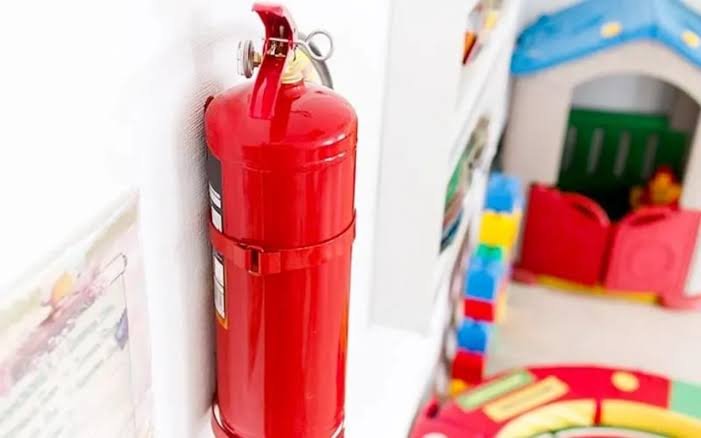
Schools are places where children learn, develop skills, and prepare for the future. Parents trust schools to provide a secure environment, while teachers and administrators work to support students throughout the school day. However, like other occupied buildings, schools can face fire hazards that require careful planning and prevention.
Electrical faults, overloaded sockets, laboratory activities, kitchen equipment, and poorly stored combustible materials can contribute to fire risks. If a fire begins during lessons, breaks, examinations, or school events, students and staff need clear instructions and reliable warning systems to respond safely.
School fire safety is therefore more than a regulatory responsibility. It is an essential investment in the protection of students, teachers, support staff, visitors, and school property.
In Pakistan, schools vary from small neighbourhood institutions to large campuses with laboratories, libraries, computer rooms, cafeterias, and multiple floors. Each building needs fire safety arrangements appropriate to its design and occupancy.
This guide explains the key elements of school fire safety, including alarm systems, prevention, evacuation planning, staff training, equipment maintenance, and the responsibilities of school management.
1. Why Is Fire Safety Important in Schools?
Schools may accommodate hundreds or even thousands of people at particular times of the day. Many students are young and depend on adults for instructions during emergencies. This makes early warning and organised evacuation especially important.
A fire emergency can also create confusion if students are unfamiliar with exits or staff members do not know their assigned responsibilities.
An effective school fire safety programme helps to:
- Protect students, teachers, and other occupants.
- Provide early warning when a potential fire is detected.
- Reduce confusion during evacuation.
- Identify hazards before they cause an incident.
- Support compliance with applicable building and fire safety requirements.
- Protect school facilities, educational materials, and equipment.
- Reassure parents that safety is treated as a priority.
Fire safety should be considered during school construction, renovation, daily operations, and future expansion. A building that was suitable for a small number of students may need additional measures if enrolment increases or new facilities are introduced.
The objective is to develop a consistent safety culture in which prevention, preparedness, and maintenance are part of everyday school management.
2. Identify Common Fire Hazards in Schools
The first step towards improving school fire safety is identifying the hazards that could lead to a fire or make an emergency more difficult to manage.
Electrical equipment and wiring
Schools use computers, printers, projectors, air conditioners, fans, laboratory equipment, and many other electrical devices. Damaged cables, faulty sockets, overloaded circuits, and poor-quality installations can increase the risk of electrical fires.
Electrical installations should be inspected and maintained by qualified professionals. Damaged equipment should be removed from service until it has been assessed and repaired.
Science laboratories
Laboratories may contain heating equipment, chemicals, gas supplies, and materials that require special handling. Their risks depend on the activities being conducted.
School management should establish appropriate laboratory procedures, supervise practical activities, store materials correctly, and ensure that staff understand the emergency arrangements.
Kitchens and cafeterias
School kitchens may use gas appliances, hot surfaces, cooking oils, and electrical equipment. Poor maintenance or unsafe working practices can create fire hazards.
Cooking areas should be kept clean, ventilation equipment maintained, and combustible materials stored away from heat sources.
Libraries and storage rooms
Books, paper, cardboard, curtains, and other combustible materials can contribute to fire growth. Storage rooms should remain organised, and materials should not block doors, corridors, staircases, or electrical equipment.
Workshops and maintenance areas
Carpentry rooms, technical workshops, and maintenance spaces may contain machinery, electrical tools, dust, or flammable products. Their safety arrangements should reflect the specific activities taking place.
Identifying hazards allows schools to address problems before they develop into emergencies.
3. Install a Suitable Fire Alarm System
A fire alarm system is an important component of a school’s overall safety arrangements. It is designed to detect signs of fire or allow someone to raise an alarm manually, alerting occupants to a possible emergency.
The appropriate system depends on the building’s size, layout, occupancy, and applicable requirements.
A school fire alarm installation may include:
- Smoke detectors: Detect smoke particles in suitable locations.
- Heat detectors: Respond to specified temperature conditions and may be appropriate in certain environments.
- Manual call points: Allow a person to activate the alarm when a fire or other emergency is noticed.
- Sounders and visual warning devices: Alert people throughout relevant areas of the building.
- Control panels: Receive signals from connected devices and indicate alarm or fault conditions.
- Backup power: Helps the system remain operational during a mains power failure, according to its design.
Detectors should be selected and positioned according to the environment. For example, a laboratory, kitchen, classroom, and electrical equipment room may require different considerations.
A school should not purchase devices solely because they are inexpensive. Product compatibility, quality documentation, correct installation, and ongoing maintenance are equally important.
When researching a Fire alarm system in Pakistan, school administrators should consider the school’s particular needs and consult a qualified fire safety professional. For information about fire safety products and solutions, visit Flame Defender.
4. Understand Fire Alarm Requirements in Pakistan
Fire safety requirements depend on the building’s classification, size, occupancy, design, and the rules adopted or enforced by the relevant authority.
The Building Code of Pakistan: Fire Safety Provisions 2016 is an important national reference for building fire prevention, detection, evacuation, and life safety. Its educational occupancy provisions address fire alarm systems and specify an exception for certain small educational buildings meeting defined criteria. The code also discusses standalone smoke detectors for qualifying exempt buildings. <Cite refs={[“turn601849search26″,”turn601849search0”]} />
This means school management should not assume that every school has identical equipment requirements. The applicable provisions need to be checked against the school’s actual characteristics and local requirements.
Administrators should consult the relevant building control authority, education department, local civil defence or fire service, and qualified fire safety professionals where appropriate.
Schools should also keep records of inspections, maintenance, drills, and any required approvals. These records help management monitor outstanding safety issues and demonstrate that responsibilities are being taken seriously.
5. Keep Emergency Exits Clear and Accessible
A fire alarm provides a warning, but students and staff must also be able to leave the building safely. Emergency exits, corridors, staircases, and designated escape routes should remain accessible whenever the school is occupied.
School management should inspect escape routes routinely and ensure that:
- Exit doors can be opened as required during occupancy.
- Corridors and staircases are free from unnecessary storage.
- Exit signs are visible and appropriate for the building.
- Doors do not create avoidable obstructions during evacuation.
- Routes lead towards a suitable place of safety.
- Students and staff know where the exits are located.
Security arrangements must not prevent safe evacuation. If a school uses grills, gates, electronic locks, or other security features, its emergency arrangements should be reviewed by qualified professionals to ensure occupants can leave safely.
Multi-storey schools need particular attention to staircases and the movement of students between floors. The plan should account for the building’s layout and any students who may need assistance.
Never assume that a door marked as an exit is usable without checking the route beyond it.
6. Create a Clear School Fire Evacuation Plan
Every school should have an evacuation plan appropriate to its building, student population, and daily activities.
The plan should identify how occupants will respond when the alarm sounds, which routes they should use, where they should assemble, and who is responsible for checking attendance.
A useful plan includes:
- A clear procedure for raising the alarm.
- Primary evacuation routes and suitable alternatives.
- Designated outdoor assembly areas.
- Staff responsibilities during evacuation.
- Procedures for accounting for students and visitors.
- Arrangements for people who need additional assistance.
- Contact procedures for emergency services and school management.
Classroom teachers should understand how to direct their students towards the designated routes. Other staff members may be assigned responsibilities for visitor areas, laboratories, libraries, or administrative offices.
At the assembly point, staff should follow the school’s procedure for checking attendance and reporting missing people to emergency responders.
No staff member or student should re-enter the building to search for belongings or attempt an unauthorised rescue. Emergency responders should handle searches and other dangerous tasks.
7. Train Teachers and School Staff
Fire safety equipment is most effective when the people responsible for the building understand how to use and maintain it.
Teachers and staff should receive information about alarm signals, evacuation routes, assembly areas, reporting procedures, and their assigned responsibilities.
Training should cover:
Alarm recognition: Staff should know what the school’s alarm sounds or looks like and understand the required response.
Evacuation procedures: Employees should know how to direct students to the appropriate exits without creating confusion.
Attendance checks: Teachers should understand the approved procedure for confirming which students have reached the assembly area.
Hazard reporting: Staff should know how to report damaged electrical equipment, blocked exits, or faulty safety devices.
Equipment awareness: Designated staff should know the purpose and limitations of the school’s fire safety equipment.
Where extinguishers are provided, appropriate staff should receive suitable instruction. However, evacuation and personal safety must remain the priority. Staff should not be expected to fight a spreading fire or take unnecessary risks.
Refresher training should be provided when procedures change, equipment is upgraded, or new staff members join the school.
8. Conduct Regular Fire Drills
Fire drills allow schools to practise their evacuation procedures in a controlled and organised manner.
A drill can help identify problems that might not be obvious during a classroom discussion. For example, students may not know which staircase to use, a corridor may become congested, or staff may discover that an assembly area is unsuitable.
Schools should conduct drills according to applicable requirements and their safety plan. The frequency should reflect the relevant rules, building risks, and school circumstances.
After each drill, management should review:
- Whether the alarm was heard across the required areas.
- Whether students and staff understood the instructions.
- Whether escape routes remained accessible.
- Whether any congestion or confusion occurred.
- Whether attendance procedures worked properly.
- Whether anyone required additional assistance.
- Which improvements should be completed before the next drill.
Drills should be explained in an age-appropriate way, particularly for younger students. The purpose is to build familiarity and confidence, not to frighten children.
Any shortcomings should be documented and addressed rather than ignored after the exercise ends.
9. Maintain Fire Extinguishers and Other Safety Equipment
Schools may require fire extinguishers and other firefighting equipment based on their hazards, building design, and applicable requirements.
Different extinguishers are designed for different types of fire. The equipment selected for a laboratory may not be identical to what is appropriate for a general office or kitchen.
Before choosing or installing equipment, management should obtain advice from a qualified fire safety professional.
Regular inspection should confirm that equipment is accessible, correctly identified, undamaged, and maintained according to the manufacturer’s instructions and applicable requirements.
School management should also check that:
- Equipment has not been blocked by furniture or stored materials.
- Inspection and service records are maintained.
- Defects are reported and corrected promptly.
- Staff know where equipment is located.
- Warning signs and instructions remain readable.
Fire extinguishers are not substitutes for evacuation. If a fire is growing, smoke is spreading, or an exit may become unsafe, occupants should leave and contact emergency responders.
Other safety systems, including emergency lighting and fire doors where required, should also be included in the school’s maintenance programme.
10. Improve Electrical Safety Throughout the Campus
Electrical faults are an important hazard to address in schools because electrical equipment is used in classrooms, offices, laboratories, kitchens, and staff rooms.
Preventive measures should include professional inspection of wiring, distribution boards, sockets, and other electrical installations.
Avoid overloading extension leads and power strips. Use equipment according to its rated capacity and manufacturer’s instructions. Damaged plugs, cables, or appliances should be removed from use until they can be safely assessed.
Air conditioners, computer laboratories, photocopiers, and other equipment should receive appropriate maintenance.
School staff should never ignore repeated circuit trips, unusual burning smells, sparks, or visible damage. These signs require prompt attention by a qualified electrician.
Electrical distribution boards and other service areas should remain accessible to authorised personnel and should not be used as general storage spaces.
During renovations, schools should ensure that contractors follow appropriate safety procedures and that any changes to electrical systems are properly inspected.
11. Consider the Needs of Younger Students and Students With Disabilities
School fire safety planning must recognise that not all students can evacuate in the same way.
Younger children may need direct guidance from teachers. Students with mobility, hearing, vision, or other access needs may require additional arrangements.
School management should identify these needs in advance and develop an appropriate plan with the people concerned, their families where suitable, and qualified professionals.
Possible considerations include accessible escape routes, suitable audible or visual warnings, trained assistance, and alternative communication methods.
Staff assignments should include backup arrangements in case a particular employee is absent. Plans should also account for visitors who may be unfamiliar with the campus.
The school should avoid relying on improvised arrangements during an actual emergency. Any specialised evacuation procedures should be reviewed and practised appropriately.
An inclusive safety plan helps ensure that emergency arrangements consider the whole school community rather than only the majority of occupants.
12. Store Materials Safely and Manage Special-Risk Areas
Schools often store books, paper, cleaning products, laboratory supplies, sports equipment, and maintenance materials. Poor storage can increase fire risk or obstruct evacuation routes.
Storage rooms should be organised, with combustible materials kept away from heat sources and electrical equipment. Flammable products should be handled and stored according to their labels and relevant safety procedures.
Laboratories should have written rules for the use, handling, and storage of materials. Kitchens should maintain appropriate housekeeping and equipment maintenance arrangements.
Cleaning products should remain in suitable storage areas and away from students where necessary. Maintenance activities involving heat or sparks should be controlled through appropriate procedures and supervision.
School management should also review temporary decorations, event equipment, and electrical installations used during assemblies or celebrations.
A simple routine inspection can help identify unsafe storage practices before they become serious problems.
13. Develop a School Fire Safety Management Programme
Fire safety should be managed continuously rather than treated as a one-time purchase.
School leadership should assign responsibility for coordinating inspections, maintenance, training, and emergency planning. This may involve a designated safety officer or a team with clearly defined responsibilities.
A practical management programme should include:
- Scheduled inspections of alarms and other safety equipment.
- Records of maintenance and reported faults.
- Regular checks of emergency exits and corridors.
- Staff induction and refresher training.
- Fire drills and documented follow-up actions.
- Review of safety procedures after renovations or changes in occupancy.
- Coordination with relevant authorities and qualified professionals.
Management should provide a process for reporting hazards without delay. Staff should know whom to contact if they discover a blocked exit, damaged cable, faulty detector, or other safety concern.
Budgeting for maintenance is an essential part of this programme. Equipment that is purchased but never tested or serviced may not provide the expected protection.
Conclusion
School fire safety is an essential investment in the wellbeing of students, teachers, staff, and visitors. Effective protection depends on more than purchasing an alarm or placing extinguishers around a campus. It requires hazard identification, appropriate detection and warning systems, accessible escape routes, trained staff, regular drills, and consistent maintenance.
For schools in Pakistan, fire safety arrangements should reflect the building’s size, occupancy, activities, and applicable requirements. School administrators should consult the relevant authorities and qualified professionals to ensure that their systems and procedures are appropriate.
A reliable fire alarm system, a well-practised evacuation plan, and a strong safety culture can work together to improve preparedness and reduce avoidable risks.
To explore fire safety products and solutions, visit Flame Defender. Above all, schools should treat fire safety as an ongoing responsibility that protects lives and supports a safer learning environment.
Frequently Asked Questions (FAQs)
1. Why is fire safety important in schools?
Fire safety helps protect students, teachers, staff, and visitors from fire-related hazards. Early warning, clear evacuation routes, regular drills, and well-maintained equipment help people respond more effectively during an emergency.
2. Does every school in Pakistan need a fire alarm system?
The requirements depend on the school’s classification, size, occupancy, and applicable building regulations. The Building Code of Pakistan: Fire Safety Provisions 2016 contains specific provisions for educational buildings, including a limited exception for certain small buildings. Schools should confirm the requirements that apply to their premises.
3. What equipment is commonly used for school fire safety?
Depending on the building and its risks, a school may need fire alarm and detection devices, manual call points, audible or visual warning devices, suitable extinguishers, emergency lighting, exit signs, and other protective equipment. The final arrangement should be based on a professional assessment and applicable requirements.
4. How often should schools conduct fire drills?
Schools should follow applicable regulations and their documented safety plan. Drills should be conducted regularly, with their frequency determined by the building’s needs and relevant requirements. After each drill, management should review problems and record improvements.
5. Who is responsible for fire safety in a school?
School management is responsible for ensuring that appropriate fire safety arrangements are established and maintained. Teachers, support staff, maintenance personnel, and students also have roles in following procedures and reporting hazards. Qualified professionals should handle technical system design, installation, inspection, and servicing where required.