
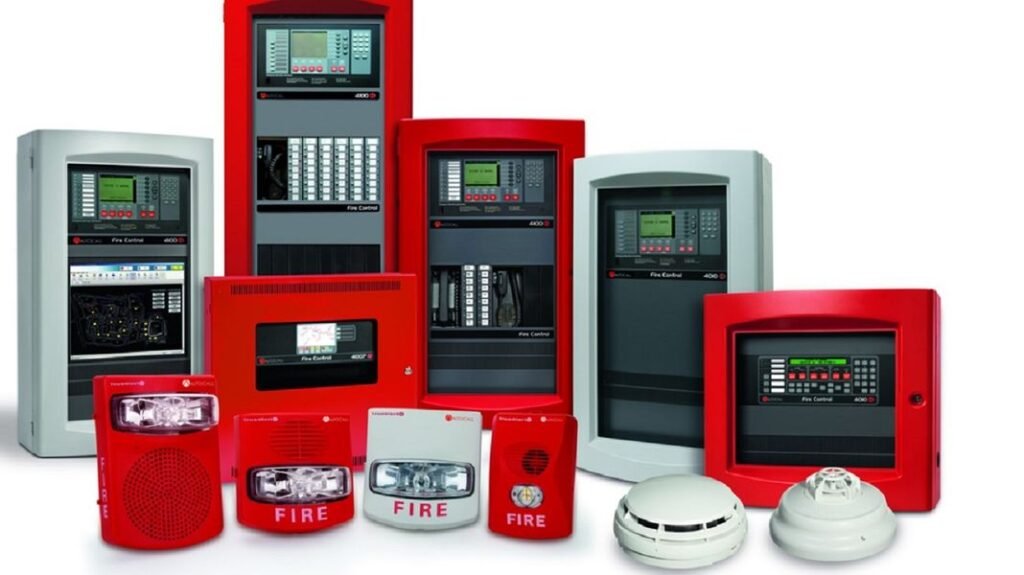
Modern fire protection is no longer limited to smoke detectors, heat detectors, manual call points, and alarm sounders. In many commercial, industrial, healthcare, educational, residential, and high-rise buildings, a fire alarm system must also communicate with other building services and initiate specific actions when an emergency occurs.
This is where special application devices become important. These devices can provide the interface between a fire alarm control panel and equipment such as smoke-control systems, HVAC equipment, access-control systems, elevators, fire suppression equipment, generators, door holders, and other life-safety functions.
A Fire alarm system in Pakistan may therefore involve much more than simply detecting smoke. A properly designed system can serve as part of a wider life-safety network, helping different systems respond to a fire condition in a coordinated manner.
Pakistan’s Building Code Fire Safety Provisions recognize functions such as automatic detection, manual alarm initiation, monitoring of abnormal suppression-system conditions, activation of suppression systems, emergency control functions, and notification appliances as components of building fire alarm systems.
What Is a Life Safety Network?
A life safety network is essentially a coordinated arrangement of systems and devices designed to detect an emergency, communicate its status, and initiate appropriate safety actions.
A fire alarm control panel sits at the centre of many such installations. Detectors and manual devices provide information to the panel, while output or interface devices allow the panel to communicate with other systems.
For example, if smoke is detected in a building, the fire alarm system might:
- Activate audible and visual notification appliances
- Display the location of the alarm
- Release electromagnetic door holders
- Shut down selected HVAC equipment
- Activate smoke-control equipment
- Recall elevators
- Signal a security or monitoring system
- Release a fire suppression system where specifically designed to do so
The exact sequence depends on the building design, applicable codes, risk assessment, and approved cause-and-effect strategy.
Building fire safety provisions in Pakistan specifically identify functions such as elevator recall and shutdown, HVAC shutdown, smoke management, stairwell pressurization, unlocking doors, and releasing hold-open devices as possible fire safety functions.
Understanding Special Application Devices
Special application devices are components used when a standard detector or alarm notification appliance is not enough to perform a particular fire safety function.
These devices can generally be divided into input devices, output devices, and interface modules.
Input Devices
Input devices allow the fire alarm system to receive information from external equipment.
Examples may include monitoring:
- Sprinkler water-flow switches
- Valve supervisory switches
- Pressure switches
- Suppression-system signals
- Pump status
- Equipment fault conditions
- Other approved supervisory or alarm signals
The fire alarm panel can then process the information and display an appropriate alarm, supervisory, or trouble condition.
Output Devices
Output devices allow the fire alarm system to control or signal other equipment.
Depending on the system design, outputs may be used for:
- Door release
- HVAC shutdown
- Elevator control
- Smoke-control systems
- Equipment shutdown
- Notification systems
- Suppression-system interfaces
- Other emergency control functions
ISO 7240-18 specifically addresses input/output devices connected to the transmission path of fire detection and alarm systems and describes their role in receiving or transmitting signals necessary for fire alarm or fire protection functions.
Why Interfaces Are Important
A fire does not remain confined to the fire alarm system.
Smoke can travel through air-conditioning ducts. Elevators can become unsafe routes during an emergency. Automatically held-open doors may need to close. Access-controlled doors may need to release occupants. Smoke-control equipment may need to operate.
This means that the fire alarm system may need to communicate with several other building systems.
Without appropriate interfaces, individual systems may operate independently instead of responding as part of a coordinated emergency strategy.
For example, imagine a commercial building where a smoke detector activates on the third floor. The fire alarm panel identifies the detector and activates the alarm. At the same time, an approved control interface could initiate a programmed HVAC shutdown or another emergency function.
The objective is not simply to produce an alarm sound. The objective is to support the building’s overall emergency response.
Fire Alarm Control Modules
Control modules are commonly used to provide an interface between an addressable fire alarm system and external equipment.
A module can receive a command from the fire alarm control panel and provide an output to connected equipment, depending on the manufacturer’s design and listing.
Applications can include:
- Door release systems
- HVAC shutdown
- Smoke dampers
- Elevator interfaces
- Fire pump signals
- Suppression-system interfaces
- Emergency equipment
The exact module required depends on the equipment being controlled, the electrical characteristics of the circuit, the manufacturer’s compatibility requirements, and the applicable installation standard.
It is important not to assume that every relay or interface module is suitable for every life-safety application.
Monitor Modules
Monitor modules work in the opposite direction.
Instead of controlling external equipment, they allow the fire alarm system to monitor an external contact or signal.
For example, a monitor module may receive a signal from a sprinkler water-flow switch.
When water begins flowing through the sprinkler system, the water-flow switch can change state. The monitor module communicates that condition to the fire alarm control panel, which can then process and display the corresponding alarm.
Similar interfaces can be used for supervisory conditions or other approved monitoring applications.
Door Release and Access Control
Doors are an important part of emergency evacuation.
Many modern buildings use electronic access-control systems, magnetic locks, automatic doors, or electromagnetic door holders. During a fire emergency, these systems may need to change their normal operating state.
For example, an electromagnetic door holder may normally keep a fire door open for convenience. When a fire alarm occurs, the life-safety interface can release the door so that the fire door closes.
Building fire safety provisions in Pakistan specifically identify the release of hold-open devices and unlocking of doors among fire safety functions that may be actuated where required.
The objective is to prevent normal building automation or security arrangements from interfering with fire compartmentation or evacuation.
HVAC Shutdown and Smoke Control
Heating, ventilation, and air-conditioning systems can influence the movement of smoke within a building.
In some applications, the fire alarm system may therefore need to provide signals to HVAC equipment or smoke-control systems.
The response depends heavily on building design. A system may be required to shut down selected air-handling equipment, close dampers, operate smoke-exhaust equipment, or support stairwell pressurization.
These functions should not be improvised during installation. They need to be designed as part of the building’s fire safety strategy.
Pakistan’s fire safety provisions recognize smoke management, smoke control, stairwell or elevator shaft pressurization, and HVAC shutdown as fire safety functions where required.
Elevator Interfaces
Elevators require special consideration during a fire emergency.
Depending on the building design and applicable requirements, fire alarm signals may initiate elevator recall or other programmed emergency functions.
This can help prevent occupants from continuing to use elevators as normal transportation during a fire emergency.
The interface between a fire alarm system and elevator controller should be carefully designed and coordinated between the fire alarm contractor, elevator contractor, electrical consultant, and relevant authority.
Building fire safety provisions specifically identify elevator recall and shutdown as fire safety functions.
Fire Suppression System Interfaces
Fire alarm systems may also communicate with fixed fire suppression systems.
Depending on the application, a fire suppression system may generate alarm, supervisory, or trouble signals for the fire alarm panel.
The panel can then communicate the condition to occupants or a monitoring facility.
Some systems may also require controlled activation sequences. These applications demand particularly careful engineering because an incorrect signal could result in unwanted discharge or failure to operate when required.
For this reason, suppression-system interfaces should always follow the manufacturer’s approved design and applicable codes.
Special Devices in Addressable Systems
Addressable fire alarm systems provide individual identification of connected devices, allowing the control panel to determine where a particular event originates.
This can make special application interfaces easier to identify and manage in large buildings.
For example, instead of simply showing that a general zone has a problem, an appropriately configured addressable system can identify a particular module and its programmed description.
A technical specification used in Pakistan for addressable fire alarm systems requires the control panel to monitor intelligent addressable detectors and modules for normal, trouble, and alarm conditions, and to operate programmed notification and auxiliary outputs.
This illustrates why system programming and documentation are just as important as the physical equipment.
Cause-and-Effect Programming
A sophisticated fire alarm system needs a clear cause-and-effect strategy.
Cause-and-effect describes what should happen when a particular event occurs.
For example:
Cause: Smoke detector activates on Floor 4
Effect: Fire alarm activates → notification devices operate → selected HVAC equipment responds → programmed doors release → designated elevator function activates.
Another event may produce a different response.
For example:
Cause: Sprinkler valve tamper switch changes state
Effect: Supervisory signal appears at the fire alarm control panel.
The purpose of cause-and-effect programming is to make the system response predictable and coordinated.
Before commissioning, the intended sequences should be documented and tested.
Testing Special Application Devices
Installing an interface module is not enough. Its actual operation needs to be verified.
Testing may involve checking:
- Correct device identification
- Wiring integrity
- Normal condition
- Alarm condition
- Supervisory condition
- Trouble condition
- Relay operation
- Connected equipment response
- Restoration after activation
- Correct panel indication
- Correct cause-and-effect sequence
Pakistan’s Building Code Fire Safety Provisions require automatic fire detectors to be located, maintained, and tested according to NFPA 22 or another approved code/standard, and require initiating devices to remain accessible for periodic inspection, testing, and maintenance.
The wider principle is important: life-safety equipment should remain accessible and serviceable throughout its operating life.
Standards and Compatibility
Fire alarm systems should not be assembled by simply combining random devices from different manufacturers.
Compatibility is important because the control panel, detectors, modules, notification appliances, power supplies, and interfaces need to operate as an engineered system.
Depending on the project, specifications may reference standards such as NFPA 72, BS 5839, EN 54, ISO 7240, or other approved standards.
For example, BS 5839 covers recommendations relating to the design, installation, commissioning, and maintenance of fire detection and alarm systems for buildings.
EN 54 is a multi-part series covering components such as control and indicating equipment, sounders, power supplies, heat detectors, smoke detectors, flame detectors, and manual call points.
The applicable requirements should be established during the design stage rather than selected after installation.
Importance for Buildings in Pakistan
Fire safety requirements are becoming increasingly important across Pakistan’s commercial and institutional sectors.
Punjab Civil Defence, for example, identifies fire detection and alarm systems, firefighting arrangements, fire safety plans, emergency fire control rooms, emergency exits and evacuation plans, and ventilation systems among fire safety measures inspected in industries, commercial premises, and high-rise buildings.
Recent public procurement activity also demonstrates continuing demand for addressable fire detection and alarm equipment in Pakistan. In 2026, Pakistan Security Printing Corporation published procurement notices for addressable fire alarm system equipment and a separate supply, installation, commissioning, and testing project for an addressable fire detection and alarm system.
As buildings become more technologically advanced, the need for reliable interfaces between fire alarms and other life-safety systems is likely to become increasingly significant.
Choosing the Right Fire Alarm Equipment
When planning a fire alarm installation, equipment should be selected according to the actual building and its hazards.
Important considerations include:
- Building occupancy
- Number of floors
- Building size
- Environmental conditions
- Type of fire hazards
- Required detection technology
- Number of devices
- Addressable or conventional architecture
- Required emergency interfaces
- Applicable codes and standards
- Maintenance requirements
- Availability of technical support and spare parts
A professional assessment can help determine which detectors, modules, control panels, notification appliances, and special application devices are appropriate.
For businesses researching fire detection and protection equipment in Pakistan, Flame Defender’s fire equipment range can be used as a starting point for exploring available fire safety solutions.
Maintenance Is as Important as Installation
Even a well-designed system can become unreliable if it is not maintained.
Dust, environmental conditions, damaged wiring, unauthorized modifications, equipment ageing, discharged backup batteries, and changes to building layouts can all affect system performance.
Maintenance should therefore include inspection, testing, fault identification, documentation, and corrective action.
The system should also be reviewed whenever a building undergoes major renovation, changes occupancy, adds new equipment, or modifies HVAC, access control, elevator, or suppression systems.
A fire alarm is a life-safety system, so maintenance should not be treated as an optional service.
Conclusion
Special application devices provide an important bridge between fire alarm systems and the wider life-safety infrastructure of a building.
Smoke detectors and manual call points may initiate an alarm, but modern buildings often require much more coordinated action. Through monitor modules, control modules, relays, interfaces, and carefully programmed cause-and-effect sequences, a fire alarm system can communicate with doors, HVAC equipment, elevators, smoke-control systems, suppression systems, and other emergency functions.
For buildings in Pakistan, the design should be based on the specific occupancy, hazards, applicable regulations, approved standards, manufacturer compatibility, and requirements of the relevant authority having jurisdiction.
Ultimately, the value of a fire alarm system is not simply the sound it produces. Its real value lies in detecting an emergency early, communicating reliable information, and supporting a coordinated response that helps protect people and property.
Frequently Asked Questions
1. What are special application devices in a fire alarm system?
Special application devices are interface components that allow a fire alarm system to monitor or control equipment beyond ordinary detection and notification devices. Examples include modules used for HVAC shutdown, door release, elevator interfaces, sprinkler monitoring, and smoke-control functions.
2. What is the difference between a monitor module and a control module?
A monitor module generally receives information from an external device and reports its status to the fire alarm panel. A control module generally receives a command from the fire alarm panel and provides an output to an external system or device. The exact operation depends on the manufacturer’s equipment and system design.
3. Can a fire alarm system control an elevator?
Yes, fire alarm systems can be interfaced with elevator systems for programmed emergency functions such as recall or shutdown where required. The interface must be designed and coordinated with the elevator system and applicable fire safety requirements.
4. Why does a fire alarm system need to connect to HVAC equipment?
HVAC equipment can affect the movement of smoke through a building. Depending on the building’s fire strategy, the fire alarm system may therefore need to initiate HVAC shutdown, damper operation, smoke extraction, or other smoke-management functions.
5. How often should special application devices be tested?
Testing should follow the applicable code or standard, manufacturer’s instructions, project requirements, and requirements of the relevant authority. Testing should verify not only the module itself but also the equipment and emergency function connected to it. :::