
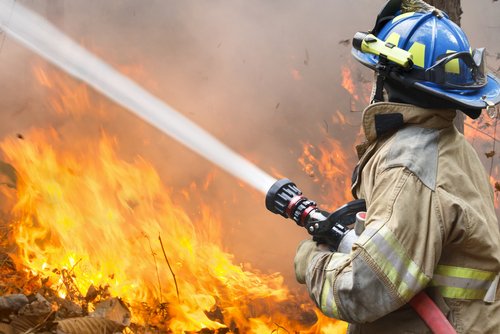
Summer brings high temperatures, dry weather, and increased demand for electricity across Pakistan. Homes, offices, factories, shops, and warehouses often rely heavily on fans, air conditioners, refrigerators, water pumps, and other electrical appliances to remain comfortable. Although these devices are useful, their increased use can create additional fire risks when electrical installations and equipment are not properly maintained.
Hot and dry conditions can also increase the risk of outdoor fires, particularly where dry grass, waste, or other combustible materials are present. A small fire can become a serious emergency when people are unaware of potential hazards or do not know how to respond.
Understanding summer fire hazards does more than help prevent property damage. It helps people recognize warning signs, make safer decisions, and prepare for emergencies before they happen. This knowledge can protect employees, families, customers, and visitors.
In Pakistan, summer fire preparedness is especially important for commercial buildings, industrial facilities, residential properties, and public spaces. A suitable fire alarm system in Pakistan can provide an early warning when smoke or another fire-related condition is detected. However, alarms are only one part of an effective safety arrangement. Prevention, maintenance, staff awareness, and evacuation planning are equally important.
This guide explains common summer fire hazards, practical prevention measures, and how better preparation can help save lives during an emergency.
1. Why Summer Fire Safety Matters
During summer, electrical appliances may operate for longer periods because people need cooling throughout the day. Air conditioners, fans, refrigerators, and water pumps can place additional demand on electrical installations.
At the same time, high temperatures and dry conditions can make some outdoor environments more vulnerable to fire. Businesses that store paper, cardboard, textiles, plastics, packaging, or other combustible materials should pay particular attention to housekeeping and safe storage.
Summer fire safety matters because a fire can affect several areas of life at once:
- Personal safety: Smoke and heat can put occupants at risk.
- Property protection: Buildings, furniture, machinery, and stock may be damaged.
- Business continuity: A fire can interrupt operations and affect customers.
- Community safety: Fires may spread beyond the original property.
- Emergency preparedness: Clear procedures help people respond more effectively.
The National Disaster Management Authority (NDMA) includes urban fire safety and summer hazard preparedness in its public guidance and contingency planning. These resources emphasize prevention, early reporting, suitable equipment, and coordination with emergency services. <Cite refs={[“turn429964search0″,”turn429964search12″,”turn429964search13”]}/>
2. Identify Common Summer Fire Hazards
The first step toward prevention is understanding where fires may start. Different properties have different risks, so homeowners and business managers should assess their actual surroundings and activities.
Electrical overloads
Using several high-power appliances at the same time can place excessive demand on unsuitable electrical circuits.
Overloaded sockets, damaged cables, loose connections, and poorly maintained electrical equipment may create fire hazards.
Have electrical installations assessed by qualified professionals, particularly when appliances operate frequently during summer. Do not use damaged plugs, cables, or sockets.
Air conditioners and cooling equipment
Air conditioners may operate for many hours during hot weather. Poor maintenance, damaged wiring, unsuitable connections, or electrical faults can create safety concerns.
Arrange maintenance according to manufacturer instructions and use qualified technicians for electrical or mechanical repairs.
Generators and backup power
Power interruptions may lead homes and businesses to rely on backup generators. Incorrect installation, unsafe electrical connections, and poor maintenance can create fire and other hazards.
Generators should be installed and operated according to manufacturer instructions and applicable safety requirements. Fuel arrangements should also be handled carefully.
Combustible waste
Cardboard, paper, dry leaves, packaging, and other combustible materials can contribute to fire spread.
Keep waste under control and prevent unnecessary accumulation near electrical equipment, machinery, and other potential ignition sources.
Outdoor fires
Dry vegetation and waste in open areas may become fire hazards during hot weather. Avoid unsafe outdoor burning and follow local restrictions and official warnings.
Recognizing these hazards allows people to address problems before an emergency develops.
3. Prevent Electrical Fires During Hot Weather
Electrical safety is one of the most important parts of summer fire prevention.
When cooling equipment operates for extended periods, electrical systems must be suitable for the connected load. A building with old or damaged wiring may require professional assessment before additional appliances are used.
Businesses and households should follow these precautions:
- Avoid connecting too many appliances to one socket or extension board.
- Use electrical equipment according to its rated capacity.
- Replace damaged plugs and cables.
- Arrange repairs through qualified electricians.
- Keep electrical panels accessible and free from stored materials.
- Do not ignore repeated circuit interruptions or unusual heating.
- Use suitable surge protection where appropriate.
- Switch off equipment when it is not required, following manufacturer instructions.
Never attempt unauthorized repairs to electrical installations. If an appliance produces unusual smells, sparks, or excessive heat, stop using it when safe and arrange professional inspection.
Preventive maintenance is generally more effective than waiting for equipment to fail.
4. Maintain Air Conditioners and Cooling Appliances
Air conditioners, fans, refrigerators, and water pumps are commonly used during Pakistan’s hot months.
Although these appliances provide comfort, they should not be treated as maintenance-free equipment.
Air conditioners should be inspected and serviced according to their manufacturer’s recommendations. Damaged cables, loose electrical connections, blocked filters, and unusual operating conditions should be addressed by qualified technicians.
Avoid placing materials around electrical appliances in ways that obstruct ventilation or create additional hazards.
Refrigerators should also have suitable ventilation around their cooling components, following manufacturer instructions. Electrical connections should be inspected if an appliance repeatedly trips a circuit or shows signs of malfunction.
For commercial properties, facility managers should maintain records of equipment inspections and repairs. A regular maintenance schedule helps identify recurring faults and supports safer operation.
5. Understand the Risks of Generators and Fuel Storage
Generators are useful during power interruptions, but they introduce risks that require careful management.
Fuel-powered generators should never be operated inside homes, garages, enclosed balconies, or other enclosed spaces. They produce exhaust gases, including carbon monoxide, which can be extremely dangerous.
Generators should be placed outdoors in an appropriate location away from doors, windows, and ventilation openings. Installation and electrical connections should be handled by qualified professionals.
Fuel should be stored only in appropriate approved containers and locations, following applicable safety requirements and manufacturer guidance.
Never refuel a running or hot generator. Follow the manufacturer’s instructions for shutting down and allowing equipment to cool before refuelling.
Businesses should also ensure that backup power arrangements do not create additional hazards for employees, customers, or nearby properties.
6. Keep Combustible Materials Away from Heat Sources
The way materials are stored can influence how quickly a fire develops.
Paper, cardboard, textiles, plastics, packaging, and other combustible materials should be kept away from potential ignition sources.
In offices, avoid placing documents and boxes near electrical panels, extension boards, and equipment that produces heat.
In warehouses, maintain organized storage arrangements and keep designated escape routes clear.
Factories should assess the materials used in production and ensure that storage areas follow suitable fire safety arrangements.
Households should also avoid unnecessary accumulation of waste, dry vegetation, and combustible items around buildings.
Good housekeeping is a simple but important fire prevention measure.
7. Install a Suitable Fire Alarm System
Early warning is an important part of protecting occupants during a fire emergency.
A fire may begin in a storeroom, electrical room, kitchen, or another area that is not regularly occupied. Without suitable detection and warning arrangements, occupants may not become aware of the problem quickly.
A properly designed fire alarm system in Pakistan can help detect fire-related conditions and alert people so they can follow the building’s emergency procedure.
Depending on the building and its risk assessment, a system may include:
Smoke detectors: These detect smoke in suitable locations and can provide an early warning of a developing fire.
Heat detectors: These respond to temperature conditions and may be suitable for certain areas where smoke detection is not appropriate.
Manual call points: These allow people to activate the alarm when they discover a fire, where such devices are included in the system design.
Audible alarms: These provide sound warnings to occupants.
Visual notification devices: These can support communication in areas where an audible warning may be difficult to hear.
Control panels: Larger installations may use a central panel to monitor detection devices and manage alarm signals.
The appropriate system depends on the building’s layout, occupancy, fire risks, and applicable requirements. Installation and maintenance should be carried out by suitably qualified professionals.
An alarm does not prevent every fire or guarantee that everyone will evacuate safely. It should be combined with clear escape routes, appropriate firefighting arrangements, and regular emergency training.
8. Keep Fire Extinguishers and Safety Equipment Ready
Fire extinguishers can help control certain small fires when the equipment is suitable and the situation is safe for a trained person to respond.
Different types of fire require different extinguishing methods. Businesses should assess their hazards before selecting equipment rather than assuming that one extinguisher is suitable for every situation.
A fire safety inspection should consider:
- Whether the extinguishers match the identified hazards.
- Whether equipment is visible and accessible.
- Whether inspection and servicing requirements are followed.
- Whether employees understand the equipment’s purpose.
- Whether hydrants, hose reels, and sprinkler systems are maintained where installed.
Never allow furniture, stock, or waste to block firefighting equipment.
Employees should only attempt to control a small fire if they have suitable training, the correct equipment is available, and a safe escape route remains open. If the fire grows or conditions become unsafe, they should evacuate immediately.
People should not attempt to fight large fires or approach dangerous electrical or fuel-related incidents.
9. Prepare a Clear Emergency Evacuation Plan
Fire prevention is important, but every building should also have a plan for what occupants must do if a fire occurs.
An emergency evacuation plan should identify approved exits, escape routes, stairways, assembly points, and communication procedures.
For homes, families should discuss how everyone can leave the property safely and where they should meet afterward.
For businesses, managers should explain evacuation procedures to employees and ensure that visitors can receive clear instructions.
A practical plan should include:
- Primary and alternative escape routes where appropriate.
- Clearly identified emergency exits.
- Accessible and unobstructed corridors.
- Suitable exit signs and emergency lighting.
- A designated assembly point.
- Procedures for assisting people who need additional support.
- Responsibilities for contacting emergency services.
The Punjab Civil Defence Department identifies fire detection and alarm systems, firefighting arrangements, fire safety plans, and emergency exits with evacuation plans among the measures considered during inspections of relevant commercial, industrial, and high-rise premises. <Cite refs={[“turn429964search9”]}/>
Plans should be reviewed whenever building layouts or occupancy arrangements change.
10. Train Employees and Household Members
Fire safety equipment is useful, but people also need to know how to respond when an emergency occurs.
Training helps occupants recognize hazards, understand alarm signals, and follow evacuation instructions.
Workplace fire safety training should cover:
- Identifying common fire hazards.
- Reporting damaged electrical equipment.
- Keeping storage areas organized.
- Understanding alarm signals.
- Knowing the nearest approved exits.
- Following evacuation procedures.
- Identifying assembly points.
- Understanding when not to attempt firefighting.
Businesses should provide suitable training to new employees and refresher sessions when procedures change.
Households should also explain basic fire safety to children in an age-appropriate way. Children should know how to alert a responsible adult and follow the family’s evacuation instructions. They should never be expected to operate firefighting equipment or manage an emergency independently.
Rescue 1122’s Community Safety Programme includes public awareness, school safety activities, and training in emergency preparedness and evacuation procedures. <Cite refs={[“turn429964search11″,”turn429964search1”]}/>
11. Take Outdoor Fire Risks Seriously
Summer fire hazards are not limited to buildings.
Dry vegetation, waste, and certain outdoor activities can contribute to fires in open areas. Hot and dry weather may increase the consequences of an ignition, particularly where vegetation is dense or firefighting access is limited.
Homeowners and businesses should remove unnecessary dry vegetation around buildings where appropriate and maintain clear access routes.
Avoid burning garden waste or rubbish in unsafe conditions. Follow local restrictions and do not discard burning materials near dry grass or other combustible substances.
If an outdoor fire is discovered, report it promptly to the appropriate emergency service or local authority. Do not approach it to assess its size or attempt to control a spreading fire without proper training and equipment.
The NDMA’s summer and forest fire guidance emphasizes prompt reporting, official warnings, evacuation when instructed, and coordination with emergency responders. <Cite refs={[“turn429964search14″,”turn429964search12”]}/>
12. What to Do When a Fire Breaks Out
Knowing how to respond can reduce confusion during an emergency.
If a fire is discovered inside a building:
- Raise the alarm using the building’s approved procedure.
- Warn nearby occupants if it is safe to do so.
- Leave through the nearest safe approved escape route.
- Avoid routes affected by smoke or heat.
- Do not use ordinary passenger lifts during a fire.
- Proceed to the designated assembly point.
- Contact emergency services.
- Do not re-enter the building until authorities declare it safe.
Do not delay evacuation to collect personal belongings.
If smoke affects an escape route, follow the building’s emergency instructions and avoid entering areas that may be dangerous.
In Punjab, Rescue 1122 provides emergency response services, including fire services. Its official website lists 1122 as the emergency number. <Cite refs={[“turn429964search1”]}/>
Follow instructions from emergency responders and provide accurate information about the incident.
13. Inspect Fire Safety Equipment Before Summer
Seasonal inspections help homeowners and business managers identify problems before temperatures rise and cooling equipment is used more frequently.
A summer fire safety review may include:
Electrical systems: Arrange suitable inspections of wiring, sockets, panels, and high-load connections.
Cooling appliances: Check air conditioners, fans, and other frequently used equipment according to manufacturer guidance.
Fire alarms: Test and maintain detection and alarm equipment according to the manufacturer’s instructions and applicable requirements.
Fire extinguishers: Confirm that equipment is suitable, accessible, and within its servicing requirements.
Emergency exits: Ensure that escape routes are clear and exit doors remain usable.
Emergency lighting: Check installed systems according to their maintenance and testing schedules.
Storage areas: Remove unnecessary combustible waste and maintain suitable storage arrangements.
Employee awareness: Review training and emergency procedures with staff.
Maintain records of inspections and repairs. This helps organizations track faults and confirm that identified problems have been addressed.
14. Follow Fire Safety Guidance in Pakistan
Fire safety requirements depend on the building’s use, location, occupancy, and applicable regulations.
The National Disaster Management Authority publishes summer hazard plans and public safety guidance that address preparedness and risk reduction. The Provincial Disaster Management Authority also makes summer contingency planning resources available. <Cite refs={[“turn429964search12″,”turn429964search5”]}/>
For relevant commercial, industrial, and high-rise premises, Punjab Civil Defence provides information about fire safety inspections and required safety arrangements. <Cite refs={[“turn429964search9”]}/>
Business owners should consult the appropriate building-control authority, Civil Defence department, fire service, and qualified fire safety professionals to understand which requirements apply to their properties.
A general online checklist cannot replace a site-specific fire risk assessment.
15. Make Fire Prevention a Year-Round Responsibility
Although summer can bring additional fire risks, fire safety should not be treated as a seasonal activity.
Electrical equipment needs regular attention throughout the year. Fire alarms, extinguishers, escape routes, and emergency lighting should remain maintained and accessible.
Businesses should assign responsibility for safety inspections, employee training, and corrective actions. Households should review their emergency arrangements and ensure that everyone understands the basic response procedure.
A strong safety culture encourages people to report hazards instead of ignoring them. Small problems, such as damaged wiring or blocked exits, should be addressed before they contribute to a serious incident.
Preparedness is most effective when prevention, detection, and emergency response work together.
Conclusion
Summer fire hazards can affect homes, offices, factories, shops, and public buildings throughout Pakistan. Increased electricity demand, poorly maintained cooling equipment, unsafe generator arrangements, and combustible materials can create avoidable risks.
Understanding these hazards helps people take preventive action, recognize warning signs, and respond more effectively when an emergency occurs.
A suitable fire alarm system in Pakistan can support early detection and warning, while maintained firefighting equipment, clear escape routes, regular inspections, and employee training strengthen the overall safety arrangement.
The most important step is to prepare before a fire happens. By making fire prevention part of everyday life and workplace management, households and businesses can help protect people, property, and their communities.
Frequently Asked Questions (FAQs)
1. What are the most common summer fire hazards in Pakistan?
Common summer fire hazards include overloaded electrical connections, damaged wiring, poorly maintained air conditioners, unsafe generator arrangements, combustible waste, and outdoor fires involving dry vegetation. The risks depend on the property and its activities.
2. How can businesses prevent fires during summer?
Businesses can reduce fire risks by inspecting electrical installations, maintaining cooling equipment, organizing storage areas, keeping combustible materials away from ignition sources, maintaining fire protection equipment, and training employees in emergency procedures.
3. Why is a fire alarm system important during summer?
Summer may increase the use of electrical and cooling equipment, creating additional opportunities for equipment-related faults. A suitable fire alarm system can provide an early warning when smoke or another fire-related condition is detected, helping occupants follow their evacuation plan.
4. What should I do if a fire starts in my building?
Raise the alarm, warn others if safe, and leave through an approved escape route. Avoid smoke-affected areas and ordinary passenger lifts. Move to the designated assembly point, contact emergency services, and do not return until authorities confirm that the building is safe.
5. How often should fire safety equipment be inspected?
Inspection and servicing schedules depend on the equipment, manufacturer’s instructions, applicable standards, and local requirements. Businesses should establish a documented maintenance schedule and arrange professional servicing when required.