
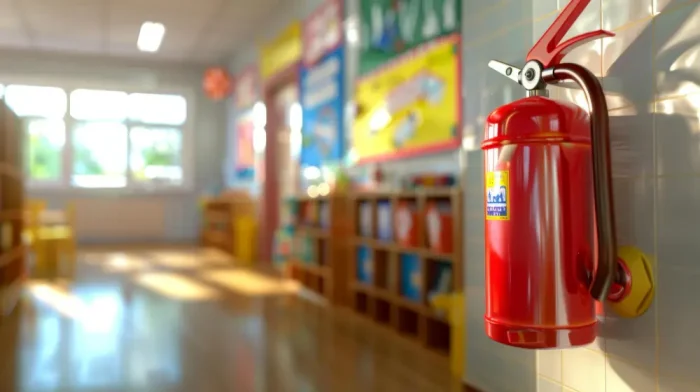
Schools are places where children learn, develop skills, and prepare for their future. Keeping students, teachers, and other staff safe is one of the most important responsibilities of every educational institution. While schools focus on academic performance and student development, fire safety must also remain a priority.
A fire emergency can develop because of faulty electrical wiring, overloaded sockets, laboratory equipment, kitchen appliances, generator problems, or unsafe storage practices. If a school does not have suitable fire protection equipment and a clear evacuation plan, even a small incident can create confusion and put occupants at risk.
School fire safety involves more than installing extinguishers or displaying emergency signs. It requires a complete approach that includes fire prevention, early detection, alarm systems, clear escape routes, regular maintenance, staff training, and evacuation drills.
In Pakistan, schools operate in many different types of buildings, ranging from purpose-built campuses to converted residential properties and multi-storey educational facilities. Each building has its own risks and safety requirements. School management must understand these risks and take appropriate measures to protect everyone on the premises.
A properly designed fire alarm system in Pakistan can provide an early warning when a fire is detected, helping teachers, students, and other occupants begin an organised evacuation. When combined with practical training and suitable firefighting arrangements, it becomes an important part of a school’s wider emergency preparedness plan.
1. Understanding the Importance of School Fire Safety
School fire safety is essential because educational buildings may contain hundreds or even thousands of people at the same time. Students may be unfamiliar with emergency procedures, while younger children may need additional guidance to leave the building safely.
A fire can also interrupt lessons, damage classrooms and learning materials, and affect the wider school community. The consequences may extend beyond the immediate incident, especially when buildings remain closed for repairs.
An effective fire safety programme helps schools identify hazards before an emergency occurs. It also ensures that students and staff understand what to do if an alarm sounds.
The main objectives of school fire safety include:
- Reducing the likelihood of accidental fires.
- Detecting fire-related danger as early as possible.
- Warning occupants promptly.
- Providing clear and accessible evacuation routes.
- Maintaining suitable fire protection equipment.
- Training teachers and staff in emergency responsibilities.
- Supporting students who need additional assistance.
- Helping emergency responders reach the school.
The National Disaster Management Authority (NDMA) has developed the Pakistan School Safety Framework to support safer learning environments and improve preparedness for emergencies. Its guidance highlights the importance of safety planning, emergency procedures, training, and regular review.
School management should treat fire safety as an ongoing responsibility rather than a task that is completed once and forgotten.
2. Identify Common Fire Hazards in Schools
The first step towards preventing school fires is identifying the conditions that could cause one. A school safety assessment should examine classrooms, laboratories, computer rooms, libraries, kitchens, storage areas, electrical rooms, and outdoor facilities.
Electrical problems are a common concern. Damaged cables, poorly maintained switchboards, overloaded sockets, and unsuitable extension leads can create dangerous conditions. Schools that use computers, air conditioners, projectors, printers, and other electrical equipment should ensure that their electrical systems are appropriate for the demand.
Science laboratories may present additional risks because they can contain heating equipment, chemicals, and specialist appliances. Laboratory activities should follow approved procedures under the supervision of qualified staff.
Other potential hazards include:
- Combustible materials stored near electrical equipment.
- Paper, cardboard, and waste accumulating in corridors.
- Faulty kitchen appliances.
- Poorly maintained generators.
- Blocked ventilation around equipment.
- Damaged emergency lights or exit signs.
- Fire doors that do not close properly.
- Storage that obstructs escape routes.
School management should inspect these areas regularly and record identified problems. Repairs should be assigned to qualified personnel, with follow-up checks to confirm that the hazards have been addressed.
A structured risk assessment helps schools decide which improvements are most urgent and how maintenance resources should be allocated.
3. Install a Suitable Fire Alarm System
A fire alarm system is an important part of a school’s emergency warning arrangements. It helps alert occupants when the system detects a fire or when someone activates a manual alarm point.
Without a dependable warning system, people in distant classrooms, upper floors, laboratories, or staff rooms may not realise that an emergency has started. A suitable alarm system can help reduce this delay and support a coordinated evacuation.
The correct system depends on the building’s size, layout, occupancy, fire risks, and applicable regulations. School management should consult qualified fire safety professionals to determine the appropriate design.
A system may include several components:
Fire detectors: Smoke or heat detectors identify signs of a possible fire. Detector type and placement must suit the environment. For example, kitchens and laboratories may need a different detection approach from ordinary classrooms.
Control panel: The panel receives signals from compatible devices and indicates alarm conditions or system faults.
Manual call points: These allow a person to activate the alarm when they discover a fire, where such devices are included in the system design.
Sounders and visual warning devices: These alert occupants. Visual notification may be important in areas where an audible alarm might not be sufficient for everyone.
Backup power: Appropriate backup supplies help maintain the system’s intended operation if the normal electricity supply fails.
Monitoring and maintenance: Schools should arrange suitable inspections, testing, and servicing according to the manufacturer’s instructions and applicable requirements.
A fire alarm system in Pakistan should be selected and installed according to the building’s actual needs rather than simply choosing the cheapest available equipment.
Schools should also ensure that alarm signals are distinctive, understood by staff, and included in emergency drills. An alarm is most useful when everyone knows what it means and how to respond.
4. Maintain Smoke Detectors and Fire Alarm Equipment
Installing fire detection equipment is only the beginning. Detectors, control panels, warning devices, and backup supplies must remain in suitable working condition.
Dust, physical damage, poor maintenance, depleted backup batteries, and unresolved faults may affect a system’s performance. Schools should establish a documented maintenance programme and appoint responsible personnel to coordinate inspections.
Maintenance should include:
- Checking the system for visible damage.
- Arranging scheduled tests according to manufacturer guidance.
- Reviewing control-panel indicators and fault warnings.
- Inspecting accessible detectors and notification devices.
- Checking backup power arrangements.
- Recording faults and corrective work.
- Arranging professional servicing when required.
Testing should follow the manufacturer’s instructions and applicable standards. Staff should be informed before planned tests so that an alarm is not mistaken for an actual emergency. Procedures should also ensure that the system is returned to normal operation after testing.
Never leave a required alarm system disabled because of a fault without arranging appropriate corrective action and interim safety measures through responsible personnel.
School managers should keep records showing when equipment was inspected, which faults were found, and how those faults were resolved.
Reliable maintenance helps ensure that the system is ready to perform its intended role when an emergency occurs.
5. Keep Emergency Exits Clear and Accessible
An alarm can warn people about a fire, but it cannot protect them if they cannot leave the building safely. Emergency exits and escape routes must therefore be considered essential parts of school fire safety.
Schools should identify suitable evacuation routes from classrooms, laboratories, libraries, halls, cafeterias, and other occupied areas. Routes should lead towards safe outdoor areas without requiring students to move through unnecessary hazards.
Corridors, stairways, and exit doors must remain free of stored furniture, cartons, sports equipment, and other obstructions. Exit signs should be visible, and emergency lighting should be maintained where required.
School management should check that:
- Required exits are accessible during occupancy.
- Doors and gates can be opened safely during an emergency.
- Escape routes are clearly marked.
- Stairways remain unobstructed.
- Emergency lighting works as intended.
- Assembly areas are identified and suitable.
- Access routes for emergency vehicles are maintained.
Schools must not rely on a single exit where the building’s approved design and applicable requirements call for additional escape routes.
Staff should understand which routes serve their classrooms and what alternatives are available if the normal route is unsafe. Evacuation plans should reflect the actual building layout and be updated whenever the building changes.
6. Conduct Regular Fire Drills
Fire drills help students and staff practise the steps they should take when a fire alarm sounds. Without practice, people may become confused, move in the wrong direction, or delay leaving the building.
A drill allows the school to assess whether alarm signals are understood, escape routes are practical, and staff know their responsibilities.
During a planned drill, students should follow the school’s instructions, leave in an orderly manner, and proceed to the designated assembly point. Teachers or assigned staff should help maintain order and follow the school’s attendance-checking procedure.
A useful fire drill should evaluate:
- Whether occupants recognise the alarm.
- Whether evacuation begins promptly.
- Whether routes are clear and usable.
- Whether staff understand their assigned duties.
- Whether students reach the correct assembly point.
- Whether everyone can be accounted for.
- Whether additional assistance arrangements work as intended.
After each drill, school management should discuss what went well and what needs improvement. For example, the school may discover that an exit sign is difficult to see or that a particular corridor becomes congested.
The Pakistan School Safety Framework emphasises the importance of emergency procedures and safety drills. Punjab Civil Defence also lists evacuation drills for schools among its training activities.
Drills should be conducted according to the school’s safety plan and applicable requirements, with arrangements suited to students’ ages and needs.
7. Train Teachers and School Staff
Teachers and other school employees play an important role in emergency preparedness. They are often responsible for guiding students, communicating instructions, and helping maintain order during evacuation.
Training should begin when employees join the school and be refreshed periodically. New staff members should learn the alarm signal, their nearest escape routes, assembly locations, and the school’s emergency communication procedures.
Training should cover:
- Recognising and reporting fire hazards.
- Activating the alarm when a fire is discovered.
- Following evacuation instructions.
- Directing students towards safe exits.
- Taking attendance at the assembly point.
- Reporting missing or unaccounted-for occupants.
- Contacting emergency services.
- Understanding when firefighting equipment may be used safely.
Only trained and authorised personnel should attempt to use extinguishers, and only when the fire is small, the correct equipment is available, and a safe escape route remains open. Evacuation should take priority whenever conditions are unsafe.
Staff should never be expected to enter a smoke-filled area or search a dangerous building for missing students. They should provide information to emergency responders and follow their instructions.
Regular training helps school employees respond with greater confidence and consistency.
8. Teach Students Age-Appropriate Fire Safety
Students should understand the basic actions to take when they hear a fire alarm or discover a fire. Teaching these skills in an age-appropriate way helps make emergency procedures familiar before they are needed.
Younger children may need simple instructions, demonstrations, and repeated practice. Older students can learn more about recognising hazards, reporting problems, and supporting a calm evacuation.
Schools can teach students to:
- Stop classroom activities when instructed to evacuate.
- Follow their teacher or designated staff member.
- Walk calmly and avoid pushing.
- Use the assigned escape route.
- Leave belongings behind.
- Go directly to the assembly point.
- Stay with the group until given further instructions.
- Report hazards to a responsible adult.
Students should never play with alarm devices, extinguishers, electrical panels, or laboratory equipment. They should also understand that a fire alarm must be taken seriously, even if they suspect it may be a drill.
Teachers can reinforce safety lessons through classroom discussions, age-appropriate posters, and supervised drills.
The aim is not to make children afraid of emergencies. It is to give them clear, practical knowledge that helps them respond appropriately.
9. Provide Suitable Fire Extinguishers and Other Equipment
Fire extinguishers and other protective equipment can support a school’s fire safety arrangements when they are selected, installed, and maintained appropriately.
The required equipment depends on the school’s building design, occupancy, activities, and identified hazards. Laboratories, kitchens, electrical rooms, and general classrooms may have different protection needs.
School management should seek professional advice to select suitable extinguishers and any additional systems required by applicable regulations.
Equipment should be clearly identified, accessible, and maintained according to manufacturer instructions and relevant standards. Inspection records should be retained, and faulty or discharged equipment should be serviced or replaced promptly.
Other important provisions may include:
- Emergency lighting.
- Illuminated or clearly visible exit signs.
- First-aid supplies.
- Suitable communication equipment.
- Fire safety notices and evacuation maps.
- Additional detection or suppression systems where required.
Staff should know where equipment is located and understand its purpose. However, equipment should never be used as a reason to delay evacuation or take unnecessary risks.
The school’s fire safety plan should explain how equipment is checked, who is responsible for maintenance, and how faults are reported.
10. Pay Special Attention to Laboratories, Kitchens, and Electrical Rooms
Some school areas need additional precautions because their activities or equipment create specific fire risks.
Science laboratories
Laboratories may contain heating equipment, chemicals, and electrical appliances. Schools should maintain suitable storage arrangements, follow approved laboratory procedures, and ensure that activities are supervised by qualified staff.
Chemicals must be stored according to their safety instructions and kept away from incompatible materials. Laboratory equipment should be switched off and secured according to established procedures when not in use.
Kitchens and cafeterias
School kitchens may use gas or electric cooking appliances, hot surfaces, and oils. Staff should receive appropriate training, keep combustible materials away from heat sources, and report faults immediately.
Gas installations and cooking equipment should be maintained by qualified personnel. Kitchens should remain tidy, and any required fire suppression equipment should be kept in serviceable condition.
Electrical and generator rooms
Electrical panels, generators, and associated equipment require suitable installation, ventilation, access control, and professional maintenance. Storage should not obstruct electrical equipment or emergency access.
Damaged cables, unusual heating, and recurring electrical faults should be investigated promptly. Unqualified personnel should not attempt electrical repairs.
By addressing the particular hazards in these areas, schools can reduce avoidable ignition risks and strengthen their overall safety arrangements.
11. Prepare a Written School Fire Evacuation Plan
Every school should have an emergency plan that explains how occupants will be warned, where they should go, and who is responsible for coordinating the response.
The plan should reflect the school’s actual layout and include procedures for classrooms, laboratories, libraries, halls, cafeterias, and other occupied spaces.
A practical plan should identify:
Alarm procedures: Explain how the alarm is raised and what staff and students should do when it sounds.
Escape routes: Show the primary and alternative routes from occupied areas.
Assembly points: Identify safe outdoor locations where groups can gather away from the building and emergency vehicle access.
Staff responsibilities: Assign roles for guiding students, checking attendance, contacting emergency services, and communicating with school leadership.
Assistance arrangements: Plan how younger students and people with disabilities or mobility limitations will receive appropriate support.
Emergency contacts: Maintain current contact details for local emergency services, school management, and relevant authorities.
Communication with families: Establish a suitable method for sharing verified information after the immediate emergency has been managed.
Evacuation maps should be displayed in suitable locations and updated when classrooms, corridors, or exits change.
Schools should review their plans at least annually and after significant changes or incidents, in line with the Pakistan School Safety Framework’s approach to regular safety-plan review.
12. Improve School Fire Safety in Pakistan
Schools across Pakistan operate under different conditions. Some have purpose-built facilities with dedicated emergency infrastructure, while others occupy older buildings or premises originally designed for different purposes.
This variety means that school management must assess the specific risks associated with each site rather than relying on a generic checklist alone.
The Building Code of Pakistan (Fire Safety Provisions) 2016, developed through the Pakistan Engineering Council and the National Disaster Management Authority, is an important national reference for building fire safety. Schools should consult qualified professionals and the relevant authorities to determine which requirements apply to their premises.
The Pakistan School Safety Framework provides additional guidance for emergency preparedness and school-level safety planning. Punjab Civil Defence offers fire safety training and evacuation-drill activities, while other provincial and local authorities may provide their own guidance.
School management should prioritise:
- A documented fire risk assessment.
- Suitable detection and alarm arrangements.
- Maintained firefighting equipment.
- Clear and accessible escape routes.
- Regular inspection of electrical installations.
- Staff training and student awareness.
- Practical evacuation drills.
- Cooperation with relevant emergency services.
Where deficiencies are identified, the school should establish a corrective-action plan with clear responsibilities and deadlines.
A fire alarm system in Pakistan is most effective when it forms part of a coordinated programme that also addresses prevention, building safety, maintenance, and emergency response.
Conclusion
School fire safety is essential for protecting students, teachers, staff, and visitors. Fires can start because of electrical faults, cooking equipment, laboratory activities, or other hazards, but effective preparation can help schools reduce risks and respond more effectively.
A suitable fire alarm system, maintained detection equipment, accessible exits, appropriate firefighting provisions, staff training, and regular evacuation drills all contribute to a safer learning environment.
School management should assess hazards regularly, maintain detailed inspection records, and make sure that everyone understands the emergency plan. Students should be taught to respond calmly, follow staff instructions, and leave the building promptly when evacuation is required.
For educational institutions in Pakistan, national school safety guidance and applicable building requirements provide useful foundations for planning and improvement. Working with qualified fire safety professionals and relevant authorities can help schools identify and address shortcomings.
Most importantly, fire safety must remain an everyday responsibility. Consistent maintenance, practical training, and clear procedures help prepare school communities to act quickly when an emergency occurs.
Frequently Asked Questions (FAQs)
1. Why is fire safety important in schools?
Fire safety helps protect students, teachers, staff, and visitors from fire-related hazards. It also helps schools reduce risks, maintain safe escape routes, provide early warning, and prepare occupants to respond appropriately during an emergency.
2. What fire safety equipment should a school have?
The required equipment depends on the building and its hazards. It may include a suitable fire alarm system, smoke or heat detectors, appropriate extinguishers, emergency lighting, exit signs, and other protective systems required by applicable regulations.
3. How often should schools conduct fire drills?
Schools should follow their approved safety plans and applicable requirements for drill frequency. Drills should be repeated regularly, evaluated afterward, and updated when weaknesses are identified or building arrangements change.
4. How does a fire alarm system help during a school emergency?
A properly designed and maintained alarm system warns occupants when a fire is detected or the alarm is manually activated. This warning can help teachers and students begin evacuation sooner, but it must be supported by clear escape routes and emergency procedures.
5. What should students do when a fire alarm sounds?
Students should stop their activities, follow their teacher or designated staff member, use the assigned safe route, and proceed to the assembly point. They should not collect belongings, push others, or return to the building until authorised personnel confirm it is safe.