
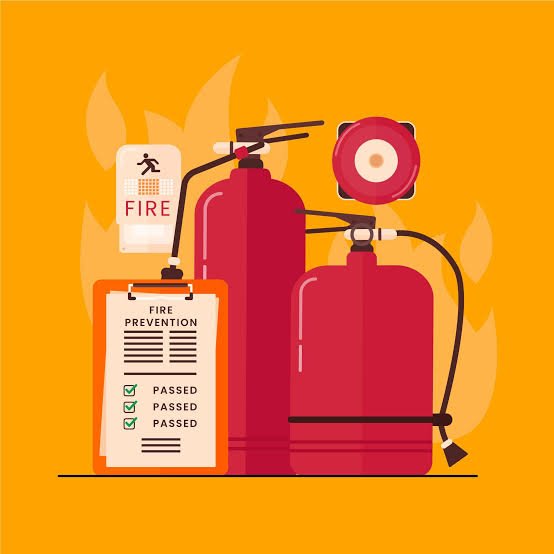
Fire emergencies can become dangerous very quickly. When people are frightened, they may remember advice they have heard from friends, social media, television, or previous experiences. Unfortunately, not all fire-safety advice is accurate. Some common beliefs can create confusion and may delay evacuation or other appropriate action.
Understanding the difference between a fire-safety fact and a myth is therefore an important part of emergency preparedness. The goal is not to make people panic, but to help them respond calmly and follow sensible safety procedures.
In Pakistan, fire protection is addressed through building and fire-safety provisions that cover areas such as occupant notification, means of egress, fire protection systems, and emergency safety arrangements. The Pakistan Engineering Council lists the Building Code of Pakistan – Fire Safety Provisions 2016 among its published building codes.
This article explains several common fire-safety myths and the safer principles people should understand instead.
Why Fire Safety Myths Can Be Dangerous
A myth may sound reasonable because it contains a small amount of truth. The problem occurs when people rely on it during an actual emergency.
For example, someone may assume that a fire is safe to investigate because there is no visible smoke. Another person may believe that an alarm can be ignored if they cannot immediately see flames. Someone else might think that having a fire extinguisher means they should always try to fight a fire.
These assumptions can delay a person’s decision to leave.
A good emergency plan should make the safest action simple: recognize the warning, alert others when appropriate, leave through a safe route, and seek professional emergency assistance.
A fire alarm is one part of this system. The Building Code of Pakistan Fire Safety Provisions 2016 states that fire alarm systems should be provided where necessary to warn occupants when the building’s size, arrangement, or occupancy means that the fire itself may not provide adequate warning.
Myth 1: A Small Fire Is Always Safe to Handle
One common misconception is that a fire is safe to approach simply because it appears small.
Fire conditions can change rapidly. Smoke can spread, temperatures can rise, and a fire can move beyond its original location. The situation can also be different depending on the material burning, ventilation, building layout, and location of the fire.
For this reason, people should not assume that every fire can or should be handled personally.
The priority should always be personal safety and evacuation. Firefighting equipment is part of a wider fire-protection strategy, but its presence does not mean that occupants are expected to take unnecessary risks.
If conditions are becoming unsafe, the correct response is to leave and contact the appropriate emergency services.
Myth 2: If You Cannot See Smoke, There Is No Fire
Fire does not always give people an obvious visual warning.
A fire may begin in another room, behind a door, inside a concealed area, or somewhere occupants cannot see. In larger buildings, the location of the fire may also be far away from the people who need to evacuate.
This is one reason detection and alarm systems are important.
A suitable fire alarm system in Pakistan can provide an early warning when connected detection devices identify conditions associated with fire. Depending on the system, components can include smoke detectors, heat detectors, manual call points, control panels, sounders, and visual notification devices.
People should therefore take an alarm seriously even when they cannot immediately see smoke or flames.
Myth 3: Fire Alarms Are Only Necessary in Large Commercial Buildings
Fire-safety requirements depend on factors such as building use, size, layout, occupancy, and applicable requirements.
The important point is that fire detection should not be viewed as something relevant only to shopping centres or factories.
Homes, schools, offices, hospitals, hotels, restaurants, warehouses, and other occupied spaces can all have different fire risks. The appropriate detection and warning arrangements should be considered according to the building and its use.
The Building Code of Pakistan Fire Safety Provisions specifically addresses occupant notification and fire alarm systems where necessary.
The right approach is not to ask whether every building needs exactly the same system. Instead, fire protection should be planned according to the specific property and applicable requirements.
Myth 4: Once a Fire Alarm Is Installed, It Never Needs Attention
Installing an alarm system is only one stage of fire-safety preparation.
Like other safety equipment, fire alarm systems require appropriate inspection, testing, maintenance, and servicing. Dust, damaged wiring, deteriorating batteries, component faults, or other problems can affect system performance.
The Building Code of Pakistan Fire Safety Provisions includes provisions concerning maintenance, inspection, and testing of fire-protection systems.
Regular attention can include checking:
- Fire alarm control panels
- Smoke and heat detectors
- Manual call points
- Sounders and visual alarms
- Batteries and power supplies
- Wiring and connections
- Fault indicators
- Testing and maintenance records
Flame Defender also emphasizes that an alarm should be treated as an ongoing safety system rather than a one-time purchase.
A system showing faults should not simply be ignored.
Myth 5: False Alarms Mean the System Should Be Disabled
Repeated false alarms can be frustrating, particularly in busy workplaces or commercial buildings.
However, disabling detectors or ignoring alarm faults can create a serious safety problem.
Instead, recurring unwanted alarms should be investigated by appropriately qualified personnel. The cause may involve environmental conditions, equipment problems, system design, maintenance issues, or other factors.
The purpose of investigating false alarms is to improve reliability while keeping the detection system available when a genuine emergency occurs.
People should never assume that an alarm is harmless simply because previous alarms turned out to be false.
Myth 6: You Should Always Use the Elevator During an Emergency
Elevators can be affected by fire, smoke, electrical problems, or changes in building operation.
Emergency evacuation planning should therefore identify appropriate exit routes rather than relying on normal elevator travel.
The Building Code of Pakistan Fire Safety Provisions addresses means of egress and requires routes to be arranged or marked so that the way to a place of safety is clearly indicated. It also addresses illumination of means of egress.
People should follow the building’s established emergency procedures and instructions from responsible emergency personnel.
Myth 7: The Main Entrance Is Always the Safest Exit
People naturally tend to leave a building through the door they normally use.
During an emergency, however, the main entrance may not be the safest available route. Smoke, fire, crowd movement, or another obstruction could affect that path.
Every occupied building should have appropriate means of egress, and occupants should be familiar with more than one possible route where applicable.
The Building Code emphasizes that means of egress should provide a clear way to a place of safety.
This is why emergency exit signs should remain visible and escape routes should not be blocked by boxes, furniture, equipment, or stored materials.
Myth 8: Fire Safety Is Only the Responsibility of the Building Owner
Building owners and managers have important responsibilities, but fire safety also depends on the people using the building.
Employees should know basic emergency procedures. Families should discuss how they will leave their home. Students should understand what an alarm means. Visitors should follow instructions from building staff.
Fire safety is therefore a shared responsibility involving building design, equipment, maintenance, management, training, and occupant behaviour.
A technically advanced fire alarm system cannot compensate for an obstructed escape route or people who do not understand what the alarm means.
Myth 9: A Fire Alarm Replaces an Evacuation Plan
A fire alarm provides warning. It does not automatically tell every person exactly where to go or guarantee that everyone will escape.
A complete fire-safety strategy should combine detection and notification with suitable escape arrangements, emergency planning, appropriate equipment, maintenance, and occupant awareness.
Flame Defender similarly describes fire alarms as one part of a broader fire-protection strategy rather than a standalone solution.
A basic evacuation plan should answer practical questions such as:
- What does the emergency alarm sound like?
- Which exits can occupants use?
- Where should people gather outside?
- Who is responsible for raising the alarm?
- How should visitors receive instructions?
- What should happen if the normal route is blocked?
Planning these details before an emergency can reduce confusion.
Myth 10: Emergency Exits Can Be Used for Storage When There Is No Emergency
This is an especially risky misconception.
A corridor or emergency exit that is clear today can become obstructed tomorrow if boxes, furniture, stock, or other materials are placed there.
Escape routes need to remain usable.
The Building Code of Pakistan Fire Safety Provisions states that means of egress must be arranged and marked so that the route to safety is clearly indicated.
Regular inspections should therefore check that:
- Exit doors can be used as intended.
- Corridors remain clear.
- Exit signs remain visible.
- Emergency lighting is maintained where required.
- Stairways are not used for unnecessary storage.
- Occupants can identify available escape routes.
Myth 11: Children Will Automatically Know What to Do
Children need simple, age-appropriate fire-safety education.
During an emergency, they may become frightened or confused. Teaching them beforehand what an alarm means can make the expected response easier to remember.
A simple message can be:
Hear the alarm. Leave safely. Tell an adult.
Children should know that an alarm is not something to ignore simply because they cannot see smoke or flames. They should also understand that they should not stop to collect toys, bags, or other belongings during an evacuation.
Families and schools can also explain where children should go after leaving and which trusted adults they should follow.
Myth 12: Fire Safety Training Is Only Needed Once
People forget information, workplaces change, staff members leave, and buildings can be renovated.
For these reasons, fire-safety awareness should be reinforced periodically.
Training can cover alarm recognition, evacuation routes, emergency responsibilities, assembly areas, reporting procedures, and general prevention practices.
For businesses and institutions, training should also reflect the specific hazards and layout of the property.
A short refresher can be valuable, especially after major changes to a building or its emergency procedures.
The Role of a Fire Alarm System in Pakistan
Fire alarms are designed to provide warning so occupants have an opportunity to respond.
A typical system may include detection devices, a control panel, notification appliances, manual activation points, and power supplies. The exact configuration depends on the building’s size, use, layout, risk profile, and system design.
For example, a larger or more complex property may require a more sophisticated arrangement than a small building.
The important principle is that an alarm should form part of a coordinated fire-protection strategy.
Professional installation and maintenance are important because incorrect placement, unsuitable equipment, damaged components, or unresolved faults can affect system reliability. Flame Defender describes installation, maintenance, and system upgrades as part of its fire-alarm services in Pakistan.
How to Build a Myth-Free Fire Safety Plan
A practical fire-safety plan does not need to be complicated.
1. Identify potential hazards
Look for overloaded electrical systems, unsafe storage, blocked exits, cooking hazards, heating equipment, and other possible ignition sources.
2. Know the escape routes
Identify the normal exit and alternative routes where applicable. Keep these paths clear.
3. Understand the alarm
Everyone in the building should know what the fire alarm sounds or looks like and what action it requires.
4. Maintain safety equipment
Fire alarms, detection equipment, extinguishers, emergency lighting, and other systems should receive appropriate inspection and maintenance.
5. Practise the plan
Drills can help occupants become familiar with evacuation procedures and identify problems before a real emergency.
6. Review the plan
Review emergency arrangements when the building layout, occupancy, equipment, or other important conditions change.
Why Correct Information Matters
Fire safety is not about memorizing every technical regulation. It is about understanding a few important principles and avoiding dangerous assumptions.
An alarm should not be ignored simply because flames are not visible. An exit should not be blocked because it is rarely used. A fire-protection system should not be forgotten after installation. And people should not take unnecessary risks simply because a fire appears small.
The safest approach is based on preparation, early warning, clear escape routes, appropriate equipment, regular maintenance, and informed decision-making.
For properties that need professional fire-protection support, you can learn more about fire-safety solutions from Flame Defender.
Conclusion
Fire-safety myths can create dangerous misunderstandings, but they can also be replaced with simple, practical facts.
The most important lesson is that no single safety measure works alone. A fire alarm provides warning, but people still need clear escape routes. Fire extinguishers may be available, but they do not eliminate the need for evacuation. Training is useful, but equipment must also be inspected and maintained.
Pakistan’s fire-safety framework recognizes the importance of occupant notification, means of egress, and properly maintained fire-protection arrangements.
By learning what common myths get wrong and preparing before an emergency happens, families, employees, students, and building managers can make fire safety more understandable and practical.
The simplest principle is also one of the most important: take fire warnings seriously, protect people first, and leave safely when conditions require evacuation.
Frequently Asked Questions
1. What is the biggest fire-safety myth?
One common myth is that a fire alarm can be ignored when there are no visible flames or smoke. Fire can begin in another area of a building, so an alarm should be treated as a serious warning.
2. Why is a fire alarm system important in Pakistan?
A suitable fire alarm system can provide early warning to occupants when a fire or related condition is detected. The appropriate system depends on the building, its use, layout, and applicable requirements.
3. Does installing a fire alarm complete a building’s fire-safety plan?
No. A fire alarm is only one part of fire protection. Safe escape routes, emergency planning, appropriate equipment, occupant awareness, inspection, testing, and maintenance are also important.
4. Should people ignore an alarm if previous alarms were false?
No. Repeated false alarms should be investigated rather than simply ignored or permanently disabled. The goal is to identify the cause while keeping the system reliable for genuine emergencies.
5. How can families prepare for a fire emergency?
Families can identify escape routes, keep exits clear, discuss what the alarm means, establish an outdoor meeting point, and practise their emergency plan. Children should receive simple instructions appropriate to their age.