
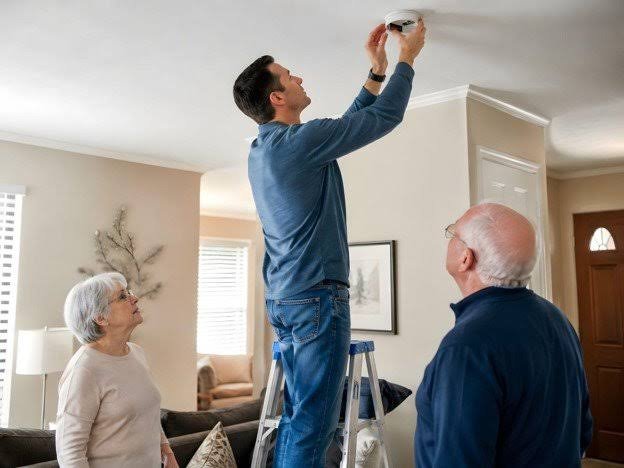
Fire safety is important for everyone, but older adults may face additional challenges during an emergency. Limited mobility, hearing or vision difficulties, certain health conditions, and dependence on mobility aids can make it harder to recognise a warning, leave a building, or reach a safe place quickly.
In Pakistan, many older adults live with family members, in independent homes, or in apartment buildings. Their safety depends not only on alarms and other equipment but also on thoughtful home arrangements, regular maintenance, family communication, and emergency planning.
Fire prevention should never rely on older people responding quickly without support. Homes and residential facilities should be arranged so that warning systems are accessible, escape routes are clear, and assistance is available when needed.
This guide explains ten important ways fire safety measures can help protect older adults and their families.
1. Install Suitable Smoke Alarms and Fire Detection Systems
Early warning is one of the most important parts of residential fire safety. Smoke alarms can alert occupants when smoke is detected, giving them an opportunity to leave the property and seek help.
Older adults who have hearing difficulties may not hear a conventional alarm clearly, particularly while sleeping. A suitable warning arrangement may therefore need additional features, such as visual alerts or vibrating devices designed to work with compatible alarm systems.
The correct equipment depends on the person’s needs and the layout of the property. Families should ask a qualified fire safety professional about suitable alarm types, locations, and installation arrangements.
A fire alarm system in Pakistan may include smoke or heat detectors, manual call points, control panels, audible sounders, and visual warning devices. Larger residential buildings may need connected systems that alert occupants in different areas.
For older residents, it is important to consider whether the warning can be noticed from bedrooms and other frequently occupied spaces. The system should be professionally installed and maintained according to the relevant requirements and manufacturer’s instructions.
Never cover, disconnect, or remove an alarm because it produces an inconvenient sound. If it repeatedly gives false warnings, arrange for a competent person to investigate the cause.
2. Make Escape Routes Easy to Access
An evacuation route should be suitable for the people who actually live in the property. A route that works for a healthy adult may not be convenient for someone who uses a walking frame, wheelchair, or other mobility aid.
Families should examine the route from the older person’s bedroom to the main exit. Check whether doorways are wide enough, floors are level where possible, and furniture does not restrict movement.
Staircases deserve particular attention. If an older resident has difficulty using stairs, family members and building management should discuss appropriate arrangements with a competent safety professional.
Keep corridors, doorways, and exits free from stored belongings. Shoes, boxes, loose rugs, and furniture can create obstacles during an emergency.
In apartment buildings, residents should know the designated evacuation route and the location of appropriate staircases. Lifts should not be used during a fire unless emergency personnel specifically direct otherwise.
The Pakistan Building Code’s Fire Safety Provisions 2016 recognises the importance of considering occupants’ capabilities and providing appropriate means of escape, including accessibility for people with impaired mobility.
3. Prepare an Individual Emergency Assistance Plan
A general household evacuation plan may not address every older person’s needs. Someone who moves slowly, has difficulty hearing instructions, or needs help with everyday mobility may require an individual assistance arrangement.
Families and caregivers should discuss these needs before an emergency occurs.
An individual plan can identify:
- The older person’s usual sleeping and living areas.
- The safest available exit route.
- Any mobility aids they normally use.
- The family member or caregiver responsible for assistance.
- Important contact information.
- A suitable meeting point outside the building.
The plan should be realistic. Do not assume that one family member will always be present or available. If the older adult lives alone, discuss arrangements with trusted relatives, neighbours, building management, or caregivers.
People who need assistance should understand how to communicate their needs. Families should also make sure that everyone involved knows the plan and understands their role.
The United States Fire Administration recommends discussing escape arrangements with older adults, family members, and neighbours, particularly when additional help may be needed. These principles can be adapted to Pakistani homes and residential settings.
4. Reduce Electrical Hazards at Home
Electrical equipment is used throughout modern homes, including lights, fans, heaters, refrigerators, televisions, and charging devices. Damaged wiring or poorly maintained appliances can create fire risks.
Older properties may have electrical installations that need professional assessment. Families should pay attention to warning signs such as damaged sockets, exposed wires, unusual buzzing, repeated power interruptions, or burning smells.
Avoid overloading sockets or connecting several high-power appliances to one extension board. Electrical accessories should be suitable for the equipment being used.
Older adults should not be expected to repair electrical faults themselves. If a problem appears, family members or caregivers should arrange for a qualified electrician to inspect it.
Electrical appliances should be used according to their instructions. Damaged heaters, fans, chargers, and other devices should not remain in service simply because they still appear to work.
In Pakistan, voltage fluctuations and power interruptions can also affect household appliances. Suitable equipment and professional maintenance can help reduce related risks.
5. Keep Kitchens Safe and Cooking Arrangements Simple
Cooking is an everyday activity, but it requires attention because kitchens contain heat sources, electrical appliances, gas connections, and combustible materials.
Older adults who cook independently should have a kitchen arrangement that is comfortable and easy to use. Frequently used items should be stored in accessible places so that people do not need to climb or stretch unnecessarily.
Important safety habits include:
- Avoid leaving cooking unattended.
- Keep cloth, paper, and plastic away from heat sources.
- Use cooking appliances according to their instructions.
- Keep kitchen floors clear and dry.
- Report damaged gas connections or electrical appliances.
- Ask for help when an appliance is difficult to operate safely.
A timer or reminder may help someone remember that food is cooking. Families can also discuss whether another household member should be present during cooking when additional support is needed.
If a fire develops or there is a serious emergency, the priority should be to move away from danger, alert others, and contact emergency services. Older adults should not be expected to fight a fire or handle unfamiliar equipment.
6. Pay Attention to Heating Equipment and Gas Safety
Room heaters and gas appliances are commonly used in many Pakistani homes, particularly during colder months. They need appropriate installation, ventilation, and maintenance.
Families should ensure that heating equipment is suitable for the room and used according to the manufacturer’s instructions. Portable heaters should be kept away from bedding, curtains, clothing, and furniture.
Do not use cooking appliances as substitute room heaters. Ventilation openings should not be blocked, and fuel-burning equipment should receive appropriate professional maintenance.
Carbon monoxide is a particularly important concern because it is poisonous and cannot reliably be detected by smell. Where appropriate, a suitable carbon monoxide alarm can provide an additional warning.
If a gas leak is suspected, everyone should move away from the affected area. Avoid flames and do not operate electrical switches in that area. Contact the relevant emergency or gas service provider from a safe location.
Older adults should have clear instructions about whom to contact if they notice a gas smell or suspect an appliance is faulty. Families should arrange professional inspections rather than asking residents to investigate technical problems themselves.
7. Keep Floors, Corridors, and Staircases Clear
A safe home should allow older residents to move around without unnecessary obstacles. Everyday clutter can become particularly dangerous when someone needs to leave quickly.
Keep walking routes clear of loose cables, unnecessary furniture, boxes, and other items. Rugs should not move easily underfoot, and floors should be kept in a condition that supports safe movement.
Staircases should have suitable lighting and handrails where appropriate. Frequently used rooms should have clear access to doors and corridors.
In apartment buildings, shared areas also matter. Corridors, stairways, and lobbies should not be used as storage spaces. Residents should report blocked exits, damaged emergency lights, and other problems to building management.
Families should consider whether furniture arrangements make it difficult for an older person to reach the exit. Small changes to the layout can make everyday movement easier and improve access during an emergency.
8. Make Emergency Information Easy to Understand
During an emergency, people need clear information. Older adults with hearing, vision, or memory difficulties may need warning arrangements that are adapted to their needs.
Use clear signs and simple instructions where helpful. Emergency contact numbers can be kept in an easy-to-find place, provided this does not create clutter or block an exit.
Family members should explain the sound and meaning of the household alarm. If the person has difficulty hearing it, discuss additional warning devices with a qualified professional.
Instructions should be simple and familiar. For example, residents should know whom to alert, which exit to use, and where to meet outside.
In shared residential buildings, management should make sure emergency announcements and instructions are accessible to residents who may need additional assistance.
Pictures and visual reminders can also help communicate basic safety information, particularly where written instructions are difficult to follow.
9. Arrange Regular Checks and Family Safety Discussions
Fire safety arrangements need regular attention. Smoke alarms can become damaged, electrical equipment can deteriorate, and household layouts can change.
Families should agree on a routine for checking alarms and reporting faults. Follow the manufacturer’s guidance for testing and maintenance. If an older adult cannot safely reach an alarm, another responsible person should help.
A household safety review can include:
- Checking that smoke alarms are present and working.
- Reviewing the condition of electrical appliances.
- Confirming that exits are accessible.
- Checking that mobility aids are easy to reach.
- Reviewing emergency contact details.
- Discussing the evacuation plan.
- Reporting maintenance problems to the responsible person.
These discussions should be respectful. Older adults should be included in decisions about their own safety rather than having arrangements made without consulting them.
If a person lives in a care home or residential facility, the management should have suitable fire safety arrangements, staff responsibilities, and emergency procedures.
10. Make Sure Families and Caregivers Know Their Roles
Older adults may depend on relatives, caregivers, neighbours, or residential staff for assistance. Everyone involved should understand the agreed emergency arrangements.
Family members should know how to raise an alarm, contact emergency services, and communicate with the older resident. Caregivers should be familiar with the person’s normal mobility needs and the building’s evacuation plan.
Where several relatives share responsibilities, it is helpful to agree who will check on the older person and who will communicate with other family members.
If the older adult lives alone, trusted neighbours may be included in the communication plan with the person’s agreement. Building management may also need to know about assistance requirements where relevant.
During an emergency, helpers should follow the building’s procedures and the instructions of emergency responders. They should not enter a dangerous area or put themselves at risk.
Good communication and advance planning can reduce confusion and help ensure that support is available when it is needed.
Fire Safety in Pakistan: Important Building Considerations
Fire safety arrangements should reflect the building’s design and the needs of its occupants. A detached house, apartment block, hospital, and residential care facility may require different arrangements.
The Building Code of Pakistan Fire Safety Provisions 2016 provides an important national reference for fire protection and life safety. It addresses occupant notification, means of escape, accessibility, and the need to consider the capabilities of building occupants.
The code also recognises that fire safety should not depend on a single safeguard. Alarm systems, appropriate escape arrangements, building features, and other protective measures should work together.
In Punjab, Civil Defence identifies fire detection and alarm systems, firefighting arrangements, fire safety plans, and emergency exits among the measures inspected in relevant premises. These inspection arrangements should not be assumed to apply identically to every private home or every province.
Property owners, residential facility managers, and families should confirm which requirements apply to their specific building and location. Qualified fire safety professionals can help assess whether the existing arrangements are suitable for older residents.
A Practical Fire Safety Checklist for Older Adults
Families and caregivers can use this checklist when reviewing a home:
- [ ] Suitable smoke alarms are installed and maintained.
- [ ] Warning devices can be noticed by the older resident.
- [ ] The main escape route is accessible.
- [ ] Corridors and doorways are free from clutter.
- [ ] Mobility aids are kept in an accessible place.
- [ ] Electrical equipment is in good condition.
- [ ] Cooking and heating appliances are used safely.
- [ ] Important emergency numbers are available.
- [ ] A household evacuation plan has been discussed.
- [ ] Family members or caregivers understand their responsibilities.
- [ ] Building management has been informed of relevant assistance needs where appropriate.
- [ ] The plan is reviewed when living arrangements or mobility needs change.
This checklist is a general awareness resource. It does not replace a professional fire risk assessment or individual care advice.
Conclusion
Fire safety for older adults requires thoughtful planning, suitable equipment, and cooperation between families, caregivers, property owners, and building managers. Limited mobility, hearing or vision difficulties, and other individual needs should be considered when arranging alarms and escape routes.
Working smoke alarms, accessible exits, safe electrical and cooking arrangements, and a clear assistance plan can all contribute to a safer home.
In Pakistan, the Building Code of Pakistan Fire Safety Provisions 2016 provides an important reference for building fire and life safety. Families should also consider the specific needs of older residents and seek professional guidance when necessary.
A reliable fire alarm system is valuable, but it is only one part of a complete safety approach. Regular checks, clear communication, and a realistic emergency plan help ensure that older adults are not left to manage an emergency without appropriate support.
Frequently Asked Questions
1. Why is fire safety especially important for older adults?
Some older adults may have difficulty hearing alarms, seeing warning signs, or moving quickly during an emergency. Suitable warning devices, accessible escape routes, and planned assistance can help address these challenges.
2. What type of smoke alarm is suitable for an older person with hearing difficulties?
A conventional audible alarm may not be sufficient for someone who cannot hear it clearly. Depending on individual needs, a compatible visual alert or vibrating warning device may be appropriate. A qualified professional can help identify a suitable system.
3. How can families help older adults prepare for a fire emergency?
Families can discuss an evacuation plan, keep routes clear, make sure alarms are maintained, keep mobility aids accessible, and agree who will provide assistance. The plan should reflect the older person’s actual needs and living arrangements.
4. What should an older person do when a fire alarm sounds?
They should follow the agreed evacuation plan, leave using a safe and accessible route, and seek assistance if needed. They should avoid lifts unless emergency personnel specifically direct otherwise, and should not return until authorities confirm that the building is safe.
5. What fire safety requirements apply to residential buildings in Pakistan?
The Building Code of Pakistan Fire Safety Provisions 2016 is an important national reference for building fire and life safety. Specific requirements depend on building type, occupancy, location, and the relevant authority. Property owners and facility managers should confirm applicable requirements with qualified professionals and local authorities.