
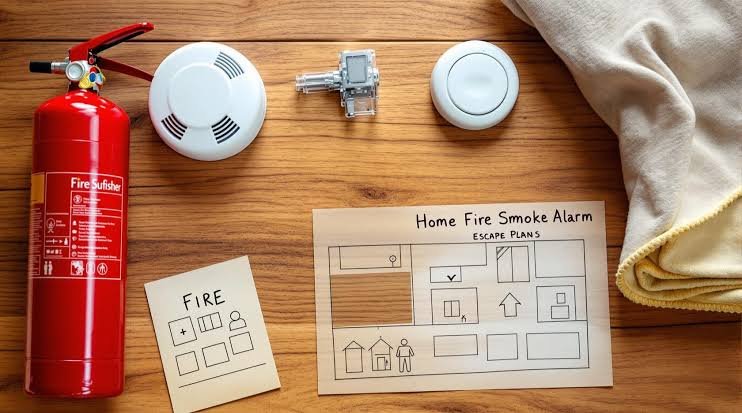
Home fire safety is often misunderstood as simply keeping a fire extinguisher in the kitchen or installing a smoke alarm on the ceiling. In reality, effective home fire safety is a complete system made up of prevention, detection, warning, evacuation, and regular maintenance.
A home can contain many potential fire hazards, including cooking appliances, electrical equipment, gas appliances, heating devices, generators, batteries, and combustible household materials. A small problem can become a serious emergency if it is not noticed quickly.
This is why every household needs more than one safety measure.
The basic idea is simple:
Prevent fires where possible, detect problems early, alert everyone, and leave safely when an emergency occurs.
For families in Pakistan, these principles are especially useful because residential buildings can differ considerably in construction, electrical systems, cooking arrangements, backup power, and fuel use.
A properly planned fire alarm system in Pakistan can form an important part of this approach, but an alarm is only one layer of protection. It needs to work together with safe household habits, suitable equipment, clear escape routes, and regular maintenance.
What Does Home Fire Safety Mean?
Home fire safety refers to the measures used to reduce the possibility of a fire and protect people if one occurs.
It normally includes five major areas:
- Fire prevention
- Fire detection
- Warning and communication
- Safe evacuation
- Equipment maintenance and preparedness
Each part has a different purpose.
For example, safe electrical practices can help prevent a fire, while a smoke alarm can provide an early warning. An escape plan helps people know where to go, while a maintained extinguisher can provide a first line of defense against a limited fire when a safe response is possible.
NFPA describes smoke alarms as a key part of a home fire escape plan because working alarms provide early warning and can help people get outside quickly.
1. Fire Safety Starts With Prevention
The best fire is the one that never starts.
Prevention involves identifying common hazards and reducing unnecessary risks around the home.
Important areas include:
- Cooking appliances
- Electrical outlets and wiring
- Gas appliances
- Heating equipment
- Generators and other equipment
- Batteries and chargers
- Candles and other open flames
- Combustible materials
- Clutter near heat-producing appliances
Homeowners should follow appliance manufacturers’ instructions and arrange professional repairs when electrical, gas, or technical problems occur.
Good housekeeping also matters. Keeping combustible materials away from heat sources and maintaining clear areas around equipment can reduce avoidable hazards.
Prevention does not require complicated technology. Often, it starts with everyday habits.
2. Smoke Alarms Detect Problems Early
The next part of the system is detection.
Smoke alarms are designed to detect smoke and provide an audible warning. This can be particularly important when people are sleeping or when a fire begins in another part of the home.
NFPA recommends smoke alarms in sleeping rooms, outside separate sleeping areas, and on every level of a home. It also recommends interconnected alarms where appropriate, so that when one alarm activates, the others can sound as well.
A homeowner should not assume that installing an alarm once means the job is finished.
Smoke alarms require ongoing attention.
Their maintenance can include:
- Testing according to manufacturer instructions
- Addressing low-battery warnings
- Replacing batteries where applicable
- Keeping alarms free from inappropriate obstruction
- Replacing devices at the recommended end of service life
- Investigating repeated faults
NFPA guidance recommends regular testing and replacing smoke alarms when they reach the manufacturer’s recommended service life.
3. A Fire Alarm System Can Provide Broader Protection
A standalone smoke alarm is different from a complete fire alarm system.
A larger fire alarm system in Pakistan may include several components working together, such as:
- Smoke detectors
- Heat detectors
- Manual alarm points
- Control panels
- Audible notification devices
- Visual notification devices
- Backup power
- Monitoring or communication features
The exact arrangement depends on the building and its requirements.
NFPA 72 is a major reference for fire alarm and signaling systems and covers areas including installation, inspection, testing, and maintenance of fire alarm systems, carbon monoxide detection and warning equipment, and emergency communications systems.
For more complex systems, professional design and servicing are important.
The Pakistan Engineering Council’s online portal identifies installation, commissioning, and maintenance of fire detection, alarm, and suppression systems and allied equipment as a defined engineering service category.
This is why homeowners should not attempt technical modifications to sophisticated fire alarm equipment themselves.
4. The Alarm Is a Warning, Not the Solution
One of the most important things to understand is that an alarm does not put out a fire.
Its primary purpose is to provide warning.
When an alarm sounds, people should follow their emergency plan and move toward safety. Delaying evacuation to investigate the source of an alarm can waste valuable time.
NFPA’s home escape guidance emphasizes that when a smoke alarm sounds, occupants should get out and stay out rather than returning inside.
This is especially important for children. Children should learn that the sound of a smoke alarm means they need to alert an adult and follow the household evacuation plan.
They should not be expected to inspect a fire or operate technical fire-protection equipment.
5. Home Fire Safety Depends on Escape Routes
Detection is only useful if people know how to respond.
Every household should have a simple escape plan.
NFPA recommends identifying two ways out of each room where possible, ensuring doors and windows can be opened, selecting an outdoor meeting place, discussing the plan with everyone in the home, and practicing it.
An escape plan should consider the actual layout of the house.
For example, families should know:
- The main exit
- An alternative route
- Where household members should meet outside
- Who may need assistance
- How children will be helped
- How guests will be informed
- Where emergency services should be contacted
The plan should be simple enough for everyone to understand.
6. Keep Exits Clear
A fire escape route should never become a storage area.
Boxes, furniture, equipment, bicycles, shoes, or other household items can make movement more difficult during an emergency.
Doors and windows that form part of an escape route should remain usable.
NFPA’s home escape guidance emphasizes keeping doors and windows leading outside accessible and removing obstacles that could prevent people from getting out.
Families should review escape routes whenever the home is renovated or furniture is rearranged.
A route that worked six months ago may no longer be practical after major changes to the home.
7. Fire Extinguishers Provide Another Layer
A suitable portable extinguisher can provide a first line of defense against a limited fire.
However, an extinguisher is not appropriate for every situation.
NFPA 10 establishes requirements for portable fire extinguishers and describes their role as a first line of defense against fires of limited size.
The Pakistan Engineering Council’s Building Code of Pakistan Fire Safety Provisions 2016 also addresses portable extinguishers and their selection according to the hazards present.
For homeowners, the important lesson is to select suitable equipment and keep it maintained and accessible.
People should never feel that they must fight a fire when conditions are dangerous. Evacuation should take priority when a fire is spreading, smoke is heavy, or there is any doubt about personal safety.
8. Kitchen Safety Is a Major Part of Home Fire Prevention
The kitchen contains several potential fire hazards.
Cooking appliances produce heat, while cooking oils, packaging, cloth, paper, and other materials may be combustible.
Simple prevention measures include:
- Keeping the cooking area reasonably clean
- Keeping combustible items away from heat sources
- Maintaining appliances according to manufacturer instructions
- Avoiding unnecessary clutter
- Keeping children away from active cooking areas
- Remaining attentive while cooking
- Making sure kitchen equipment receives appropriate maintenance
A kitchen should also have a suitable smoke-detection arrangement without placing detectors where normal cooking activity will cause unnecessary problems.
If a home has a more advanced cooking-related fire-protection system, it should be professionally installed and maintained.
9. Electrical Safety Is Another Essential Layer
Modern homes rely heavily on electricity.
Televisions, refrigerators, air conditioners, computers, chargers, kitchen appliances, fans, pumps, and other devices all contribute to the home’s electrical load.
Warning signs such as damaged cables, discolored sockets, burning smells, unusual heat, sparks, or repeated electrical faults should not be ignored.
Electrical repairs should be handled by qualified professionals.
Avoid improvising repairs or continuing to use visibly damaged equipment.
Good electrical maintenance supports fire prevention before an alarm ever becomes necessary.
10. Gas Safety Matters in Many Pakistani Homes
Gas appliances are another important consideration.
Where homes use gas for cooking or other purposes, appliances should be properly installed and maintained by qualified professionals.
Household members should never attempt technical repairs or modifications without appropriate expertise.
If a person suspects a dangerous gas problem, they should avoid creating ignition sources, move away from the suspected danger, alert an adult, and follow the property’s emergency procedures.
Children should never be asked to investigate suspected gas problems.
Professional maintenance is particularly important when gas appliances are old, damaged, or behaving unexpectedly.
11. Home Fire Safety Also Includes Maintenance
Fire-safety equipment can become less reliable when it is neglected.
A smoke alarm may have a depleted battery. An extinguisher may be damaged. A fire alarm control panel may indicate a fault. Emergency equipment may become blocked by storage.
Regular maintenance helps identify these problems.
A simple household maintenance routine can include:
- Testing smoke alarms according to manufacturer instructions
- Addressing alarm warnings
- Checking that extinguishers remain accessible
- Reviewing visible equipment condition
- Keeping exits clear
- Maintaining electrical equipment
- Arranging professional servicing for complex systems
- Replacing equipment at the end of its service life
The Building Code of Pakistan Fire Safety Provisions 2016 addresses fire-safety systems and equipment in the context of installation, maintenance, repair, servicing, and testing.
12. Everyone in the Home Needs to Understand the Plan
A fire-safety system cannot depend on one person.
Everyone in the household should understand the basic emergency plan.
Children should know:
- What the smoke alarm sounds like
- That an alarm means they need to get to safety
- Where to meet outside
- Which adult to alert
- That they should not hide during an emergency
- That they should not return inside
Adults should understand the home’s escape routes and know who may require additional assistance.
NFPA recommends involving everyone in the home when creating an escape plan and considering assistance for young children, older adults, or people who may have difficulty getting outside independently.
13. Practice Makes the Plan Easier to Follow
Knowing an escape plan is useful. Practicing it is even better.
A household can periodically review:
- The sound of the alarm
- Primary escape routes
- Alternative routes
- The outdoor meeting location
- Assistance arrangements
- Emergency contact procedures
NFPA recommends practicing home fire drills at least twice a year.
Practice should be calm and age-appropriate. The purpose is to make the household familiar with the plan, not to create fear.
14. What Happens When a Fire Alarm Sounds?
A simple response plan can help prevent confusion.
When an alarm sounds:
Recognize the warning.
Treat the alarm seriously.
Alert others.
Make sure household members know there is an emergency.
Leave safely.
Use the safest available exit.
Go to the meeting place.
Move to the family’s designated outdoor location.
Stay outside.
Do not return to the building.
Contact emergency services.
Call from a safe location and provide the necessary information.
NFPA’s escape guidance specifically emphasizes getting out and staying out after a smoke alarm sounds.
The exact emergency contact process may vary by location, so households should know the appropriate local emergency arrangements.
15. Home Fire Safety Should Be Reviewed After Changes
Homes change over time.
A family may add a room, renovate a kitchen, install new electrical equipment, change heating arrangements, or add backup power.
These changes can affect fire risk and the home’s safety arrangements.
After major renovations or changes, homeowners should consider whether:
- Smoke alarm locations remain appropriate
- Escape routes are still clear
- Electrical systems require professional review
- Existing fire equipment remains suitable
- New hazards have been introduced
- More detection may be appropriate
A professional assessment can be useful for larger or more complex homes.
Home Fire Safety in Pakistan
Pakistan’s Building Code of Pakistan Fire Safety Provisions 2016 provides a national reference for fire prevention, life safety, and fire protection. Its provisions cover various aspects of fire detection, fire protection equipment, means of egress, and maintenance.
However, the exact requirements for a particular property can depend on its type, size, use, construction, and applicable local authority requirements.
For a simple home, the priority is to establish practical layers of protection rather than purchasing unnecessary equipment.
For larger residences or properties with sophisticated fire-protection systems, professional advice becomes more important.
If you are researching fire-safety equipment and solutions, you can explore Flame Defender.
A Simple Home Fire Safety Checklist
Use this as a starting point for reviewing your home:
- [ ] Smoke alarms are installed where appropriate.
- [ ] Smoke alarms are tested according to manufacturer instructions.
- [ ] Batteries are maintained or replaced as required.
- [ ] Fire equipment is accessible.
- [ ] Suitable extinguishers are available where appropriate.
- [ ] Electrical warning signs are addressed.
- [ ] Gas appliances receive appropriate professional maintenance.
- [ ] Cooking areas are kept reasonably clear.
- [ ] Escape routes are not blocked.
- [ ] Everyone knows the home’s escape plan.
- [ ] An outdoor meeting point has been selected.
- [ ] Children understand what the alarm means.
- [ ] The household practices its escape plan.
- [ ] Complex fire-protection systems receive professional maintenance.
Final Thoughts
So, how does home fire safety actually work?
It works through layers.
Prevention reduces the chance of a fire starting. Smoke alarms and other detection devices provide early warning. A suitable fire alarm system can coordinate detection and notification in more complex properties. Fire extinguishers can provide an additional layer for limited fires when a safe response is possible. Clear exits and an practiced escape plan help people leave safely. Regular maintenance keeps the equipment ready.
No single product can provide complete protection.
For families in Pakistan, a sensible approach is to understand the hazards in the home, maintain appropriate equipment, keep escape routes clear, and make sure everyone knows what to do when an alarm sounds.
A fire alarm system in Pakistan can be an important part of this approach, but its greatest value comes when it is combined with prevention, preparedness, and responsible maintenance.
The ultimate purpose of home fire safety is simple: reduce the chance of a fire, provide an early warning if one occurs, and help everyone get to safety.
FAQs
1. What is the most important part of home fire safety?
There is no single most important product. Effective home fire safety combines prevention, working smoke alarms, suitable equipment, clear escape routes, an emergency plan, and regular maintenance.
2. How often should I test my smoke alarms?
Follow the manufacturer’s instructions. NFPA recommends testing smoke alarms at least once a month and replacing alarms when they reach their recommended service life.
3. Do all homes need a complete fire alarm system?
Not necessarily. A simple home may use standalone smoke alarms, while larger or more complex properties may require a more integrated system. The appropriate arrangement depends on the property and applicable requirements.
4. Should children be taught how to use fire extinguishers?
Children should receive age-appropriate fire-safety education, but they should not be expected to fight a fire. Their priority should be recognizing the alarm, alerting an adult, following the escape plan, and reaching safety.
5. How can I create a home fire escape plan?
Identify primary and alternative ways out, keep exits clear, select an outdoor meeting place, discuss the plan with everyone in the household, and practice it regularly. NFPA recommends practicing home fire drills at least twice a year.