
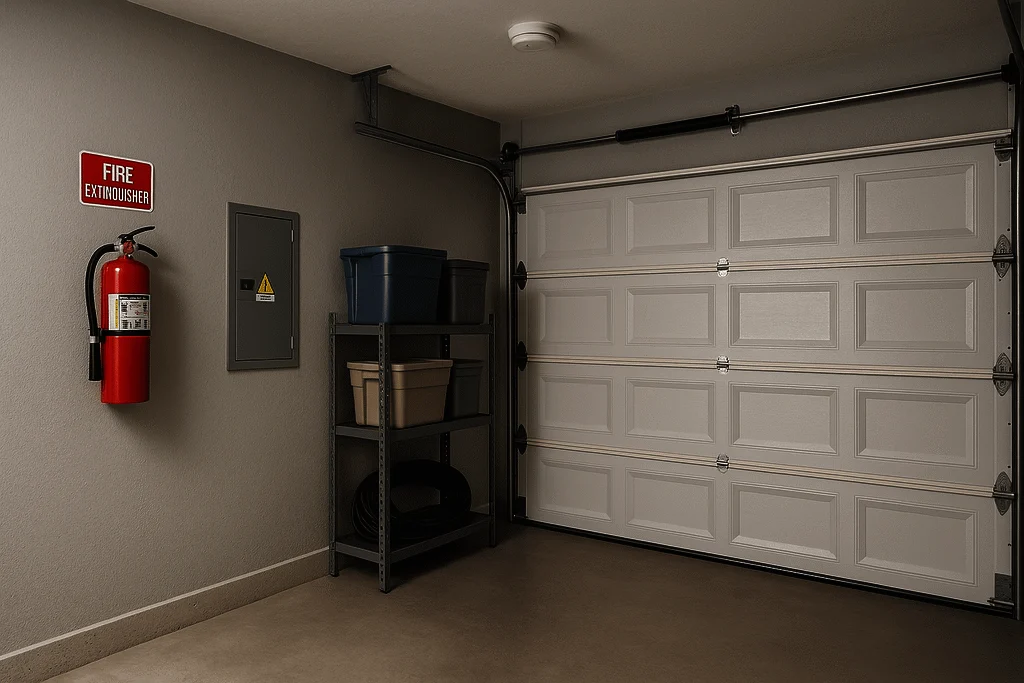
Garages are often treated as simple spaces for parking vehicles, but they can present several serious fire hazards. Fuel, lubricants, electrical equipment, batteries, tires, cleaning chemicals, paints, and other combustible materials may all be present in the same area. In commercial and underground garages, additional risks can come from vehicle density, limited ventilation, and the difficulty of evacuating smoke.
Effective garage fire safety is therefore not based on a single device. It involves a combination of fire prevention, early detection, alarm notification, ventilation, fire suppression, emergency exits, and regular maintenance.
For property owners, facility managers, and businesses in Pakistan, understanding how these systems work is particularly important. The Building Code of Pakistan addresses fire detection and alarm systems as well as specific requirements for motor-vehicle-related occupancies. Enclosed parking garages, for example, can have requirements relating to sprinklers, smoke removal, fire separation, and fire-control equipment depending on the building and occupancy.
Why Are Garages Vulnerable to Fire?
A garage contains several potential sources of ignition and fuel.
Vehicles themselves contain combustible materials and flammable fluids. Electrical wiring, batteries, chargers, engines, exhaust components, and mechanical equipment can also generate heat or sparks. A leaking fuel or oil container can create an additional hazard.
Storage practices can make the situation worse. Cardboard, paper, fabrics, paints, solvents, plastics, and oily materials may allow a small fire to grow rapidly.
In an enclosed garage, smoke can become an even greater concern. Smoke may spread through stairways, corridors, ventilation systems, or openings connecting the garage with other parts of a building.
The U.S. Fire Administration similarly identifies flammable liquids, combustible storage, gas appliances, and electrical tools among the hazards associated with garage fires.
This is why garage protection should be considered as a complete fire-safety system rather than simply placing an extinguisher beside the entrance.
What Does Garage Fire Safety Actually Include?
A properly designed garage fire-safety strategy can include several interconnected components:
- Fire detection
- Alarm notification
- Manual alarm points
- Automatic sprinklers where required
- Appropriate fire extinguishers
- Mechanical ventilation and smoke control
- Fire-rated walls and doors
- Emergency lighting and exit routes
- Electrical safety measures
- Safe storage of flammable materials
- Inspection, testing, and maintenance
The exact combination depends on factors such as the size of the garage, whether it is residential or commercial, whether it is above or below ground, the number of vehicles, building occupancy, and applicable local regulations.
In Pakistan, the Building Code of Pakistan Fire Safety Provisions 2016 provides requirements for fire alarm systems and references recognized standards for their installation.
How Does a Fire Alarm System Work in a Garage?
A fire alarm system in Pakistan typically consists of several devices working together rather than one standalone alarm.
The basic process is straightforward:
Detection → Control panel → Alarm notification → Emergency response
A detector identifies a potential fire condition. Its signal is transmitted to the fire alarm control panel. The panel processes the signal and activates notification devices such as sounders, horns, strobes, or other approved warning appliances.
Depending on the system design, the alarm may also communicate with monitoring equipment or interact with other building safety systems.
The Pakistan Fire Safety Provisions recognize multiple methods of initiating a fire alarm, including manual initiation, automatic detection, and operation of extinguishing systems.
Fire Alarm Control Panel
The control panel acts as the central point of the system.
It receives signals from detectors and other initiating devices and determines what action should occur. It can also identify faults such as certain wiring or device problems.
For larger buildings, the panel may be connected to other fire-safety equipment and building controls.
Smoke Detectors
Smoke detectors identify particles produced by combustion.
They can be useful in many indoor areas, but detector selection must take the environment into account. A garage can contain exhaust fumes, dust, humidity, and other conditions that may affect detector performance.
For that reason, the detector appropriate for a garage should be selected according to the specific environment and system design rather than simply installing the same detector used in an office.
Heat Detectors
Heat detectors respond to temperature conditions rather than smoke.
They can be useful in locations where smoke detectors could experience unwanted alarms because of environmental conditions.
For residential garages, the U.S. Fire Administration specifically recommends a heat alarm rather than a smoke alarm inside the garage.
The correct detector type for a commercial or industrial garage, however, should be determined through the applicable fire-safety design and code requirements.
Manual Call Points
Automatic detection is only one part of an alarm system.
Manual fire alarm points allow a person who discovers a fire to initiate the alarm without waiting for an automatic detector.
Pakistan’s Fire Safety Provisions state that, for new alarm installations, manual fire alarm boxes should generally be located within 60 inches of exit doorways unless another provision modifies the requirement.
What Happens After a Fire Is Detected?
Once a detector or manual call point activates, the fire alarm control panel receives the signal.
The system may then activate:
- Audible alarms
- Visual alarm indicators
- Emergency notification systems
- Fire suppression-related controls
- Ventilation or smoke-control functions
- Monitoring or signaling equipment
The exact sequence depends on the building’s approved fire-safety design.
The important principle is that detection and notification should happen early enough to give occupants time to respond.
A fire alarm does not extinguish a fire by itself. Its primary function is to detect or receive an indication of a fire condition and provide appropriate warning or control signals. Detection therefore needs to work alongside suppression, evacuation procedures, and other protective measures.
Why Is Ventilation Important in a Garage?
Ventilation serves several purposes in garages.
Vehicles produce exhaust gases even during normal operation. In enclosed areas, mechanical ventilation can help control accumulated contaminants.
During a fire, smoke control becomes particularly important. Smoke can reduce visibility, make evacuation difficult, and expose people to hazardous combustion products.
The Building Code of Pakistan requires mechanical ventilation for repair garages in accordance with applicable mechanical-code provisions. It also includes specific smoke-removal provisions for certain mechanical-access enclosed parking garages.
Ventilation should therefore be designed according to the garage’s use and applicable requirements rather than treated simply as a collection of exhaust fans.
What Role Do Fire Sprinklers Play?
Alarm systems provide warning, while sprinklers can provide active fire suppression.
When an automatic sprinkler system is properly designed and installed, individual sprinkler heads operate when exposed to the heat conditions for which they are designed. Water is then discharged to control or suppress the fire.
The sprinkler system is not a replacement for an alarm system. These systems perform different functions.
The Building Code of Pakistan includes automatic sprinkler requirements for certain enclosed parking garages, while Punjab’s building regulations also specify automatic sprinkler coverage for internal underground car parks.
Whether a particular garage requires sprinklers depends on its characteristics and the applicable authority and code requirements.
Fire Extinguishers in Garages
Portable fire extinguishers are another important layer of protection.
The appropriate extinguisher depends on the type of potential fire. Garages may contain ordinary combustibles, flammable liquids, and energized electrical equipment, so extinguisher selection should be based on the hazards present.
Extinguishers should be:
- Appropriate for the identified fire hazards
- Easily accessible
- Clearly visible
- Properly mounted where required
- Maintained in operational condition
- Regularly inspected
Punjab’s community safety building regulations specify requirements for multipurpose dry-chemical extinguishers and maximum travel distances to extinguishers in covered buildings.
The extinguisher should never be positioned where someone would have to pass through a fire to reach it.
Preventing Garage Fires Before They Start
Detection and suppression are important, but prevention remains the first layer of protection.
Control Flammable Materials
Gasoline, paints, solvents, oils, and similar materials should be stored only where permitted and in suitable containers.
Where possible, unnecessary flammable-liquid storage should be kept away from ignition sources and living areas.
Maintain Electrical Equipment
Damaged cables, overloaded circuits, loose connections, defective chargers, and poorly maintained electrical equipment can create ignition hazards.
Electrical systems should be installed and maintained by qualified professionals.
Keep Combustibles Away From Heat
Paper, cardboard, cloth, plastics, oily rags, and other combustible materials should not be stored next to heaters, engines, electrical equipment, or other heat-producing sources.
The U.S. Fire Administration recommends keeping combustible materials away from heat-generating equipment and using appropriate storage practices for oily materials.
Maintain Clear Exits
Vehicles, boxes, tools, equipment, and stored materials should not obstruct exit routes.
In an emergency, people may have limited visibility because of smoke. A previously familiar route can become difficult to navigate if it is blocked.
Fire-Rated Separation Between a Garage and a Building
A garage attached to a home or larger building creates an additional concern: preventing a garage fire from quickly spreading into occupied areas.
Fire-rated walls, ceilings, doors, and other assemblies can help provide separation where required by the applicable building code.
The Building Code of Pakistan includes specific provisions concerning separation between private garages and dwelling areas, including requirements relating to fire-resistance-rated construction and doors.
A fire-rated door is only effective as part of a properly designed assembly. Door condition, self-closing mechanisms, latching, penetrations, and surrounding construction can all matter.
How Should a Garage Fire Alarm Be Maintained?
Installing equipment is not the end of the process.
Fire alarm components need inspection, testing, servicing, and maintenance according to the applicable requirements and manufacturer instructions.
The Pakistan Fire Safety Provisions state that system components should be installed, tested, inspected, and maintained in accordance with the manufacturer’s published instructions and the applicable provisions.
A maintenance program should consider:
- Detector condition
- Alarm sounders and visual indicators
- Manual call points
- Control-panel status
- Backup power
- Wiring and connections
- Fault indications
- Sprinkler system condition where installed
- Fire extinguisher condition
- Ventilation and smoke-control equipment
- Emergency lighting and exit routes
Testing should be documented so that building managers can identify recurring faults and ensure corrective work is completed.
Why Backup Power Matters
A fire can interrupt normal electrical power. For this reason, critical fire-protection equipment may require standby or uninterrupted power depending on the system and applicable regulations.
Punjab’s building regulations, for example, require building fire alarm and detection systems to be connected to a central control panel with uninterrupted power supply in the covered buildings addressed by those regulations.
The specific backup arrangement should be determined by the approved system design and applicable requirements.
Designing a Fire Safety System for a Garage in Pakistan
There is no single fire alarm configuration that is appropriate for every garage.
A small private residential garage has different requirements from a multi-storey commercial parking facility, automobile repair workshop, warehouse garage, or underground parking structure.
A proper assessment should consider:
- Garage size and layout
- Number of vehicles
- Above-ground or underground location
- Vehicle repair activities
- Fuel or flammable-liquid storage
- Electrical charging equipment
- Ventilation
- Occupant load
- Number and location of exits
- Fire separation
- Required detection technology
- Suppression requirements
- Local authority requirements
For larger facilities, the design should be reviewed against the applicable Building Code of Pakistan provisions and requirements of the relevant authority having jurisdiction.
Common Garage Fire-Safety Mistakes
Several simple mistakes can reduce the effectiveness of a fire-protection system.
Installing the Wrong Detector
A detector suitable for an office may not be suitable for a dusty, humid, or mechanically active garage.
Treating the Alarm as the Complete Solution
An alarm provides warning, but it does not replace extinguishers, sprinklers, safe storage, ventilation, fire separation, or evacuation procedures.
Ignoring False Alarms
Frequent unwanted alarms can cause people to become less responsive to genuine emergencies. Faults should be investigated rather than repeatedly ignored.
Blocking Fire Equipment
Fire extinguishers, manual call points, exits, and emergency equipment must remain accessible.
Neglecting Maintenance
A system that was installed correctly can still become unreliable if detectors, batteries, wiring, alarms, or control equipment are not maintained.
Storing Too Much Combustible Material
A garage should not become an uncontrolled storage room. Reducing unnecessary combustible storage can reduce the potential fire load.
A Practical Garage Fire-Safety Checklist
Property owners and facility managers can use the following checklist as a basic review:
- [ ] Identify potential ignition sources.
- [ ] Remove unnecessary combustible storage.
- [ ] Store flammable materials appropriately.
- [ ] Keep exits and access paths clear.
- [ ] Install suitable detection equipment.
- [ ] Provide manual alarm initiation where required.
- [ ] Install audible and visual notification devices where required.
- [ ] Provide appropriate extinguishers.
- [ ] Check whether sprinklers are required.
- [ ] Assess ventilation and smoke-control requirements.
- [ ] Maintain fire-rated separation where applicable.
- [ ] Provide suitable emergency lighting and signage.
- [ ] Test and maintain fire-protection equipment.
- [ ] Keep maintenance records.
- [ ] Review the system whenever the garage layout or use changes.
Final Thoughts
Garage fire safety works best as a layered protection strategy.
Prevention reduces the chance of ignition. Detection provides early warning. Alarm systems notify occupants. Fire extinguishers provide an initial means of response. Sprinklers can control or suppress fires where installed. Ventilation and smoke-control systems address hazardous gases and smoke. Fire-rated construction can slow fire spread, while clear exits support evacuation.
For anyone researching a fire alarm system in Pakistan, the most important point is that equipment should be selected according to the actual garage environment and applicable regulations rather than simply choosing the most basic alarm available.
The Building Code of Pakistan and applicable provincial or local requirements should be consulted for the specific type of building. Professional fire-safety assessment is particularly important for commercial, industrial, multi-storey, and underground garages, where the risks and regulatory requirements can be substantially different.
Frequently Asked Questions
1. Is a fire alarm necessary in a garage?
The requirement depends on the type, size, occupancy, and design of the building. Certain buildings and occupancies in Pakistan are required to have fire alarm or detection systems under applicable fire-safety provisions. Underground and enclosed parking facilities may also have additional requirements for sprinklers, smoke control, and other fire-protection measures.
2. Should a garage have a smoke detector or heat detector?
The appropriate detector depends on the environment and the applicable system design. Residential garage guidance commonly recommends heat alarms because normal garage conditions can make smoke alarms prone to unwanted alarms. Commercial garages require a more detailed assessment of environmental conditions and code requirements.
3. Are sprinklers required in parking garages in Pakistan?
Some enclosed and underground parking garages are subject to automatic sprinkler requirements. However, requirements can depend on the building’s classification, construction, size, location, and applicable authority. Punjab regulations, for example, specifically address sprinkler coverage for internal underground car parks.
4. How often should a garage fire alarm system be checked?
Fire alarm systems should be inspected, tested, and maintained according to applicable regulations, the approved system design, and the manufacturer’s instructions. The Pakistan Fire Safety Provisions specifically require system components to be installed, tested, inspected, and maintained accordingly.
5. Can a fire alarm system prevent a garage fire?
A fire alarm system primarily provides detection and warning; it does not by itself prevent ignition or extinguish a fire. Effective protection combines prevention, detection, notification, suppression where required, ventilation, fire separation, and emergency procedures.