
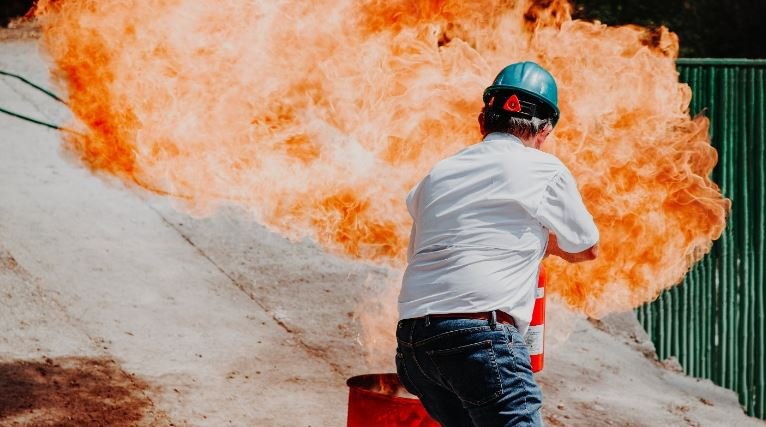
Fire safety equipment is important, but equipment alone cannot create a safe building. People also need to know how to recognize hazards, respond to alarms, follow evacuation procedures, and report unsafe conditions. This is why fire safety training should be treated as an important part of every workplace, school, hospital, commercial building, factory, hotel, and other occupied property.
A fire can create confusion within seconds. People may not immediately know where to go, who should raise the alarm, or how to respond safely. Regular training gives occupants an opportunity to understand emergency procedures before an actual incident occurs.
In Pakistan, the Building Code of Pakistan Fire Safety Provisions 2016 identifies fire and life-safety education for employees, responsible parties, fire brigades, and the general public as part of its scope. The provisions also address inspection, maintenance, servicing, and testing of fire-protection systems and equipment.
This makes training more than a general workplace activity. It can form part of a wider fire-safety management program.
What Is Fire Safety Training?
Fire safety training is the process of teaching people how to prevent fires, recognize hazards, respond to warnings, and evacuate safely during an emergency.
The content should be appropriate for the building and the people who use it. An office may have different risks from a factory, restaurant, hospital, school, warehouse, or residential building.
A basic training program may cover:
- Common causes of fires
- Electrical and housekeeping hazards
- Fire alarm awareness
- Emergency evacuation
- Exit routes
- Assembly areas
- Emergency communication
- Fire-extinguisher awareness
- Reporting hazards
- Responsibilities during an emergency
- Assistance for visitors and people who may need additional support
The goal is not to turn every employee into a firefighter. The primary goal is to help people make safer decisions and leave the building safely when necessary.
Why Fire Safety Training Matters
Many fire emergencies become more difficult when people are unfamiliar with the building’s emergency procedures.
For example, an employee might hear an alarm but not know whether it is a drill or a real emergency. Someone may not know which exit to use. A visitor may be unfamiliar with the building altogether.
Training can reduce this uncertainty.
A well-planned program helps people understand what an alarm means, where emergency exits are located, where they should assemble, and whom they should notify if they discover a hazard.
The Building Code of Pakistan Fire Safety Provisions 2016 is designed to establish a reasonable level of fire and life safety and property protection from fire-related hazards. Its scope specifically includes fire and life-safety education.
Fire Safety Training Starts With Prevention
Emergency response is only one part of fire safety. Good training should also teach people how everyday actions can increase or reduce fire risk.
Common areas of awareness include:
Electrical Safety
Electrical equipment can become a fire hazard when it is damaged, improperly used, overloaded, or poorly maintained.
Employees should know how to report damaged cables, unusual electrical smells, overheating equipment, or other concerning conditions. They should also understand that unauthorized electrical modifications should not be treated as routine maintenance.
Housekeeping
Combustible waste, unnecessary packaging, paper, textiles, and other materials can increase the potential fuel available to a fire.
Good housekeeping helps keep work areas and emergency routes clear.
Storage
Materials should be stored in a way that does not block exits, access routes, firefighting equipment, or safety equipment.
Employees should understand that an apparently convenient storage location may create a serious emergency problem.
Cooking Areas
Offices, restaurants, schools, hospitals, and other facilities may have kitchens or food-preparation areas.
Training should cover basic prevention principles, including keeping cooking areas appropriately managed and reporting unsafe conditions.
Smoking and Ignition Sources
Where smoking is permitted, organizations should have clear rules regarding designated areas and safe disposal. Ignition sources should also be controlled around combustible materials.
Understanding the Fire Alarm System
A Fire alarm system in Pakistan is an important component of many fire-protection arrangements, but its effectiveness depends on appropriate design, installation, maintenance, and occupant response.
NFPA 72, the National Fire Alarm and Signaling Code, provides guidance covering fire alarm system installation, inspection, testing, and maintenance, as well as emergency communications.
Training should help occupants understand what the alarm sounds or signals like and what they are expected to do when it activates.
People should not assume that an alarm can simply be ignored because there is no visible smoke.
A basic workplace awareness session can explain:
- What the building’s alarm sounds like
- What visual alarm indicators mean where provided
- What occupants should do when an alarm activates
- Where the designated exits are
- Where the assembly area is located
- Who has emergency responsibilities
- How visitors are included in evacuation procedures
The exact response should always follow the building’s approved emergency plan.
Who Needs Fire Safety Training?
Fire safety training can benefit almost everyone who regularly uses a building.
Different groups, however, may need different levels of information.
Employees
Employees should understand evacuation procedures, alarm signals, emergency exits, reporting procedures, and their workplace’s fire-safety rules.
Managers and Supervisors
Supervisors may have additional responsibilities for communicating emergency procedures, accounting for staff, coordinating evacuation, and reporting problems.
Security Personnel
Security staff can have an important role in emergency communication, directing occupants according to the emergency plan, controlling access where appropriate, and assisting emergency responders.
Maintenance Teams
Maintenance personnel may work around electrical systems, machinery, generators, building services, or other hazards. Their training should reflect the risks associated with their responsibilities.
Visitors and Contractors
Organizations should have a practical method for communicating emergency procedures to visitors and contractors, particularly when people are unfamiliar with the building.
Training Should Be Appropriate for the Building
There is no universal fire-safety training program that is equally suitable for every property.
A small office may need a relatively straightforward evacuation program. A hospital may require more detailed procedures because patients may not be able to evacuate independently. A factory may have machinery, combustible materials, hot-work activities, or specialized hazards.
The Building Code of Pakistan Fire Safety Provisions 2016 covers different types of fire and life-safety situations, including hazardous materials, fire protection systems, emergency operations, and means of egress.
Training should therefore be based on an assessment of the actual building.
Emergency Evacuation Training
Evacuation is one of the most important parts of fire safety education.
People should know where their normal and alternative escape routes are located. Routes should remain clear and accessible, and occupants should understand the designated assembly arrangement.
Training can cover:
- Recognizing the emergency alarm
- Leaving promptly according to the emergency plan
- Using designated escape routes
- Avoiding blocked or unsafe routes
- Following instructions from responsible personnel
- Reporting to the designated assembly area
- Helping account for occupants where assigned
- Waiting for official instructions before returning
The purpose is to establish predictable behavior during an unpredictable situation.
Fire Drills: Turning Knowledge Into Practice
A classroom presentation is useful, but practical drills can help people become familiar with emergency procedures.
A drill can reveal problems that may not be obvious during a meeting. For example, an exit may be difficult to access, employees may not know the assembly location, or supervisors may be unclear about their responsibilities.
After a drill, management can review:
- How people responded to the alarm
- Whether escape routes remained accessible
- Whether employees knew where to assemble
- Whether visitors were accounted for
- Whether communication worked properly
- Whether any confusion occurred
- What improvements are needed
The purpose of a drill should be learning and improving the emergency plan, not frightening participants.
Fire Extinguisher Awareness
Fire extinguishers can be useful for appropriate small fires when used by people who are trained and when conditions are safe.
However, fire safety training should make an important distinction: employees should not be expected to fight a fire when doing so would place them at risk.
Evacuation and calling for emergency assistance should remain central to the emergency plan.
Training can explain the general purpose of extinguishers, their locations, and the importance of selecting equipment suitable for the relevant hazard. Detailed extinguisher operation should be provided through appropriate professional instruction where employees are expected to have that responsibility.
Training for Fire Alarm and Safety Personnel
Some organizations need personnel with more specialized responsibilities.
Larger or higher-risk facilities may designate fire wardens, emergency coordinators, safety officers, or other responsible personnel.
Their training can include:
- Emergency-plan coordination
- Evacuation responsibilities
- Communication procedures
- Occupant accountability
- Hazard reporting
- Inspection awareness
- Coordination with emergency responders
- Documentation
- Post-drill reviews
Professional qualifications and responsibilities should be matched to the facility’s needs.
NFPA 1082, for example, addresses professional qualifications for facilities fire and life-safety directors and includes competencies related to administration, planning, training, response, and recovery.
Professional Training and Competence in Pakistan
Organizations should consider the qualifications and experience of people responsible for specialized fire-protection work.
The Pakistan Engineering Council lists ME02 as a professional engineering category covering installation, commissioning, and maintenance of fire detection, alarm, and suppression systems and allied equipment.
This is particularly relevant when an organization needs professional assistance with specialized fire-protection systems.
Training employees in basic emergency awareness is different from designing or maintaining a complex fire-protection system. The latter should be handled by appropriately qualified professionals.
Fire Safety Training for Schools
Schools need age-appropriate fire-safety education.
Students should learn basic safety concepts such as recognizing an alarm, following teachers’ instructions, using designated exits, and going to the appropriate assembly area.
Children should not be given responsibilities that require them to operate hazardous equipment or investigate fire hazards.
Teachers, administrators, security personnel, and other adults can receive more detailed training based on their responsibilities.
The emphasis should always be on prevention, early warning, orderly evacuation, and adult supervision.
Fire Safety Training in Hospitals
Hospitals present unique challenges because patients may have limited mobility or may depend on staff for assistance.
Training should therefore be connected to the hospital’s emergency plan.
Relevant personnel may need to understand:
- Alarm response
- Patient movement procedures
- Department-specific responsibilities
- Emergency communication
- Evacuation priorities
- Fire doors and protected areas
- Coordination between departments
- Emergency responder access
Hospitals should also consider visitors, patients’ families, contractors, and other people who may not be familiar with the building.
Fire Safety Training in Factories and Industrial Facilities
Industrial environments may contain machinery, electrical equipment, combustible materials, fuel sources, chemicals, or activities that generate heat and sparks.
Training should reflect the specific hazards present at the site.
Hot work such as welding, cutting, grinding, and similar activities deserves particular attention. NFPA 51B addresses fire prevention during hot work because such activities can create fire or explosion hazards.
Workers should receive appropriate site-specific instruction and follow the facility’s established safety procedures.
Training During Construction and Renovation
Fire safety should not be forgotten during construction or renovation.
Temporary electrical arrangements, combustible materials, construction waste, temporary structures, and activities involving heat or sparks can create additional hazards.
The Building Code of Pakistan Fire Safety Provisions 2016 includes construction, remodeling, additions, inspection, and maintenance within its fire and life-safety scope.
Workers and contractors should therefore receive information about site-specific emergency arrangements before beginning work.
Making Fire Safety Training Regular
One training session is rarely enough.
Employees can forget information, emergency plans can change, and building layouts can be modified.
A continuing training program can include:
- New-employee orientation
- Refresher sessions
- Emergency drills
- Hazard-awareness discussions
- Safety notices
- Equipment-awareness sessions
- Post-incident reviews
- Training after significant building changes
The exact frequency should be based on the building, applicable requirements, risk level, and organizational emergency plan.
Keep Training Simple and Practical
Fire safety training does not have to be complicated.
People are more likely to remember information when instructions are clear and directly connected to their environment.
Instead of giving employees a long list of technical requirements, organizations can focus on practical questions:
What does the alarm mean?
Where are the exits?
Where should I go?
Where is the assembly area?
Who should I inform if I see a hazard?
What should I do if my usual exit is unavailable?
Who is responsible for helping visitors or people requiring assistance?
These simple questions can form the foundation of a useful workplace fire-safety program.
Record Training and Improve the Program
Documentation helps organizations track participation and identify gaps.
Training records can include:
- Date of training
- Topics covered
- Participants
- Trainer or training organization
- Drill information
- Observed problems
- Corrective actions
- Follow-up dates
If a drill identifies a blocked exit or communication problem, the organization should record the issue and follow through on corrective action.
Training should be treated as a continuous improvement process.
Fire Safety Training Is a Small Investment With a Large Purpose
The cost of training is usually small compared with the potential consequences of an unmanaged fire emergency.
Training helps people understand their responsibilities before an emergency occurs. It also helps organizations identify weaknesses in evacuation plans, communication, equipment awareness, and emergency coordination.
The Building Code of Pakistan recognizes fire and life-safety education as part of its broader fire-safety framework, alongside inspection, maintenance, testing, and protection systems.
That combination is important. A fire alarm can provide an early warning, but people need to understand how to respond. An emergency exit can provide a route to safety, but people need to know where it is. Fire equipment can provide protection, but it needs to be correctly selected and maintained.
Training connects these elements together.
Conclusion
Fire safety training is one of the simplest ways to strengthen a building’s overall emergency preparedness.
In Pakistan, fire-safety planning can involve the Building Code of Pakistan Fire Safety Provisions 2016 as well as requirements and enforcement arrangements applicable to the specific jurisdiction and building. The national provisions recognize fire and life-safety education alongside the design, installation, maintenance, repair, servicing, and testing of fire-protection systems.
Organizations should therefore look beyond equipment purchases. A safer workplace combines appropriate fire-protection systems with informed people, clear emergency procedures, regular maintenance, and practical training.
Whether the building uses a modern Fire alarm system in Pakistan, portable firefighting equipment, emergency lighting, or other protective systems, employees need to understand what those systems mean and how they fit into the emergency plan.
For organizations seeking professional fire-safety solutions and support, Flame Defender provides fire-safety services and solutions for the Pakistani market.
Fire safety training may be a small investment, but the knowledge it provides can make a significant difference when people need to respond calmly and safely.
FAQs
1. Why is fire safety training important?
Fire safety training helps people recognize hazards, understand alarms, follow evacuation procedures, locate emergency exits, and respond appropriately during a fire emergency. It also helps organizations identify weaknesses in their emergency plans.
2. How often should employees receive fire safety training?
The appropriate frequency depends on the workplace, building type, hazards, applicable requirements, and emergency plan. Refresher training should also be considered when employees join, procedures change, the building is modified, or drills identify significant problems.
3. What should basic fire safety training include?
Basic training can include fire prevention, alarm awareness, emergency exits, evacuation procedures, assembly areas, hazard reporting, emergency communication, and general awareness of firefighting equipment. Training should be adapted to the specific building.
4. Is fire safety training required in Pakistan?
Fire and life-safety education is included within the scope of the Building Code of Pakistan Fire Safety Provisions 2016. Specific requirements can depend on the applicable authority, jurisdiction, building type, and occupancy.
5. Does fire safety training replace fire protection equipment?
No. Training and equipment serve different purposes. A building may need appropriate detection, alarm, suppression, emergency exits, and other protective systems, while trained occupants need to understand how to respond to emergencies. A complete fire-safety program brings these elements together.