
Fire safety is an essential part of running a small business. Whether you own a shop, office, restaurant, salon, workshop, clinic, or small warehouse, a fire can threaten employees, customers, equipment, stock, and the future of your business.
Small businesses may have limited space and resources, but they still face fire risks from electrical equipment, cooking appliances, heating systems, flammable materials, and everyday work activities. A single incident can interrupt operations, damage property, and put lives at risk.
The good news is that many fire hazards can be reduced through simple preventive measures, regular inspections, staff training, and suitable fire protection equipment.
A fire alarm system in Pakistan can form an important part of a business’s fire-safety arrangements by providing early warning when a fire is detected. However, alarms work best alongside safe electrical installations, clear escape routes, suitable extinguishers, and an emergency plan.
Pakistan’s Building Code of Pakistan – Fire Safety Provisions 2016 addresses fire and life safety in buildings, including owner and occupant responsibilities, fire protection systems, and maintenance records. The Pakistan Engineering Council lists these provisions among its building codes and standards.
This guide explains the basics of fire prevention and preparedness for small businesses in Pakistan.
1. Understand the Fire Risks in Your Business
The first step is to identify where a fire could start and what could make it spread.
Different businesses have different hazards. A restaurant may have cooking equipment and gas appliances, while an office may have computers, printers, chargers, and electrical distribution boards. A workshop may use machinery, solvents, or combustible materials.
Start by walking through your premises and inspecting each room.
Common fire hazards include:
- Overloaded electrical sockets
- Damaged wires and plugs
- Poorly maintained appliances
- Cooking equipment left unattended
- Gas leaks or faulty connections
- Heaters placed near combustible materials
- Flammable liquids stored incorrectly
- Combustible waste and packaging
- Blocked emergency exits
- Unmaintained fire protection equipment
Make a list of the hazards you find, identify who is responsible for correcting them, and set a deadline for each action.
A simple written assessment can help you manage risks instead of relying on memory.
2. Improve Electrical Safety
Electrical equipment is a regular part of almost every small business. Computers, printers, refrigerators, lights, machinery, and chargers all depend on electrical systems.
Problems can arise when equipment is overloaded, damaged, poorly installed, or used incorrectly.
Electrical safety practices
- Check cables and plugs for damage.
- Replace damaged equipment rather than continuing to use it.
- Avoid overloading sockets and extension boards.
- Keep electrical equipment away from water.
- Do not run cables where people can trip over them.
- Keep electrical panels accessible.
- Use qualified professionals for electrical repairs.
- Investigate repeated circuit-breaker trips.
Avoid using makeshift wiring or connecting several high-power appliances to one extension board.
Businesses should also consider whether their electrical capacity is suitable for the equipment they operate. Adding machinery or appliances without reviewing the electrical installation can introduce unnecessary risk.
3. Keep Work Areas Clean and Organized
Good housekeeping is one of the simplest fire-prevention measures.
Paper, cardboard, packaging, fabric, dust, and other combustible materials can help a fire spread. When these materials accumulate near heat sources, electrical equipment, or work areas, the risk can increase.
Make housekeeping part of daily operations
- Remove unnecessary cardboard and packaging.
- Dispose of waste regularly.
- Keep storage areas organized.
- Do not store goods in corridors or stairways.
- Keep combustible materials away from heaters.
- Avoid accumulating waste near electrical panels.
- Keep exits and firefighting equipment accessible.
Assign employees responsibility for keeping their work areas clean. A short inspection at the end of each shift can help identify hazards before the premises are closed.
4. Store Flammable Materials Safely
Some small businesses use products that can ignite easily, including paints, solvents, fuels, cleaning chemicals, aerosols, and adhesives.
These materials should be stored according to their labels, safety data, applicable requirements, and the manufacturer’s instructions.
Basic storage precautions
- Keep containers properly closed.
- Store materials in suitable designated areas.
- Keep them away from flames and heat.
- Avoid unnecessary quantities of flammable products.
- Keep incompatible chemicals separated where required.
- Prevent leaks and spills.
- Make sure employees understand safe handling procedures.
Never store flammable liquids in ordinary drink bottles or other unsuitable containers.
If your business uses hazardous chemicals, seek professional guidance on appropriate storage, ventilation, fire protection, and emergency procedures.
5. Take Extra Care in Kitchens and Restaurants
Restaurants, cafés, bakeries, and food businesses often have additional fire risks because of cooking equipment, hot oil, gas appliances, and grease accumulation.
A small kitchen fire can spread quickly if combustible materials are nearby or if staff are unsure how to respond.
Kitchen fire-prevention tips
- Keep cooking equipment clean.
- Remove grease buildup regularly.
- Do not leave cooking unattended.
- Keep towels and packaging away from burners.
- Maintain gas appliances and connections.
- Keep suitable firefighting equipment accessible.
- Train staff on emergency procedures.
Never pour water onto burning cooking oil. Water can cause burning oil to spread and create a more dangerous fire.
If a fire is spreading or cannot be controlled safely, staff should evacuate and contact emergency services rather than attempting to fight it.
6. Install Suitable Fire Detection and Alarms
A fire can start when a business is busy, quiet, or closed. Early warning can help people recognize danger and begin evacuation.
A suitable fire alarm system in Pakistan may include different devices depending on the building’s layout, occupancy, size, and fire risks.
Common components include:
- Smoke detectors
- Heat detectors
- Manual call points
- Alarm sounders
- Visual notification devices
- Fire alarm control panels
- Monitoring or communication equipment
Not every business needs the same system. A small office, a restaurant, and a multi-storey commercial building may have very different fire-safety requirements.
The Pakistan Building Code includes provisions for fire alarm systems in specified occupancies and building conditions. For example, its business-occupancy provisions identify criteria involving building height and occupant numbers. The exact requirements should be checked against the applicable Code and the relevant Authority Having Jurisdiction.
What should business owners consider?
- Can occupants hear or otherwise receive the alarm?
- Are detectors suitable for the environment?
- Are manual call points accessible?
- Are alarm signals clear?
- Is the system maintained?
- Do employees know what to do when it activates?
The system should be designed and installed by qualified professionals in accordance with applicable requirements.
7. Inspect and Maintain Fire Protection Equipment
Fire protection equipment must be ready when an emergency occurs.
Installing equipment and then ignoring it can leave a business with a false sense of security.
Equipment that may require inspection and maintenance includes:
- Fire alarm systems
- Smoke and heat detectors
- Fire extinguishers
- Fire hose reels
- Hydrants
- Fire pumps
- Sprinkler systems
- Emergency lighting
- Exit signs
- Fire doors
The equipment required will depend on the building and its fire-safety design.
Pakistan’s Fire Safety Provisions require owners, operators, lessees, or occupants to maintain records of inspections, testing, and maintenance for fire protection systems and related safety arrangements as required by the Authority Having Jurisdiction.
Keep records of inspections, faults, repairs, and tests in a location where responsible staff can access them.
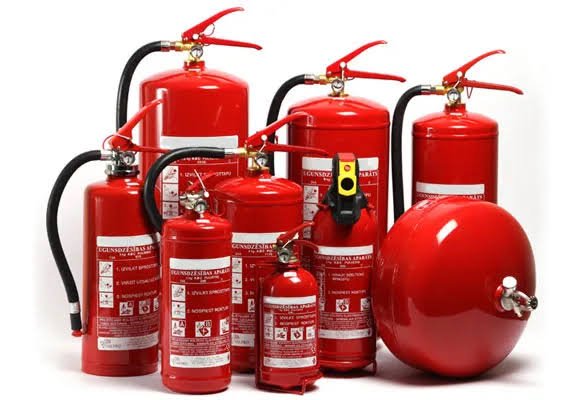
8. Choose and Position Fire Extinguishers Carefully
Fire extinguishers can be useful for certain small fires, but the correct type must be selected for the hazards present.
Different fires require different extinguishing methods. For example, water-based extinguishers are not appropriate for every electrical or flammable-liquid fire.
Business owners should seek advice from a qualified fire-safety professional when selecting equipment.
General extinguisher precautions
- Choose equipment suitable for the expected fire risks.
- Place it where people can find it.
- Keep it visible and accessible.
- Follow inspection and maintenance requirements.
- Train employees in safe use.
- Do not block access with stock or furniture.
Employees should only attempt to use an extinguisher when the fire is small, they are trained, and they have a safe escape route behind them.
If smoke is heavy, the fire is spreading, or the exit is threatened, leave immediately.
9. Keep Emergency Exits Clear
A fire-safety plan must provide a way for occupants to leave the building safely.
Blocked exits can delay evacuation and create additional danger.
Do not use emergency routes as storage areas.
Check these areas regularly:
- Main entrances and exits
- Emergency exit doors
- Corridors
- Stairways
- Passageways
- Exit signage
- Emergency lighting
- Access to fire doors
The Pakistan Building Code addresses means of egress and building evacuation as part of its fire-safety requirements.
Make sure employees know more than one way out where the building’s approved plan provides alternatives.
10. Create a Simple Business Fire-Emergency Plan
Every small business should have a clear plan explaining what employees must do if a fire occurs.
The plan should be easy to understand and suitable for the building.
Include the following:
- How to raise the alarm
- How to contact emergency services
- Primary and alternative escape routes
- The outdoor assembly point
- How to account for employees and visitors
- Who assists people needing help
- Who communicates with emergency responders
- What to do if an exit is blocked
Display the plan where employees can see it, and explain it to new staff.
Do not rely on one employee being present. Make sure more than one person understands the emergency procedure.
11. Train Employees and Practice Evacuation
Fire safety depends on people as well as equipment.
Employees should know how to recognize hazards, report problems, respond to alarms, and evacuate without delay.
Training should be appropriate to their roles and the risks of the workplace.
Employees should understand:
- What the fire alarm sounds like
- How to raise an alarm
- Where the exits are
- Where to meet outside
- How to report a fire
- When not to use an extinguisher
- How to help visitors evacuate
- How to report damaged equipment
Conduct evacuation drills as required by applicable rules and the business’s emergency plan. After each drill, review what worked and what needs improvement.
The Pakistan Building Code addresses emergency evacuation and relocation drills and related recordkeeping.
12. Consider Customers, Visitors, and People With Disabilities
Small businesses often focus on employees but forget that customers and visitors may also be inside during an emergency.
A safe evacuation plan should account for people who are unfamiliar with the building.
Some individuals may need assistance because of mobility, hearing, vision, or other access requirements.
Practical steps
- Keep routes wide and unobstructed.
- Use clear exit signs.
- Provide understandable instructions.
- Train staff to guide visitors.
- Plan assistance for people who may need it.
- Consider audible and visual alarm notification where appropriate.
The objective is to make sure that everyone in the premises can receive the warning and understand how to reach safety.
13. Protect Your Business During Closing Hours
A fire can start after employees leave.
Before closing, staff should follow a consistent shutdown routine suited to the business.
Closing checklist
- Turn off equipment that does not need to remain operating.
- Check cooking appliances.
- Remove combustible waste.
- Store flammable materials correctly.
- Report electrical faults.
- Keep exits and fire equipment accessible.
- Confirm that required fire protection systems remain operational.
- Secure the premises without obstructing emergency access.
Do not switch off or disable required fire alarm systems to avoid nuisance alarms.
If a system develops a fault, report it and arrange appropriate corrective action. Temporary safety measures may be needed according to the building’s requirements and the relevant authority’s instructions.
14. Prepare for Power Outages and Backup Equipment
Power interruptions can affect business operations and may create additional safety concerns.
Businesses using generators, UPS units, or battery systems should follow manufacturer instructions and ensure that equipment is installed and maintained appropriately.
Generator safety
- Operate generators outdoors in suitable locations.
- Keep exhaust away from doors, windows, and air intakes.
- Store fuel safely.
- Keep generators away from combustible materials.
- Inspect electrical connections.
- Avoid improvised wiring.
Never operate a fuel-powered generator inside an enclosed workspace or other area where dangerous exhaust gases can accumulate.
For UPS and battery equipment, follow the manufacturer’s guidance on ventilation, charging, electrical protection, and maintenance.
15. Review Fire Safety When Your Business Changes
A business may start with a small team and a limited amount of equipment, then expand over time.
New machinery, extra stock, additional floors, renovations, or changes in occupancy can affect fire risks and evacuation arrangements.
Whenever the business changes, review:
- Electrical capacity
- Storage arrangements
- Fire alarm coverage
- Escape routes
- Fire protection equipment
- Occupant numbers
- Emergency procedures
- Applicable approvals
The Pakistan Building Code includes responsibilities related to building use and changes in occupancy. Owners and occupants should consult the relevant authority when changes may affect fire-safety compliance.
16. Keep Fire-Safety Records Organized
Records help a business track maintenance, identify recurring problems, and demonstrate that safety responsibilities are being managed.
Maintain records appropriate to the building and applicable requirements.
These may include:
- Fire-safety inspections
- Alarm testing
- Equipment servicing
- Extinguisher maintenance
- Staff training
- Evacuation drills
- Reported faults
- Corrective actions
- Emergency plans
Keep records both accessible and protected from loss. The Pakistan Building Code addresses the retention and storage of fire-safety maintenance and inspection records, including keeping copies in different locations.
Small Business Fire Safety Checklist
Use this checklist as a practical starting point for reviewing your premises.
Prevention
- Electrical equipment is in good condition.
- Sockets are not overloaded.
- Combustible waste is removed regularly.
- Flammable materials are stored safely.
- Cooking and heating equipment is used properly.
- Smoking and open flames are controlled.
Detection and protection
- Suitable fire detection and alarms are installed where required.
- Alarm systems are inspected and maintained.
- Fire extinguishers are appropriate and accessible.
- Hydrants, hose reels, or sprinklers are maintained where installed.
- Fire doors are unobstructed.
- Emergency lighting and exit signs are checked.
Evacuation and training
- Escape routes are clear.
- Staff know how to raise the alarm.
- Emergency exits are understood.
- An assembly point is identified.
- Visitors can be guided to safety.
- Evacuation drills are carried out as required.
- Fire-safety records are maintained.
Fire Safety for Small Businesses in Pakistan
Pakistan’s Building Code of Pakistan – Fire Safety Provisions 2016 sets out fire and life-safety requirements for buildings and structures. It covers general safety responsibilities, fire protection, detection and alarm systems, means of egress, and related provisions. The Pakistan Engineering Council lists the Code among its building codes and standards.
The Code includes requirements for certain business occupancies based on factors such as building height and occupant numbers. It also provides for inspection, testing, and maintenance of fire alarm and detection systems according to relevant standards and the Authority Having Jurisdiction.
However, the specific requirements applicable to a small business can depend on its location, building type, occupancy, size, and other conditions. Business owners should check with the relevant building-control or fire-safety authority and obtain professional advice when designing or upgrading systems.
For information about fire protection equipment and solutions, you can visit Flame Defender.
Final Thoughts
Fire safety is a practical responsibility for every small business. It does not begin with buying equipment; it begins with understanding the risks inside the premises and taking consistent steps to reduce them.
Safe electrical practices, careful storage, good housekeeping, kitchen precautions, and clear emergency exits can help prevent common fire hazards. A suitable fire alarm system in Pakistan can provide early warning, while extinguishers, hydrants, emergency lighting, and other protection systems may support the wider safety strategy where appropriate.
The most important part is making sure that equipment is maintained and employees know what to do.
Prevent hazards, detect fires early, keep escape routes clear, maintain protection systems, and practice evacuation. These measures help create a safer environment for employees, customers, and the business itself.
FAQs
1. Why is fire safety important for small businesses?
Fire safety helps protect employees, customers, property, stock, equipment, and business operations. Prevention and emergency planning can reduce avoidable hazards and help people respond more safely if a fire occurs.
2. Is a fire alarm system required for every small business in Pakistan?
Not necessarily. Requirements depend on the building’s occupancy, height, size, layout, and applicable regulations. The Pakistan Building Code includes criteria for fire alarm and detection systems in specified business occupancies. Business owners should confirm the requirements with the relevant authority.
3. What fire protection equipment should a small business have?
The appropriate equipment depends on the hazards and building requirements. It may include fire alarms, smoke or heat detectors, extinguishers, emergency lighting, exit signs, fire doors, hose reels, hydrants, or sprinklers. A qualified professional can help determine what is suitable.
4. How can employees prepare for a fire emergency?
Employees should know how to raise the alarm, contact emergency services, identify escape routes, reach the assembly point, and assist visitors safely. Businesses should provide suitable training and conduct evacuation drills as required.
5. How often should a business inspect its fire-safety equipment?
Inspection, testing, and maintenance frequency depends on the equipment, applicable standards, manufacturer instructions, and requirements of the relevant authority. Businesses should follow the appropriate maintenance program and keep records of inspections, testing, faults, and repairs.