
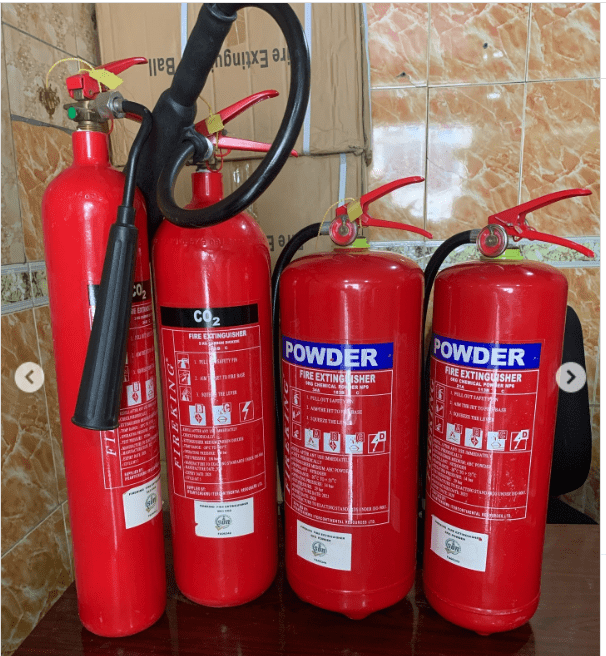
Fire safety is an important part of protecting your home and family. A small fire can develop quickly, particularly when it involves cooking oil, electrical equipment, gas appliances, or combustible household materials. Knowing how to respond calmly and having suitable fire safety equipment can help reduce risks and protect lives.
A fire extinguisher is one useful part of a household fire safety plan. It is designed to control certain small fires during their early stages, provided the extinguisher is appropriate for the fire and it is safe to use. However, an extinguisher cannot replace smoke alarms, safe evacuation, or professional emergency assistance.
In Pakistan, families living in houses, apartments, and shared residential buildings should understand the fire hazards around them. Electrical faults, overloaded sockets, cooking accidents, and unsafe storage of flammable materials can all contribute to household fire risks.
This guide explains the main types of fire extinguishers, how families can select and maintain them, and how they fit into a broader fire protection plan. It also explains why equipment such as a fire alarm system in Pakistan is an important consideration for homes and residential buildings.
1. Why Every Family Should Understand Fire Extinguishers
Many people recognise a fire extinguisher but do not know which type is suitable for different fires. Choosing the wrong extinguisher can make a dangerous situation worse. For example, using water on burning cooking oil or energised electrical equipment can create additional hazards.
Understanding fire extinguishers helps families make informed decisions before an emergency occurs. It also encourages people to recognise when a fire is too dangerous to tackle themselves.
A suitable extinguisher can be useful in locations such as:
- Kitchens, where cooking accidents may occur.
- Garages and storage areas containing combustible materials.
- Workshops with tools and electrical equipment.
- Residential buildings with shared facilities.
- Small offices or home-based businesses.
The correct type, size, rating, and placement depend on the hazards present. Families should consult the manufacturer’s instructions and, where necessary, a qualified fire safety professional.
The most important principle is that human safety always comes before property protection. If a fire spreads, produces heavy smoke, blocks an exit, or cannot be controlled immediately, everyone should evacuate and contact the local fire and rescue service.
2. Understanding the Different Types of Fire Extinguishers
Fire extinguishers contain different agents designed for particular fire hazards. The label identifies the types of fires for which an extinguisher is suitable. Families should read this information rather than selecting equipment based only on its appearance or price.
Water Fire Extinguishers
Water extinguishers are generally intended for ordinary combustible materials, including paper, wood, cloth, and some plastics.
They work mainly by cooling burning materials. However, standard water extinguishers are not suitable for fires involving energised electrical equipment, flammable liquids, or burning cooking oil.
Before selecting one, check whether it is approved for the specific hazards in the intended location.
Foam Fire Extinguishers
Foam extinguishers are commonly designed for certain fires involving ordinary combustible materials and flammable liquids.
The foam helps cover the fuel surface and suppress the fire. Nevertheless, suitability depends on the extinguisher’s rating and the material involved. Some foam formulations also have environmental considerations, so buyers should review product specifications and local requirements.
Never assume that every foam extinguisher is appropriate for every liquid or electrical hazard.
Dry Chemical Fire Extinguishers
Dry chemical extinguishers are widely used because certain models can handle multiple categories of fire.
A multipurpose model may be labelled for Class A, B, and C fires under common classification systems. These labels generally refer to ordinary combustibles, flammable liquids, and energised electrical equipment, respectively. Classification conventions can vary, so always follow the label used on the actual product.
Dry chemical extinguishers may be considered for residential settings where several different hazards exist. Their powder can, however, leave residue that requires cleanup and may affect sensitive equipment.
Carbon Dioxide (CO₂) Fire Extinguishers
Carbon dioxide extinguishers are commonly used for certain flammable-liquid and electrical-equipment fires. They leave little or no extinguishing residue, which can be useful around some electronic equipment.
However, CO₂ has limitations. Its effectiveness can be reduced by outdoor wind or strong air movement, and discharge in confined spaces requires particular caution because it can reduce the available oxygen.
Families should choose a CO₂ extinguisher only when it suits the identified risks and users understand its limitations.
Wet Chemical Fire Extinguishers
Wet chemical extinguishers are specifically designed for certain cooking-oil and fat fires, particularly those associated with commercial cooking appliances. Some models are also rated for other fire classes.
Cooking oil fires are especially dangerous because pouring water onto burning oil can cause the burning material to spread violently.
If a pan catches fire, do not carry it, do not pour water onto it, and do not attempt a risky intervention. If it is safe to do so, turn off the heat without reaching across the flames. Otherwise, leave the area, close the door behind you if possible, and call for emergency assistance.
For more information on extinguisher types, consult the National Fire Protection Association’s guide.
3. How to Choose the Right Fire Extinguisher for Your Home
Selecting an extinguisher should begin with identifying the hazards in the home. A product that works well in one room may be unsuitable for another.
Consider these factors before buying:
Identify the likely fire risks. Think about cooking equipment, electrical appliances, fuel storage, workshops, and other potential ignition sources.
Check the fire rating. Read the manufacturer’s label to confirm which fire classes the extinguisher is designed to handle.
Choose a manageable size. An extinguisher should be large enough for its intended purpose but also manageable for the adults expected to operate it. Heavier equipment is not automatically the best choice for every household.
Review product quality. Look for clear labelling, instructions, a traceable manufacturer or supplier, and relevant certification or conformity information.
Consider the installation location. The extinguisher should be accessible, visible, and positioned where it can be reached without moving towards a likely fire.
Seek professional advice where necessary. Homes with workshops, commercial kitchens, fuel storage, or other unusual hazards may need a more specific assessment.
In Pakistan, buyers should also consider applicable building requirements and local fire safety guidance. The Building Code of Pakistan: Fire Safety Provisions 2016 provides guidance on selecting, installing, and maintaining portable fire extinguishers. The requirements applicable to a particular property depend on the relevant regulations and authority.
4. Where Should Fire Extinguishers Be Placed?
Having an extinguisher is useful only if it can be reached safely when needed. Poor placement, locked storage, or objects blocking access can make equipment difficult to use during an emergency.
Common considerations include:
- Kitchen: Choose a suitable extinguisher for the cooking hazards, but do not place it where someone would have to pass close to a stove fire to reach it.
- Garage or workshop: Consider the presence of fuels, paints, tools, and electrical equipment when choosing equipment.
- Utility areas: Assess electrical panels, heating equipment, and other relevant hazards.
- Shared residential spaces: Follow the building’s fire safety plan and applicable installation requirements.
Extinguishers should be mounted or stored according to the manufacturer’s instructions and applicable standards. They should remain visible and accessible, while being protected from damage, excessive heat, moisture, or other unsuitable conditions.
Do not block corridors, stairs, or exits with fire equipment or other objects. A clear escape route is more important than trying to save belongings.
5. How to Use a Fire Extinguisher Safely
Every adult in the household should know where the fire safety equipment is located and understand its limitations. Reading instructions in advance is better than trying to learn them during an emergency.
A commonly taught method for operating compatible portable extinguishers is PASS:
- P — Pull: Pull the safety pin, following the device’s instructions.
- A — Aim: Aim towards the base of the fire.
- S — Squeeze: Squeeze the operating handle as directed.
- S — Sweep: Sweep the discharge across the base of the fire.
This method is not suitable for every device or situation, so the manufacturer’s instructions and any required training should take priority.
More importantly, PASS is not a reason to approach a dangerous fire. Before anyone considers using an extinguisher, other occupants should be alerted, emergency services should be contacted, and a safe escape route must remain available.
Only a small, contained fire should ever be considered for an extinguisher response, and only when the person is capable, appropriately trained, and confident that escape will remain possible. Children should not be expected to fight fires.
If the fire grows, smoke becomes heavy, the extinguisher fails to control it immediately, or there is any doubt about safety, stop and evacuate. Close doors behind you if this can be done without delay or risk, and stay outside.
The U.S. Fire Administration’s extinguisher guidance provides further information about safe decision-making, operating methods, and maintenance.
6. Fire Extinguisher Maintenance and Inspection
An extinguisher may become unreliable if it is damaged, loses pressure, or is not serviced correctly. Regular checks help families identify problems before an emergency occurs.
Follow the manufacturer’s inspection and maintenance schedule, as well as applicable local requirements.
Check the Pressure Indicator
If the model has a pressure gauge, confirm that its reading falls within the manufacturer’s recommended range. A gauge outside that range may indicate that professional attention is needed.
Not every extinguisher uses the same type of indicator, so follow the instructions for the particular model.
Inspect the Cylinder
Look for dents, corrosion, leakage, or other signs of damage. Check the hose, nozzle, handle, safety pin, and tamper seal where fitted. Do not attempt to repair a damaged cylinder yourself.
Keep Instructions Visible
Labels and operating instructions should be readable. If the label is missing or damaged, ask the supplier or a qualified service provider to identify the equipment and determine whether it remains suitable.
Arrange Professional Servicing
Some extinguishers require periodic servicing, testing, or recharging by qualified personnel. Others may need replacement when they can no longer be safely maintained.
Do not rely on an assumed universal expiry period. The required service interval depends on the extinguisher type, manufacturer, condition, and applicable standard.
Keep a Simple Record
Families, landlords, and property managers can record inspection dates and any service work. For shared buildings or businesses, a more formal maintenance schedule may be necessary.
The Pakistan fire safety provisions discuss extinguisher readiness, placement, selection, and servicing. Equipment should remain charged, operational, and in its designated location when not in use.
7. Why Fire Alarms Matter Alongside Extinguishers
Fire extinguishers and fire alarms perform different jobs. An extinguisher is intended to control certain fires, while a suitable alarm system warns people that a fire may be developing.
A fire may start when family members are asleep, in another room, or away from the source of the problem. Early warning can give occupants more time to evacuate and seek assistance.
A fire alarm system in Pakistan may be particularly relevant in apartment buildings, larger homes, commercial premises, schools, and other properties where the building’s design or applicable requirements call for detection and alarm equipment.
When assessing an alarm system, consider:
- Whether smoke or heat detection is appropriate for the area.
- Whether alarms can be heard throughout the occupied spaces.
- Whether equipment is installed according to its instructions.
- Whether backup power or other system features are needed.
- Whether regular testing and maintenance are arranged.
- Whether occupants know what to do when an alarm sounds.
Smoke alarms, building-wide fire alarm systems, and automatic suppression systems are not interchangeable. Their design depends on the property’s size, occupancy, layout, and applicable safety requirements.
For multi-storey residential buildings, owners and managers should consult qualified professionals and the relevant local authority to determine the appropriate arrangements. An extinguisher should never be treated as a replacement for required detection, alarm, or suppression equipment.
8. Common Fire Extinguisher Mistakes Families Should Avoid
Even good equipment can provide limited protection if it is misunderstood or neglected. Avoid these common mistakes:
Buying without checking the label: An extinguisher may not be suitable for the hazards present in the home.
Using water on the wrong type of fire: Water can be dangerous when used on burning cooking oil or energised electrical equipment.
Hiding equipment away: An extinguisher that is difficult to find or reach may be of little practical help during an emergency.
Ignoring maintenance: Damaged equipment or incorrect pressure readings should be assessed promptly.
Assuming every fire is manageable: Fires can spread rapidly and create dangerous smoke. Evacuation must take priority when conditions are unsafe.
Forgetting to plan an escape: Every household should know the available exits and agree on a safe outdoor meeting point.
Expecting children to operate equipment: Children should learn to recognise alarms, leave immediately, and tell a trusted adult or emergency responder about the danger. They should not be responsible for fighting fires.
Avoiding these mistakes makes fire protection more practical and helps families focus on the most important goal: getting everyone to safety.
9. Creating a Family Fire Safety Plan in Pakistan
A household fire safety plan should be simple enough for everyone to understand and practise.
Start by identifying two ways out of each commonly occupied room where possible. Keep exits and passageways clear, and agree on an outdoor meeting point away from the building.
Teach family members how to recognise an alarm and leave immediately when it sounds. Make sure everyone understands that they should not return inside to collect phones, documents, money, or other belongings.
Discuss who may need additional assistance during an evacuation, including young children, older family members, or people with mobility limitations. Plan assistance in advance without putting anyone at unnecessary risk.
Keep emergency contact information accessible. In Pakistan, confirm the appropriate fire and rescue service number for your city or province and ensure family members know how to contact it.
Households should also reduce preventable hazards by avoiding overloaded electrical sockets, arranging repairs for damaged wiring, keeping flammable materials away from ignition sources, and using cooking and heating equipment according to instructions.
For rented properties and apartment buildings, ask the landlord or building management about alarm arrangements, emergency exits, extinguishers, and evacuation procedures.
Families in Pakistan can use the national fire safety provisions as a reference, while checking the requirements applicable to their location and property type.
Conclusion
Fire extinguishers can be a valuable part of family fire protection when they are selected for the right hazards, maintained properly, and used only when conditions are safe. Understanding the differences between water, foam, dry chemical, carbon dioxide, and wet chemical extinguishers helps families make better decisions about their needs.
However, fire safety requires more than purchasing a single piece of equipment. Suitable alarms, clear escape routes, preventive habits, maintenance, and a rehearsed evacuation plan all contribute to a safer home.
For families in Pakistan, it is sensible to assess household risks and seek qualified guidance when choosing equipment or planning protection for larger properties. A suitable fire alarm system in Pakistan, combined with appropriate extinguishers and a clear emergency plan, can support earlier warning and a more organised response.
The best time to prepare is before an emergency happens. Review your home’s fire risks, check existing equipment, and make sure every family member knows how to get out safely.
Frequently Asked Questions (FAQs)
1. Which fire extinguisher is best for a home in Pakistan?
The appropriate extinguisher depends on the hazards in the home. A suitably rated multipurpose dry chemical extinguisher may cover several common fire classes, but cooking areas and other specialised risks may require different equipment. Read the product label and seek professional advice when needed.
2. Can a fire extinguisher be used on an electrical fire?
Only use an extinguisher specifically rated for the electrical hazard and follow its instructions. Never use a standard water extinguisher on energised electrical equipment. If the fire is spreading or there is any doubt about safety, evacuate and call for help.
3. How often should a fire extinguisher be checked?
Follow the manufacturer’s instructions and the maintenance schedule required by applicable standards. Regular visual checks can identify obvious damage or pressure problems, while servicing and testing should be carried out at the required intervals by qualified personnel.
4. Is a fire extinguisher enough to protect a family from fire?
No. An extinguisher is only one component of a broader fire safety plan. Appropriate smoke alarms or fire alarm systems, clear escape routes, preventive measures, and a family evacuation plan are also important. People should evacuate rather than attempt to fight an unsafe fire.
5. Why is a fire alarm system important in Pakistan?
A suitable alarm system can warn occupants about a developing fire and help them respond sooner. The appropriate system depends on the property’s design, occupancy, and applicable local requirements. Larger residential buildings and commercial properties may need professional assessment to determine suitable fire detection and alarm arrangements.