
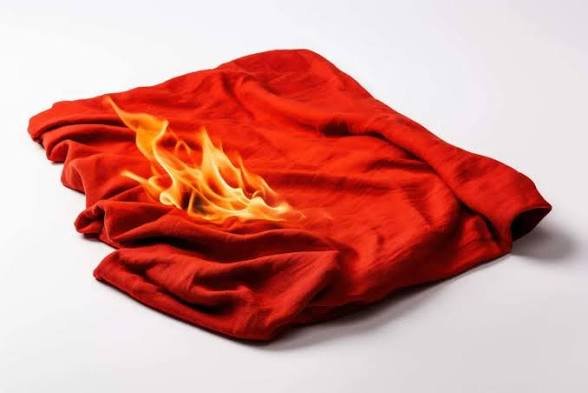
Fire safety at home is about preparing for emergencies before they happen. Kitchens, electrical appliances, heating equipment, and other household items can create fire risks if they are damaged, misused, or left unattended. While prevention should always be the first priority, having appropriate safety equipment can provide an additional layer of protection.
A fire blanket is one such piece of equipment. It is a specially designed fire-resistant blanket intended for certain small fires and for smothering flames in specific situations. It should be considered part of a wider home fire-safety plan rather than a replacement for smoke alarms, fire alarms, fire extinguishers, safe evacuation, or professional emergency assistance.
Pakistan’s Building Code of Pakistan Fire Safety Provisions 2016 emphasizes that buildings should be equipped, maintained, and operated to provide reasonable levels of life safety and property protection from fire hazards. It also places responsibilities on building owners, operators, lessees, and occupants concerning applicable fire-safety provisions.
What Is a Fire Blanket?
A fire blanket is a sheet of fire-resistant material designed for use in certain small, contained fire situations. Depending on its design and certification, it can help smother flames by covering the burning material and limiting the supply of oxygen.
Fire blankets are commonly associated with kitchen fire safety because cooking areas can contain heat sources and combustible materials. They may also be used in other appropriate situations covered by the manufacturer’s instructions.
The important point is that a fire blanket is not a universal solution for every type or size of fire.
If a fire is growing rapidly, producing significant smoke, spreading beyond a small area, or preventing a safe escape route, people should leave the area and contact emergency services rather than attempting to deal with it themselves.
Why Should Homes Have Fire Blankets?
A fire can develop quickly, especially in a kitchen or other area where heat-producing equipment is present. Having suitable safety equipment nearby can support a household’s overall emergency-preparedness plan.
A fire blanket can be useful because it:
- Takes up relatively little space
- Does not require electricity
- Can provide an additional fire-safety option
- Can be stored near appropriate risk areas
- May be useful for certain small, contained fires
- Can complement other fire-safety equipment
However, the blanket should be selected from a reputable source and used only according to its instructions.
The goal is not to encourage people to approach fires. Instead, a household should have a clear plan for recognizing when evacuation is the safest option.
Fire Blankets and Kitchen Safety
The kitchen is one of the areas where fire-safety planning deserves particular attention.
Cooking involves heat, electrical appliances, oils, and other materials that can become involved in a fire. Good kitchen safety therefore combines prevention with suitable detection and emergency equipment.
A fire blanket may form one part of this arrangement.
Other important measures include:
- Keeping cooking areas clean
- Maintaining electrical appliances
- Avoiding damaged electrical cords
- Keeping combustible items away from heat sources
- Staying attentive while cooking
- Maintaining suitable smoke or fire detection
- Keeping exits accessible
- Knowing how to evacuate safely
A fire blanket should never be treated as permission to leave cooking equipment unattended.
Fire Blankets Are Not a Replacement for Fire Alarms
One of the most important differences between a fire blanket and an alarm system is their purpose.
A blanket is a manual piece of equipment that may be used in certain small fire situations. A fire alarm system is designed to detect and notify people about fire-related conditions.
A properly designed Fire alarm system in Pakistan can provide early warning through components such as smoke detectors, heat detectors, control panels, and notification devices. Flame Defender describes conventional and addressable fire alarm solutions for residential, commercial, and industrial properties in Pakistan.
Early warning is particularly important because people may be asleep or located in another part of a building when a fire begins.
For this reason, homes should consider fire detection and alarms as a fundamental part of fire preparedness, while a fire blanket can be an additional safety measure.
Choosing a Suitable Fire Blanket
Not every blanket sold as a fire blanket is necessarily appropriate for every application.
When selecting one, homeowners should consider:
- Product certification or recognized testing
- Manufacturer information
- Intended applications
- Appropriate size
- Material and construction
- Packaging and storage instructions
- Clear usage instructions
- Product condition
- Recommended replacement arrangements
The Pakistan Building Code states that listed, approved, and labeled equipment should be installed and used according to its listing limitations and the manufacturer’s instructions.
This principle is useful when selecting fire-safety equipment for a home.
Where Should a Fire Blanket Be Stored?
A fire blanket should be stored in an accessible location appropriate to its intended use.
In a home, this may mean keeping it in or near a kitchen area where it can be reached without placing someone directly in the path of a potential fire.
It should not be hidden behind large objects or stored somewhere that becomes inaccessible during an emergency.
At the same time, the storage position should be chosen carefully. Safety equipment should be accessible without requiring a person to move toward an active fire unnecessarily.
The household should know where the blanket is located before an emergency occurs.
Why Accessibility Matters
Having safety equipment somewhere inside a home does not necessarily mean it will be useful during an emergency.
If a fire blanket is buried inside a crowded cabinet or placed behind other objects, finding it may become difficult.
A household should therefore decide where safety equipment belongs and keep that location consistent.
Important equipment can include:
- Smoke alarms
- Fire alarm components
- Fire blankets
- Suitable fire extinguishers
- Emergency lighting where appropriate
- Emergency contact information
Each household should follow the manufacturer’s storage instructions and maintain clear access to its safety equipment.
Understanding the Limits of a Fire Blanket
Fire blankets have limitations.
They are not designed to control every type of fire, and their suitability depends on the product, fire conditions, and manufacturer’s instructions.
A fire that is already large or spreading can create serious risks. Smoke can also become dangerous even when flames appear relatively small.
A household should not attempt to use a fire blanket if doing so would place someone between the fire and an escape route.
The basic rule is simple: people are more important than property.
If there is uncertainty about whether a situation can be handled safely, the priority should be evacuation and contacting emergency services.
Fire Blankets and Electrical Fires
Electrical equipment can present special hazards. Damaged wiring, overloaded circuits, defective appliances, and other electrical problems can contribute to fires.
A fire blanket should not be assumed to be suitable for every electrical-fire situation. Product instructions should always be checked, and people should avoid taking unnecessary risks around energized electrical equipment.
Electrical safety should focus primarily on prevention.
Homeowners can reduce risks by:
- Replacing damaged cords
- Avoiding overloaded outlets
- Using electrical equipment according to instructions
- Keeping electrical devices away from water
- Having serious wiring problems assessed by qualified professionals
- Avoiding unsafe modifications
A reliable Fire alarm system in Pakistan can provide an additional layer of early warning when a fire-related condition is detected. Flame Defender provides fire alarm installation, testing, maintenance, and upgrade services for different types of properties.
Fire Blankets and Cooking Fires
Cooking-related fires require particular caution because the correct response depends on the type and circumstances of the fire.
People should not experiment with different methods during an emergency. Instead, they should follow established safety guidance and the manufacturer’s instructions for their equipment.
A fire blanket should only be used when it is specifically appropriate for the situation and when doing so does not expose the person to unnecessary danger.
If the fire is spreading, producing heavy smoke, or making the room unsafe, evacuation should take priority.
Do Not Treat a Fire Blanket Like a Toy
Fire-safety equipment should never be used for experimentation or demonstrations without appropriate supervision and controlled conditions.
Children should not be encouraged to approach a fire or practice using emergency equipment around real flames.
Instead, younger household members can learn basic safety principles such as:
- Recognizing smoke alarms
- Knowing emergency exits
- Understanding that fire is dangerous
- Knowing how to call for help
- Following adults’ evacuation instructions
- Never playing with matches, lighters, or other ignition sources
Fire safety education should focus on prevention, early warning, and safe evacuation.
Fire Detection Should Come First
A strong home fire-safety strategy begins with preventing fires and detecting them early.
Smoke alarms can alert occupants to smoke, while more advanced fire alarm arrangements may use multiple detection technologies.
A Fire alarm system in Pakistan can be designed according to the property’s size, layout, occupancy, and applicable requirements. Flame Defender lists smoke detectors, heat sensors, smart control panels, conventional systems, addressable systems, wireless systems, and aspirating detection among its fire alarm offerings.
The appropriate arrangement depends on the building and should be determined using applicable standards and professional advice where necessary.
Maintenance Is Important
Fire-safety equipment should not simply be purchased and forgotten.
Fire blankets should be kept in the condition specified by their manufacturer. If a blanket becomes damaged, contaminated, or otherwise unsuitable, it should be replaced according to the manufacturer’s guidance.
Fire alarm systems also require appropriate testing and maintenance.
Pakistan’s Building Code requires owners, operators, occupants, or other persons in control of buildings to maintain records of maintenance, inspections, and testing of fire-protection systems, fire alarm systems, smoke-control systems, emergency drills, emergency action plans, emergency power, and other equipment as required by the authority having jurisdiction.
This highlights the broader principle that fire safety is an ongoing responsibility.
Combine Fire Blankets With Other Safety Measures
A fire blanket is most useful when it forms part of a wider safety plan.
A household’s fire-safety strategy can include:
Fire Prevention
Reduce the chance of fire by maintaining appliances, avoiding unsafe electrical practices, and keeping combustible materials away from heat sources.
Early Detection
Smoke alarms and other detection equipment can provide warning before occupants become aware of a developing fire.
Notification
A Fire alarm system in Pakistan can provide audible or visual alerts, depending on the system design. These alerts can help occupants recognize that an emergency may be occurring.
Safe Evacuation
Everyone in the household should know how to leave the building and where to gather at a safe location.
Appropriate Fire Equipment
Suitable equipment, such as fire blankets and properly selected extinguishers, can provide additional protection when used within their intended limits.
Professional Assistance
Emergency services and qualified fire-safety professionals should handle situations beyond the capabilities of occupants.
Fire Blankets in Apartments and Houses
Different homes have different fire risks.
A small apartment may have a compact kitchen and fewer occupants, while a large house may have several floors, bedrooms, garages, kitchens, and electrical systems.
The fire-safety plan should take the layout into account.
Multi-story homes should pay particular attention to escape routes. Bedrooms should have suitable smoke detection, and everyone should know how to leave the building if an alarm sounds.
A fire blanket may be useful in a kitchen, but it should never be considered a substitute for proper escape planning.
Fire Safety for Families
Every household can benefit from discussing what to do if a fire occurs.
Families can decide:
- Which exits can be used
- Where to meet outside
- Who will contact emergency services
- How to respond when an alarm sounds
- How to help younger children or people who need assistance
- Where safety equipment is located
These decisions are easier to make before an emergency than during one.
The household should also understand that evacuation is generally the priority when a fire cannot be safely and immediately controlled.
Professional Fire Safety Services
Some fire-safety systems require professional design, installation, inspection, or maintenance.
Pakistan Engineering Council identifies ME02 as a specialized category covering the installation, commissioning, and maintenance of fire detection, alarm, and suppression systems and related equipment.
For homes and other properties requiring a more comprehensive system, professional assessment can help identify suitable detection and protection measures.
Flame Defender provides fire alarm installation and maintenance services for residential, commercial, and industrial properties in Pakistan.
Fire Safety Checklist for Homes
A simple home fire-safety review can include:
- Are smoke alarms installed where appropriate?
- Are alarms tested and maintained according to their instructions?
- Is the kitchen kept free from unnecessary combustible materials?
- Are electrical cords and appliances in good condition?
- Are emergency exits accessible?
- Does everyone know the household evacuation plan?
- Is there a safe meeting point outside?
- Is appropriate fire-safety equipment accessible?
- Is the fire blanket stored according to its manufacturer’s instructions?
- Are household members aware that they should evacuate if a fire becomes unsafe to approach?
This checklist is a general safety guide and does not replace local requirements or professional advice.
Why a Layered Fire-Safety Plan Works Better
Fire safety works best when several protective measures support one another.
Prevention reduces the chance of a fire starting. Detection provides early warning. Alarms notify occupants. Emergency exits provide a way out. Fire blankets and other suitable equipment may provide an additional option for certain small incidents. Professional emergency responders provide assistance when an incident exceeds the capabilities of occupants.
This layered approach is consistent with the broader principle in Pakistan’s Fire Safety Provisions that buildings should be equipped and maintained to provide reasonable levels of life safety and property protection.
Final Thoughts
A fire blanket can be a useful addition to a home’s fire-safety equipment, particularly when stored appropriately and used only for situations covered by the manufacturer’s instructions. However, it should never create a false sense of security.
The most important priorities are preventing fires, detecting them early, keeping escape routes accessible, and making sure everyone knows how to evacuate safely.
A Fire alarm system in Pakistan can provide an important layer of early warning, while fire blankets and other appropriate equipment can complement a broader safety plan. Regular maintenance and professional assessment are also important for keeping fire-protection systems dependable.
For homeowners, the best approach is to think about fire safety as a complete system rather than relying on one product. Prevention, detection, warning, evacuation, suitable equipment, and professional emergency assistance all have their own roles.
FAQs
1. What is a fire blanket used for?
A fire blanket is designed for certain small, contained fire situations and works by covering the fire and restricting oxygen. It should only be used when appropriate for the situation and according to the manufacturer’s instructions.
2. Is a fire blanket a replacement for a fire alarm?
No. A fire blanket and a fire alarm have different purposes. A fire blanket is manual equipment for specific situations, while a fire alarm provides warning when a fire-related condition is detected. Both can form part of a wider fire-safety plan.
3. Where should a fire blanket be kept?
It should be stored in an accessible location appropriate for its intended use, such as a suitable area near the kitchen, while avoiding locations that could become inaccessible during a fire. Always follow the manufacturer’s storage instructions.
4. Can a fire blanket be used for every type of fire?
No. Its suitability depends on the type and size of the fire and the manufacturer’s instructions. If a fire is spreading, producing significant smoke, or making escape difficult, people should evacuate and contact emergency services rather than attempting to control it.
5. Why is a fire alarm system important for homes in Pakistan?
A properly designed Fire alarm system in Pakistan can provide early warning of smoke, heat, or other fire-related conditions, giving occupants valuable time to respond and evacuate. The appropriate system depends on the home’s size, layout, risks, and applicable requirements. Flame Defender provides fire alarm installation and maintenance services for residential and other properties in Pakistan.