
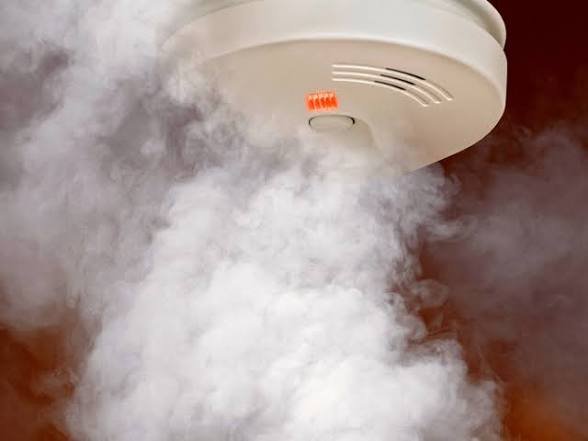
Home is supposed to be one of the safest places for a family. However, fires can happen unexpectedly because of electrical faults, cooking equipment, heating appliances, damaged wiring, gas-related problems, or other ignition sources. A small problem can develop into a dangerous situation if it is not detected early.
This is why fire detection deserves an important place in every home’s safety plan.
A fire alarm system can detect signs of a developing fire and alert people inside the property. Depending on the type of system, detection may involve smoke, heat, or other indicators associated with fire. The Building Code of Pakistan Fire Safety Provisions 2016 recognizes different types of automatic fire detectors, including smoke, heat, flame, gas, and combination detectors.
For homeowners in Pakistan, understanding how fire alarms work, why they matter, and how they fit into a wider emergency plan can help families prepare more effectively.
Why Early Fire Detection Matters
One of the biggest challenges during a home fire is that people may not immediately know that something is wrong.
A fire could start in a kitchen while someone is in another part of the house. It could begin because of an electrical problem in an area that is not occupied. At night, family members may be asleep and unable to notice smoke or unusual smells quickly.
A functioning alarm can provide an important warning when smoke, heat, or another monitored fire condition is detected.
This early warning can give occupants more time to recognize the emergency, leave the building, and contact emergency services.
The value of early detection is particularly important at night. People who are sleeping may not notice a developing fire until conditions have already become dangerous.
A fire alarm system in Pakistan can therefore form an important part of a home’s overall fire-safety strategy, although the exact type of detection appropriate for a property depends on its size, layout, occupancy, risks, and applicable requirements.
Common Causes of Home Fires
Understanding common fire risks is just as important as installing detection equipment.
Homes can contain many potential sources of ignition. Some risks are associated with everyday activities and may be overlooked because they seem normal.
Common areas requiring attention include:
Electrical Equipment
Damaged cables, faulty appliances, overloaded outlets, and other electrical problems can create fire hazards.
Families should not ignore signs such as damaged wiring, unusual overheating, burning smells, sparks, or repeatedly malfunctioning electrical equipment. Electrical problems should be assessed by appropriately qualified professionals.
Cooking
Cooking is another important area of home fire safety.
Pots, pans, cooking appliances, oils, and other materials can become dangerous if a cooking fire develops. Families should maintain safe cooking habits and avoid leaving cooking activities unattended.
Heating Equipment
Portable heaters and other heating equipment can become hazardous if used improperly or placed too close to combustible materials.
Heating appliances should be used according to their manufacturer’s instructions and kept in suitable locations.
Generators and Electrical Backup Equipment
Generators and other backup electrical equipment require appropriate installation, ventilation, fuel management, and maintenance. Poorly managed equipment can create both fire and other safety hazards.
Candles and Open Flames
Candles and other open flames can ignite nearby combustible materials. They should be treated as potential ignition sources rather than ordinary decorative objects.
Reducing these hazards is the first layer of protection. Detection provides another layer when prevention alone is not enough.
What Does a Fire Alarm System Do?
A fire alarm system is designed to detect a potential fire condition and provide an alert.
The exact components depend on the type and scale of the system.
A system may include:
- Smoke detectors
- Heat detectors
- Manual alarm devices
- Control panels
- Audible alarm devices
- Visual notification devices
- Power supplies
- Backup power
- Monitoring or communication components where applicable
The Pakistan Engineering Council’s fire-safety provisions recognize several categories of automatic fire detectors, including smoke and heat detectors as well as other specialized detection technologies.
Not every home needs the same arrangement.
A small residential property may have a relatively straightforward detection setup, while a larger residence or multi-level property may require a more comprehensive system.
The important point is that the system should be appropriate for the building rather than selected solely according to price.
Why Every Home Benefits From Fire Detection
There are several reasons fire detection is an important part of household preparedness.
1. It Provides an Early Warning
The most obvious benefit is notification.
If a fire starts away from the people who are currently in the room, an alarm can draw attention to the developing emergency.
This is especially important when people are sleeping or when different family members are spread throughout a larger property.
2. It Supports Evacuation
An alarm does not put out a fire, but it can alert occupants that they need to respond.
Once an alarm sounds, people should follow their household emergency plan and leave the building when necessary.
Fire alarms therefore work together with clear escape routes and an evacuation plan.
3. It Helps Families Prepare
Knowing that the home has a functioning alarm system can encourage families to take other parts of fire safety seriously.
For example, a household can combine fire detection with:
- Clear escape routes
- A family meeting point
- Electrical safety
- Safe cooking practices
- Appropriate fire-safety equipment
- Emergency contact information
- Regular maintenance
This creates a layered approach instead of relying on a single safety measure.
4. It Can Be Particularly Important at Night
People may not notice smoke or a developing fire while asleep.
An audible warning can alert sleeping occupants to an emergency that they otherwise might not recognize immediately.
This makes reliable detection particularly valuable in bedrooms and other areas where people spend extended periods.
Choosing the Right Fire Alarm Arrangement
There is no universal fire alarm system that is suitable for every home.
The appropriate arrangement depends on several factors.
Property Size
A small house and a large multi-storey residence may have very different detection requirements.
Building Layout
The number of rooms, floors, stairways, corridors, and enclosed spaces can influence how detection and notification should be arranged.
Occupancy
The number of people living in the home and their individual needs can affect emergency planning.
For example, households may need to consider young children, older family members, or people who may need additional assistance during an evacuation.
Fire Risks
The locations of kitchens, electrical equipment, heating appliances, generators, storage areas, and other potential hazards should be considered when planning detection.
Maintenance Requirements
Homeowners should consider not only the initial installation but also how the system will be tested, maintained, repaired, and eventually upgraded.
Flame Defender describes residential fire alarm solutions involving components such as smoke detectors, heat sensors, control panels, and notification equipment. It also emphasizes that system selection should take account of property characteristics and that maintenance is an important part of reliability.
Standalone Alarms and Larger Systems
Different homes can use different approaches to fire detection.
Standalone smoke alarms can provide basic detection for suitable residential situations.
Larger properties may require a connected fire alarm arrangement with multiple detectors, a central control panel, notification devices, and other components.
The choice should not simply be based on which option is cheapest.
A professional assessment can help determine what type of detection is appropriate for a particular property.
The Building Code of Pakistan provides a broader framework for fire detection and alarm systems in applicable buildings, but requirements can vary according to building type, occupancy, design, and other factors.
Installation Is Only the Beginning
One common misunderstanding is that once a fire alarm has been installed, it can simply be forgotten.
That is not a good approach.
Like other safety equipment, fire alarms need appropriate attention after installation.
Maintenance can involve checking:
- Detectors
- Alarm notification devices
- Control panels
- Power supplies
- Backup batteries where applicable
- Wiring and connections
- Fault indicators
- General system condition
Flame Defender’s recent home fire-safety guidance emphasizes that fire-protection equipment should be inspected and maintained rather than purchased and forgotten. It also notes that Pakistan’s fire-safety provisions cover design, installation, maintenance, repair, servicing, and testing of fire-protection systems and equipment.
The exact inspection and testing schedule should follow the equipment manufacturer’s instructions and applicable requirements.
Never Ignore Alarm Faults
A recurring fault or warning indicator should not simply become part of the background.
If a system repeatedly develops faults or false alarms, the underlying issue should be investigated by appropriately qualified personnel.
Simply disabling an alarm because it produces unwanted alerts can create a serious safety weakness.
The purpose of maintenance is to ensure that the system remains ready to provide warning when it is genuinely needed.
Reliable detection requires both appropriate equipment and responsible maintenance.
Fire Alarms Do Not Replace an Evacuation Plan
Another important point is that an alarm is only one part of home fire safety.
Families should also know how they will leave the property.
A basic home emergency plan can identify:
- Primary exit routes
- Alternative exits
- Stairways
- A safe outdoor meeting location
- Family members who may need assistance
- Emergency contact information
Escape routes should remain accessible.
The Building Code of Pakistan emphasizes safe means of egress and unobstructed escape routes as part of fire and life safety.
Everyone in the household should understand that when an alarm indicates a fire emergency, they should follow the established evacuation plan rather than stopping to collect belongings.
Teaching Children About Fire Alarms
Children should understand that a fire alarm is a safety warning, not something to ignore.
Parents and guardians can explain in simple language:
- What the alarm sounds like
- Why the alarm must be taken seriously
- Where to go during an emergency
- Which exits can be used
- Where the family meeting point is
- Why nobody should hide during an emergency
Children should not be expected to handle technical fire-protection equipment themselves.
The goal is simply to help them recognize the warning and follow the family’s emergency plan.
Flame Defender’s home fire-safety guidance similarly emphasizes age-appropriate fire education, evacuation planning, and taking fire alarms seriously.
Fire Alarm Systems and Electrical Safety
Electrical safety deserves special attention because electrical problems are among the hazards that can contribute to residential fires.
Families should regularly look for obvious warning signs, including:
- Damaged cables
- Broken plugs
- Unusual overheating
- Repeated circuit interruptions
- Burning smells
- Sparks
- Poorly maintained electrical equipment
Electrical repairs should be carried out by appropriately qualified professionals.
A fire alarm does not prevent an electrical fault. Instead, detection can provide another layer of protection if a fire develops.
This distinction is important.
Prevention reduces hazards.
Detection provides warning.
Evacuation gets people away from danger.
A complete fire-safety approach uses these layers together.
What Happens When the Power Goes Out?
Power reliability can be an important consideration when selecting and maintaining a fire alarm system.
Some systems include backup power so that the alarm can continue operating during a power interruption, depending on the design.
Backup arrangements should be maintained and tested according to the system’s requirements.
Flame Defender’s information on fire-protection systems also highlights the importance of backup power for systems that need to continue functioning when the primary electrical supply is unavailable.
Homeowners should ask qualified professionals about the backup arrangements appropriate for their particular system rather than assuming every system operates in exactly the same way.
A Simple Home Fire-Safety Checklist
A household can use the following points as a starting point for reviewing fire safety:
- Fire detection equipment is installed where appropriate.
- Alarm devices are kept in suitable working condition.
- Fault indications are investigated.
- Smoke and heat detection equipment is maintained according to requirements.
- Escape routes are kept clear.
- Family members know the emergency plan.
- Children understand what the alarm means.
- Electrical equipment is regularly checked for obvious damage.
- Cooking areas are kept appropriately managed.
- Heating equipment is used safely.
- Combustible materials are stored responsibly.
- Emergency contact information is accessible.
- The family has a safe outdoor meeting point.
- Fire-safety equipment is inspected and maintained as appropriate.
This checklist is a general starting point and does not replace a professional assessment where one is required.
Why Maintenance Matters
A fire alarm can remain unused for months or years. That can create a false sense of security.
A homeowner may assume that because the alarm worked previously, it will automatically work during the next emergency.
However, equipment can experience ageing, battery depletion, environmental effects, electrical faults, physical damage, or other problems.
Regular maintenance helps identify these issues.
The Building Code of Pakistan Fire Safety Provisions 2016 includes provisions related to inspection, testing, maintenance, and servicing of fire-protection systems and equipment.
For homeowners, the basic principle is simple: fire-safety equipment should be treated as safety equipment, not as a one-time purchase.
Fire Alarm Systems in Pakistan
The need for appropriate fire detection is relevant across Pakistan because homes vary greatly in size, construction, layout, occupancy, and surrounding conditions.
A suitable fire alarm system in Pakistan should be considered according to the specific property rather than assuming that one design will work equally well everywhere.
Factors such as building size, number of floors, room arrangement, cooking areas, electrical equipment, occupancy, and applicable requirements can influence the appropriate solution.
Professional fire-safety providers can assess a property and help determine suitable detection and notification arrangements.
Flame Defender states that it provides fire alarm installation, maintenance, testing, and upgrade services for residential, commercial, and industrial properties in Pakistan.
Creating a Complete Home Fire-Safety Strategy
A home fire alarm should not operate alone.
A stronger approach combines several layers:
Prevention
Reduce common hazards involving electricity, cooking, heating, open flames, and combustible materials.
Detection
Use appropriate smoke, heat, or other fire-detection equipment for the property.
Notification
Make sure occupants can recognize an alarm and understand what it means.
Evacuation
Keep escape routes accessible and establish a family meeting point.
Maintenance
Inspect and maintain fire-safety equipment according to applicable requirements and manufacturer guidance.
Education
Teach household members, including children, basic fire-safety behavior appropriate for their age.
This layered approach is important because no single safety measure can address every possible fire situation.
Conclusion
Every home deserves serious attention to fire detection because a fire can develop unexpectedly and may not always be noticed immediately.
A properly selected and maintained alarm can provide early warning when smoke, heat, or another monitored fire condition is detected. That warning can support a household’s emergency response and evacuation plan.
However, installing an alarm should not be viewed as the end of fire safety. Prevention, electrical safety, safe cooking practices, clear escape routes, household education, and regular maintenance are equally important parts of a complete strategy.
For homeowners considering a fire alarm system in Pakistan, the right solution depends on the property’s size, layout, occupancy, risks, and applicable requirements. Professional assessment can help determine what type of detection and notification arrangement is appropriate.
For more information about residential fire-safety and fire-alarm solutions, visit Flame Defender.
Frequently Asked Questions
1. Why does every home need a fire alarm?
A fire alarm can provide an early warning when smoke, heat, or another monitored fire condition is detected. This can help occupants recognize an emergency and follow their evacuation plan.
2. Is a fire alarm enough to protect a home?
No. A fire alarm is one layer of protection. It should work alongside fire prevention, electrical safety, clear escape routes, emergency planning, and appropriate maintenance.
3. What type of fire alarm is suitable for a home in Pakistan?
There is no single solution for every property. The appropriate arrangement depends on the home’s size, layout, occupancy, potential hazards, and applicable safety requirements.
4. Do home fire alarm systems require maintenance?
Yes. Fire alarms should receive appropriate inspection, testing, and maintenance according to the manufacturer’s instructions and applicable requirements. Batteries, detectors, control equipment, notification devices, and other components may require attention.
5. What should a family do when the fire alarm sounds?
Treat the alarm seriously. Follow the household evacuation plan, use a safe available exit, move to the designated meeting location, and contact the appropriate emergency services. People should not delay their evacuation to collect belongings or investigate an unsafe fire situation.