
Shopping malls are busy public places where thousands of people may visit every day. They contain retail stores, restaurants, food courts, cinemas, entertainment areas, offices, storage rooms, and parking facilities. Because these buildings accommodate large numbers of visitors and employees, fire safety must be a major priority.
A fire emergency in a shopping mall can create serious challenges. Visitors may be unfamiliar with the building layout, children may become separated from their families, and crowded corridors can make evacuation more difficult. Smoke, electrical faults, cooking activities, storage materials, and equipment failures can all contribute to potential fire hazards.
Mall fire safety involves much more than installing fire extinguishers. It requires a coordinated system of prevention, early detection, emergency warnings, evacuation planning, staff training, and regular maintenance. Every part of the building should have suitable protection based on its design and activities.
In Pakistan, shopping centres vary in size, construction, occupancy, and facilities. Therefore, their fire safety arrangements should be planned according to the specific risks of each property and applicable local requirements.
This article explains the importance of mall fire safety, common fire hazards, the role of detection systems, emergency procedures, maintenance responsibilities, and practical ways to create safer shopping environments.
What Is Mall Fire Safety?
Mall fire safety refers to the measures used to prevent fires, detect emergencies, warn occupants, and support safe evacuation in shopping centres.
These measures include physical equipment, building design, staff responsibilities, visitor awareness, and emergency management procedures.
A complete mall fire safety arrangement may include:
- Smoke and heat detection systems.
- Fire alarm and warning equipment.
- Suitable fire extinguishers.
- Automatic sprinkler systems where required.
- Emergency lighting.
- Clearly marked exit routes.
- Fire-resistant building components.
- Fire safety training.
- Regular inspections and maintenance.
- Emergency evacuation plans.
Each measure has a specific purpose. Together, they help building managers reduce fire risks and prepare occupants for emergencies.
Why Is Fire Safety Important in Shopping Malls?
Shopping malls contain many different activities within one building. A restaurant may use commercial cooking equipment, a retail store may contain large quantities of packaging, and an entertainment area may have electrical equipment and crowded seating.
These different activities create a range of fire safety challenges.
1. Protecting Visitors and Employees
The most important purpose of mall fire safety is protecting human life.
Visitors may include children, elderly people, people with disabilities, and individuals who are unfamiliar with emergency exits. Employees may also be responsible for assisting customers during an evacuation.
Clear warnings, accessible escape routes, and trained staff can help people respond more effectively.
2. Reducing Property Damage
A fire can damage shops, equipment, stock, furniture, electrical installations, and building structures.
Suitable prevention and protection measures can reduce the potential impact of an incident and support safer business operations.
3. Maintaining Business Continuity
A serious fire incident may force a shopping centre to close temporarily or permanently.
This can affect shop owners, employees, suppliers, service providers, and customers.
Effective fire safety planning helps reduce avoidable risks and supports the continued operation of the property.
4. Supporting Emergency Responders
A well-managed mall should have organised emergency procedures, accessible building information, and suitable fire protection arrangements.
These measures can help emergency responders understand the property and manage an incident more effectively.
5. Meeting Safety Responsibilities
Mall owners and management teams should understand the fire safety requirements that apply to their buildings.
Professional assessments, suitable equipment, maintenance records, and staff training help demonstrate that safety responsibilities are being taken seriously.
Common Fire Hazards in Shopping Malls
Understanding common hazards is an important part of developing an effective fire safety plan.
Electrical Equipment and Installations
Shopping malls depend on electrical systems for lighting, escalators, lifts, air conditioning, computers, signs, security equipment, and retail operations.
Damaged cables, overloaded equipment, unsuitable installations, and poorly maintained electrical systems may increase fire risks.
Electrical systems should be installed, inspected, and maintained by qualified professionals. Employees should report unusual smells, visible damage, or signs of overheating rather than attempting repairs.
Restaurants and Food Courts
Food courts and restaurants may use cooking appliances, heating equipment, and electrical systems throughout the day.
Cooking areas require suitable fire protection arrangements based on their equipment and activities.
Commercial kitchens should have appropriate maintenance procedures, suitable extinguishing equipment, and trained staff who understand emergency responsibilities.
Storage Areas
Shopping centres often have storage rooms containing cardboard boxes, packaging, textiles, cleaning materials, and other combustible products.
Poor storage practices can increase fire risks and obstruct access to safety equipment.
Storage areas should remain organised, with suitable separation between combustible materials and potential ignition sources.
Decorative Materials
Temporary decorations, display materials, banners, and seasonal installations may contribute to fire risks if unsuitable products are used.
Mall management should ensure that decorative materials meet relevant safety requirements and do not block emergency exits, detectors, sprinklers, or other protection equipment.
Parking Areas
Indoor parking facilities may contain vehicles, fuel-related hazards, electrical installations, and charging equipment.
These areas need appropriate ventilation, detection, warning, and emergency arrangements based on their design and applicable requirements.
Waste Management Areas
Cardboard, packaging, paper, and general waste can accumulate behind shops and in service areas.
Waste should be managed through suitable collection procedures, and unnecessary combustible materials should not be allowed to build up.
The Role of Fire Alarm Systems in Mall Safety
Fire alarm systems are among the most important components of a shopping mall’s fire protection arrangements.
Their main purpose is to detect or receive information about a possible fire condition and warn occupants so they can follow the building’s emergency procedures.
A larger mall may require a coordinated system containing several interconnected components.
Smoke Detectors
Smoke detectors identify smoke particles and provide a warning signal to the fire alarm system.
They may be installed in corridors, retail areas, offices, and other suitable locations according to the building’s design and fire risk assessment.
Detector selection and placement should be handled by qualified professionals.
Heat Detectors
Heat detectors respond to temperature changes or specific heat conditions.
They may be suitable for locations where smoke detection could be affected by normal environmental conditions, such as certain kitchens or service areas.
The correct detector depends on the room’s activities and the overall system design.
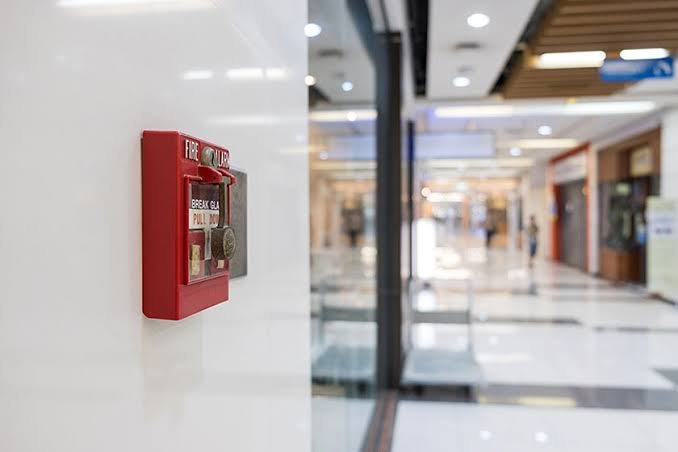
Manual Call Points
Manual call points allow a person to activate the fire alarm when they discover a possible fire emergency.
They should be positioned in accessible locations according to applicable requirements.
Staff should know where they are located and understand the building’s approved procedures for reporting emergencies.
Alarm Sounders and Visual Warnings
Sounders provide audible warnings, while visual warning devices may help alert people who cannot easily hear an alarm.
Large shopping malls should consider visitors with hearing or other accessibility needs when planning warning arrangements.
Fire Alarm Control Panels
The control panel receives information from connected devices and provides system status information.
Depending on the system design, it may identify the location or zone associated with an alarm or fault.
Only authorised and trained personnel should manage the system. Unqualified individuals should never disable or modify alarm components.
Fire Extinguishers in Shopping Malls
Fire extinguishers provide an additional layer of protection for certain early-stage fire incidents.
However, different extinguishers are designed for different fire classifications. A suitable fire risk assessment should determine which types are needed in particular areas.
Common extinguisher categories include:
- Water extinguishers: Generally designed for suitable fires involving ordinary solid combustible materials.
- Foam extinguishers: Used for certain fires involving solid materials and flammable liquids.
- Carbon dioxide extinguishers: Used for certain electrical equipment and flammable-liquid fire risks.
- Dry powder extinguishers: Available in different formulations for specific fire hazards.
- Wet chemical extinguishers: Commonly designed for certain cooking oil and fat fires.
Mall management should ensure that extinguishers are suitable, correctly located, clearly identified, and professionally maintained.
Only trained individuals should consider using an extinguisher when the fire is small, the equipment is appropriate, and a safe escape route remains available.
Visitors and untrained employees should not attempt to fight a spreading fire. Evacuation and emergency services must take priority.
Automatic Sprinkler Systems
Automatic sprinkler systems can provide an important layer of fire protection in suitable buildings.
These systems are designed to respond to heat conditions and release water through the sprinkler heads activated by the system’s design.
Sprinklers can help control or limit certain fires, reducing the potential for fire growth and damage.
Their design should consider the building’s size, layout, ceiling height, occupancy, and potential fire hazards.
Sprinkler systems require professional installation, inspection, and maintenance. Storage, decorations, or temporary structures should not obstruct sprinkler heads.
Emergency Exits and Evacuation Routes
Clear escape routes are essential in shopping malls because visitors may not know the building layout.
Emergency exits should be clearly identified, accessible, and maintained according to applicable requirements.
Keep Corridors Clear
Shopping displays, promotional stands, stock, and furniture should never obstruct escape routes.
Mall management should regularly check corridors, stairways, and exit doors.
Provide Clear Exit Signs
Exit signs help visitors identify the direction of emergency escape routes.
Signs should remain visible and should not be covered by decorations or advertising displays.
Maintain Emergency Lighting
Emergency lighting helps occupants identify escape routes when normal lighting fails.
It should be inspected and maintained according to the system’s requirements.
Plan for Different Occupants
Evacuation planning should consider children, elderly visitors, people with disabilities, and anyone who may need assistance.
Mall management should develop appropriate arrangements based on the building layout and the people likely to use it.
Follow Building-Specific Procedures
Some buildings have specialised evacuation strategies based on their construction and fire protection design.
Visitors and staff should follow the mall’s approved instructions and directions from trained personnel or emergency responders.
Lifts should not be used during a fire unless emergency personnel or the building’s approved emergency strategy specifically directs their use.
Fire Safety in Different Areas of a Shopping Mall
Each section of a mall may have different fire hazards and safety requirements.
Retail Stores
Retail stores may contain clothing, packaging, furniture, electrical equipment, and display materials.
Shop managers should keep storage organised, maintain clear exits, and report electrical or equipment problems promptly.
Staff should also know the nearest safe exits and the mall’s emergency reporting procedures.
Food Courts
Food courts contain several food businesses operating close to one another.
Their safety arrangements should include suitable kitchen protection, equipment maintenance, clear evacuation routes, and staff training.
Cooking areas should receive particular attention because heat sources and combustible materials may be present together.
Cinemas and Entertainment Areas
Cinemas and entertainment facilities may contain large numbers of people in enclosed spaces.
Emergency warnings should be understandable and accessible, while exits and escape routes must remain available.
Staff should know how to guide visitors towards safe areas without causing unnecessary confusion.
Children’s Play Areas
Children’s play areas require special attention because young visitors may not understand emergency instructions.
Staff should be trained to follow the mall’s approved procedures for helping children evacuate.
Parents and guardians should remain aware of the emergency arrangements and follow staff instructions.
Offices and Administrative Areas
Mall offices may contain computers, printers, documents, and other electrical equipment.
These areas should have appropriate detection, warning, and evacuation arrangements, along with regular electrical and fire safety inspections.
Warehouses and Loading Areas
Loading bays and storage rooms may contain packaging, delivery materials, equipment, and vehicles.
These areas should be managed carefully to prevent unnecessary accumulation of combustible materials and obstruction of emergency access.
The Importance of Fire Safety Training
Equipment alone cannot guarantee safety. People must understand how to respond when an emergency occurs.
Mall management should provide suitable fire safety training for employees, security personnel, maintenance teams, cleaning staff, and other relevant workers.
Recognising Fire Hazards
Employees should understand common warning signs, such as unusual smoke, burning smells, damaged electrical equipment, and unsafe storage conditions.
They should know how to report concerns through approved workplace procedures.
Understanding Alarm Procedures
Staff should recognise the mall’s alarm signals and understand what actions are required when an alarm sounds.
They should never ignore or silence an alarm simply because they are unsure whether it is genuine.
Learning Evacuation Responsibilities
Employees should know their designated responsibilities and the location of safe assembly areas.
Training should also cover how to support visitors who need additional assistance, following the mall’s approved plan.
Conducting Fire Drills
Regular drills help staff become familiar with evacuation procedures.
Drills should be organised professionally and reviewed afterwards to identify problems such as blocked routes, unclear instructions, or communication difficulties.
Avoiding Untrained Firefighting
Only trained personnel should consider using firefighting equipment when conditions allow safe intervention.
Employees should not investigate smoke, enter dangerous areas, or delay evacuation to protect merchandise or equipment.
Fire Safety Maintenance and Inspection
Regular maintenance helps ensure that fire protection systems remain suitable for use.
Mall management should arrange inspections according to manufacturer instructions, applicable requirements, and professional recommendations.
Important maintenance activities include:
- Fire alarm inspections: Check detectors, control panels, sounders, call points, and other system components through qualified personnel.
- Extinguisher servicing: Ensure extinguishers are suitable, accessible, and professionally maintained.
- Sprinkler maintenance: Arrange required inspections of sprinkler equipment and water supplies.
- Emergency lighting checks: Confirm that lighting and backup arrangements remain operational.
- Exit inspections: Ensure doors, corridors, stairways, and signs remain unobstructed.
- Electrical inspections: Arrange professional assessments of electrical installations and equipment.
- Recordkeeping: Maintain inspection reports, service records, and details of corrective actions.
Faults should be reported and addressed promptly. Safety equipment should never be disabled without an approved process and suitable alternative arrangements.
Common Mall Fire Safety Mistakes
Even well-managed shopping centres can develop safety problems when routine responsibilities are overlooked.
Blocking Emergency Exits
Placing stock, furniture, promotional stands, or decorations in escape routes can delay evacuation.
All exits and corridors should remain clear.
Ignoring Alarm Faults
A faulty alarm component can weaken the building’s warning arrangements.
Faults should be reported immediately and handled by authorised technicians.
Poor Storage Practices
Excessive packaging and combustible materials can increase fire risks.
Storage rooms and service areas should be inspected regularly.
Neglecting Staff Training
Employees who do not understand evacuation procedures may struggle to respond during an emergency.
Training should be provided regularly and reviewed when building arrangements change.
Delaying Equipment Maintenance
Fire protection equipment requires scheduled inspections and servicing.
Missed maintenance can leave important systems in an unsuitable condition.
Failing to Consider Accessibility
Emergency arrangements that do not consider people with disabilities, elderly visitors, or children may leave some occupants without suitable assistance.
Evacuation plans should account for different needs.
How to Improve Mall Fire Safety in Pakistan
Shopping mall owners and managers can strengthen safety arrangements through a planned and consistent approach.
Conduct a Professional Fire Risk Assessment
A qualified professional should assess the building’s layout, occupancy, electrical systems, kitchens, storage areas, and other potential hazards.
The assessment should identify appropriate prevention and protection measures.
Install Suitable Detection and Alarm Systems
Fire detection and warning equipment should be selected according to the building’s specific requirements.
A professionally designed fire alarm system in Pakistan can support early warning and coordinated emergency response in shopping malls.
Maintain Equipment Regularly
Detection systems, extinguishers, sprinklers, emergency lighting, and other equipment should receive appropriate professional inspections.
Train Employees
Staff should understand emergency responsibilities, alarm procedures, evacuation routes, and communication arrangements.
Improve Visitor Awareness
Clear signs and visible emergency information can help visitors understand where to go during an emergency.
Review Emergency Plans
Mall management should review its emergency arrangements whenever the building layout, occupancy, facilities, or activities change.
Creating a Mall Fire Safety Checklist
A practical checklist can help management teams review important safety responsibilities.
- A professional fire risk assessment has been completed.
- Suitable fire detection and alarm systems are installed.
- Alarm components receive regular professional inspection.
- Fire extinguishers are suitable and accessible.
- Sprinkler systems are maintained where installed.
- Emergency exits remain clear and accessible.
- Exit signs are visible and understandable.
- Emergency lighting is inspected.
- Electrical systems receive professional maintenance.
- Kitchens and food courts have suitable fire protection.
- Storage and waste areas are managed properly.
- Employees receive regular fire safety training.
- Evacuation drills are conducted and reviewed.
- Emergency plans consider people needing assistance.
- Inspection and maintenance records are maintained.
This checklist is a general guide. It does not replace a professional assessment or applicable local fire safety requirements.
Conclusion
Mall fire safety is essential for protecting visitors, employees, businesses, and property. Shopping centres contain different activities and hazards, so their protection arrangements must be carefully planned and regularly reviewed.
Fire detection systems, alarm equipment, extinguishers, sprinkler systems, emergency lighting, and clear evacuation routes all contribute to a safer shopping environment. However, these measures are only effective when they are properly selected, professionally installed, maintained, and supported by staff training.
In Pakistan, shopping mall owners and management teams should take a proactive approach to fire prevention and emergency preparedness. Regular risk assessments, clear responsibilities, visitor awareness, and professional inspections can help reduce avoidable risks.
A safe shopping mall is not created by equipment alone. It depends on responsible management, trained people, reliable systems, and a shared commitment to protecting everyone inside the building.
Frequently Asked Questions (FAQs)
1. Why is fire safety important in shopping malls?
Fire safety is important because shopping malls accommodate large numbers of visitors and employees. Suitable prevention, detection, warning, and evacuation arrangements help protect people and reduce the potential impact of fire emergencies.
2. What fire safety equipment should a shopping mall have?
Depending on its design and fire risk assessment, a mall may require smoke and heat detectors, fire alarm systems, suitable extinguishers, sprinkler systems, emergency lighting, exit signs, and other approved protection equipment.
3. What is the role of a fire alarm system in a shopping mall?
A fire alarm system helps detect or receive information about a possible fire condition and warn occupants. This warning allows visitors and employees to follow the building’s emergency procedures and move towards safety.
4. How often should mall fire safety equipment be inspected?
Inspection and maintenance schedules depend on the equipment type, manufacturer instructions, applicable requirements, and professional recommendations. Mall management should maintain regular inspection records and arrange servicing through qualified providers.
5. What should visitors do if a fire alarm sounds in a shopping mall?
Visitors should remain calm, follow the mall’s emergency instructions, and use the designated safe escape routes. They should avoid lifts unless emergency personnel or the approved building strategy specifically directs their use, and they should not return for personal belongings.