
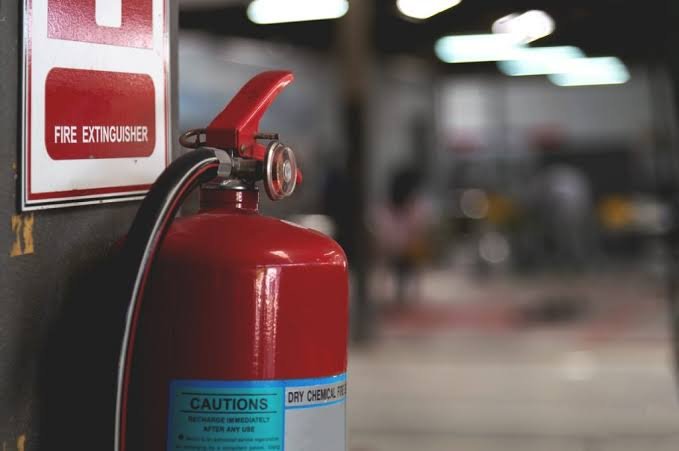
Fire extinguishers are important pieces of fire protection equipment in homes, offices, shops, factories, warehouses, and commercial buildings. However, many people misunderstand how they work, which fires they can handle, and when it is safer to evacuate instead of attempting to extinguish a fire.
Some believe that every fire extinguisher works on every type of fire. Others assume that a larger extinguisher is always the best choice or that owning one is enough to make a building safe. These misconceptions can create a false sense of security and lead to poor decisions during an emergency.
Understanding the different types of fire extinguishers helps people recognise their purpose and limitations. Water, foam, dry powder, carbon dioxide, and wet chemical extinguishers use different agents designed for particular fire hazards.
In Pakistan, selecting appropriate firefighting equipment is an important part of a wider fire safety plan. A suitable Fire alarm system in Pakistan can provide early warning, while correctly selected extinguishers, clear escape routes, and regular maintenance help support emergency preparedness.
This article explores common myths about fire extinguishers, explains the facts behind them, and discusses how households and businesses can make more informed fire safety decisions.
1. Myth: Every Fire Extinguisher Works on Every Fire
One of the most common fire safety misconceptions is that any extinguisher can be used on any fire. In reality, different extinguishers contain different agents, and each is designed for particular hazards.
Using the wrong extinguisher can be ineffective or make a dangerous situation worse. For example, water is generally suitable for fires involving ordinary combustible materials such as wood and paper, but it must not be used on burning cooking oil or equipment that may still be electrically energised.
The main extinguisher types include:
- Water: Primarily for ordinary combustible materials.
- Foam: Suitable for certain ordinary combustibles and flammable-liquid fires, depending on its rating.
- Dry chemical powder: Available in formulations designed for several fire classes.
- Carbon dioxide (CO₂): Commonly used for certain flammable-liquid and electrical-equipment fires.
- Wet chemical: Specially designed for cooking oils and fats in suitable kitchen applications.
The correct choice depends on the fuel involved, the extinguisher’s label, the surrounding hazards, and the environment.
Before purchasing or installing firefighting equipment, assess the risks present in the building. A qualified fire safety professional can help determine which extinguishers are appropriate for a home, office, factory, or commercial kitchen.
2. Myth: Water Is the Best Solution for Every Fire
Water is widely available, so some people assume it is the easiest solution whenever something catches fire. However, water is not suitable for every situation.
Water extinguishers work mainly by cooling burning material. They can be appropriate for ordinary combustible solids, including paper, wood, and some textiles, when the extinguisher is rated for that purpose.
There are important exceptions.
Electrical equipment: Water can conduct electricity, creating a risk of electric shock when equipment remains energised.
Cooking oil and grease: Water can cause burning oil to spread and produce a dangerous flare-up.
Certain chemicals and metals: Some substances react dangerously with water, so specialised fire protection may be necessary.
For these reasons, people should never assume that water is a safe option simply because it is nearby.
The safer approach is to identify the likely fire hazards before an emergency occurs and ensure suitable equipment is available. If a fire involves electrical equipment, cooking oil, or an unknown substance, do not experiment with an extinguisher or household liquid.
If the fire is spreading or the correct equipment is unavailable, leave the area and contact emergency services.
3. Myth: A Dry Powder Extinguisher Is Suitable for Every Situation
Dry powder extinguishers are often described as multipurpose equipment, but that does not mean every powder extinguisher is suitable for every fire.
Different powder formulations have different ratings. An ABC dry powder extinguisher is commonly rated for certain Class A, B, and C hazards under the classification system used on its label. Other formulations may be designed for specific industrial risks, including certain combustible metals.
Dry powder extinguishers can be useful in settings where several fire hazards are present. However, the discharged powder can reduce visibility, irritate the respiratory system, and contaminate sensitive equipment.
This may make dry powder less suitable for certain enclosed environments or areas containing delicate electronics, depending on the circumstances.
The key lesson is that multipurpose does not mean universal. Check the extinguisher’s rating and follow its instructions.
For offices, industrial workplaces, and other commercial buildings, extinguisher selection should account for the actual hazards, the space available, and the likely consequences of discharging the agent.
4. Myth: Carbon Dioxide Extinguishers Leave No Risks Behind
Carbon dioxide extinguishers are often used for certain electrical-equipment and flammable-liquid fires. They release CO₂, which helps suppress a fire without leaving the powder or foam residue associated with some other extinguishers.
This can be useful in selected areas containing computers or electrical equipment. However, CO₂ extinguishers still have limitations.
First, the gas can displace oxygen in enclosed or poorly ventilated spaces. This can create a serious breathing hazard, particularly in confined areas.
Second, the discharge can be extremely cold. Contact with the discharge horn or nozzle can cause cold injuries, so users must follow the manufacturer’s instructions and avoid touching parts that become dangerously cold.
Third, a fire may reignite if the underlying material remains hot after the CO₂ has dispersed. The agent may suppress the visible flames without adequately cooling the fuel.
CO₂ should therefore not be treated as a risk-free solution. It is important to select suitable equipment, understand its limitations, and prioritise evacuation when conditions are unsafe.
5. Myth: Foam Extinguishers Are Only for Liquid Fires
Foam extinguishers are commonly associated with flammable-liquid fires, but suitable foam products may also be rated for certain ordinary combustible materials.
Foam can help suppress a fire by cooling the burning material and creating a layer that limits the release of flammable vapours from some liquids.
However, not all foam extinguishers have identical capabilities. Their ratings and instructions determine where they can be used.
Foam should not be used on energised electrical equipment unless the equipment is specifically rated and approved for that application. Many conventional foam extinguishers are unsuitable for this purpose.
The type of liquid also matters. Certain chemicals may be incompatible with particular foam agents, and specialised hazards require appropriate professional assessment.
Businesses storing fuels, solvents, paints, or other flammable liquids should have a fire risk assessment to determine suitable protection measures.
Choosing foam simply because it is commonly used in commercial settings is not enough. The extinguisher must match the specific fire risk.
6. Myth: Wet Chemical Extinguishers Are Just Another General-Purpose Option
Wet chemical extinguishers are particularly associated with cooking oils and fats, making them important in many commercial kitchens.
Deep-fat fryers and cooking equipment can produce fires involving hot oils. Ordinary water-based responses can cause burning oil to spread dangerously, while the wrong extinguishing agent may fail to control the fire effectively.
Wet chemical agents are designed to help cool the burning material and form a surface layer that reduces the chance of reignition.
However, a wet chemical extinguisher is not automatically the best choice for every fire in a kitchen. A kitchen may also contain electrical equipment, ordinary combustible materials, and other hazards requiring different protection.
Commercial kitchens should receive a suitable fire risk assessment. Appropriate equipment, maintenance, staff training, and safe cooking practices should work together.
If a cooking fire develops beyond a small, safely manageable incident, staff should evacuate and contact emergency services rather than attempting to handle it themselves.
Never pour water onto burning cooking oil.
7. Myth: A Fire Extinguisher Never Expires
Some people believe that a fire extinguisher remains reliable as long as it looks clean and its cylinder appears undamaged. This is incorrect.
Fire extinguishers require inspection and maintenance according to the manufacturer’s instructions and applicable standards. Their condition can deteriorate, pressure can change, and internal components may require servicing.
During routine checks, the responsible person should confirm that:
- The extinguisher is accessible and visible.
- The label and operating instructions are readable.
- The pressure indicator, where fitted, shows an acceptable reading.
- The cylinder has no obvious damage, corrosion, or leakage.
- The safety pin and tamper seal are present where applicable.
- Required inspection and servicing records are current.
A visual check does not replace professional servicing or any required pressure testing.
If an extinguisher appears damaged, has been discharged, or shows a fault, it should be assessed by a competent service provider. Do not attempt to dismantle or refill it yourself.
Keeping maintenance records helps homes and businesses track service dates and identify equipment that needs attention.
8. Myth: Bigger Fire Extinguishers Are Always Better
A larger extinguisher may contain more extinguishing agent, but size alone does not determine whether it is suitable.
The correct extinguisher depends on the likely fire class, the size and layout of the area, the rating of the unit, and the people expected to use it.
A very heavy extinguisher may be difficult for some occupants to handle. An extinguisher that is too small or has an unsuitable rating may not provide the protection required for the hazard.
Placement is also important. Equipment should be easy to locate and accessible without blocking exits or exposing people to unnecessary danger.
For a small office, commercial kitchen, workshop, or warehouse, the selection process should consider the specific risks rather than simply choosing the largest available cylinder.
A qualified fire safety professional can help determine the appropriate type, rating, size, and location of extinguishers.
9. Myth: Having an Extinguisher Means a Building Is Fire-Safe
Fire extinguishers are one part of fire protection, not a complete fire safety plan.
A building can have several extinguishers and still be unsafe if escape routes are blocked, alarms are faulty, electrical installations are damaged, or occupants do not know what to do during an emergency.
A more complete approach includes:
Early warning: Suitable smoke detection and alarm arrangements help alert occupants to a possible fire.
Clear escape routes: Exits, corridors, and staircases should remain usable and appropriately marked.
Equipment maintenance: Extinguishers, alarms, and other installed systems should be inspected and maintained according to their requirements.
Staff awareness: Workers and household members should understand evacuation procedures and the limitations of firefighting equipment.
Hazard control: Electrical faults, unsafe cooking practices, combustible storage, and other risks should be addressed.
In Pakistan, the Building Code of Pakistan: Fire Safety Provisions 2016 provides technical guidance on building fire safety, including occupant notification and fire protection arrangements. Specific requirements depend on the building’s occupancy, layout, and applicable authority requirements.
A suitable Fire alarm system in Pakistan can form part of this wider plan, but equipment selection and installation should reflect the actual needs of the premises.
10. Myth: Anyone Can Safely Use a Fire Extinguisher Without Training
Fire extinguishers may appear straightforward, but using one in an emergency requires sound judgement.
A person must recognise the type of fire, identify a suitable extinguisher, understand the equipment’s limitations, and determine whether it is safe to attempt intervention.
Even the correct extinguisher may be ineffective if the fire is too large, smoke is spreading, or the user’s escape route is threatened.
People should receive appropriate training before being expected to use firefighting equipment. Training should explain when not to attempt extinguishing a fire and how to evacuate safely.
A common teaching method for portable extinguishers is the PASS sequence: Pull the pin, Aim at the base of the fire, Squeeze the handle, and Sweep from side to side. This is general training guidance, not a reason to approach a dangerous fire. Always follow the instructions for the specific extinguisher and only act if it is safe to do so.
If a fire is growing, smoke is building up, or the correct equipment is not available, raise the alarm, evacuate, and contact emergency services.
No employee or household member should feel pressured to risk their safety to protect property.
11. Myth: Fire Extinguishers Do Not Need to Match the Building’s Risks
Every building has a different combination of fire hazards. A residential kitchen, a computer room, a textile warehouse, and a workshop do not have identical needs.
Choosing extinguishers without assessing the environment can leave important hazards unprotected.
A risk assessment should consider the materials present, electrical equipment, cooking processes, storage arrangements, occupancy, escape routes, and the abilities of the people expected to respond.
For example, an area with ordinary combustible materials may require a different extinguisher from a location containing flammable liquids or cooking oils.
Buildings with specialised industrial hazards may need additional controls designed by competent professionals.
The same principle applies to fire alarm systems. Detector type, placement, notification, and maintenance should suit the building’s environment and approved design.
A building-specific assessment is more reliable than choosing equipment solely because it is common, inexpensive, or used by a neighbouring business.
12. How to Make Better Fire Safety Decisions in Pakistan
For households and businesses in Pakistan, a practical fire safety review should start by identifying the hazards present and checking existing equipment.
Begin with these steps:
- Identify the risks: Review electrical equipment, cooking areas, combustible materials, and any flammable substances.
- Check existing extinguishers: Confirm that the type and rating match the potential fire hazards.
- Review alarm coverage: Check whether suitable detection and warning equipment is installed and maintained.
- Keep exits clear: Make sure occupants can reach safe escape routes.
- Arrange professional inspections: Seek qualified advice for technical systems, specialised hazards, and compliance questions.
- Maintain records: Document inspections, defects, repairs, and training.
- Prepare occupants: Make sure everyone understands the emergency plan and knows when to evacuate.
For commercial and multi-storey buildings, confirm applicable requirements with the relevant building control or fire safety authority. Requirements may vary according to the building’s classification, location, and use.
The goal is not simply to own firefighting equipment. It is to ensure that the equipment is suitable, accessible, maintained, and supported by an effective emergency plan.
Conclusion
Misunderstandings about fire extinguishers can lead to unsuitable equipment choices and unsafe decisions during an emergency. Water, foam, dry powder, carbon dioxide, and wet chemical extinguishers have different purposes, and none should be assumed to work on every type of fire.
Regular maintenance, proper selection, and appropriate training help people understand what their equipment can and cannot do. Fire extinguishers should also be supported by hazard inspections, suitable alarm systems, clear escape routes, and a well-understood emergency plan.
For anyone reviewing a Fire alarm system in Pakistan or improving existing fire protection arrangements, the most important step is to assess the needs of the specific building. A home, office, factory, and commercial kitchen may require different combinations of equipment and procedures.
Ultimately, effective fire safety begins with accurate information and responsible preparation. Understanding the facts behind common myths can help people make better decisions and put life safety first.
Frequently Asked Questions (FAQs)
1. What are the main types of fire extinguishers?
The main types include water, foam, dry chemical powder, carbon dioxide (CO₂), and wet chemical extinguishers. Each is designed for specific fire hazards, so the label and rating should always be checked before use.
2. Can one fire extinguisher be used for every type of fire?
No. Different extinguishers are designed for different fire classes. Using an unsuitable extinguisher can be ineffective or dangerous. The correct equipment should be selected according to the risks present.
3. Is a water extinguisher safe for electrical fires?
A conventional water extinguisher should not be used on equipment that may still be electrically energised. Use only equipment specifically rated and approved for the relevant hazard, and evacuate if the situation is unsafe.
4. How often should fire extinguishers be inspected?
Extinguishers should receive regular visual checks and professional maintenance according to the manufacturer’s instructions and applicable standards. Any damaged, discharged, or faulty unit should be assessed by a competent service provider.
5. Are fire extinguishers enough to protect a building from fire?
No. Extinguishers are only one part of fire protection. Suitable alarms, clear escape routes, hazard control, equipment maintenance, and emergency training are also important for protecting occupants.