
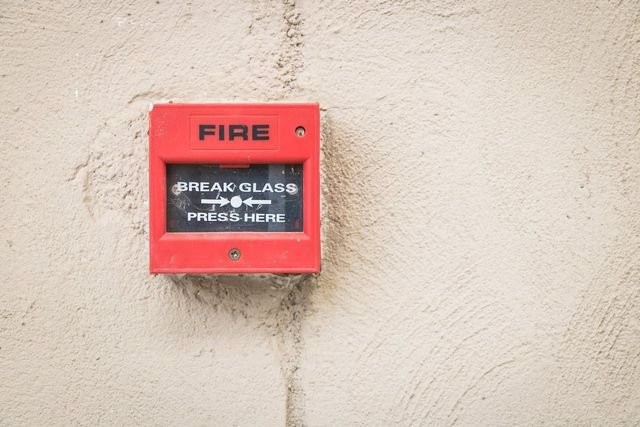
Fire safety signage may look simple, but it plays an important role in helping people understand what to do during an emergency. Signs can identify exits, point toward escape routes, mark fire equipment, warn about hazards, and provide other important information.
Despite their importance, many myths surround fire safety signs. Some people believe that putting up a few “EXIT” signs is enough. Others assume that signs do not matter if a building already has a fire alarm. Some even think that signs only need to be installed in large commercial buildings.
These assumptions can create problems during an emergency.
The Building Code of Pakistan Fire Safety Provisions 2016 states that means of egress should be arranged or marked so that the route to a place of safety is clearly indicated. It also addresses illumination of means of egress.
Fire safety signage should therefore be considered part of a wider fire and life-safety strategy rather than simple decoration.
This article explains some of the most common myths about fire safety signage and the facts that building owners, managers, workers, and occupants should understand.
What Is Fire Safety Signage?
Fire safety signage refers to signs and visual symbols used to communicate information related to fire protection, emergency evacuation, hazards, and emergency equipment.
Depending on the building, signs may identify:
- Emergency exits
- Escape routes
- Fire extinguishers
- Fire alarm call points
- Fire hose equipment
- Fire doors
- Emergency assembly areas
- Areas containing specific hazards
- No-smoking or other warning areas
- Directional routes toward exits
The exact signage required depends on the building’s design, occupancy, hazards, applicable codes, and local requirements.
Good signage should communicate quickly. During an emergency, people may not have time to stop and read lengthy instructions. Clear visual information can help people understand the intended route or location of safety equipment.
Myth 1: Fire Safety Signs Are Only Decoration
One of the biggest misconceptions is that safety signs are simply labels placed around a building.
In reality, their purpose is communication.
If an emergency occurs, people need to understand where they can go and where important safety equipment is located. This becomes particularly important for visitors who may not know the building layout.
The Pakistan fire safety provisions require means of egress to be arranged or marked so that the route toward safety is clearly indicated.
A sign therefore has a practical purpose: helping people recognize important safety information when they need it.
Myth 2: A Fire Alarm Makes Signs Unnecessary
A fire alarm and fire safety signage perform different functions.
A fire alarm system is designed to provide warning of a fire or emergency condition. Signage provides visual information about routes, equipment, hazards, and other safety features.
The two systems can support each other.
For example, an alarm may alert occupants that an emergency exists, while exit signs and directional signs can help them understand where to move.
Pakistan’s Fire Safety Provisions 2016 recognize occupant notification and state that fire alarm systems should be provided where necessary to warn occupants when the fire itself would not provide adequate warning.
This means a fire alarm system in Pakistan should not be viewed as a replacement for proper visual safety communication.
Fire protection works best as a coordinated system.
Myth 3: Only Large Buildings Need Fire Safety Signs
Another common misconception is that signage only matters in shopping malls, factories, hospitals, and high-rise buildings.
The actual requirements depend on the building’s use and applicable regulations, but the principle of clear emergency information is relevant to many types of properties.
Offices, schools, hotels, restaurants, warehouses, apartment buildings, public facilities, and other occupied spaces may all need appropriate emergency information.
The more unfamiliar a building is to its occupants, the more important clear communication can become.
A visitor may not know where the nearest exit is. A new employee may not know the location of fire equipment. A customer in a restaurant may have no understanding of the building’s layout.
Appropriate signage can reduce this uncertainty.
Myth 4: One Exit Sign Is Enough
A single exit sign does not necessarily provide adequate information throughout an entire building.
People may need to make several decisions while moving toward safety. They may have to turn at a corridor, choose between routes, move toward a staircase, or identify an exit door.
The purpose of exit and directional signage is to make the intended route understandable.
NFPA life-safety material includes requirements and guidance concerning exit signs and directional indicators. Recent NFPA 101 development material also discusses the use of the word “EXIT” or an appropriate emergency-exit pictogram and directional indicators for exit routes.
The exact number, location, visibility, and design of signs should therefore be determined according to the building layout and applicable requirements rather than using the same approach for every property.
Myth 5: Any Sign With the Word “EXIT” Is Acceptable
Simply writing “EXIT” on a piece of paper does not automatically make it a suitable emergency sign.
Emergency signage needs to be appropriately designed, positioned, visible, and maintained.
Relevant standards may specify factors such as wording, symbols, illumination, visibility, contrast, and directional information.
NFPA materials, for example, address both text-based exit signs and pictogram-based emergency exit signs. They also provide guidance on directional indicators.
For a particular building in Pakistan, the applicable local code, approved design, authority requirements, and relevant standards should be considered.
Myth 6: Signs Only Matter During a Fire
Fire safety signs are certainly important during fires, but their value begins before an emergency.
People become familiar with their surroundings through everyday exposure.
An employee who regularly sees an emergency exit sign is more likely to recognize it quickly during an emergency. Similarly, clearly marked fire equipment can make it easier for trained personnel or emergency responders to identify relevant equipment.
This is one reason safety signage should remain visible and maintained at all times.
A missing or damaged sign discovered during an emergency is much less useful than a properly maintained sign that people have already seen.
Myth 7: Emergency Signs Do Not Need Lighting
Visibility is a major consideration for emergency signage.
A sign that is difficult to see in normal conditions may become even harder to recognize if lighting is reduced during an emergency.
Pakistan’s Building Code of Pakistan Fire Safety Provisions 2016 specifically states that illumination of means of egress shall be provided.
The appropriate approach depends on the building, emergency lighting arrangement, sign design, and applicable requirements.
In some buildings, illuminated or externally illuminated signage may be appropriate. Other situations may require different approved solutions.
The important point is that emergency information should remain understandable under the conditions for which it is intended.
Myth 8: Fire Safety Signs Never Need Maintenance
Installing a sign is not the end of the process.
Signs can become:
- Dirty
- Faded
- Damaged
- Covered by advertisements
- Blocked by furniture
- Hidden by new construction
- Difficult to see because of changed lighting
- Obscured by stored materials
Building layouts can also change.
For example, an office may be renovated and a corridor may be rearranged. A warehouse may change its storage configuration. A business may add partitions or equipment.
A sign that was clearly visible before the change may no longer be effective.
Regular inspections should therefore include signage as part of the overall fire safety checklist.
The Pakistani fire safety provisions also address maintenance, inspection, and testing of fire protection features.
Myth 9: Fire Equipment Does Not Need Signs
Another misconception is that everyone automatically knows where fire equipment is located.
In reality, equipment can be difficult to identify in busy environments.
Fire extinguishers, alarm points, hose equipment, and other fire protection features may be positioned in corridors, offices, industrial areas, kitchens, warehouses, or other locations.
Appropriate identification can make the equipment easier to locate.
However, signs should not be used to compensate for poor equipment placement. Fire equipment should remain accessible and appropriately located according to the building’s design and applicable requirements.
Signage and equipment location should work together.
Myth 10: More Signs Always Mean Better Fire Safety
It may seem logical that adding more signs will automatically improve safety.
That is not necessarily true.
Too many signs can create visual clutter. If every wall is covered with different messages, people may have difficulty identifying the most important information.
Effective signage should be clear, consistent, appropriately positioned, and relevant to the location.
Emergency information should stand out from ordinary commercial signs, advertisements, decorations, and other visual material.
The goal is not to fill a building with signs. The goal is to provide the right information where people need it.
Myth 11: Signage Is the Same for Every Building
Different buildings have different fire risks and evacuation challenges.
A hospital may have patients who need assistance. A school may have young students. A warehouse may have large storage areas and changing layouts. A hotel may contain visitors who are unfamiliar with the building. A high-rise building may require occupants to use protected stairways rather than relying on elevators during certain emergencies.
Therefore, signage should reflect the building’s actual design and use.
NFPA’s building safety resources recognize that fire and life-safety considerations vary according to occupancy and building characteristics.
A professional assessment can help determine what signage is appropriate for a particular property.
Myth 12: Fire Safety Signage Replaces Staff Training
Signs are helpful, but they are not a substitute for education and emergency planning.
Employees should understand basic emergency procedures, including how to respond to an alarm and where they are expected to go during an evacuation.
Staff members with specific responsibilities should receive appropriate training for those responsibilities.
A sign can point toward an exit, but it cannot explain every emergency procedure.
This is especially important in workplaces where employees may need to help visitors or follow established emergency plans.
Myth 13: Signs Are Only for People Who Can Read the Local Language
Fire emergencies can involve people from different backgrounds and language groups.
Symbols can sometimes communicate information more quickly than words, particularly in places used by visitors or people who speak different languages.
NFPA materials discussing exit signage recognize pictogram-based signs as one option and note that symbols can be useful in occupancies where people may speak multiple languages.
However, the appropriate sign format should follow the applicable requirements for the building.
The key objective is clear communication.
Myth 14: Signage Is Separate From the Fire Protection System
It is better to think of fire safety as a connected system.
Fire detection, alarms, emergency lighting, exits, fire doors, extinguishers, sprinklers, evacuation procedures, staff training, and signage can all contribute to life safety.
The Pakistan Building Code states that fire protection systems and safeguards provided to achieve fire-safety objectives should be designed, installed, and approved according to applicable codes and referenced standards.
This broader approach is important because a weakness in one area can affect the effectiveness of another.
For example, an alarm may provide an excellent warning, but occupants still need a clear and usable route toward safety.
Myth 15: Fire Safety Signage Can Be Ignored During Renovation
Renovation is a time when signage deserves extra attention.
Walls may move, doors may change, corridors may be rearranged, and equipment may be relocated.
A building owner should therefore review fire safety arrangements whenever significant changes are made.
The Building Code of Pakistan Fire Safety Provisions 2016 includes provisions concerning construction, repair, alterations, additions, and the maintenance of required means of egress and fire protection features.
After changes, emergency routes and signs should still provide clear information consistent with the approved building arrangement.
What Makes Fire Safety Signage Effective?
Good signage generally shares several characteristics.
Clear
People should be able to understand the message quickly.
Visible
Signs should not be hidden behind objects, advertisements, furniture, or equipment.
Consistent
Similar safety messages should use a consistent visual approach throughout the building.
Appropriate
The sign should match the purpose and location.
Maintained
Damaged, faded, dirty, or obsolete signs should be addressed.
Integrated
Signage should work alongside alarms, emergency lighting, exits, fire equipment, and emergency procedures.
Fire Safety Signage and the Pakistan Context
In Pakistan, fire safety planning should take account of applicable national provisions, local authority requirements, building characteristics, and relevant technical standards.
The Building Code of Pakistan Fire Safety Provisions 2016 provides requirements concerning means of egress, occupant notification, fire protection systems, and maintenance, inspection, and testing.
At the same time, international standards such as NFPA 170 address fire safety and emergency symbols, while NFPA 72 covers fire alarm and signaling systems.
These resources should not be treated as a replacement for the requirements applicable to a particular Pakistani building. Building owners and managers should work with competent professionals and the relevant authority when specialized design or compliance decisions are involved.
A Simple Fire Safety Signage Checklist
Building managers can include the following questions in routine safety reviews:
- Are emergency exits clearly identified?
- Can occupants see the signs from the intended approach?
- Are directional signs needed at decision points?
- Are signs blocked by furniture or stored materials?
- Are fire equipment locations clearly identified?
- Are signs damaged, faded, or dirty?
- Are emergency routes still consistent with the signs?
- Has the building layout changed?
- Is emergency lighting appropriate for the escape route?
- Have signage problems been recorded and corrected?
- Are employees familiar with the emergency routes?
- Has the signage been reviewed after renovation or construction?
This checklist is a general starting point. It does not replace a professional assessment or the requirements applicable to a particular building.
The Bigger Lesson
Fire safety signage may seem like a small part of building safety, but small details can become important during an emergency.
The biggest myth is that signs are simply decorations added after the important fire protection systems have been installed.
In reality, effective emergency communication is part of a coordinated life-safety strategy.
A properly maintained fire alarm system in Pakistan can provide an important warning, but occupants also need clear information about how to respond and where to move. Exit signs, directional indicators, equipment signs, emergency lighting, evacuation plans, and staff training can all support that response.
The goal should not be to install as many signs as possible. It should be to provide clear, visible, appropriate information that works with the building’s overall fire safety arrangements.
For fire protection information and professional services in Pakistan, you can learn more from Flame Defender.
FAQs
1. Why is fire safety signage important?
Fire safety signage helps people identify emergency exits, escape routes, fire equipment, hazards, and other important safety information. Clear signs can reduce confusion and help occupants understand the intended emergency route.
2. Does a fire alarm system replace emergency exit signs?
No. A fire alarm provides warning, while signage provides visual information about exits, routes, and equipment. Both can form part of a coordinated fire and life-safety strategy.
3. What should an emergency exit sign show?
An appropriate exit sign generally identifies the emergency exit using approved wording, symbols, or both, depending on the applicable requirements. The sign should be clearly visible and appropriately positioned for the building.
4. Do fire safety signs need maintenance?
Yes. Signs should remain visible, legible, and unobstructed. Damaged, faded, dirty, or outdated signs should be addressed, particularly after building renovations or layout changes.
5. Are the same fire safety signs suitable for every building in Pakistan?
Not necessarily. Signage requirements can depend on the building’s occupancy, layout, hazards, evacuation arrangements, applicable codes, and local authority requirements. A suitable assessment should be made for the specific property.