
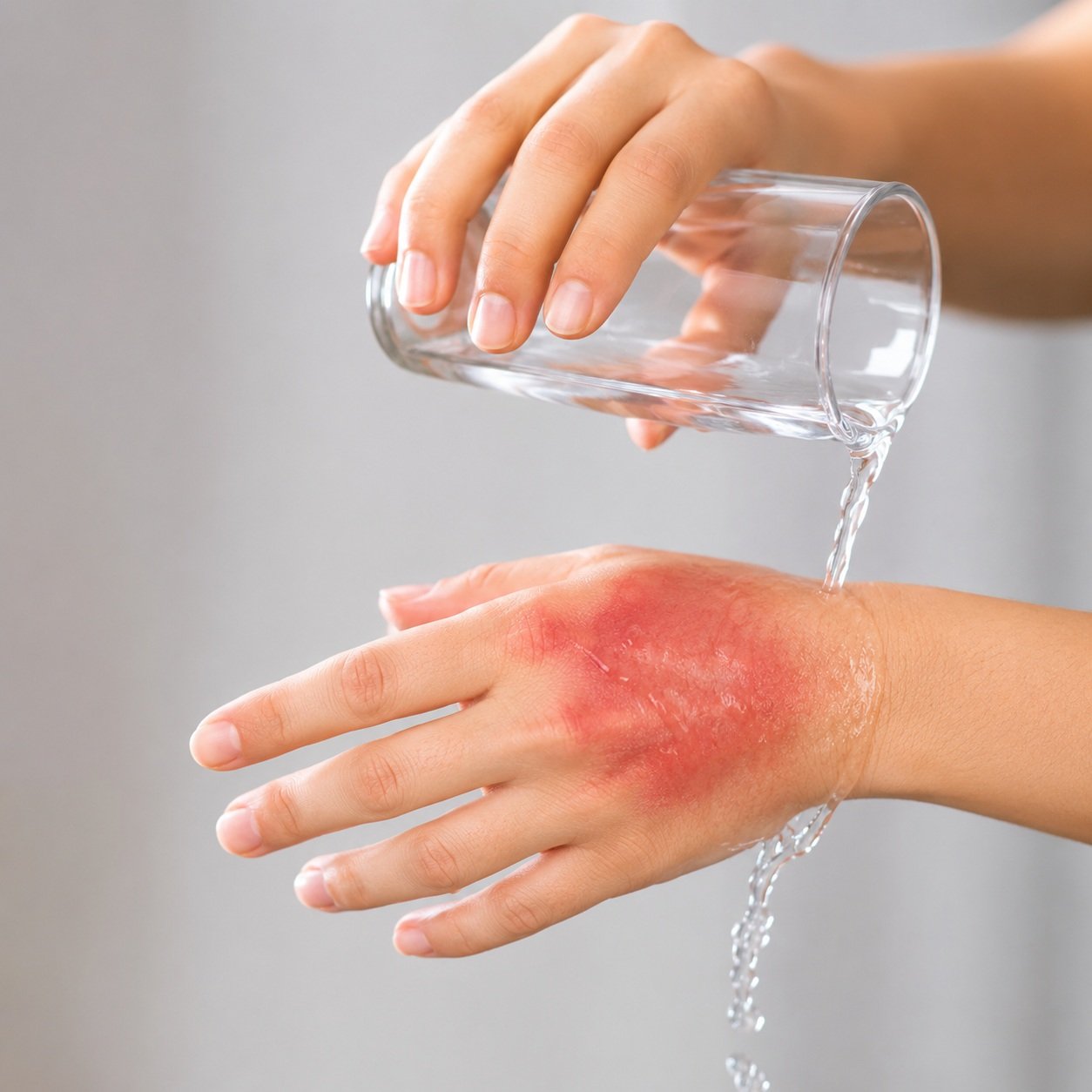
Burn injuries can happen unexpectedly in any home. Hot water, cooking oil, steam, electrical appliances, gas stoves, and open flames are common sources of burns. In Pakistan, where many households use gas cylinders, pressure cookers, and other heat-producing appliances, understanding basic burn first aid is an important part of family safety.
A burn may appear minor at first, but some injuries require urgent medical attention. Knowing how to respond can help reduce further damage, relieve discomfort, and protect the injured person while professional care is arranged.
Every household should understand the basic principles of burn first aid and keep suitable first-aid supplies in an accessible location. However, having a first-aid kit is only one part of preparation. Families should also know how to prevent burns, recognize serious injuries, and respond safely to fire-related emergencies.
This guide explains burn first aid in plain English, including common causes, immediate care, mistakes to avoid, and situations that require medical attention. It also explains how fire prevention measures and a reliable fire alarm system in Pakistan can contribute to a safer home.
Important: This article provides general educational information, not a substitute for professional medical advice or practical first-aid training.
1. What Is a Burn?
A burn is an injury to the skin or other body tissues caused by heat, chemicals, electricity, radiation, or friction. The severity depends on factors such as the cause, depth, size, and location of the injury.
Burns can occur during everyday household activities, including preparing meals, bathing children, ironing clothes, or handling hot appliances.
Common types of burns
Thermal burns: These result from contact with flames, hot surfaces, steam, or hot liquids.
Scalds: These are caused by hot liquids or steam. Spilled tea, boiling water, and hot cooking oil can cause scald injuries.
Electrical burns: These occur when electricity injures body tissues. Even a small visible injury can be associated with deeper damage.
Chemical burns: Certain cleaning products and industrial chemicals can damage the skin or eyes.
Understanding the possible cause helps determine the appropriate first-aid response. Chemical and electrical burns need particular caution and prompt professional assessment.
2. Why Every Home Needs Burn First-Aid Knowledge
Accidents do not always happen when a medical professional is nearby. A household member may burn a hand while cooking or accidentally spill a hot drink. Knowing the correct first steps can make a meaningful difference.
Responding promptly
Appropriate first aid begins as soon as the area is safe. For ordinary heat-related burns, cooling the affected area with cool running water helps stop the burning process and may reduce pain and tissue damage.
Preventing further injury
Incorrect remedies can make an injury worse. Applying ice, butter, toothpaste, or household pastes is not recommended. A simple understanding of what to do—and what to avoid—helps prevent unnecessary harm.
Recognizing serious burns
Some burns require urgent medical attention even when the visible injury seems small. Knowing the warning signs helps families avoid delays in obtaining care.
Protecting children and older adults
Children may accidentally touch hot cookware, while older adults may be more vulnerable to complications. Families should understand how to prevent common accidents and seek appropriate medical advice when an injury occurs.
Preparing for emergencies
A first-aid kit, accessible emergency contacts, and a basic understanding of burn care help households respond more confidently when an accident occurs.
The World Health Organization identifies burns as a significant public health concern and emphasizes prevention, appropriate first aid, and access to medical care. <Cite refs={[“turn538023search0”]}/>
3. The First Steps to Take When Someone Gets Burned
Before helping an injured person, make sure the surroundings are safe. Do not approach an active fire, exposed electrical hazard, leaking gas cylinder, or chemical spill if doing so could put you in danger.
For an ordinary heat-related burn, follow these basic steps.
Step 1: Stop the burning process
Move the person away from the heat source if it is safe. If clothing is burning, help them stop, drop, and roll, or use an appropriate method to extinguish the flames without endangering yourself.
Never put yourself at risk trying to rescue someone from an unsafe area. Contact emergency responders when necessary.
Step 2: Cool the burn
Hold the affected area under cool running water for 20 minutes. Begin as soon as possible.
Use cool water rather than ice or freezing water. If the burn is extensive, take care not to make the injured person excessively cold, particularly if they are a child.
Step 3: Remove nearby jewellery and loose clothing
Carefully remove jewellery or clothing near the affected area before swelling develops, provided it is not stuck to the skin.
Never pull away clothing or material that has adhered to the burn.
Step 4: Protect the injury
After cooling, cover the burn loosely with a clean, non-fluffy dressing or another suitable non-stick covering. Do not wrap the affected area tightly.
For larger or more serious burns, seek urgent medical care rather than delaying treatment to arrange a dressing.
Step 5: Assess the need for medical help
Seek urgent medical attention if the burn is large, deep, caused by electricity or chemicals, or affects the face, hands, feet, major joints, or genital area. Burns in children should be assessed by a healthcare professional, especially when the severity is uncertain.
These steps follow general guidance from the NHS and British Red Cross. <Cite refs={[“turn538023search2″,”turn538023search1”]}/>
4. Common Burn First-Aid Mistakes to Avoid
Many people try home remedies because they believe these will cool the skin or help it heal faster. Unfortunately, some traditional remedies can worsen an injury or interfere with medical treatment.
Do not apply ice
Ice and freezing water can damage injured tissue. Use cool running water instead.
Avoid butter, oil, and toothpaste
Butter, cooking oil, toothpaste, and thick household pastes are not appropriate first-aid treatments for a fresh burn. They do not replace proper cooling and may complicate subsequent medical care.
Do not apply turmeric or other homemade pastes
Although these remedies are familiar in some households, they are not recommended for initial burn treatment. Keep the injury clean and follow established first-aid guidance.
Never burst blisters
Blisters help protect the injured skin. Breaking them can increase the risk of infection and further damage.
Do not pull away stuck clothing
Material that has adhered to burned skin should be left in place for medical professionals to manage.
Do not delay medical care
Do not assume that a burn is harmless simply because it does not cause much pain. Some serious burns can damage deeper tissues and may have reduced sensation.
Avoiding these mistakes is an important part of effective burn first aid. <Cite refs={[“turn538023search0″,”turn538023search2”]}/>
5. When Does a Burn Require Medical Attention?
Not every burn needs hospital treatment, but some injuries require urgent assessment. When in doubt, seek professional medical advice.
Contact emergency services or seek urgent medical care for burns that:
- Appear large or deep.
- Affect the face, hands, feet, major joints, or genital area.
- Result from electricity or a hazardous chemical.
- Cause breathing difficulties or may involve smoke inhalation.
- Are associated with significant swelling or other serious injuries.
- Affect a baby or child, particularly when the extent or severity is uncertain.
A burn that circles an arm, leg, or another body part also needs urgent assessment because swelling may interfere with circulation.
If the person has trouble breathing, appears confused, or has been exposed to a serious fire, prioritize emergency assistance. Do not delay contacting emergency responders while trying to manage a serious injury at home.
Electrical injuries deserve particular attention because damage inside the body may be more extensive than the visible skin injury suggests.
For chemical burns, protect yourself from exposure and follow emergency guidance. Chemical exposure to the eyes requires immediate, thorough irrigation and urgent medical assessment.
The appropriate treatment depends on the injury. A healthcare professional can assess its severity and determine whether specialist care is necessary. <Cite refs={[“turn538023search2″,”turn538023search3”]}/>
6. What Should a Home Burn First-Aid Kit Contain?
A well-organized first-aid kit helps families access basic supplies quickly. Store it in a clean, dry, accessible location that adults can reach easily.
Useful supplies include:
- Sterile, non-stick dressings: These can help cover an injury without sticking to the damaged skin.
- Sterile gauze: Useful for appropriate wound coverage when recommended.
- Clean medical gloves: Help reduce direct contact with an injury.
- Medical tape: Useful for securing suitable dressings without placing adhesive directly on a burn.
- Clean scissors: For cutting dressings or other supplies when needed.
- Emergency contact information: Include local emergency services and important family contacts.
- Basic first-aid instructions: Keep a reliable reference with the supplies.
Clean running water is especially important for cooling ordinary heat-related burns. A kit alone cannot replace access to water or professional medical care.
Avoid stocking the kit with unverified burn creams or relying on homemade treatments. Ask a healthcare professional or pharmacist which additional supplies are suitable for your household.
Check the kit periodically to replace expired, damaged, or used items. Make sure family members know where it is stored.
7. Preventing Burns in the Kitchen
The kitchen is one of the most important areas to consider when developing a household burn-prevention plan.
Keep hot liquids away from children
Place hot tea, coffee, soup, and cooking liquids away from table edges. Use stable surfaces and avoid carrying hot liquids when a child is directly in your path.
Handle cooking equipment carefully
Use suitable oven mitts or heat-resistant holders when handling hot cookware. Keep handles positioned so that they are less likely to be knocked accidentally.
Avoid unattended cooking
Stay attentive when using the stove. Keep cloths, paper, and other combustible materials away from hot surfaces and flames.
Use pressure cookers correctly
Follow the manufacturer’s instructions and allow pressure to release according to the appliance’s design. Never force open a pressurized cooker.
Maintain safe gas equipment
If your kitchen uses LPG or piped gas, ensure that the equipment is suitable and maintained by qualified professionals. Report suspected leaks and avoid improvised repairs.
These precautions can reduce the risk of burns and other household accidents.
8. Fire Prevention and the Role of Alarm Systems
Burn prevention is closely connected to broader fire safety. Preventing a fire from starting is important, but early warning is also essential when an incident occurs.
A fire alarm system in Pakistan can form part of a residential or commercial building’s fire protection arrangements. Depending on the installation, it may include smoke detectors, heat detectors, manual call points, and audible or visual alarms.
Smoke detectors provide early warning
Smoke detectors can alert occupants to smoke associated with a developing fire. Early warning gives people an opportunity to follow their evacuation plan and seek assistance.
Gas detectors serve a different purpose
A standard smoke alarm is not designed to detect every gas leak. Properties using LPG may require an appropriate gas detector based on a professional risk assessment.
Fire extinguishers require suitable use
Extinguishers should be selected for the hazards present. Household members should understand that fighting a fire is not a substitute for evacuation, and they should never attempt to extinguish a fire when escape is threatened.
Plan for evacuation
Make sure everyone knows the safest exit, where to meet outside, and how to contact emergency responders. Never use a lift during a fire unless emergency personnel specifically direct otherwise.
Alarm systems and prevention measures help reduce risks, but they cannot eliminate every emergency. Regular maintenance, clear escape routes, and informed occupants remain essential.
9. Teaching Children About Burn Safety
Children benefit from simple, consistent safety rules that match their age and understanding.
Teach them to:
- Stay away from hot stoves, irons, heaters, and cooking equipment.
- Never play with matches, lighters, or electrical sockets.
- Ask an adult before touching unfamiliar appliances.
- Keep away from the kitchen when hot food is being moved.
- Tell an adult immediately if someone is injured.
- Leave the building and follow adult instructions when a fire alarm sounds.
Keep hot drinks, cooking liquids, and heated appliances out of children’s reach. Use suitable barriers where necessary, and supervise young children around heat sources.
Adults should also learn basic first aid so they can respond appropriately if a child is burned. Children should never be expected to manage a serious injury or fire emergency alone.
10. Build a Simple Home Fire and Burn Safety Routine
Safety is most effective when it becomes part of everyday household routines.
Once a month, consider reviewing the following:
- Check that smoke alarms have no visible damage and follow their recommended testing instructions.
- Keep cooking areas and escape routes free from unnecessary clutter.
- Check accessible electrical equipment for visible damage.
- Make sure the first-aid kit is stocked and easy to locate.
- Review emergency contact information.
- Confirm that household members know the evacuation route.
- Report defective gas equipment or suspected leaks.
- Review any safety concerns that have not yet been resolved.
Arrange professional maintenance when required. Do not open or repair electrical, gas, alarm, or other technical equipment unless appropriately qualified.
A regular review helps identify small problems before they become more serious.
Conclusion
Burn first aid is an important life skill that every household should understand. Accidents involving hot water, cooking oil, steam, electrical appliances, and flames can happen unexpectedly, but appropriate first aid and timely medical attention can help reduce further harm.
Remember the most important principles: ensure the area is safe, cool an ordinary heat-related burn under cool running water for 20 minutes, avoid harmful home remedies, cover the injury appropriately, and seek medical help when necessary.
Prevention is equally important. Safe cooking habits, maintained equipment, child supervision, working smoke alarms, and a clear evacuation plan can help protect families.
A suitable and maintained fire alarm system, together with appropriate fire prevention measures, supports a safer home. Combining these precautions with basic first-aid knowledge helps households prepare for emergencies more responsibly.
Frequently Asked Questions (FAQs)
1. What is the first thing to do when someone gets burned?
First, ensure the area is safe and stop the burning process. For an ordinary heat-related burn, cool the affected area under cool running water for 20 minutes. Seek urgent medical care for serious injuries.
2. Should I apply toothpaste, butter, or turmeric to a burn?
No. Avoid toothpaste, butter, cooking oil, turmeric, and other homemade pastes. Use cool running water for initial cooling and seek medical advice when necessary.
3. What should every home burn first-aid kit contain?
A basic kit can include sterile non-stick dressings, gauze, medical gloves, tape, scissors, emergency contact information, and reliable first-aid instructions. Clean running water is essential for cooling ordinary heat-related burns.
4. When should a burn be treated by a doctor?
Seek urgent medical care for large or deep burns, burns involving sensitive areas such as the face or hands, electrical or chemical burns, and any burn associated with breathing difficulties. Children with burns should receive appropriate medical advice.
5. How can a fire alarm system help prevent burn injuries?
A fire alarm system can provide an early warning of a developing fire, helping occupants evacuate and contact emergency responders. It does not prevent every fire, so it should be combined with safe household habits, suitable equipment maintenance, and an emergency escape plan.
SEO details
- SEO title: Burn First Aid: Why Every Home Needs It
- Target keyword: Fire alarm system in Pakistan
- Meta description: Learn essential burn first aid for Pakistani homes, including safe cooling, common mistakes, emergency warning signs, first-aid kit essentials, and fire prevention.
- Suggested URL slug:
burn-first-aid-why-every-home-needs-it - Website: flame-defender.com