
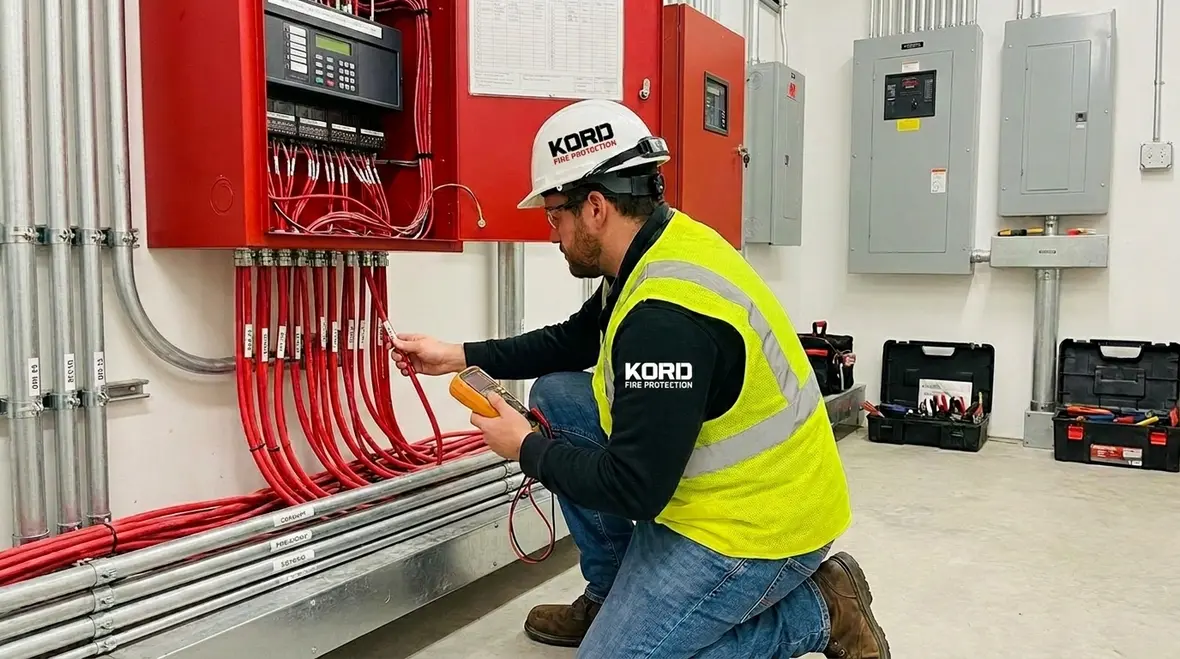
Electricity is essential in modern homes, offices, shops, factories, and commercial buildings. It powers lighting, cooling systems, computers, kitchen appliances, machinery, and communication equipment. However, electrical systems can also create serious fire hazards when wiring is damaged, circuits are overloaded, appliances are faulty, or installations are poorly maintained.
Electrical fires can develop without much warning. A damaged cable hidden behind furniture, an overheated socket, or an improperly maintained electrical panel may create risks that occupants do not immediately recognise. In Pakistan, where homes and businesses rely heavily on electrical appliances, backup power systems, and temporary connections, electrical fire prevention deserves regular attention.
Choosing suitable electrical fire safety measures is not simply about buying equipment. It involves understanding the property’s electrical condition, identifying possible hazards, selecting appropriate protection, and ensuring that qualified professionals install and maintain safety systems.
This buyer’s guide explains what homeowners, business owners, and property managers should consider when planning electrical fire safety. It also discusses the role of alarms, circuit protection, professional inspections, and emergency planning.
1. Understand the Common Causes of Electrical Fires
Before selecting any safety equipment, it is important to understand how electrical fires can occur. Different properties have different risks depending on their wiring, appliances, electrical load, and maintenance practices.
Some common causes include:
Overloaded sockets: Connecting too many appliances to one outlet or extension board can cause excessive electrical demand and overheating.
Damaged wiring: Old, cracked, loose, or exposed wiring may increase the risk of electrical faults.
Faulty appliances: Poorly maintained equipment or appliances with damaged internal components can become dangerous.
Incorrect electrical installations: Unsuitable cables, poorly installed connections, and improperly selected protective devices may create hazards.
Poor maintenance: Electrical panels, cables, and equipment require periodic inspection. Ignoring visible defects can allow problems to remain unnoticed.
Unsafe temporary connections: Informal wiring arrangements and unsuitable extension cables can increase the possibility of overheating and electrical faults.
The National Electric Power Regulatory Authority (NEPRA) advises the public to arrange regular inspections of internal wiring through qualified electricians and avoid overloading switches, sockets, and plugs. These precautions are relevant to homes, shops, and factories across Pakistan.
2. Start With a Professional Electrical Inspection
One of the most important steps before purchasing electrical fire safety equipment is arranging a professional inspection.
Buying alarms or protective devices without understanding the condition of the existing electrical installation may leave important hazards unaddressed.
A qualified electrician or electrical engineer can assess the property’s wiring, distribution boards, electrical load, protective devices, and visible signs of deterioration.
During an inspection, the professional may consider:
- The age and condition of electrical wiring.
- Whether cables are suitable for the expected electrical load.
- The condition of sockets, switches, and distribution boards.
- Whether protective devices are appropriate.
- The condition of electrical connections and earthing arrangements.
- Whether temporary wiring creates unnecessary risks.
- Whether the installation requires repair or upgrading.
NEPRA’s public awareness guidance specifically recommends regular internal wiring inspections by licensed electricians. It also advises people not to attempt electrical repairs themselves.
For older properties, an inspection is particularly valuable because electrical demand may have increased over time as new appliances and equipment have been added.
3. Check the Quality of Wiring and Electrical Components
Wiring is one of the foundations of electrical safety. Even a modern alarm system cannot compensate for an unsafe electrical installation.
When assessing electrical safety products and components, buyers should consider quality, suitability, certification, and compatibility with the property’s electrical system.
Important areas include:
Suitable cables: Electrical cables must be appropriate for their intended application and expected load. A qualified professional should determine the correct specifications.
Good-quality sockets and switches: Components should be suitable for the installation and designed for their intended electrical conditions.
Proper enclosures: Electrical distribution boards and related equipment should have suitable protective enclosures.
Reliable connections: Loose or deteriorated connections can contribute to overheating and electrical faults.
Suitable earthing: Proper earthing is an important part of electrical protection and should be assessed by a qualified professional.
Avoid choosing electrical components only because they are inexpensive. Poor-quality or unsuitable products may create greater long-term costs and safety concerns.
4. Understand Circuit Breakers and Electrical Protection
Circuit protection is an important part of preventing electrical hazards. Protective devices are designed to respond to certain abnormal electrical conditions, depending on their type and specifications.
A professional should assess which protective devices are appropriate for the property.
Common categories include:
Miniature Circuit Breakers (MCBs)
MCBs provide protection against certain overload and short-circuit conditions. They are commonly used in electrical distribution systems.
Their ratings must match the circuit design and cable capacity. An incorrectly selected breaker may not provide suitable protection.
Residual Current Devices (RCDs)
RCDs detect certain forms of current leakage and disconnect the supply when their operating conditions are met. They are mainly associated with protection against electric shock, although they can contribute to reducing some electrical hazards.
Residual Current Circuit Breakers with Overcurrent Protection (RCBOs)
RCBOs combine residual-current protection with overcurrent protection in one device. They may be suitable for particular circuits depending on the design of the installation.
Surge Protection Devices (SPDs)
Surge protection devices help protect electrical equipment against certain transient voltage surges. They are especially relevant where sensitive electronic equipment is installed.
These devices serve different purposes. They are not interchangeable, and selecting them requires an understanding of the electrical installation.
Buyers should ask a qualified electrician or engineer to explain which protection is suitable and why.
5. Consider Smoke Detectors and Fire Alarm Systems
Electrical fires can produce smoke before flames become visible. Early warning is therefore an important part of residential and commercial fire safety.
Smoke detectors and fire alarm systems can help occupants recognise an emergency and begin evacuation.
When evaluating an alarm system, consider the following:
- Whether the system is suitable for the building’s layout.
- Whether the detector type is appropriate for the environment.
- Whether alarms provide sufficient warning throughout occupied areas.
- Whether the system has a reliable power arrangement.
- Whether installation and maintenance support are available.
- Whether the system can be integrated with other building safety arrangements where appropriate.
Smoke alarms should be selected and installed according to recognised guidance and manufacturer instructions. Their location and type matter because different environments can affect detector performance.
A fire alarm system in Pakistan should be selected according to the property’s size, occupancy, building design, and applicable fire safety requirements.
For commercial buildings, professional assessment is especially important because occupants may be unfamiliar with the building and may need clear instructions during an emergency.
6. Check Backup Power and Battery Safety
Many Pakistani properties use backup power arrangements because of interruptions in electricity supply. These may include UPS systems, batteries, generators, and solar installations.
Although backup power can improve convenience, it also introduces additional electrical equipment that must be assessed and maintained.
Before choosing or installing backup equipment, buyers should consider:
- Whether the equipment is suitable for the intended load.
- Whether installation will be completed by a qualified professional.
- Whether the location is appropriate and adequately ventilated where required.
- Whether cables and connections are suitable.
- Whether manufacturer instructions are available.
- Whether the system can be inspected and maintained.
- Whether battery-related hazards have been considered.
Battery systems should not be placed in unsuitable areas or close to combustible materials. Damaged, swollen, leaking, or unusually hot batteries should be treated as potential hazards and assessed by a qualified professional.
Do not attempt to repair electrical or battery equipment yourself.
7. Evaluate Electrical Safety in Kitchens and Other High-Risk Areas
Some parts of a building contain more electrical equipment or operate under conditions that require additional attention.
Kitchens, workshops, server rooms, storage areas, and industrial production spaces may have different electrical fire risks.
In kitchens, electrical appliances may operate near heat, moisture, and combustible materials. Businesses may also use commercial refrigeration, cooking equipment, and ventilation systems.
In workshops and factories, machinery and electrical panels may operate for extended periods or under demanding conditions.
A safety assessment should consider:
- The number and type of electrical appliances.
- Whether equipment has adequate ventilation.
- Whether electrical installations are protected from environmental conditions.
- Whether combustible materials are stored appropriately.
- Whether equipment is inspected regularly.
- Whether staff know how to report electrical defects.
Electrical equipment should be used according to manufacturer instructions. Appliances with damaged cords, unusual heating, or other visible defects should not continue operating until professionally assessed.
8. Compare Product Quality, Certification, and Compatibility
When purchasing electrical safety equipment, buyers should avoid selecting products based only on price or appearance.
The correct product must be suitable for the electrical system and the building’s actual requirements.
Before making a purchase, check:
Manufacturer information: Look for clear manufacturer details, product specifications, and technical documentation.
Applicable standards: Ask whether the product complies with recognised standards relevant to its category.
Certification: Check whether the product has credible certification or testing documentation where applicable.
Compatibility: Confirm that the product is suitable for the existing installation.
Warranty: Understand what the warranty covers and what conditions apply.
After-sales support: Consider whether replacement parts, maintenance, and technical support are available.
Installation requirements: Some equipment requires specialist installation and commissioning.
Buyers should request documentation rather than relying entirely on advertising claims. A product described as advanced or high-quality is not automatically suitable for every property.
9. Consider Professional Installation and Maintenance
Even suitable equipment can become ineffective if it is installed incorrectly or poorly maintained.
Electrical installations and fire detection systems should be handled by qualified professionals. Buyers should confirm who will be responsible for installation, inspection, testing, and future servicing.
Before accepting an installation, ask for:
- Product specifications.
- Installation documentation.
- Relevant test and commissioning records.
- Maintenance instructions.
- Warranty information.
- Contact details for technical support.
NEPRA also advises the public not to repair electrical items independently and to use licensed electricians for inspection and repair work.
For commercial and industrial premises, maintenance should be documented. This helps property managers identify recurring problems and demonstrate that safety equipment is being monitored.
10. Understand the Role of Fire Safety Codes in Pakistan
Electrical fire safety is connected to wider building and workplace safety requirements.
The Building Code of Pakistan Fire Safety Provisions 2016 provides a national reference for fire protection in buildings. Pakistan also has the Pakistan Electric and Telecommunication Safety Code 2014, which is included among the relevant instruments listed by the Pakistan Engineering Council.
NEPRA publishes a Power Safety Code containing provisions concerning workplace fire prevention, inspection of fire protection equipment, and checking electrical equipment for defects.
However, the exact requirements applicable to a property depend on its type, location, use, and the authority responsible for approval or enforcement.
Before purchasing equipment for a commercial or industrial building, owners should consult qualified professionals and the relevant local authority.
A suitable fire alarm system in Pakistan should form part of a wider approach that includes safe electrical design, proper maintenance, emergency exits, and evacuation planning.
11. Review the Property’s Fire Detection and Emergency Arrangements
Electrical protection and fire detection work together but perform different functions.
Circuit protection may reduce certain electrical hazards, while smoke detection and fire alarms provide warnings when fire-related conditions are detected.
A complete safety assessment should consider both.
For a home, this may involve suitable smoke alarms, safe electrical installations, and a household evacuation plan.
For a commercial property, the arrangements may also include:
- Building-wide alarm coverage.
- Clearly marked emergency exits.
- Emergency lighting where required.
- Staff awareness and training.
- Routine inspection of fire protection equipment.
- A documented emergency response plan.
The Punjab Civil Defence Department identifies fire detection and alarm systems, firefighting equipment, fire safety plans, and emergency exits among the measures considered during fire safety inspections.
These arrangements should be assessed according to the building’s actual requirements rather than selected as isolated products.
12. Avoid Common Electrical Fire Safety Buying Mistakes
Buyers sometimes make decisions that reduce the effectiveness of their safety arrangements.
Common mistakes include:
Choosing the cheapest product: Low cost should not be the only purchasing consideration. Suitability, quality, and documentation matter.
Ignoring professional advice: Electrical safety products must match the installation and its requirements.
Buying incompatible equipment: A protective device or alarm may not work properly with an unsuitable system.
Ignoring maintenance costs: Safety equipment requires ongoing inspection and servicing.
Assuming one product solves every problem: Circuit breakers, smoke detectors, and fire alarms have different functions.
Overlooking backup power: UPS units, batteries, and generators should be included in the safety assessment.
Ignoring warning signs: Burning smells, unusual heating, damaged cables, and repeated electrical faults should be assessed promptly by qualified professionals.
A careful buying decision should consider the entire safety system rather than one individual product.
13. A Practical Electrical Fire Safety Buying Checklist
Before purchasing electrical fire safety equipment, review the following points with a qualified professional:
- [ ] The property’s electrical installation has been assessed.
- [ ] Existing wiring is suitable for the expected load.
- [ ] Damaged or outdated components have been identified.
- [ ] Circuit protection has been professionally evaluated.
- [ ] Earthing arrangements have been assessed.
- [ ] Smoke detection requirements have been reviewed.
- [ ] The fire alarm system is suitable for the building.
- [ ] Backup power equipment has been included in the assessment.
- [ ] Products have clear specifications and documentation.
- [ ] Relevant certification and standards have been checked.
- [ ] Installation will be completed by qualified personnel.
- [ ] Warranty and after-sales support are available.
- [ ] Maintenance requirements are understood.
- [ ] Emergency exits and evacuation arrangements have been reviewed.
This checklist can help homeowners, businesses, and property managers make more informed purchasing decisions.
Conclusion
Electrical fire safety is an important responsibility for every property owner. Faulty wiring, overloaded sockets, damaged appliances, and unsuitable electrical installations can create hazards that affect people, buildings, and valuable equipment.
Before buying safety products, begin with a professional electrical inspection. Understand the property’s risks, compare suitable protective devices, check product quality, and confirm that installation and maintenance will be handled by qualified personnel.
Smoke detectors and a reliable fire alarm system in Pakistan can provide important early warnings, but they cannot replace safe wiring, appropriate circuit protection, and regular inspections.
The best electrical fire safety investment is a coordinated system that combines prevention, detection, professional maintenance, and emergency preparedness.
Frequently Asked Questions (FAQs)
1. What should I check before buying electrical fire safety equipment?
Start with a professional electrical inspection. Then assess wiring condition, circuit protection, smoke detection, product compatibility, certification, installation requirements, warranty, and maintenance support.
2. What causes electrical fires in homes and businesses?
Common causes include overloaded sockets, damaged wiring, faulty appliances, loose connections, unsuitable electrical installations, and poor maintenance.
3. Are circuit breakers and fire alarms the same?
No. Circuit breakers provide protection against certain electrical faults, while fire alarms detect fire-related conditions and warn occupants. Both may be important parts of a property’s safety arrangements.
4. Why should electrical equipment be installed by a qualified professional?
Professional installation helps ensure that equipment is suitable for the electrical system and installed according to applicable requirements. It also reduces the risk of unsafe connections and incompatible components.
5. How does a fire alarm system help prevent electrical fire injuries?
A fire alarm system provides an early warning when fire-related conditions are detected. This can give occupants an opportunity to follow the evacuation plan and move to safety. It does not eliminate the electrical fault or replace preventive maintenance.