
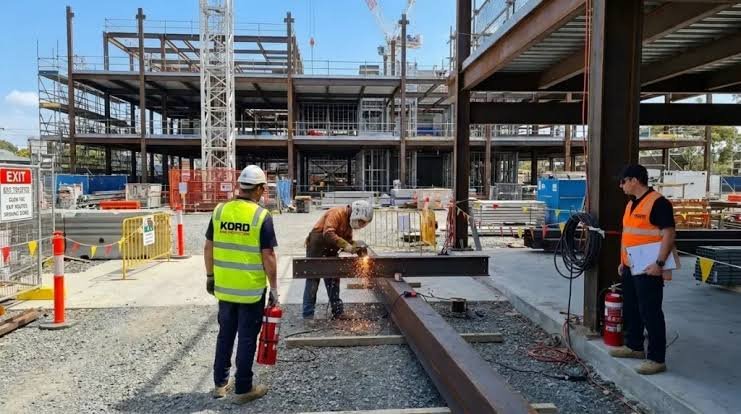
Construction sites are busy environments where workers, contractors, engineers, and visitors perform different activities every day. From welding and electrical work to material storage and equipment operation, each stage of a construction project can introduce fire risks. A small mistake, poor housekeeping, or an overlooked electrical problem can put people, property, and the entire project at risk.
Fire safety should therefore be treated as an essential part of construction planning rather than something considered only after an incident occurs. Every site needs clear safety responsibilities, suitable fire detection arrangements, accessible escape routes, proper storage practices, and workers who understand how to respond to an emergency.
In Pakistan, construction projects range from small residential developments to large commercial buildings, factories, roads, and infrastructure projects. Although their sizes and working conditions differ, the need to protect workers and surrounding communities remains the same.
This guide explains the importance of fire safety for construction sites, common hazards, prevention measures, emergency planning, and the role of fire protection systems. It also explores how a reliable fire alarm system in Pakistan can contribute to a safer construction environment.
1. Why Fire Safety Matters on Construction Sites
Construction sites often contain several temporary and changing fire hazards. Building materials, electrical equipment, fuel, packaging, and temporary facilities may be present in the same area. Different contractors may also work close to one another, increasing the importance of coordination.
Unlike a completed building, a construction site may not yet have permanent fire protection systems. Some areas might lack finished walls, permanent staircases, emergency lighting, or installed alarms. This can make it harder for workers to recognise danger and leave the site safely.
Effective fire safety helps to:
- Protect workers, contractors, visitors, and nearby residents.
- Reduce damage to construction materials and equipment.
- Prevent avoidable project delays.
- Improve emergency awareness among workers.
- Support compliance with applicable safety requirements.
- Reduce risks associated with temporary electrical installations and combustible materials.
Fire prevention is also a business responsibility. A serious incident can interrupt work, affect project budgets, damage equipment, and create legal and reputational problems. A planned safety programme helps reduce these risks while supporting a more organised workplace.
2. Understand Common Fire Hazards
The first step towards a safer construction site is identifying activities and materials that could contribute to a fire. Each project should have a risk assessment that reflects its size, design, working conditions, and current construction stage.
Electrical installations
Temporary electrical connections, damaged cables, overloaded circuits, and poorly maintained equipment can create fire risks. Construction sites often use temporary power supplies before permanent electrical systems are completed.
Electrical installations should be planned and inspected by qualified professionals. Damaged equipment must be reported and taken out of service through the site’s approved safety procedures. Workers should never attempt repairs beyond their training or authority.
Hot work activities
Some construction activities produce heat, sparks, or other ignition sources. Welding, cutting, and similar work require careful planning because nearby combustible materials may increase the risk of fire.
Projects should have a formal hot-work authorisation process where required. Supervisors should ensure that the work area has been assessed, suitable precautions are in place, and responsible trained personnel oversee the activity.
Combustible construction materials
Wood, cardboard, plastic packaging, insulation, paints, and certain finishing products can contribute to fire spread. Storing unnecessary materials near work areas or escape routes can increase the danger.
Materials should be stored in designated locations, with attention to manufacturer guidance and site safety rules. Waste should not be allowed to accumulate.
Fuel and gas storage
Some construction projects use fuel, gas cylinders, and other potentially hazardous products. Poor storage arrangements can expose workers and nearby facilities to additional risks.
These materials should be managed by authorised personnel in suitable designated areas, following relevant regulations, supplier instructions, and professional safety advice. Unauthorised access should be prevented.
Temporary buildings and site offices
Site offices, storage cabins, worker facilities, and temporary structures also require attention. Electrical appliances, heating equipment, cooking arrangements, and stored materials can create hazards if they are not properly managed.
Fire safety planning must cover the entire site, not just the main building under construction.
3. Prepare a Site-Specific Fire Safety Plan
A general safety policy is useful, but every construction project needs a fire safety plan that reflects its actual conditions.
The plan should identify:
- Main fire hazards and high-risk work areas.
- Locations of combustible and hazardous materials.
- Emergency exits and alternative escape routes.
- Assembly points and evacuation arrangements.
- Alarm and emergency communication methods.
- Responsibilities of supervisors and safety personnel.
- Emergency contact information.
- Arrangements for informing visitors and contractors.
The plan should be updated as the project changes. For example, a new floor, temporary storage area, or change in site access may affect evacuation arrangements.
A designated site safety manager or other responsible person should coordinate the programme. Workers should know who to contact when they notice an unsafe condition.
4. Maintain Clear Escape Routes and Emergency Exits
An effective evacuation arrangement is one of the most important parts of construction site fire safety. Workers must be able to recognise how to leave an affected area without confusion.
Construction projects can have temporary access restrictions, unfinished staircases, scaffolding, stored materials, and changing floor layouts. These conditions make regular checks especially important.
A safe escape arrangement should include:
Clearly identified routes: Workers should know the approved ways to leave their work areas. Routes should be communicated through suitable signs and site briefings.
Unobstructed access: Materials, tools, waste, and equipment should not block designated escape routes or emergency doors.
Suitable lighting: Temporary and permanent lighting arrangements should support safe movement, including where normal power may be interrupted.
Visible information: Emergency signs should be easy to recognise and appropriate for the site environment.
Assembly points: Workers should know where to gather after leaving the site. Assembly points should be communicated during induction and updated if site conditions change.
Escape arrangements must be reviewed whenever construction work affects access, stairways, corridors, or exits. No worker should be expected to find an unfamiliar route during an emergency.
5. Use Fire Detection and Alarm Arrangements
Early warning gives people an opportunity to respond before a fire situation becomes more dangerous. Construction sites should have suitable arrangements for detecting and communicating emergencies.
A fire alarm system may be part of a project’s temporary safety arrangements or may be installed as permanent building infrastructure during later construction stages. The appropriate design depends on the building, its current condition, the work being performed, and the applicable requirements.
A suitable alarm arrangement should be:
- Appropriate for the size and layout of the site.
- Audible or otherwise accessible to people in relevant work areas.
- Maintained and checked by competent personnel.
- Supported by clear emergency communication procedures.
- Adapted as the project expands or changes.
A fire alarm system in Pakistan can be an important part of a wider construction safety programme. However, simply purchasing alarm equipment is not enough. The system must be selected, installed, tested, and maintained according to its intended use and applicable technical requirements.
Workers should understand what the site’s alarm signals mean and what action they are expected to take. Alarm awareness should form part of worker induction and regular safety briefings.
6. Store Materials and Waste Responsibly
Good housekeeping is one of the simplest ways to improve fire prevention. Construction projects produce packaging, timber offcuts, plastic materials, and general waste throughout the working day.
If waste is left in work areas, it can contribute to fire spread and obstruct movement. A planned housekeeping programme helps keep the site organised.
Useful measures include:
- Providing designated waste collection areas.
- Removing unnecessary packaging and offcuts regularly.
- Keeping combustible materials away from ignition sources.
- Separating incompatible materials according to professional guidance.
- Maintaining suitable storage conditions.
- Keeping access to safety equipment and exits clear.
- Assigning responsibility for routine housekeeping inspections.
Storage arrangements should be reviewed as material quantities and site activities change. Workers should not create informal storage spaces in stairways, corridors, or other areas needed for emergency movement.
7. Manage Electrical and Hot Work Risks
Electrical work and hot work require additional supervision because they may introduce ignition sources into areas containing combustible materials.
Only qualified and authorised personnel should carry out specialist electrical work. Site management should ensure that temporary electrical arrangements are professionally assessed and maintained.
For hot work, a documented authorisation process can help supervisors check that the activity has been properly assessed before it begins. The process should identify the location, nearby hazards, responsible people, and required precautions.
Where the risk assessment requires it, a competent fire-watch person should be assigned under the site’s approved procedures. The person should understand their responsibilities and know how to raise an alarm and communicate with supervisors.
Workers should never improvise electrical repairs or attempt to manage hazardous work without the required training and supervision. If conditions appear unsafe, the concern should be reported to the responsible supervisor.
8. Provide Suitable Fire Protection Equipment
Fire protection equipment should be selected according to the hazards, site layout, and applicable standards. Different environments may require different types of equipment, and not every product is appropriate for every fire risk.
Construction management should arrange for a competent fire safety professional to assess the equipment required for the project.
Important considerations include:
- Whether the equipment is suitable for the identified risks.
- Whether it is accessible and clearly identified.
- Whether inspection and maintenance arrangements are documented.
- Whether workers know how to report missing or damaged equipment.
- Whether the equipment remains accessible as the site changes.
Fire extinguishers and other equipment should not be treated as substitutes for evacuation planning, alarms, or professional emergency response. Workers should follow their training and site procedures. Untrained personnel, including children visiting a site, should never be expected to fight a fire.
9. Train Workers and Contractors
Fire safety training helps workers recognise hazards and understand their responsibilities. It should be provided during site induction and repeated when working conditions or site arrangements change.
Training topics can include:
Recognising hazards: Workers should understand common fire risks, including unsafe electrical conditions, combustible waste, and poorly managed storage.
Understanding alarms: Everyone should know how an emergency is communicated and what the site’s alarm signals mean.
Evacuation awareness: Workers should know their escape routes, assembly points, and reporting arrangements.
Reporting concerns: Staff should understand how to raise concerns about damaged equipment, blocked exits, or unsafe work conditions.
Contractor coordination: Contractors should receive relevant site safety information before beginning work. They should also understand how their activities may affect other teams.
Training should use clear language that workers understand. Where necessary, information can be supported with visual signs, demonstrations by qualified trainers, and brief toolbox talks.
10. Conduct Emergency Drills and Regular Inspections
An emergency plan should not remain only on paper. Planned drills help workers become familiar with alarms, communication methods, and evacuation arrangements.
Drills should be organised by responsible site management and conducted in a controlled manner. Their purpose is to identify confusion, communication gaps, and problems with escape arrangements.
After a drill, supervisors can review:
- Whether workers recognised the alarm.
- Whether instructions were understood.
- Whether escape routes were accessible.
- Whether assembly arrangements were clear.
- Whether contractors and visitors were included.
- Whether any changes are needed in the emergency plan.
Regular inspections are equally important. A checklist can help the safety team review alarm arrangements, temporary electrical installations, storage areas, housekeeping, emergency signs, and access routes.
Inspection findings should be recorded, assigned to responsible personnel, and followed up until concerns are addressed.
11. Prepare for Changing Construction Conditions
One major difference between construction sites and completed buildings is that their layouts change continuously. A safe arrangement at the beginning of a project may become unsuitable several weeks later.
For example, a new work area may affect the route workers use to reach an exit. Additional materials may require a different storage arrangement. Temporary structures may change how people move around the site.
Site management should review fire safety whenever there is a significant change in:
- Building layout or construction stage.
- Number of workers or contractors.
- Work activities and equipment.
- Material storage arrangements.
- Temporary power installations.
- Access routes and emergency exits.
- Alarm and communication arrangements.
This process helps ensure that fire safety remains relevant throughout the project instead of becoming outdated.
12. Understand Fire Safety Requirements in Pakistan
Construction companies in Pakistan should consider relevant national building provisions, occupational safety requirements, and local authority directions when planning fire protection.
The Building Code of Pakistan Fire Safety Provisions 2016, published by the Pakistan Engineering Council, provides a national framework covering fire prevention, life safety, building protection, fire protection systems, and means of escape. It also addresses construction, alteration, and demolition operations. The specific requirements applicable to a project should be confirmed with the relevant authority and qualified professionals.
In April 2026, the International Labour Organization reported that Pakistan had approved a national Occupational Safety and Health Code of Practice for the construction sector. The code covers building works, civil engineering, infrastructure development, and demolition. The ILO stated that it would come into force one year after notification, so project managers should confirm its commencement and applicable implementation requirements with the relevant authorities.
Requirements can differ according to project type, location, and the authority responsible for enforcement. Construction companies should therefore obtain professional advice rather than assume that one checklist covers every project in Pakistan.
13. The Role of Professional Fire Safety Support
Fire safety systems need proper planning, installation, and maintenance. Choosing equipment without understanding the site’s risks can leave important gaps in protection.
Professional support can help construction companies assess hazards, identify suitable detection and alarm arrangements, review escape provisions, and plan inspection schedules.
For projects that require a fire alarm system in Pakistan, the design should consider the building’s intended use, construction stage, environmental conditions, and relevant technical standards. Qualified specialists can also help ensure that temporary arrangements are reviewed as the project develops.
Working with experienced fire safety professionals can improve coordination between project managers, engineers, contractors, and safety teams.
14. Construction Site Fire Safety Checklist
A practical checklist can help supervisors review important safety arrangements throughout a project.
- [ ] A site-specific fire risk assessment is available.
- [ ] Workers and contractors receive fire safety induction.
- [ ] Emergency contacts and reporting arrangements are displayed.
- [ ] Escape routes and assembly points are identified.
- [ ] Exits and access routes remain unobstructed.
- [ ] Alarm and communication arrangements are suitable.
- [ ] Temporary electrical installations are professionally maintained.
- [ ] Hot work is managed through approved procedures.
- [ ] Combustible materials are stored appropriately.
- [ ] Waste is collected and removed regularly.
- [ ] Fire protection equipment is suitable and inspected.
- [ ] Emergency drills and inspections are documented.
- [ ] Fire safety arrangements are reviewed when site conditions change.
The checklist should be adapted to the project rather than used as a replacement for a professional risk assessment or legal compliance review.
Conclusion
Fire safety for construction sites requires continuous attention, clear responsibilities, and cooperation between everyone involved in a project. Electrical hazards, hot work, combustible materials, temporary facilities, and changing site layouts can all increase fire risks if they are not properly managed.
A well-planned safety programme combines prevention, early warning, suitable equipment, clear escape routes, worker training, inspections, and emergency drills. These measures help protect workers while reducing the possibility of serious disruption and property damage.
In Pakistan, construction companies should consider the Building Code of Pakistan Fire Safety Provisions 2016, applicable occupational safety requirements, and directions from relevant authorities. Professional assessment is important when selecting and maintaining fire protection arrangements.
Whether a project involves a small building or a large infrastructure development, safety should remain a priority from the first day of work until final completion.
Frequently Asked Questions (FAQs)
1. Why is fire safety important on construction sites?
Fire safety protects workers, contractors, visitors, nearby communities, and property. Construction sites contain changing hazards such as temporary electrical systems, combustible materials, and hot work activities. Proper planning helps reduce these risks and supports safer working conditions.
2. What are the common causes of fires on construction sites?
Common risk factors include electrical faults, poorly managed hot work, combustible waste, unsuitable material storage, and unsafe use of equipment. Each site should conduct a risk assessment to identify the hazards relevant to its activities.
3. What fire safety equipment should a construction site have?
Equipment depends on the project’s hazards, size, layout, and applicable requirements. It may include suitable fire detection and alarm arrangements, appropriate fire protection equipment, emergency signs, and communication systems. A qualified professional should assess what is needed.
4. How often should construction workers receive fire safety training?
Workers should receive relevant training during site induction and whenever important site conditions or responsibilities change. Regular briefings and planned emergency drills can help reinforce awareness and identify weaknesses in the site’s arrangements.
5. What fire safety regulations apply to construction sites in Pakistan?
Relevant provisions may include the Building Code of Pakistan Fire Safety Provisions 2016 and applicable occupational safety requirements. Pakistan’s national construction-sector Occupational Safety and Health Code of Practice was approved in 2026, with commencement subject to the timeline reported by the ILO. Project managers should confirm current requirements with the relevant authorities.