
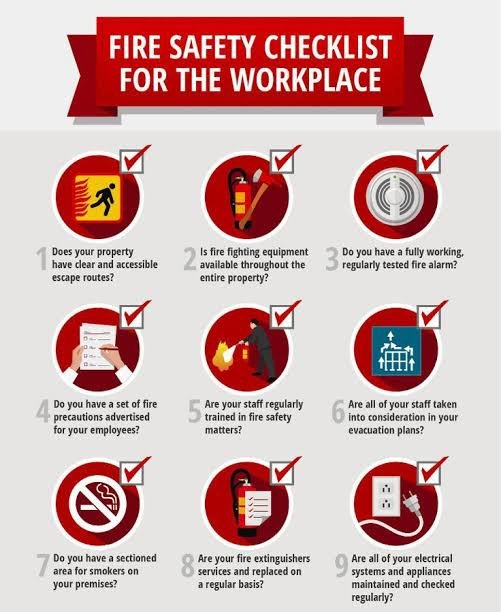
Fire safety is an important responsibility for every home, office, school, commercial building, and industrial facility. Although many people understand the importance of fire extinguishers and alarm systems, they sometimes overlook one of the simplest ways to improve overall preparedness: a fire safety checklist.
A fire safety checklist is more than a document filled with boxes to tick. It is a practical tool that helps people identify potential hazards, review safety equipment, check emergency arrangements, and make sure important precautions are not forgotten. Without a consistent inspection process, small maintenance problems can remain unnoticed and emergency plans may become outdated.
In Pakistan, fire safety deserves particular attention because buildings have different layouts, occupancy levels, electrical requirements, and emergency arrangements. A shopping centre, factory, school, apartment building, and small office do not face exactly the same risks. Their safety procedures should reflect their individual needs.
The Building Code of Pakistan – Fire Safety Provisions 2016 provides an important reference for fire prevention and life safety in buildings. Provincial and local authorities may also have their own inspection procedures and requirements.
Here are five important reasons why fire safety checklists matter more than many people realise.
What Is a Fire Safety Checklist?
A fire safety checklist is a structured document used to review fire prevention measures, protective equipment, building conditions, and emergency arrangements.
It helps property owners, facility managers, safety officers, and employees examine whether essential precautions are in place and whether maintenance or corrective action is needed.
A typical checklist may include:
- Fire detection and alarm systems
- Fire extinguishers and other applicable firefighting equipment
- Emergency exits and evacuation routes
- Emergency lighting and exit signs
- Electrical installations and visible hazards
- Fire doors and access routes
- Storage of combustible materials
- Emergency contact information
- Staff awareness and evacuation training
- Inspection and maintenance records
The exact checklist should depend on the building’s size, purpose, occupancy, and applicable safety requirements. A checklist for a small office should not automatically be treated as suitable for a hospital or industrial facility.
1. Checklists Help Identify Fire Hazards Early
One of the biggest benefits of a fire safety checklist is that it encourages regular inspections. Fire hazards do not always appear suddenly. Some develop gradually because of poor maintenance, changes in building use, or everyday working practices.
For example, damaged electrical equipment, overloaded storage areas, poorly maintained machinery, and blocked escape routes can create safety concerns. If nobody checks these conditions regularly, they may remain unnoticed.
A checklist gives people a consistent way to review important areas instead of depending entirely on memory.
Common hazards worth reviewing
A building inspection may include checking:
- Whether electrical equipment appears damaged or poorly maintained
- Whether combustible materials are stored appropriately
- Whether corridors and exits remain clear
- Whether kitchens and cooking areas have suitable precautions
- Whether waste is collected and managed properly
- Whether generator and equipment rooms are maintained
- Whether maintenance concerns have been reported and addressed
These checks are useful in different environments. In a warehouse, storage arrangements may need particular attention. In a restaurant, cooking areas and electrical appliances may be important inspection points. In an office, electrical equipment and clear evacuation routes deserve regular review.
Why early identification matters
Finding a problem during a routine inspection gives the responsible person an opportunity to arrange appropriate corrective action before an emergency occurs.
For instance, a checklist may reveal that an exit route is being used for temporary storage. The building manager can arrange for the obstruction to be removed and remind staff that emergency routes must remain accessible.
The checklist does not eliminate every hazard, but it makes inspections more organised and helps prevent important concerns from being overlooked.
2. They Help Keep Fire Safety Equipment Ready
Fire protection equipment must be suitable for the building and maintained according to the manufacturer’s instructions and applicable requirements. Simply purchasing equipment does not guarantee that it will remain ready for use.
Over time, equipment may require inspection, servicing, repairs, or replacement. A checklist helps responsible people keep track of these requirements.
Reviewing fire alarm systems
A fire alarm system is an important part of a building’s overall safety arrangements. It is designed to provide an early warning so occupants can respond and evacuate.
A checklist can help management confirm whether:
- The installed system has an appropriate maintenance schedule
- Inspection and servicing records are available
- Reported faults have been referred to qualified personnel
- Required warning devices are accessible and not obstructed
- Relevant backup power arrangements are maintained
- Changes to the building have been reviewed for their effect on detection and warning coverage
A suitable fire alarm system in Pakistan should be selected according to the property’s requirements, relevant standards, and applicable authority guidance. Installation, testing, and servicing should be handled by qualified professionals.
Reviewing other safety equipment
Depending on the building, the checklist may also cover:
- Fire extinguishers and their inspection records
- Fire hydrants and hose reels, where installed
- Sprinkler systems, where required
- Fire pumps and associated water supplies
- Emergency lighting
- Fire doors and their condition
- Safety signs and evacuation information
The purpose is to identify missing, damaged, overdue, or inaccessible equipment so that the responsible person can arrange suitable action.
A checklist should never replace professional inspection or technical servicing. It is a management tool that helps ensure those activities are organised and recorded.
3. Checklists Improve Emergency Preparedness
Having safety equipment is only one part of fire protection. People also need to understand what to do if an alarm sounds or an emergency occurs.
Without clear arrangements, occupants may become confused about evacuation routes, designated meeting points, or who is responsible for communicating important information.
A fire safety checklist helps organisations review their emergency arrangements regularly.
Reviewing evacuation routes
Every building should have evacuation arrangements appropriate to its design and occupancy.
A checklist can help confirm that:
- Emergency exits are identified and accessible
- Corridors and stairways are kept clear
- Exit signs are visible
- Emergency lighting is maintained where required
- Evacuation information is available
- Assembly arrangements are communicated to occupants
Building managers should also consider people who may need additional assistance, including young children, older adults, visitors, and people with disabilities.
Reviewing staff awareness
Employees should know the basic emergency procedures relevant to their workplace.
A checklist may include questions such as:
- Have employees received appropriate fire safety information?
- Do staff know how to recognise the alarm?
- Are emergency contacts displayed?
- Are evacuation responsibilities clearly assigned?
- Are drills organised where required?
- Are new employees informed about emergency arrangements?
Fire drills can help people become familiar with evacuation procedures. They should be planned and supervised responsibly, with suitable arrangements for everyone in the building.
The objective is not simply to complete a drill. It is to identify confusion, communication problems, or accessibility issues that need improvement.
Why preparedness matters
When emergency arrangements are reviewed regularly, people are more likely to understand their responsibilities. This can support a more organised response and help reduce confusion during an emergency.
A fire safety checklist makes it easier to review whether those arrangements remain suitable as staff, building layouts, and occupancy patterns change.
4. They Support Maintenance, Accountability, and Record-Keeping
Fire safety is not a one-time activity. Buildings change, equipment ages, and maintenance requirements continue throughout the year.
A checklist creates a record of what was inspected, what problems were identified, and what action was taken.
This is particularly important for businesses and organisations with multiple departments, floors, or locations.
Creating a clear inspection record
A useful inspection record should include:
- Date of inspection
- Name or role of the responsible person
- Area or equipment inspected
- Condition observed
- Problems identified
- Corrective action required
- Person or department responsible
- Target completion date
- Follow-up inspection details
For example, an inspection may identify a damaged emergency sign. The record can show that the issue was reported, assigned to the maintenance team, and checked again after replacement.
This process makes it easier to track unresolved problems instead of relying on verbal reminders.
Assigning responsibilities
A checklist can also help clarify who is responsible for different safety tasks.
A building manager may oversee general inspections, while qualified technicians handle specialist equipment maintenance. Department supervisors may report hazards in their work areas, and employees may be responsible for keeping designated routes clear.
Clear responsibilities reduce the chance that everyone assumes someone else is handling an important task.
Supporting compliance reviews
Documentation can help building management prepare for inspections and demonstrate that safety arrangements are being reviewed.
In Pakistan, the Punjab Civil Defence Department identifies fire detection and alarm systems, firefighting arrangements, fire safety plans, emergency control rooms, and evacuation arrangements among the measures considered during inspections of relevant premises.
However, requirements can differ according to location, building type, and the authority responsible for enforcement. A checklist should therefore be reviewed against the rules applicable to the specific property.
5. They Help Protect People, Property, and Business Continuity
The most important purpose of fire safety is protecting human life. Checklists support this objective by bringing different safety responsibilities together in one organised process.
They help responsible people review prevention measures, warning systems, evacuation arrangements, and equipment maintenance before problems become more serious.
Protecting building occupants
A well-maintained fire safety arrangement can help occupants receive warnings and understand how to leave a building safely.
This is important in places where many people may be present, such as:
- Schools and educational institutions
- Hospitals and healthcare facilities
- Shopping centres
- Hotels and restaurants
- Factories and warehouses
- Offices and commercial buildings
- Apartment complexes
Each type of property has different needs. Hospitals, for example, must consider patients who may not be able to evacuate independently. Schools need procedures that account for children and staff. Warehouses may require attention to storage arrangements and access routes.
A checklist helps management consider these differences rather than applying a generic approach to every building.
Reducing disruption
A fire-related incident can interrupt business operations, damage equipment, affect stock, and create financial difficulties.
Routine inspections may help identify maintenance issues and weaknesses in emergency arrangements before they contribute to a larger problem.
For businesses, this also supports continuity planning. Management can review important documents, emergency contacts, responsibilities, and arrangements for communicating with employees.
Building confidence among employees and visitors
People are more likely to feel confident in a workplace or public building when safety arrangements are clearly maintained and communicated.
Visible exit signs, accessible emergency routes, maintained equipment, and organised procedures demonstrate that management takes safety responsibilities seriously.
A checklist helps keep these arrangements under regular review.
How to Create an Effective Fire Safety Checklist
A useful checklist should be practical, easy to understand, and relevant to the property. It should not be unnecessarily complicated or copied without considering the building’s actual risks.
Step 1: Understand the building
Start by reviewing the building’s purpose, size, number of floors, occupancy, and layout.
Identify areas that may need particular attention, such as kitchens, electrical rooms, storage spaces, workshops, generator areas, and parking facilities.
Step 2: Review applicable requirements
Check the relevant building and fire safety requirements for the property’s location and occupancy.
The Building Code of Pakistan – Fire Safety Provisions 2016 is an important national reference. Provincial and local authorities may also issue additional requirements or inspection guidance.
Step 3: Divide the checklist into sections
Organise the document into clear categories, such as:
- Fire prevention and housekeeping
- Fire detection and alarm arrangements
- Fire protection equipment
- Emergency exits and signage
- Electrical and equipment safety
- Evacuation planning
- Staff awareness and training
- Maintenance and inspection records
This makes the checklist easier to complete and review.
Step 4: Assign responsible people
Identify who will complete inspections and who will follow up on problems. Technical work should be assigned to appropriately qualified professionals.
Step 5: Record findings and corrective action
Do not simply mark an item as incomplete. Record what needs attention, who will address it, and when it should be reviewed again.
Step 6: Review the checklist regularly
Inspection frequency should reflect the building’s risk, equipment requirements, and applicable rules. Review the checklist whenever the building layout, occupancy, operations, or equipment changes.
A Simple Fire Safety Checklist for Buildings in Pakistan
The following general list can help property managers organise a basic review. It is not a substitute for a professional risk assessment or an official compliance checklist.
Fire prevention
- [ ] Common areas are free from unnecessary combustible storage.
- [ ] Electrical concerns have been reported.
- [ ] Waste is managed appropriately.
- [ ] Kitchens and equipment areas are reviewed.
Detection and protection
- [ ] Fire alarm arrangements are reviewed.
- [ ] Alarm maintenance records are available.
- [ ] Fire extinguishers are accessible and inspected.
- [ ] Other installed fire protection systems are maintained.
Evacuation arrangements
- [ ] Emergency exits are accessible.
- [ ] Corridors and stairways are clear.
- [ ] Exit signs are visible.
- [ ] Emergency lighting is maintained where required.
- [ ] Evacuation information is available.
People and procedures
- [ ] Emergency contacts are displayed.
- [ ] Employees know the relevant emergency procedures.
- [ ] Assistance arrangements are considered for people who need them.
- [ ] Drills and training are reviewed where required.
Records and follow-up
- [ ] Inspection dates are recorded.
- [ ] Maintenance documents are available.
- [ ] Reported problems are assigned to responsible people.
- [ ] Corrective actions are followed up.
Fire Safety Checklist Requirements in Pakistan
Fire safety requirements in Pakistan should be understood in the context of the building’s location, use, size, and applicable authority.
The Pakistan Engineering Council’s Building Code of Pakistan – Fire Safety Provisions 2016 provides guidance covering fire prevention, life safety, building protection, inspection, maintenance, and emergency-related arrangements.
Provincial authorities also have inspection responsibilities. For example, Punjab Civil Defence identifies several fire safety measures for relevant industrial, commercial, and high-rise premises. Sindh Civil Defence also describes inspection and training functions relating to fire safety.
These examples demonstrate why building owners should not assume that one general checklist covers every legal requirement throughout Pakistan. They should consult the relevant local authority and qualified fire safety professionals to confirm what applies to their property.
Common Mistakes to Avoid When Using Fire Safety Checklists
Even a well-designed checklist can become ineffective if it is not used properly.
Some common mistakes include:
- Completing inspections only on paper: A checklist should reflect actual conditions, not simply be filled in to complete a task.
- Using the same checklist everywhere: Different buildings have different hazards and occupancy needs.
- Ignoring maintenance records: Inspection findings should lead to appropriate action and follow-up.
- Overlooking evacuation routes: Equipment checks alone do not provide a complete picture of fire safety.
- Assigning unclear responsibilities: Every important task should have an identified responsible person.
- Forgetting to update documents: Changes to the building, equipment, or operations should trigger a review.
- Treating a checklist as professional certification: A general inspection document cannot replace required technical assessments or official approval.
Avoiding these mistakes helps make inspections more meaningful and improves the value of the checklist over time.
Conclusion
Fire safety checklists matter because they turn general safety responsibilities into practical, repeatable actions. They help identify hazards early, keep equipment maintenance organised, improve emergency preparedness, support accountability, and protect people and property.
For buildings using a fire alarm system in Pakistan, a checklist should consider the entire safety arrangement rather than focusing only on alarm equipment. Emergency exits, warning systems, extinguishers, electrical conditions, evacuation plans, training, and maintenance records all contribute to a more complete approach.
Every building has different requirements, so checklists should be adapted to its actual risks and reviewed against applicable regulations. Where technical assessment, installation, or servicing is needed, qualified professionals should be involved.
Ultimately, a checklist is valuable not because every box is marked, but because it helps people notice problems, take responsibility, and make meaningful improvements to fire safety.
Frequently Asked Questions
1. What is the main purpose of a fire safety checklist?
Its main purpose is to help identify potential fire hazards, review safety equipment, check emergency arrangements, and record maintenance or corrective actions. It makes regular inspections more organised.
2. How often should a fire safety checklist be completed?
The frequency depends on the building’s risk level, occupancy, equipment requirements, and applicable regulations. Some items may need frequent observation, while formal inspections should follow the relevant maintenance schedule and authority requirements.
3. What should a basic fire safety checklist include?
A basic checklist should cover fire hazards, alarm systems, extinguishers, emergency exits, exit signs, emergency lighting, electrical safety, evacuation arrangements, staff awareness, and inspection records.
4. Are fire safety checklists important for small businesses?
Yes. Small businesses also need to consider fire prevention, warning systems, accessible exits, suitable equipment, and emergency procedures. A checklist helps owners review these responsibilities systematically.
5. Are fire safety checklists required in Pakistan?
Fire safety obligations depend on the applicable building codes, provincial and local regulations, property type, and authority requirements. The Building Code of Pakistan – Fire Safety Provisions 2016 and relevant provincial Civil Defence guidance are important references. Property owners should confirm the requirements applicable to their premises.