
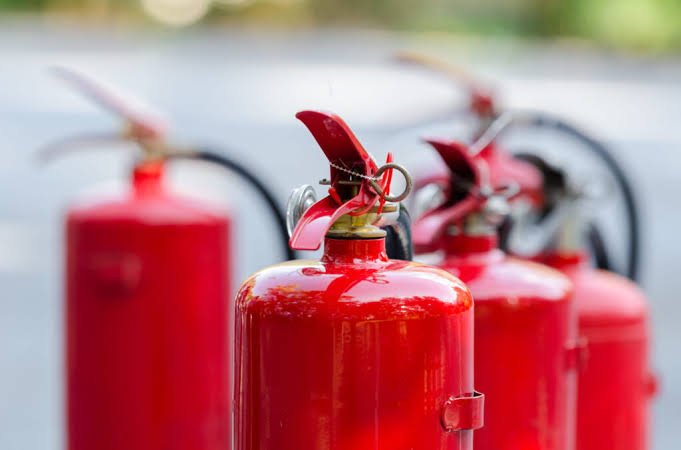
Fire extinguishers are important safety devices for homes, offices, factories, shopping centres, warehouses, restaurants, and other buildings. When a small fire occurs, the correct extinguisher may help control it before it spreads. However, choosing the wrong type, ignoring maintenance, or misunderstanding how an extinguisher works can make an emergency more dangerous.
Different fires require different extinguishing agents. Water can be suitable for ordinary combustible materials, while electrical equipment, flammable liquids, cooking oils, and combustible metals may require other specialised options. No single extinguisher is suitable for every fire hazard.
In Pakistan, property owners and businesses should consider their building’s risks, applicable fire safety requirements, and the condition of their firefighting equipment. The Building Code of Pakistan (Fire Safety Provisions 2016) provides guidance on selecting portable fire extinguishers according to the likely fire type, the hazards present, and other relevant conditions. <Cite refs={[“turn870552search24”]} />
A suitable fire alarm system in Pakistan also plays an important role in a complete fire safety plan by alerting occupants when a fire is detected. Extinguishers, alarms, escape routes, and emergency procedures should work together to protect people and property.
This guide explains seven common mistakes people make with types of fire extinguishers and how to avoid them.
Understanding the Main Types of Fire Extinguishers
Before discussing common mistakes, it helps to understand the principal extinguisher types and their intended uses. Always check the extinguisher’s actual label and applicable local requirements because fire classification conventions and approved applications can vary.
1. Water extinguishers
Water extinguishers are generally designed for Class A fires involving ordinary combustible materials such as paper, wood, cloth, and some plastics. Water cools the burning material and helps stop combustion.
They must not be used on energised electrical equipment or burning flammable liquids. Water can conduct electricity and may spread certain liquid fires.
2. Foam extinguishers
Foam extinguishers can be suitable for certain fires involving ordinary combustibles and flammable liquids, depending on the product’s rating and instructions.
They are not automatically safe for every electrical or chemical hazard. Check the manufacturer’s label before selecting or using one.
3. Dry chemical powder extinguishers
Multipurpose ABC dry chemical extinguishers are designed for specified Class A, B, and C hazards under the relevant classification system. They are widely used in many commercial and industrial settings because they can cover several common fire risks.
However, the label must confirm the extinguisher’s ratings. Powder discharge may also leave residue that affects sensitive electrical or mechanical equipment.
4. Carbon dioxide (CO₂) extinguishers
CO₂ extinguishers use carbon dioxide to help suppress suitable fires. They are commonly considered for certain flammable-liquid and electrical-equipment hazards when the extinguisher is appropriately rated.
They are not universally suitable for ordinary combustible materials or all fire situations. CO₂ can also create an asphyxiation risk in confined spaces, so the product instructions and safety procedures must be followed.
5. Wet chemical extinguishers
Wet chemical extinguishers are designed for certain fires involving cooking oils and fats, especially in commercial kitchens. Their agent helps cool the burning material and form a layer that reduces the risk of re-ignition.
A suitable extinguisher should be selected for the particular cooking hazard. Never throw water onto burning cooking oil or grease.
6. Special extinguishers for combustible metals
Some industrial processes involve combustible metals, such as magnesium or titanium. These fires require specialised extinguishing agents selected for the specific metal.
Ordinary water, foam, or multipurpose extinguishers may be unsuitable and can make some metal fires more dangerous. These hazards require a professional assessment and equipment specifically approved for the application.
The US Fire Administration provides an overview of the main extinguisher categories and their intended fire types. <Cite refs={[“turn870552search2”]} />
Mistake 1: Assuming One Extinguisher Works on Every Fire
One of the most common fire safety mistakes is believing that any extinguisher can put out any fire.
In reality, extinguishing agents work differently. Water removes heat from suitable burning materials, while other agents may interrupt combustion, displace oxygen, or form a protective layer over the fuel. The effectiveness of each agent depends on the type of fire.
For example, a water extinguisher intended for ordinary combustible materials is not suitable for use on energised electrical equipment. Applying water to burning flammable liquids may also spread the fire rather than control it.
Similarly, a multipurpose ABC extinguisher should not be assumed suitable for commercial cooking oil fires or combustible metals unless its label specifically confirms the required application.
How to avoid this mistake
Identify the hazards present in each area before choosing equipment. An office may need protection for paper, furniture, and electrical equipment, while a restaurant kitchen may have a separate cooking-oil hazard.
Ask a competent fire safety professional to assess the premises and recommend appropriate extinguishers. Check the fire classifications, product ratings, and instructions before purchase.
Choosing the correct type is more important than simply having an extinguisher on the wall.
Mistake 2: Confusing Fire Classes and Extinguisher Labels
Fire classes describe the materials involved in a fire, and extinguisher labels indicate which hazards the equipment is designed to address.
However, classification systems are not identical worldwide. In the commonly used US system, Class C refers to energised electrical equipment, while Class K relates to cooking oils and fats. Other standards use different letters for some hazards.
This can cause confusion when buyers compare imported products, read online guides from different countries, or purchase equipment without checking the label.
A person might see a particular letter on an extinguisher and assume it means the same thing in every market. That assumption can lead to an unsuitable selection.
How to avoid this mistake
Read the complete label, including the fire types, ratings, limitations, and operating instructions. Confirm which standard or classification system applies to the product and the building.
When purchasing equipment in Pakistan, ask the supplier to provide relevant product documentation and explain the intended applications. Do not rely on colour alone because colour conventions, product designs, and labels can vary.
If the extinguisher’s suitability is unclear, seek professional advice instead of guessing.
Mistake 3: Using Water on Electrical Fires or Burning Liquids
Water is familiar and widely available, so people may instinctively reach for it when they see flames. Unfortunately, using water on the wrong type of fire can create serious hazards.
Water can conduct electricity, exposing a person to electric shock when applied to energised electrical equipment. It can also cause burning oils and some flammable liquids to spread, increasing the danger.
This is particularly relevant in homes and workplaces where electrical appliances, distribution boards, generators, fuel storage, or cooking equipment are present.
How to avoid this mistake
Never apply water to energised electrical equipment or burning cooking oil. Follow the extinguisher’s label and the building’s emergency procedures.
If an electrical fault or fire occurs, raise the alarm and evacuate if there is danger. Do not approach damaged wiring or attempt to isolate electricity if doing so would expose you to flames, smoke, or electric shock.
For cooking-oil fires, use only equipment specifically suitable for that hazard, and only when it is safe and appropriate to do so. If there is any doubt, leave the area and contact emergency services.
The US Occupational Safety and Health Administration warns that water extinguishers are unsuitable for electrical fires and may worsen flammable-liquid fires. <Cite refs={[“turn870552search0”]} />
Mistake 4: Ignoring Special Fire Hazards in the Building
Some buildings have hazards that ordinary multipurpose extinguishers may not adequately address.
For example, restaurants may use deep-fat fryers, factories may process combustible metals, and industrial facilities may store particular chemicals or flammable liquids. These risks need to be identified before choosing firefighting equipment.
Installing standard extinguishers throughout a property without assessing these special hazards can leave important areas inadequately protected.
How to avoid this mistake
Conduct a fire risk assessment that considers the materials, equipment, processes, and activities in each area.
A commercial kitchen may need a suitable wet chemical extinguisher for cooking oils and fats. A metalworking facility may need a specialised extinguisher approved for the particular combustible metal present.
The exact equipment should be selected by a qualified professional who understands the hazards and applicable standards.
Do not assume that an extinguisher is appropriate simply because it is described as multipurpose. Its rating and the specific risk must match.
Mistake 5: Buying Extinguishers Based Only on Price
Cost is an important consideration for households and businesses, but choosing an extinguisher solely because it is cheap can lead to poor purchasing decisions.
A low-priced product may have unclear documentation, an unsuitable rating, inadequate support, or limited servicing options. It may also be the wrong size or type for the intended hazard.
On the other hand, the most expensive extinguisher is not automatically the best choice. The correct decision depends on technical suitability, product quality, approved applications, and maintenance needs.
How to avoid this mistake
Before purchasing, consider the following:
- Correct application: Does the extinguisher cover the likely fire hazards?
- Product documentation: Are the manufacturer, specifications, and instructions clearly identified?
- Relevant approvals: Does the product meet the standards required for the project?
- Capacity and rating: Is it appropriate for the expected risk and intended location?
- Servicing support: Can competent personnel inspect and maintain it?
- Warranty and replacement parts: Are support arrangements clearly explained?
Request an itemised quotation when purchasing equipment for a commercial or industrial building. Compare equivalent specifications rather than comparing prices alone.
The Pakistan Engineering Council’s Building Code of Pakistan (Fire Safety Provisions 2016) states that extinguisher selection should consider the type and likely size of fire, the hazards present, energised electrical equipment, ambient conditions, and other relevant factors. <Cite refs={[“turn870552search24”]} />
Mistake 6: Placing Extinguishers Where They Are Difficult to Reach
An extinguisher may be suitable and properly maintained, yet still be ineffective in an emergency if people cannot reach it quickly.
Common placement problems include storing boxes in front of an extinguisher, hiding it behind furniture, placing it in a locked room, or failing to provide clear identification.
Poor placement can delay access when people are already under pressure. In workplaces, equipment may also become inaccessible after changes to storage arrangements or office layouts.
How to avoid this mistake
Extinguishers should be installed in designated, accessible locations based on the building’s fire risks and applicable requirements. Signs should make their locations easy to identify, and escape routes must remain clear.
The appropriate number, type, and spacing depend on the building, the hazards, and the relevant standards. Avoid using a generic online recommendation as a substitute for a site-specific assessment.
Facility managers should review extinguisher locations when changing the layout, adding machinery, increasing storage, or renovating a building.
The US Occupational Safety and Health Administration explains that extinguisher selection and placement should reflect the potential type and size of workplace fires. <Cite refs={[“turn870552search1”]} />
Mistake 7: Neglecting Inspection, Maintenance, and Staff Awareness
Buying the right extinguisher does not guarantee that it will work when needed. Equipment can become damaged, lose pressure, develop corrosion, or be obstructed. It may also be used or tampered with without being returned to service.
Another common problem is assuming that employees know how to use every extinguisher. Without appropriate instruction, a person may select the wrong type, misunderstand its limitations, or remain in a dangerous area for too long.
How to avoid this mistake
Establish an inspection and maintenance programme that follows applicable requirements, manufacturer instructions, and the extinguisher’s design.
Routine checks should identify visible damage, missing components, obstruction, or other obvious problems. Qualified service personnel should carry out the prescribed servicing and testing.
After an extinguisher has been used, it should be assessed and returned to service only through the appropriate maintenance process. Keep records of inspections, servicing, defects, and corrective actions.
Staff should also know the alarm signal, evacuation routes, assembly point, and procedures for reporting a fire. Training should explain that extinguishers are intended for suitable, limited fires and must never be used when doing so would put people at risk.
The Role of Fire Alarm Systems in Fire Safety
Fire extinguishers are only one part of a complete fire protection strategy. A fire alarm system helps alert people when a fire is detected or an alarm is activated, giving occupants an opportunity to follow emergency procedures and evacuate.
Depending on the building, a fire alarm installation may include smoke detectors, heat detectors, manual call points, sounders, visual warning devices, and a control panel.
In Pakistan, applicable fire safety provisions and local requirements may call for suitable fire detection and alarm arrangements, firefighting equipment, emergency exits, and evacuation plans. Punjab Civil Defence, for example, lists these among the safety measures considered during inspections of relevant industrial, commercial, and high-rise premises. <Cite refs={[“turn870552search4”]} />
When evaluating a fire alarm system in Pakistan, property owners should consider the building’s occupancy, layout, fire hazards, alarm coverage, installation quality, and maintenance needs.
The alarm system and extinguishers serve different purposes. The alarm warns occupants; an extinguisher provides a means of fighting certain fires. Neither replaces safe escape routes, emergency planning, or the need to contact emergency services.
Choosing the Right Extinguisher for Different Locations
A property’s extinguisher requirements should be based on a fire risk assessment rather than a one-size-fits-all approach.
| Location | Important considerations |
|---|---|
| Home | Ordinary combustible materials, electrical appliances, and cooking hazards |
| Office | Paper, furniture, electrical equipment, and shared escape routes |
| Commercial kitchen | Cooking oils and fats, cooking appliances, and other kitchen hazards |
| Warehouse | Stored goods, packaging, storage configuration, and fire load |
| Factory | Machinery, electrical equipment, production processes, and any special materials |
| Server or equipment room | Sensitive electronics, electrical hazards, and the consequences of residue or water damage |
This table provides general considerations, not a definitive equipment specification. The appropriate extinguisher type, capacity, quantity, and placement should be confirmed by a competent professional.
What to Do When a Fire Starts
Fire extinguishers are designed as a first line of defence for fires of limited size. They are not intended to justify taking risks or attempting to control a spreading fire.
If you discover a fire, alert others and activate the alarm if it is safe to do so. Contact the appropriate emergency services and follow the building’s evacuation procedures.
Leave immediately if smoke is spreading, flames are growing, the fire is not clearly manageable, or your escape route could be cut off. Do not enter a smoke-filled area or return to retrieve belongings.
Only a trained person should consider using a suitable extinguisher on a small, contained fire when there is a clear escape route and conditions are safe. If there is any uncertainty, evacuate and leave firefighting to emergency responders.
After reaching safety, stay at the designated assembly point and do not re-enter until authorised emergency personnel say it is safe.
Conclusion
Fire extinguishers are valuable safety devices, but their effectiveness depends on choosing the correct type, understanding its limitations, placing it appropriately, and maintaining it properly.
The seven mistakes discussed in this guide—from assuming one extinguisher suits every fire to neglecting training and maintenance—can be avoided through careful selection, professional assessment, and consistent safety practices.
For homes and businesses in Pakistan, fire protection should include suitable extinguishers, a reliable alarm system where required, clear escape routes, and a practical emergency plan. Building owners should also confirm applicable requirements with the relevant authority.
The goal is not simply to purchase firefighting equipment. It is to ensure that the right equipment is available, maintained, and supported by procedures that prioritise human safety.
Frequently Asked Questions (FAQs)
1. What are the main types of fire extinguishers?
Common types include water, foam, dry chemical powder, carbon dioxide, wet chemical, and specialised extinguishers for combustible metals. Each has specific applications and limitations, so the label and relevant standard should always be checked.
2. Can one fire extinguisher be used for every type of fire?
No. Different fires require different extinguishing agents. A multipurpose extinguisher can cover several specified fire classes, but it should not be assumed suitable for every hazard, including all cooking-oil or combustible-metal fires.
3. Which extinguisher is suitable for electrical fires?
The correct choice depends on the equipment’s label, rating, and applicable standards. Extinguishers using suitable non-conductive agents, such as appropriately rated CO₂ or dry chemical products, may be used for certain electrical-equipment fires. Never apply water to energised electrical equipment.
4. How often should fire extinguishers be inspected?
The schedule depends on applicable regulations, manufacturer instructions, and the extinguisher type. Regular visual checks should identify visible damage or obstruction, while required servicing and testing should be performed by competent personnel and documented.
5. Why is a fire alarm system important alongside extinguishers?
A fire alarm system warns occupants of a fire or suspected emergency, helping them begin evacuation. Extinguishers can help control certain small fires when used safely. Both should form part of a broader fire safety plan that includes clear exits, maintenance, and emergency procedures.