
Fire safety is a critical part of protecting lives, property, businesses, and public infrastructure. A fire in a residential building, factory, shopping centre, hospital, school, or office can cause serious injuries, loss of life, and extensive property damage. Many emergencies become more dangerous when buildings lack suitable fire detection equipment, safe escape routes, firefighting arrangements, or trained personnel.
Fire safety laws and building regulations help establish minimum safety expectations for construction, building management, emergency preparedness, and fire protection. In Pakistan, the relevant requirements can vary according to the province, city, building type, occupancy, and authority responsible for approvals and inspections.
The Building Code of Pakistan (Fire Safety Provisions 2016) provides an important national framework for fire prevention, life safety, and fire protection in buildings. Provincial and local authorities may also apply their own regulations, inspection procedures, and approval requirements. Recent developments in Punjab, Sindh, and Islamabad demonstrate the continuing importance of building safety compliance.
For property owners and businesses, understanding these requirements is not simply about avoiding penalties. It is about ensuring that people can receive an early warning, evacuate safely, and access appropriate firefighting equipment during an emergency.
A reliable fire alarm system in Pakistan, supported by suitable extinguishers, emergency exits, maintenance procedures, and evacuation training, can form an important part of a comprehensive fire safety plan.
1. Understanding Fire Safety Laws in Pakistan
Fire safety requirements in Pakistan come from several sources rather than one universal rule covering every building in exactly the same way.
These sources may include:
- The Building Code of Pakistan (Fire Safety Provisions 2016).
- Provincial building safety regulations and laws.
- Municipal and development authority building regulations.
- Civil Defence inspection requirements.
- Fire safety conditions attached to building approvals, licences, or completion certificates.
- Applicable workplace, engineering, and other safety requirements.
The Pakistan Engineering Council (PEC) published the Building Code of Pakistan Fire Safety Provisions 2016, which establishes a framework for fire prevention and life safety in buildings. The code identifies the relevant authority having jurisdiction as responsible for implementation and enforcement within its area, subject to applicable notifications and regulations.
This distinction matters because the precise obligations for a commercial plaza in Karachi may differ from those for a factory in Lahore or an office building in Islamabad.
Property owners should therefore identify the authority responsible for their premises before deciding which requirements apply.
2. The Building Code of Pakistan (Fire Safety Provisions 2016)
The Building Code of Pakistan (Fire Safety Provisions 2016) is one of the most important national references for building fire safety.
Published by PEC and based on recognised fire safety principles, the code addresses areas such as fire prevention, building protection, safe evacuation, and appropriate fire protection arrangements.
The code’s notification, S.R.O. 1073(I)/2016, discusses the application of the provisions and identifies authorities responsible for enforcement within their respective jurisdictions. These include building control and development authorities, district and municipal administrations, cantonment administrations, Civil Defence directorates, industrial estates, and other designated authorities.
The framework is relevant to both new and existing buildings, although the specific compliance obligations and implementation procedures must be checked with the authority concerned.
Why does the code matter?
Building design choices can significantly affect how a fire develops and how occupants escape. The code provides a reference for considering issues such as:
- Building occupancy and fire risk.
- Escape routes and exit arrangements.
- Fire detection and alarm provisions.
- Firefighting equipment and suppression systems.
- Fire-resistant construction and separation.
- Emergency planning and related safety measures.
The appropriate measures depend on the building’s design, use, size, occupancy, and applicable requirements. Owners should not assume that installing a single extinguisher or alarm automatically makes a building compliant.
Official reference: Pakistan Engineering Council — Building Code of Pakistan, Fire Safety Provisions 2016.
3. Provincial and Local Fire Safety Regulations
Although the national building code provides an important foundation, provincial and local requirements also play a significant role in practical compliance.
Punjab
Punjab has a building safety framework that includes the Punjab Community Safety Act 2021 and the Punjab Community Safety Buildings Regulations 2022. The Punjab Emergency Service Department publishes information about building safety certificates, inspection checklists, and related regulations.
In September 2026, Dawn reported that amended building safety regulations had been circulated for commercial, industrial, healthcare, residential multi-storey buildings, and warehouses across Punjab. The reported changes addressed matters including fire detection and alarms, firefighting equipment, escape stairs, evacuation planning, and other safety arrangements.
Building owners should consult the current official regulations and relevant local authority to determine which provisions apply to their premises.
Sindh
In February 2026, reporting by Dawn described amendments to the Karachi Building and Town Planning Regulations that strengthened fire safety requirements in building design and approval processes.
The reported changes included dedicated firefighting water storage for specified public-sale projects and industrial buildings. They also reinforced the importance of incorporating fire protection into building planning rather than treating it as an afterthought.
Requirements should be verified with the Sindh Building Control Authority and any other relevant authority for the particular property.
Islamabad
The Capital Development Authority (CDA) has undertaken inspections and surveys of public and private buildings to assess fire safety arrangements. In January 2026, the CDA reported completing an initial survey of 6,500 buildings and highlighted concerns regarding fire safety plans and completion or fire safety certificates.
This illustrates why building owners should not rely solely on the age of a property or its existing occupancy. They should check whether the necessary approvals, inspections, and safety documentation are in place.
What about other provinces?
Requirements in Khyber Pakhtunkhwa, Balochistan, and other jurisdictions should be checked with the relevant provincial, municipal, development, or emergency services authority. The applicable rules may depend on the location and type of building.
4. Which Buildings May Need Fire Safety Measures?
Fire protection requirements depend on the building’s characteristics and the rules applicable to it. Buildings that commonly require careful assessment include:
Commercial buildings and shopping centres
These premises may accommodate large numbers of visitors, tenants, staff, and contractors. Fire protection planning should consider public warning, exit accessibility, firefighting arrangements, and coordination between building management and tenants.
Factories and industrial facilities
Factories may contain machinery, combustible stock, packaging, flammable liquids, gases, or electrical installations. The correct protection measures depend on the specific hazards and industrial processes.
Warehouses
High storage levels and large quantities of combustible goods can affect fire development and evacuation. Warehouse managers should ensure that the design and protection systems match the actual storage arrangement and fire risks.
Hospitals and healthcare facilities
Hospitals require careful planning because some occupants may have limited mobility or need assistance during evacuation. Alarm communication, emergency routes, staff responsibilities, and coordination with emergency services are particularly important.
Schools and educational institutions
Schools should have clear evacuation arrangements, accessible exits, suitable alarms, and staff who understand their emergency duties. Regular age-appropriate safety education can help students recognise alarms and follow instructions.
Offices and residential buildings
Office managers and residential building owners should assess electrical hazards, cooking risks where relevant, escape routes, alarm coverage, and the needs of occupants.
Not every building requires identical equipment. A qualified assessment and confirmation from the relevant authority help determine the appropriate arrangements.
5. Fire Alarm Systems and Legal Compliance
A fire alarm system helps alert occupants when a fire or suspected fire is detected. Depending on the design, it may include smoke detectors, heat detectors, manual call points, audible alarms, visual warning devices, and a central control panel.
Early warning is important because people need time to recognise the danger and evacuate. An alarm system can be particularly valuable in large or multi-storey buildings, where a fire may not be immediately visible to everyone.
However, the type, coverage, and configuration of the alarm system should be determined by the building’s risk assessment and applicable regulations.
What should building owners consider?
A compliant and dependable installation may require attention to:
- Suitable detection devices for the relevant environment.
- Appropriate coverage throughout required areas.
- Audible and, where necessary, visual warning devices.
- Accessible manual call points.
- Reliable power arrangements and backup power where required.
- Correct installation, commissioning, and documentation.
- Scheduled testing, inspection, and maintenance.
A system that has been installed but is not maintained may fail to provide an effective warning. Owners should keep maintenance records and arrange for faults to be corrected by competent technicians.
Businesses searching for a fire alarm system in Pakistan should consider the building’s actual needs, relevant standards, installation quality, and ongoing servicing rather than selecting equipment on price alone.
6. Fire Extinguishers and Other Firefighting Equipment
Fire safety regulations may require suitable firefighting equipment according to the building’s occupancy, hazards, and applicable provisions.
Common equipment includes portable fire extinguishers, fire hose reels, hydrants, and sprinkler systems where required. Each has a different purpose, and not every type is suitable for every fire.
For example, water can be dangerous when applied to energised electrical equipment and may spread burning flammable liquids. Equipment selection should reflect the risks identified in the fire safety assessment.
Building managers should ensure that:
- Equipment is suitable for the hazards present.
- Units are placed in designated, accessible locations.
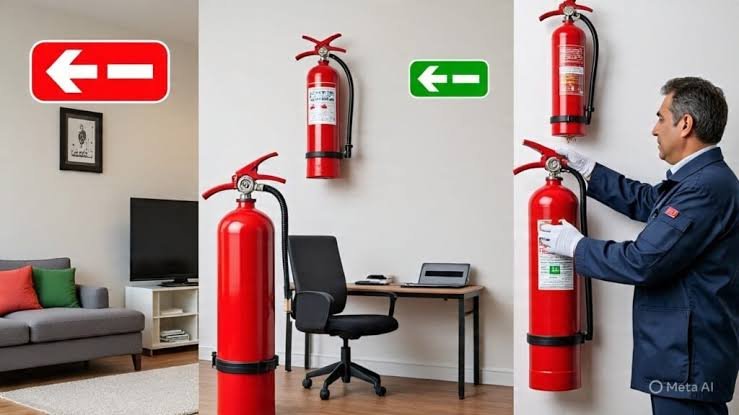
- Signage is clear and visible.
- Inspection and servicing are completed as required.
- Staff understand the limits of the equipment.
- Faults, missing equipment, and obstructions are corrected promptly.
Firefighting equipment should never obstruct exits or be concealed behind stock, furniture, or other items.
7. Emergency Exits and Evacuation Plans
A fire alarm is useful only if people can respond effectively. Clear escape routes and appropriate exit arrangements are essential parts of building safety.
Exit requirements depend on the building’s layout, occupancy, and applicable rules. Relevant considerations may include the number and location of exits, staircase arrangements, travel distances, exit signage, emergency lighting, and keeping escape routes free from obstruction.
Doors and corridors intended for evacuation must not be blocked by storage, furniture, or locked arrangements that prevent safe escape.
What should an evacuation plan include?
An effective plan should explain:
- How occupants are warned of an emergency.
- Which routes lead to designated exits.
- Where occupants should assemble outside.
- Who is responsible for calling emergency services.
- How assistance will be provided to people who need it.
- How occupants will be accounted for after evacuation.
- Who can communicate with emergency responders.
Plans should reflect the actual building layout and should be reviewed when the premises, occupancy, or operations change.
Employees and residents should know where the exits are located before an emergency occurs.
8. Fire Safety Inspections and Certificates
Inspections help authorities identify potential safety deficiencies and determine whether a building meets applicable requirements.
For example, Punjab Civil Defence identifies fire detection and alarm systems, firefighting arrangements, fire safety plans, emergency fire control rooms, and emergency exits and evacuation plans among the measures considered during inspections.
Depending on the jurisdiction and building type, owners may need approvals, safety certificates, inspection records, or other documentation. The precise requirements should be confirmed with the relevant authority.
Prepare for an inspection
Building managers can prepare by reviewing:
- Building plans and relevant approvals.
- Existing fire safety plans and evacuation procedures.
- Alarm installation and maintenance records.
- Fire extinguisher and other equipment servicing records.
- Exit routes, staircases, and emergency signage.
- Staff training and drill records.
- Outstanding defects and corrective actions.
An inspection should not be treated as a one-time exercise. Fire safety conditions can change as a building is renovated, equipment deteriorates, storage increases, or occupancy changes.
9. What Happens If a Building Fails to Meet Requirements?
Consequences depend on the applicable law, the nature of the violation, the responsible authority, and the circumstances.
Possible outcomes may include notices requiring corrective action, follow-up inspections, legal proceedings, penalties where authorised, or restrictions on building use. In serious cases, authorities may take stronger enforcement measures under the relevant legal framework.
For example, Punjab Civil Defence states that legal action may be initiated in the trial court in cases of non-compliance under Rule 9 of the Civil Defence (Special Powers) Rules, 1951. Enforcement measures in other jurisdictions may differ.
The safest approach is to address identified deficiencies promptly and obtain written clarification from the responsible authority when requirements are uncertain.
Building owners should not assume that a lack of previous enforcement means a building is compliant.
10. Responsibilities of Building Owners, Employers, and Managers
Fire safety is a shared responsibility, but clear accountability is essential.
Building owners
Owners should determine which rules apply, arrange appropriate assessments, provide required protection measures, and ensure that relevant maintenance and compliance records are available.
Employers and facility managers
They should communicate emergency procedures, keep escape routes clear, organise appropriate training, report defects, and ensure that staff know how to respond to an alarm.
Tenants and occupants
Tenants should follow the building’s safety procedures, avoid obstructing exits or equipment, report hazards, and understand the evacuation arrangements.
Contractors and service providers
Competent professionals should carry out relevant design, installation, testing, and maintenance work. Building managers should retain appropriate documentation and ensure that defects are followed up.
Responsibilities may be defined differently under different laws, contracts, and approval conditions. A clear written allocation of duties helps prevent important tasks from being overlooked.
11. How Businesses Can Improve Fire Safety Compliance
Businesses can make compliance more manageable by using a structured approach.
Step 1: Identify the applicable rules. Contact the relevant building control, development, municipal, Civil Defence, or emergency services authority.
Step 2: Assess fire risks. Review ignition sources, combustible materials, occupancy, building layout, and evacuation needs.
Step 3: Review existing systems. Check the suitability and condition of alarms, extinguishers, hydrants, sprinklers, and other installed equipment.
Step 4: Correct deficiencies. Prioritise urgent life safety issues, including obstructed exits, defective alarms, and missing or unsuitable equipment.
Step 5: Train occupants and staff. Explain alarm signals, evacuation routes, assembly points, and emergency responsibilities.
Step 6: Maintain records. Document inspections, servicing, drills, repairs, and communication with the relevant authorities.
Step 7: Reassess when circumstances change. Renovations, new machinery, changes in storage, and increased occupancy can affect fire risks and legal obligations.
This process supports better day-to-day safety and helps businesses prepare for inspections.
12. The Future of Fire Safety Awareness in Pakistan
Effective fire safety requires more than written regulations. Public awareness, competent installation, regular inspections, and responsible building management all contribute to safer premises.
Recent regulatory and enforcement developments show that authorities are continuing to focus on fire safety in commercial, industrial, healthcare, and residential buildings. Building owners should monitor official notifications rather than relying exclusively on old checklists or informal advice.
Technology can also support safer buildings. Properly selected detection systems, reliable alarms, emergency lighting, and well-maintained firefighting equipment can improve preparedness when integrated into a suitable safety plan.
Nevertheless, technology cannot replace clear escape routes, trained staff, effective supervision, and prompt evacuation.
Conclusion
Fire safety laws in Pakistan provide an important framework for reducing fire risks and protecting building occupants. The Building Code of Pakistan (Fire Safety Provisions 2016), provincial regulations, and local authority requirements all play a role in determining the measures needed for particular premises.
Owners and managers should understand their legal obligations, arrange appropriate fire risk assessments, maintain suitable equipment, keep escape routes clear, and prepare occupants for emergencies. They should also confirm the latest requirements with the authority responsible for their building, as regulations and enforcement procedures can differ across jurisdictions.
A reliable fire alarm system, supported by suitable firefighting equipment and a practical evacuation plan, can make an important contribution to building safety. Ultimately, compliance is not merely paperwork: it is an ongoing commitment to protecting people and reducing preventable harm.
Frequently Asked Questions (FAQs)
1. Which fire safety code is important in Pakistan?
The Building Code of Pakistan (Fire Safety Provisions 2016) is an important national reference for fire prevention, life safety, and fire protection in buildings. Provincial and local regulations may also apply, so owners should confirm the requirements for their specific premises.
2. Are fire alarm systems required in buildings in Pakistan?
Fire detection and alarm requirements depend on the applicable code, local regulations, building type, occupancy, and authority having jurisdiction. Property owners should obtain confirmation from the relevant building control or fire safety authority rather than assuming one rule applies to every building.
3. Who is responsible for fire safety inspections in Pakistan?
Responsibility varies by location and building type. It may involve building control authorities, municipal or district administrations, Civil Defence, emergency services, development authorities, or other designated bodies.
4. What can happen if a building does not comply with fire safety requirements?
Depending on the applicable law and the nature of the violation, authorities may require corrective action or take further enforcement measures. These can include legal proceedings, penalties where authorised, or restrictions on use. Owners should respond promptly to official notices.
5. How can a business improve fire safety compliance?
A business can start by identifying applicable regulations, arranging a fire risk assessment, maintaining suitable alarms and firefighting equipment, keeping exits clear, training staff, documenting inspections, and correcting identified defects. The relevant authority should confirm any specific approval or certification requirements.