
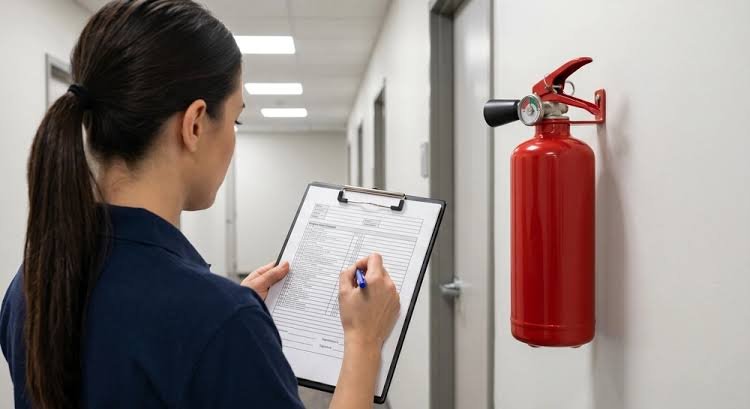
Fire safety is an essential part of protecting homes, offices, shops, schools, restaurants, factories, and other buildings. Although many people understand the importance of preventing fires, they may not know how to select, inspect, and maintain the right firefighting equipment. A fire extinguisher is one of the most familiar safety devices, but having one on the premises is not enough. It must be suitable for the potential fire hazards, accessible when needed, and maintained in proper working condition.
A small fire can develop because of faulty electrical equipment, cooking oil, flammable liquids, or combustible materials. In certain circumstances, a suitable fire extinguisher may help control a small fire before it spreads. However, using the wrong extinguisher can make a situation more dangerous. Water, for example, should not be applied to burning cooking oil or energised electrical equipment.
For beginners, the best approach is to understand the different extinguisher types, assess the hazards in the building, check equipment regularly, and learn when evacuation is the safer option.
In Pakistan, the Building Code of Pakistan (Fire Safety Provisions) 2016 provides guidance on selecting and maintaining portable fire extinguishers. A suitable fire alarm system in Pakistan is also an important part of an overall fire protection strategy because it helps warn occupants when a fire is detected.
This beginner’s checklist explains the essential points property owners, business managers, and families should know about fire extinguishers.
1. Understand Why Fire Extinguishers Matter
Fire extinguishers are portable devices designed to control fires within their intended capacity. They provide an initial response option for certain small fires, but they are not designed to replace a building’s complete fire protection arrangements.
A fire extinguisher can be useful in a home kitchen, office, retail shop, workshop, school, or commercial building when the correct equipment is available and the situation is safe enough for its use.
Before purchasing equipment, consider the following questions:
- What types of combustible materials are present?
- Are there cooking appliances or flammable liquids?
- Does the building contain electrical equipment or machinery?
- Are specialised hazards present, such as combustible metals?
- Who will be responsible for inspections and servicing?
- Do occupants understand the emergency evacuation procedure?
The answers help determine which extinguisher types are appropriate and where they should be located.
The Pakistan Engineering Council’s Building Code of Pakistan (Fire Safety Provisions) 2016 states that extinguisher selection should consider the likely fire type and size, hazards in the area, nearby energised electrical equipment, and environmental conditions. It also treats portable extinguishers as a first line of defence against fires of limited size. 【turn548940search33】
This means that selecting an extinguisher should begin with a risk assessment, not simply a decision based on price or appearance.
2. Learn About the Main Types of Fire Extinguishers
Different extinguishers use different agents to control fires. Choosing the wrong type may be ineffective or dangerous, so users should read the equipment label and obtain professional advice where necessary.
The main types include the following.
Water extinguishers
Water extinguishers are generally intended for ordinary combustible materials, such as paper, wood, and some fabrics. They cool the burning material and help stop combustion.
They must not be used on burning cooking oil or energised electrical equipment because water can spread burning liquids or create an electrical hazard.
Foam extinguishers
Foam extinguishers are designed for certain ordinary combustible materials and flammable-liquid fires, depending on the product’s rating and instructions.
They are not suitable for every hazard. The label must be checked before an extinguisher is selected for a particular location.
Dry chemical powder extinguishers
Dry chemical powder extinguishers are available in different ratings. Multipurpose models may be suitable for several common fire categories, depending on their markings.
They are often used in commercial and industrial environments, but their suitability must be checked against the actual hazards. Powder can also reduce visibility and contaminate sensitive equipment.
Carbon dioxide extinguishers
Carbon dioxide (CO₂) extinguishers are commonly used for certain flammable-liquid and electrical-equipment fires. They leave little residue, which can be beneficial around some equipment.
However, carbon dioxide presents an inhalation risk in confined spaces, and its performance depends on the circumstances. It should not be assumed suitable for every fire.
Wet chemical extinguishers
Wet chemical extinguishers are designed for certain fires involving cooking oils and fats, particularly in commercial kitchen environments. They are commonly considered for areas with deep-fat fryers and similar cooking equipment.
Their use should follow the extinguisher’s rating and instructions. A wet chemical extinguisher is not a universal solution for all fire hazards.
Specialised extinguishers
Some industrial processes involve combustible metals or other unusual hazards that require specialised extinguishing agents. Standard household or office extinguishers may not be suitable.
Important: Fire classifications and labels can vary by standard and jurisdiction. Always follow the extinguisher’s markings, the applicable local requirements, and advice from a qualified fire safety professional. The U.S. Fire Administration also explains that extinguishers should be matched to the fire hazards they are designed to address. 【turn548940search11】
3. Assess the Fire Risks Before Buying Equipment
Before purchasing an extinguisher, examine the building and identify the most likely fire hazards. A residential kitchen has different needs from an electrical workshop, warehouse, or restaurant.
For example, a home may contain upholstered furniture, paper products, cooking appliances, and electrical equipment. An office may have computers, printers, documents, and electrical distribution equipment. A commercial kitchen may need protection specifically suited to cooking oils and fats.
Use this checklist as a starting point:
- Identify the combustible materials in each area.
- Consider the equipment and activities that could start a fire.
- Identify locations where a fire could spread quickly.
- Determine which extinguisher types are suitable for those hazards.
- Check whether additional protection, such as a fixed suppression system, is required.
- Confirm the applicable building and fire safety requirements.
A qualified fire safety professional can help determine the appropriate extinguisher types, ratings, quantities, and locations.
Do not choose equipment solely because it is inexpensive, widely available, or described as multipurpose. A lower-cost extinguisher may not provide the protection needed for a particular hazard.
4. Check the Extinguisher’s Label and Specifications
The label provides essential information about the equipment’s intended use. Before accepting or installing an extinguisher, ensure the instructions and markings are legible.
Review the following details:
Fire rating: Confirm that the extinguisher is suitable for the hazards identified in the risk assessment.
Agent type: Check whether it contains water, foam, dry chemical powder, carbon dioxide, wet chemical, or another approved agent.
Operating instructions: Make sure the instructions can be read clearly and are appropriate for the intended users.
Manufacturer information: Look for identification and relevant product details.
Inspection and service records: Check available records and the condition of the equipment.
Physical condition: Look for corrosion, dents, leakage, damaged hoses, loose components, or other visible defects.
The extinguisher should come from a reputable supplier and meet the applicable product and safety requirements. If the label is missing, illegible, or inconsistent with the intended use, arrange assessment by a competent professional before relying on the equipment.
For commercial buildings, documentation is especially important because managers may need to demonstrate that fire protection equipment is inspected and maintained appropriately.
5. Install Extinguishers in Accessible Locations
Even a suitable extinguisher may be ineffective if people cannot reach it quickly. Extinguishers should be placed in locations selected through a risk assessment and in accordance with applicable requirements.
Common considerations include:
- Keep equipment visible and clearly identified.
- Avoid placing extinguishers behind furniture, stock, or locked doors.
- Maintain clear access around each unit.
- Use suitable mounting brackets or approved stands.
- Ensure signs remain visible.
- Consider how occupants can reach the equipment without approaching the fire.
- Avoid locations where heat, moisture, corrosion, or physical damage could affect the extinguisher.
The correct number and placement depend on the building’s layout, fire risks, equipment ratings, travel distances, and local requirements. A qualified professional should determine the arrangement for workplaces and larger premises.
Do not position an extinguisher where someone would need to pass through a likely fire area to reach it. Access should be considered alongside escape routes so occupants are not encouraged to move towards danger.
Schools, offices, shops, restaurants, factories, and other commercial buildings should incorporate extinguisher locations into their fire safety plans.
6. Follow a Regular Inspection and Maintenance Schedule
Fire extinguishers require ongoing attention. An extinguisher that has lost pressure, suffered damage, or been used previously may not operate as intended.
Assign a responsible person to conduct routine visual checks and arrange professional servicing according to the manufacturer’s instructions and applicable requirements.
A basic visual checklist should include:
- Is the extinguisher in its designated location?
- Is it visible and easy to reach?
- Are the instructions readable?
- Is the safety pin and tamper seal intact, where fitted?
- Is the pressure indicator within the acceptable range, where applicable?
- Is the cylinder free from visible damage, corrosion, or leakage?
- Are the hose and nozzle in suitable condition?
- Is the service information current?
Any missing, damaged, discharged, or questionable equipment should be reported promptly. It should be assessed, repaired, serviced, or replaced by a competent provider.
Do not dismantle a pressurised extinguisher or attempt unauthorised repairs. Maintenance work should be carried out by trained personnel using appropriate procedures.
The U.S. Occupational Safety and Health Administration (OSHA) describes workplace requirements for extinguisher inspection, maintenance, and testing. Its specific legal requirements apply in the United States, but its guidance illustrates why regular inspection and professional maintenance are important. 【turn548940search9】
For buildings in Pakistan, follow the applicable local requirements, the manufacturer’s instructions, and the relevant provisions of the building’s fire safety plan.
7. Keep a Record of Inspections and Servicing
Maintenance records help building managers monitor the condition of their equipment and identify outstanding problems.
A simple register can record the extinguisher’s identification number, location, type, inspection date, observed condition, service history, and corrective action required.
For businesses with multiple floors or several buildings, a central register can make it easier to track inspections and confirm that every area has been covered.
A useful record should answer four basic questions:
- Which extinguisher was inspected?
- When was the inspection completed?
- Were any problems identified?
- What action was taken to resolve them?
Records should be updated when equipment is moved, replaced, serviced, or discharged. If an extinguisher is removed from service for maintenance, responsible personnel should assess whether temporary alternative protection is necessary.
Good documentation does not replace physical inspections, but it helps ensure that maintenance responsibilities are clear and that defects are not forgotten.
8. Understand How to Respond Safely to a Small Fire
Knowing how an extinguisher works is not the same as knowing when it is safe to use one. Fire conditions can change quickly, and smoke can become dangerous before flames appear large.
The first priority is to alert people and activate the appropriate emergency procedure. Raise the alarm, contact the relevant emergency service, and follow the building’s evacuation plan.
An extinguisher should only be considered when the fire is small and contained, the person is trained and physically able to use the equipment, the extinguisher is suitable, and a clear escape route remains available.
Never attempt to fight a spreading fire, enter a smoke-filled area, or delay evacuation to protect property.
Some extinguishers use the familiar PASS sequence:
- Pull the pin or release the locking mechanism as instructed.
- Aim the nozzle towards the base of the fire.
- Squeeze the operating lever.
- Sweep the agent across the fire as directed by the equipment instructions.
This is general guidance, not a guarantee of safety. Follow the manufacturer’s instructions and any training received. If the extinguisher does not control the fire immediately, conditions worsen, or there is any doubt about safety, leave the area and evacuate.
After an extinguisher has been discharged, it must be taken out of service and professionally recharged or replaced as appropriate before being relied upon again.
9. Know What Fire Extinguishers Cannot Do
Fire extinguishers are useful for certain limited fires, but they have important limitations.
They cannot replace evacuation arrangements, fire detection systems, sprinklers, or other required protection. They may also be ineffective if the fire is too large, the agent is unsuitable, or the person using the extinguisher cannot approach safely.
For example, a portable extinguisher is not an appropriate way to tackle an advancing wildfire or a fire spreading through a building. In these situations, occupants should prioritise evacuation and emergency-service instructions.
Extinguishers also do not provide early warning. A fire alarm system can help alert occupants when a fire is detected, giving them an opportunity to respond according to the emergency plan.
A fire alarm system in Pakistan should be designed and maintained to suit the building’s needs and applicable requirements. Depending on the premises, the wider fire protection plan may also require emergency lighting, marked exits, suitable firefighting equipment, and other measures.
Punjab Civil Defence lists fire detection and alarm systems, firefighting arrangements, fire safety plans, and emergency exits among the measures considered in its fire safety inspections. 【turn548940search8】
The key principle is that each safety measure has a distinct role. Fire extinguishers support the response to certain small fires, while detection, warning, evacuation, and other protection systems help manage the broader risk.
10. Train Employees and Occupants
Fire safety equipment is more effective when people understand its purpose and limitations. Training should help occupants recognise hazards, report faults, respond to alarms, and follow the evacuation plan.
In workplaces, designated staff should understand the location of extinguishers and the procedures for raising an alarm. Where employees are expected to use extinguishers, they should receive appropriate instruction and training.
Training should cover:
- Recognising the different types of fire hazards.
- Knowing which equipment is provided for each area.
- Reporting damaged or missing extinguishers.
- Understanding the alarm signal and evacuation routes.
- Knowing when not to attempt firefighting.
- Contacting emergency services.
- Following the building’s emergency procedures.
Schools should provide age-appropriate fire safety education and ensure that students understand how to evacuate safely. Children should not be expected to use fire extinguishers.
Businesses should also conduct suitable evacuation drills and review their procedures after significant changes to the building or its operations.
Training should reinforce one essential rule: people must not put themselves at risk to save equipment or property.
11. Fire Extinguisher Checklist for Homes and Businesses in Pakistan
Use this practical checklist as an initial review. It does not replace a professional fire risk assessment or the requirements that apply to a particular building.
Before purchasing
- Identify the likely fire hazards.
- Confirm the correct extinguisher type and rating.
- Check that the product meets applicable requirements.
- Read the operating instructions.
- Obtain professional advice if the hazards are unclear.
After installation
- Confirm that the extinguisher is visible and accessible.
- Ensure its location does not obstruct an exit.
- Check that signs and instructions are legible.
- Record its location and identification details.
- Assign responsibility for regular inspections.
During routine maintenance
- Check the physical condition of the cylinder and components.
- Review the pressure indicator where fitted.
- Check the safety pin and tamper seal where applicable.
- Review inspection and service records.
- Arrange professional servicing when required.
- Correct any faults promptly.
During emergency preparation
- Make sure occupants know how to raise the alarm.
- Identify safe escape routes.
- Explain when extinguisher use may be appropriate.
- Keep emergency contacts available.
- Conduct suitable drills and training.
- Make evacuation the priority when conditions are unsafe.
Pakistan’s Building Code of Pakistan (Fire Safety Provisions) 2016 is an important reference for extinguisher selection and related building fire safety measures. Owners and managers should consult qualified professionals and the relevant authorities to confirm the requirements that apply to their premises. 【turn548940search33】
12. Combine Fire Extinguishers with a Complete Fire Safety Plan
A fire extinguisher should never be treated as the building’s only fire protection measure. A complete plan considers how fires can be prevented, how occupants will be warned, and how people will leave safely.
For homes, this may include safe cooking practices, maintained electrical equipment, suitable smoke alarms, clear exits, and a family evacuation plan.
For offices and commercial buildings, additional provisions may include a professionally designed alarm system, emergency lighting, exit signs, scheduled equipment maintenance, staff training, and other measures required by the building’s risk assessment and applicable regulations.
Regular reviews help ensure that protection remains appropriate when the building’s use, layout, occupancy, or equipment changes.
A fire alarm system in Pakistan can provide an important early-warning function, while suitable extinguishers may help trained people respond to certain small fires when conditions permit. Both should form part of a coordinated safety programme.
The goal is not simply to own fire safety equipment. It is to ensure that the equipment is appropriate, maintained, accessible, and supported by procedures that protect human life.
Conclusion
Fire extinguishers are an important part of fire safety in homes, workplaces, and commercial buildings. However, selecting the correct equipment requires an understanding of the hazards present, the types of fires an extinguisher can address, and the limitations of portable firefighting devices.
Beginners should focus on identifying risks, checking labels, ensuring suitable placement, maintaining equipment, keeping inspection records, and learning when evacuation is the safest choice.
In Pakistan, property owners and managers should use the applicable building fire safety provisions and seek professional advice when selecting or maintaining equipment. Extinguishers should also be supported by suitable fire detection, warning arrangements, clear escape routes, and regular training.
A properly selected extinguisher can be useful in the right circumstances, but no piece of equipment guarantees safety. Prevention, early warning, and a clear emergency plan remain essential to protecting people and property.
Frequently Asked Questions (FAQs)
1. Which fire extinguisher is best for beginners?
There is no single extinguisher that is best for every situation. The correct choice depends on the likely fire hazards in the area. Check the product’s fire rating and instructions, and consult a qualified fire safety professional when necessary.
2. How often should fire extinguishers be inspected?
Extinguishers should receive routine visual inspections and professional servicing according to the manufacturer’s instructions and applicable requirements. The schedule may vary by equipment type and local rules. Any damaged, discharged, or questionable extinguisher should be assessed promptly.
3. Can water extinguishers be used on electrical fires?
Water extinguishers should not be used on energised electrical equipment because of the risk of electric shock. Use only equipment specifically rated for the hazard, and follow the emergency procedure. If the situation is unsafe, evacuate and contact emergency services.
4. Are fire extinguishers enough to protect a building?
No. Extinguishers are only one part of a fire safety plan. Depending on the building, protection may also require a suitable alarm system, detection equipment, emergency lighting, clear exits, evacuation procedures, and regular staff training.
5. What should I do after using a fire extinguisher?
Leave the area if there is any remaining danger and ensure the incident has been reported. A discharged extinguisher should be taken out of service and professionally recharged or replaced as appropriate. It should not be returned to its designated location as ready for use until its serviceability has been confirmed.